Who doesn’t know Decathlon? My son makes me go there several times a year, and it takes an enormous amount of mental strength to walk out empty-handed. In five decades, the group has surpassed €16.8 billion in revenue thanks to its 1,902 stores across 74 countries. You inevitably have one somewhere near you. From a branding perspective, it is a fascinating company. Decathlon is not only a brand associated with a retailer; the company has also developed strong brands around some of its products, such as Quechua and Van Rysel, to name just a few. Yet behind these figures, Decathlon’s strategy is undergoing a transformation: an aborted attempt to move upmarket, a refocusing on affordability, a price war, accelerated digitalisation, and geographical expansion with varying degrees of intensity. As a specialist in the retail sector, I will draw on my expertise within the IntoTheMinds marketing consulting firm to offer you an up-to-date, multi-country analysis of Decathlon’s strategy.
Contact the IntoTheMinds institute
Key takeaways
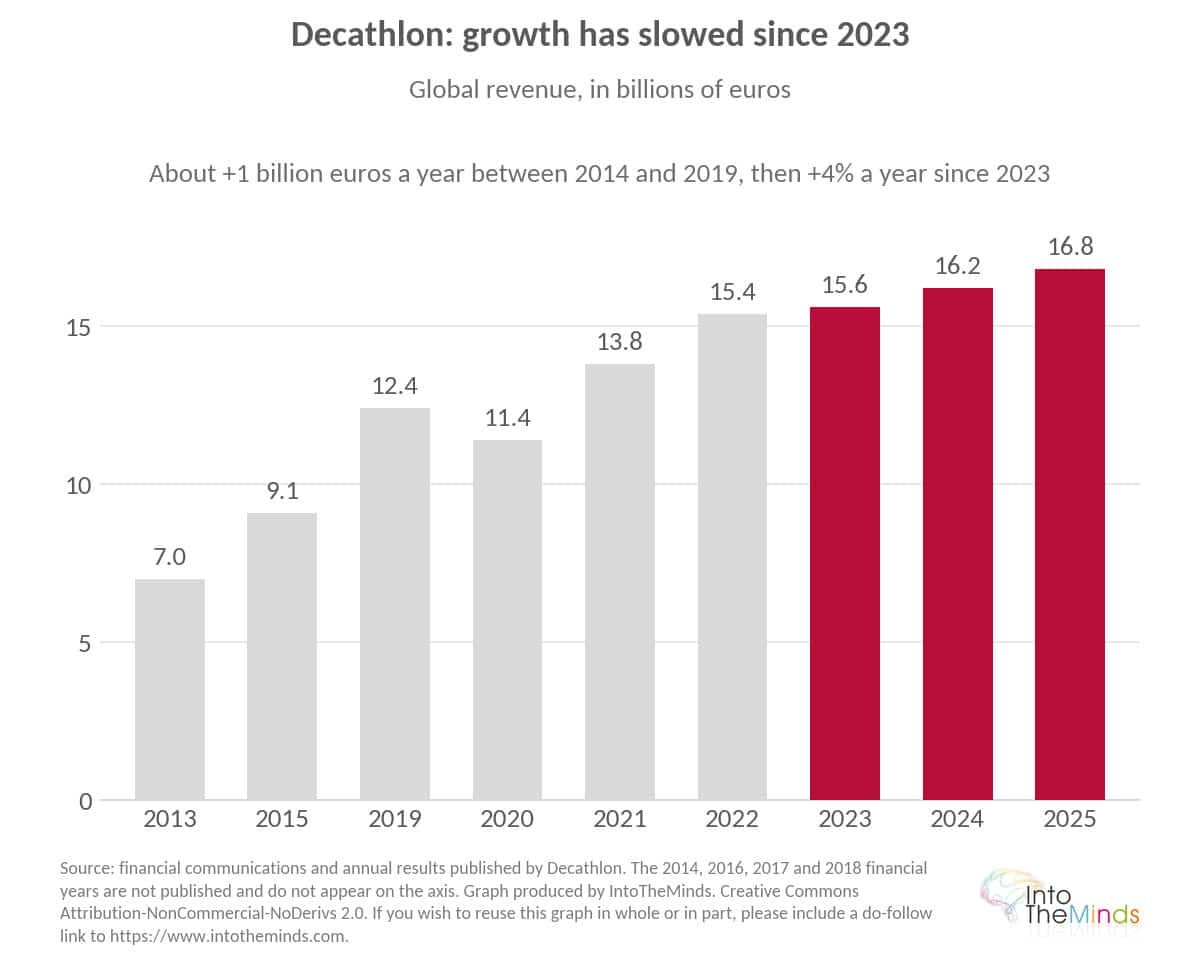
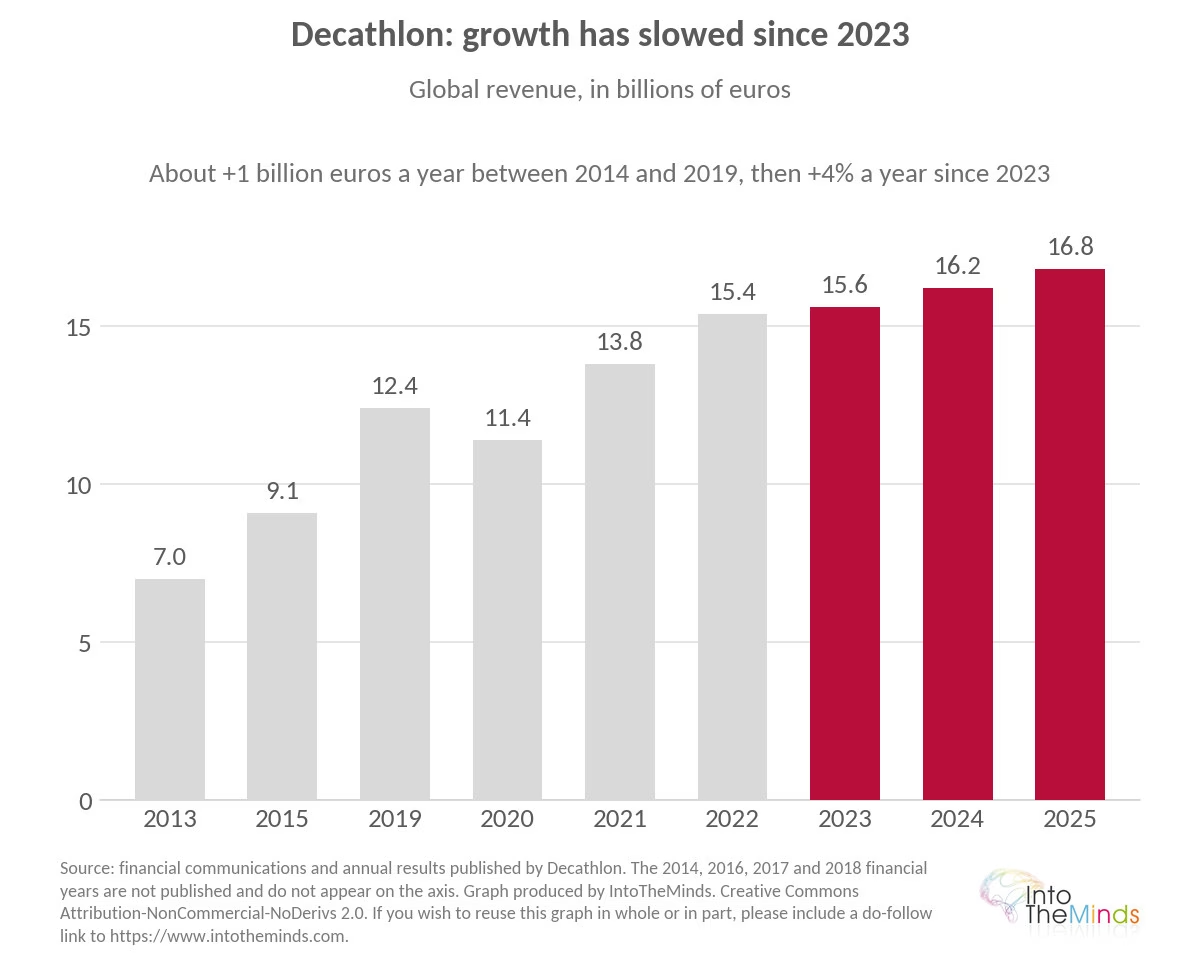
- Decathlon reached €16.8 billion in global revenue in 2025, representing a 4% increase, but growth has slowed significantly since 2023 after annual increases of close to €1 billion between 2014 and 2019.
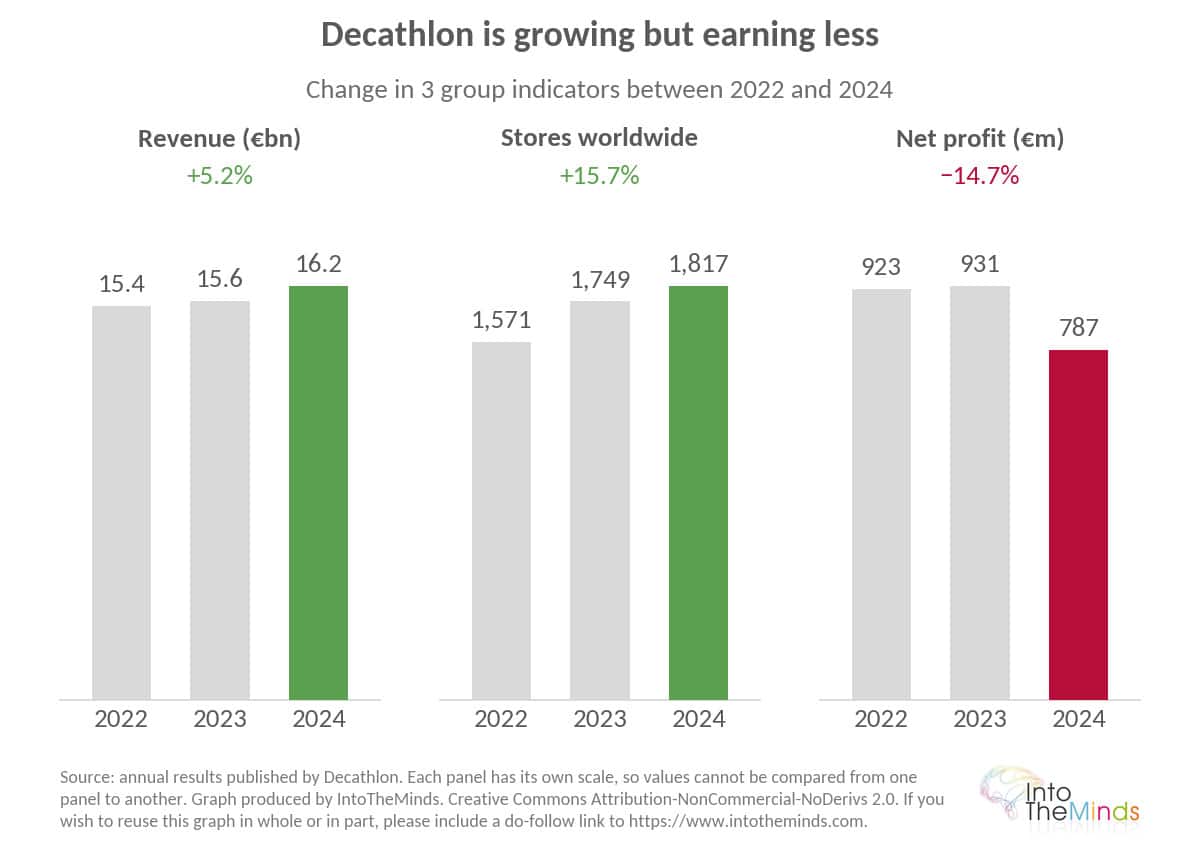
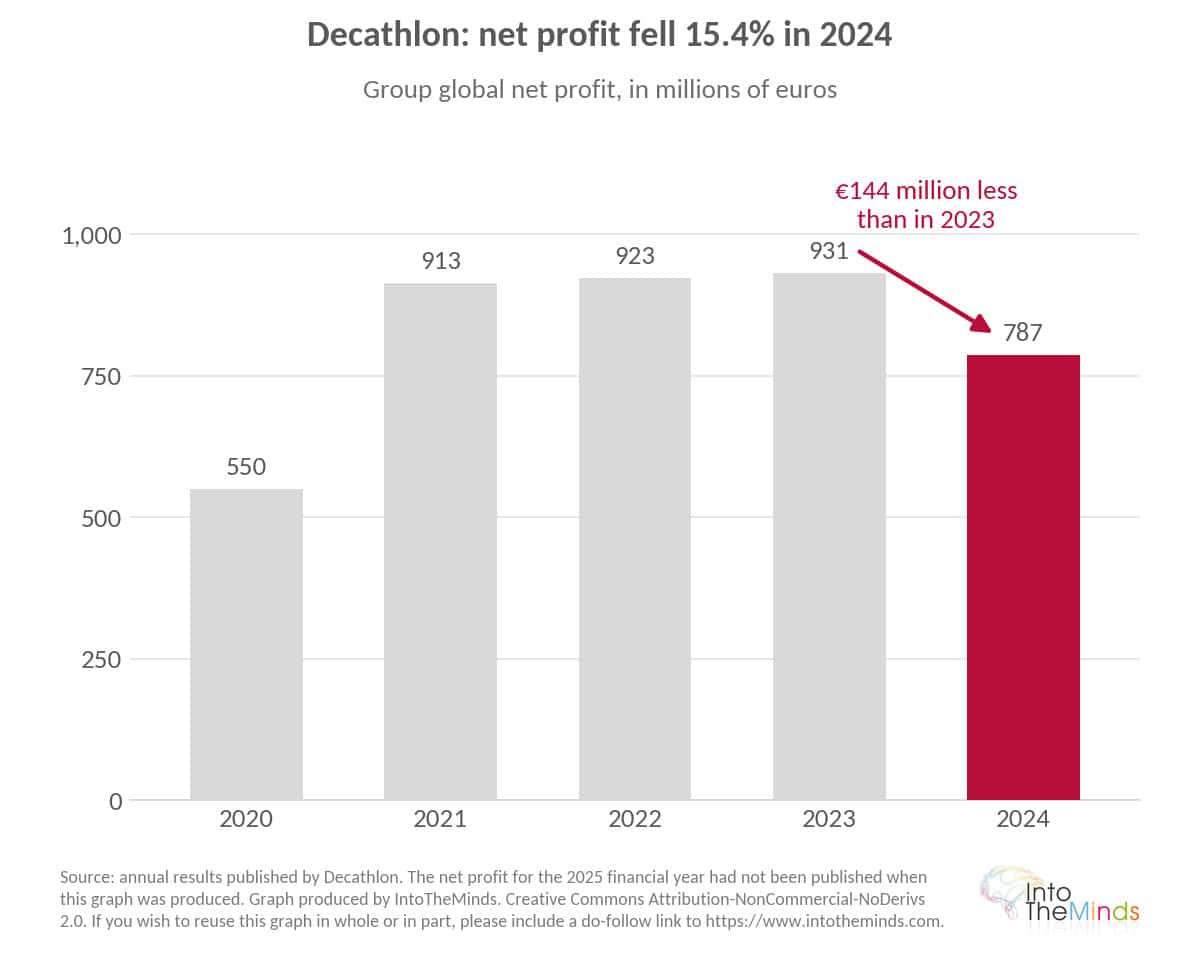
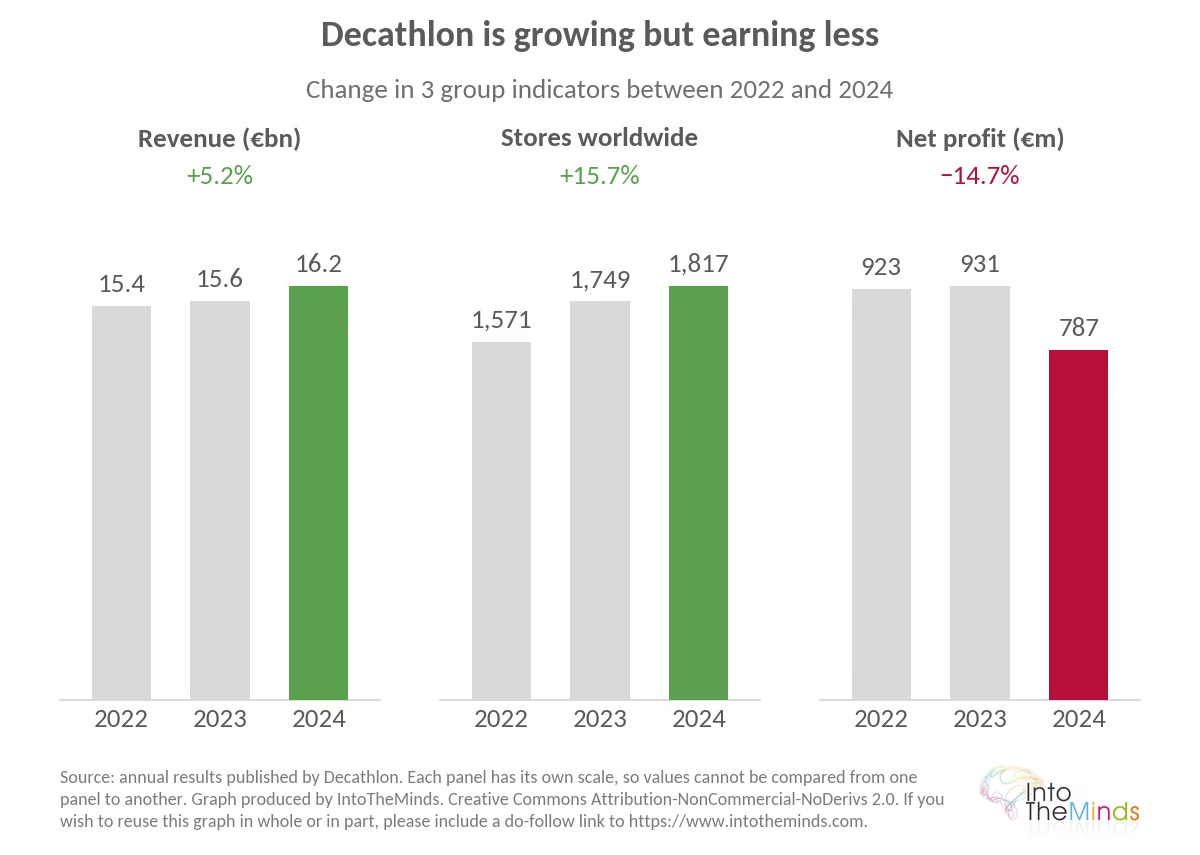
- The premiumisation strategy launched in March 2024 under Barbara Martin Coppola weighed on profitability: global net income experienced a significant decline in 2024, reflecting the investments associated with the new brand strategy.
- The 2025 refocusing redirected Decathlon’s strategy towards price accessibility, with numerous price cuts introduced recently and others scheduled for the coming months.
- In France, Decathlon holds a 51% market share among multi-sport retailers, but its brand preference rate has experienced a slight decline, although the retailer remains one of the French people’s favourite brands.
- Germany remains the main source of growth, with only 5% market share, compared with 20% or more in the group’s other key markets.
- The circular economy generated €420 million in global revenue in 2023, and a customer using repair services returns to the store three times more often.
- Decathlon is the global retailer where employees report the highest level of satisfaction, with a score of 4.00 out of 5 in the third quarter of 2025 and 89% of employees proud to work for the retailer.
The origins of Decathlon’s strategy
Decathlon’s strategy originated from a simple observation made in 1976. At the time, there were no large specialist stores selling sporting goods in France. Michel Leclercq, who was then working for his uncle Gérard Mulliez, the founder of Auchan, transposed the logic of large-scale food retail to the sports sector. The idea was not to sell a particular sport, but to offer equipment for 10 disciplines under one roof, hence the name Decathlon, directly inspired by the combined athletic event.
Michel Leclercq’s pioneering vision in 1976
Two principles structured the model from the outset.
- Pricing: offering both the quality of an entry-level product and the low price of a high-end product.
- Industrial: designing and manufacturing its own products in order to control the value chain from end to end. This vertical integration was rare for a retailer in the 1970s. Today, it is the foundation of the group’s competitiveness (if you are interested in the subject, here are some other examples of vertical integration). Decathlon designs and has more than 60% of the products sold in its stores manufactured, a proportion documented as early as 2021.
Decathlon designs and has more than 60% of the products sold in its stores manufactured.
The founding principles that shaped growth
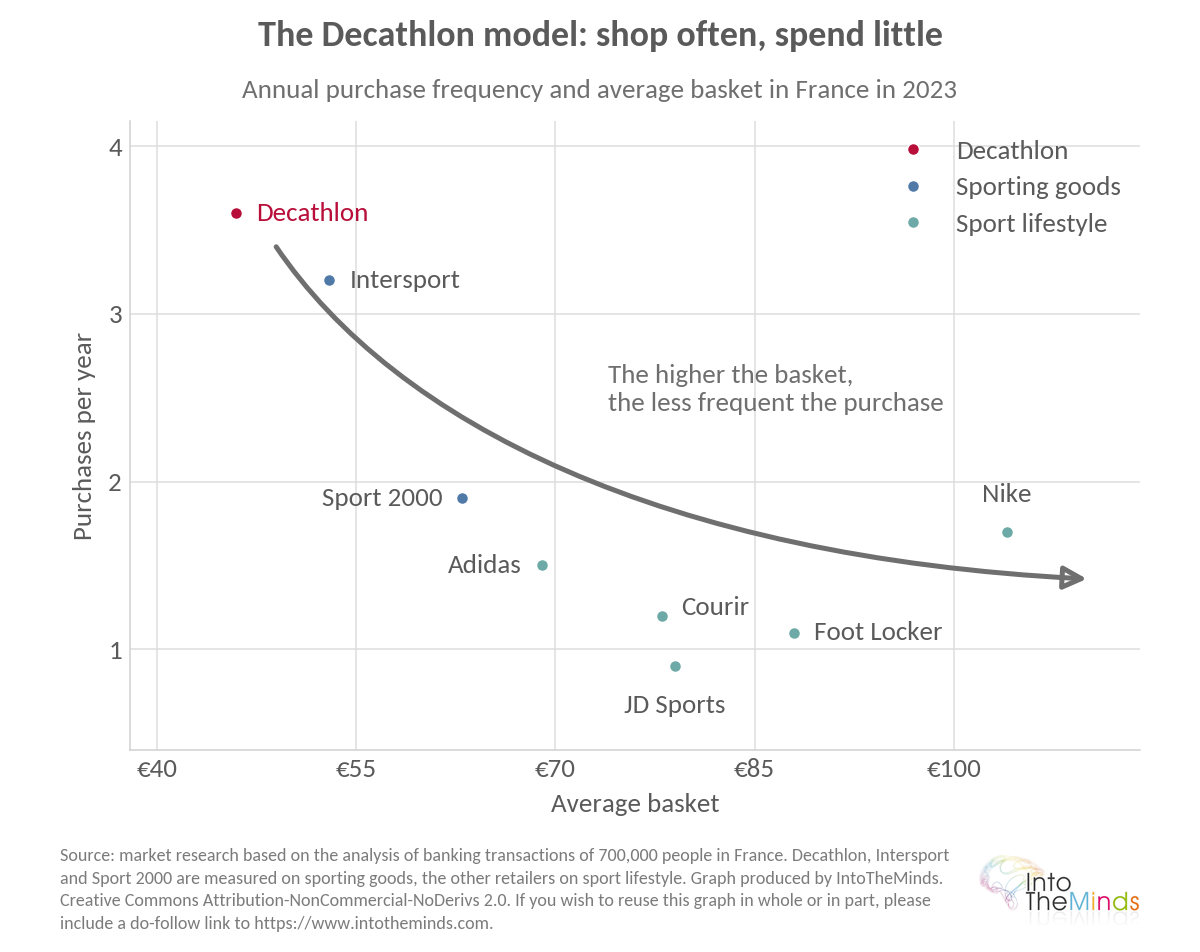
Michel Leclercq’s philosophy sums up the long-term direction of the model. It is entirely focused on customer satisfaction and loyalty. “The goal of the day is not to have generated the highest turnover, but to see customers come back in six months, in a year.” This vision led to structurally lower marketing expenditure, offset by prices 20 to 30% lower than national brands. The group thus built an exceptional purchase frequency: in 2023, Decathlon’s French customers made an average of 3.6 purchases per year, the highest frequency in the market, for an average basket of €46, the lowest. If you are a regular reader of this blog, this approach may remind you of Action’s. Below, I have prepared a chart positioning several brands according to purchase frequency and average basket (“fun fact”: Foot Locker is an offshoot of the empire built by Frank Woolworth, whom I mentioned in this article).
This model is based on a portfolio of private labels that has grown alongside the company. Each brand covers a specific universe and benefits from the economies of scale generated by integrated production:
- Quechua for mountain sports (the brand became famous even in the United States for its tents that unfold in 2 seconds: see the video below)
- Kipsta for team sports
- Tribord for water sports
- Van Rysel for cycling (I recently bought a bicycle for my son — not a Van Rysel, I assure you — and on that occasion I discovered this brand, which looks incredible)
International expansion
Decathlon’s international strategy follows a logic of progressive expansion, first nationally in the 1980s, then across Europe in the 1990s, and finally globally in the 2000s and 2010s. The group grew from 650 stores in 2013 to 1,902 in 2025, operating in 74 countries, with 75% of its business volume now generated outside France.
The 1980s–1990s: the first wave of internationalisation
Decathlon crossed the Rhine for the first time in 1986. This choice was not insignificant: Germany is Europe’s largest sports market, and Decathlon identified considerable potential there from the outset. Yet progress was slow: only around a dozen stores were opened over twenty-five years. Expansion initially focused on Latin countries, Spain and Italy, where the out-of-town large-format retail model encountered less cultural resistance. Spain became the group’s second-largest market, with more than €2 billion in revenue.
The 2000s: global acceleration and entry into Asia
Asia became the group’s main growth horizon. China and Asia have been identified as priorities for 2026, India is the subject of a €100 million investment over five years announced in 2025, and the long-term target set in April 2026 is to reach 2 billion people by 2035, representing 20% of the world’s population.
The US market illustrates the limitations of the model in certain territories. An initial attempt with four stores in the Boston area between 1999 and 2006 ended in a withdrawal. The return in 2017 was limited to two stores in San Francisco, supplemented by distribution through Walmart from 2021, with more than 80 sports and around 1,000 products available online. The franchise model, announced as a growth lever in April 2026, should make it possible to accelerate expansion where conventional expansion would require a four-year lead time.
The German case: ambition and recalibration
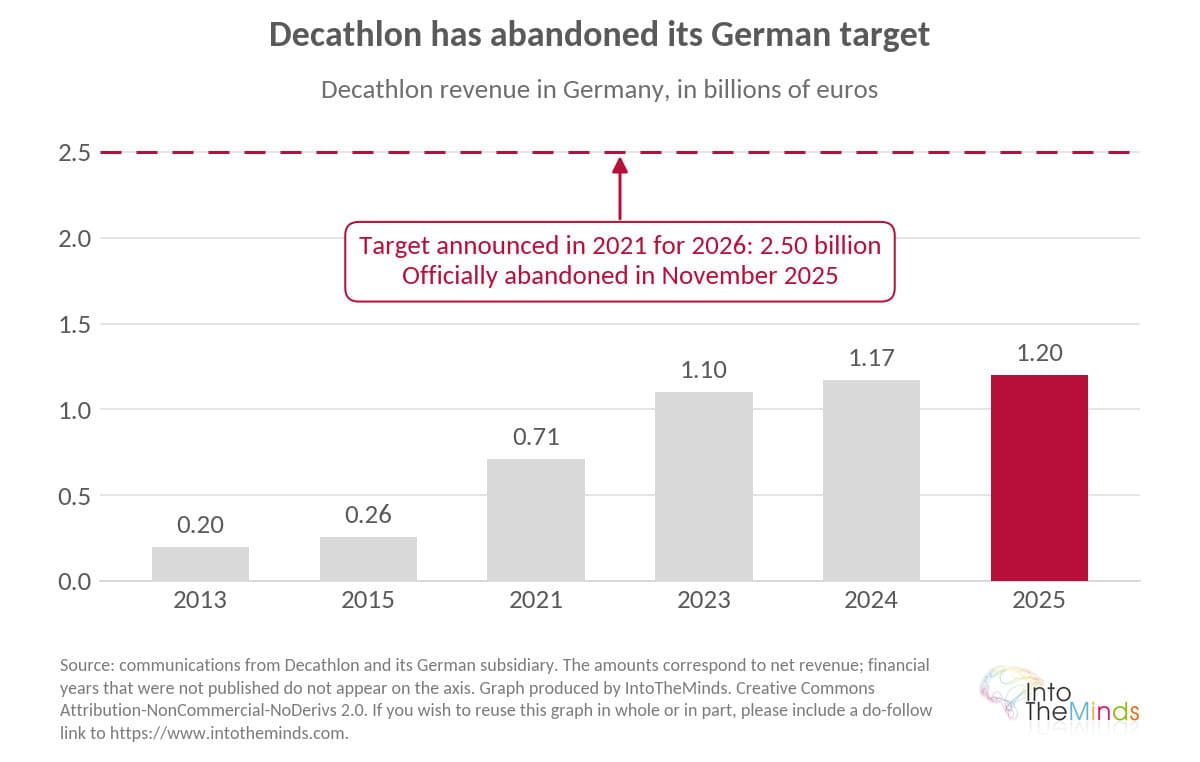
Germany illustrates both the ambition and the adjustments required by the expansion strategy. German revenue increased from €200 million in 2013 to €1.2 billion in 2025, with around 100 stores. But market share remains capped at 5%, compared with 20% or more in the group’s mature markets. The target announced in November 2021 of exceeding €2.5 billion in gross revenue by 2026 was officially abandoned in November 2025.
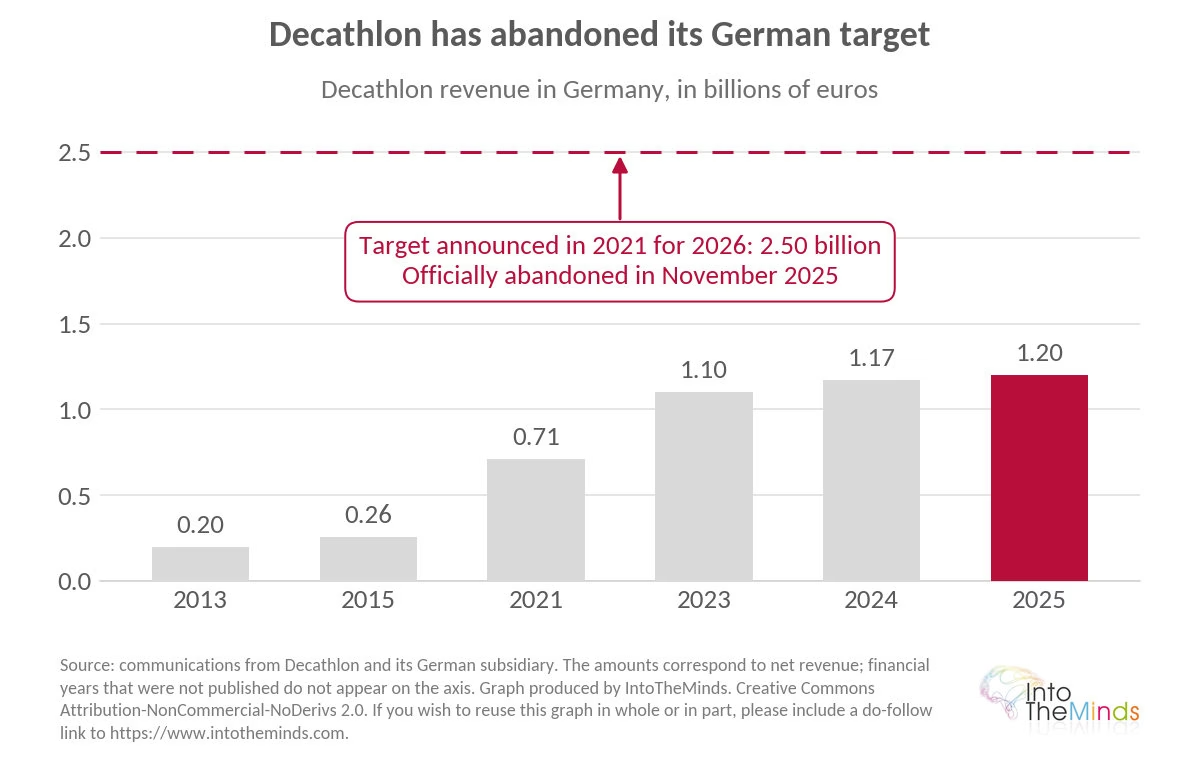
The strategic response involves new formats. The Kompaktstores of 400 to 500 square metres, tested in Berlin from December 2025, and the spaces in Galeria stores, ranging from 1,500 to 3,500 square metres, mark the end of the suburban-location dogma. The investment planned in Germany through 2027 amounts to €100 million, with the objective of increasing the number of stores from around 100 to at least 150.
Year Global revenue (€bn) France revenue (€bn) Germany revenue (€bn) Global stores Countries 2013 ~7 n.a. 0.20 650+ n.a. 2015 9.1 n.a. 0.26 ~1000 n.a. 2019 12.4 3.3 n.a. 2193 57 2020 11.4 3.5 n.a. n.a. n.a. 2021 13.8 4.2 0.71 (net) ~1700 n.a. 2022 15.4 4.7 n.a. 1571 72 2023 15.6 4.75 1.1 1749 78 2024 16.2 4.73 1.17 1817 79 2025 16.8 4.84 1.2 1902 74 Reading notes: France’s 2020 revenue is stated excluding taxes and includes Alltricks and Decapro for the first time, which were not included in previous financial years; on a like-for-like basis, the decline in 2020 amounted to 9%. The German figure for 2021 is net revenue, to be compared with the gross revenue of €953 million expected for the same year. The change in the number of countries between 2024 and 2025 reflects a change in the counting scope, with the group also referring to 80 territories of operation in April 2026.
Decathlon’s current strategic transformation
On March 12, 2024, global CEO Barbara Martin Coppola presented a complete overhaul of Decathlon’s strategy. The stated ambition was to make Decathlon a sports brand competing with Nike, rather than a retailer competing with Intersport.
The new brand identity and repositioning
This shift was accompanied by an unprecedented sponsorship programme for the group:
- Teddy Riner and Gaël Monfils sponsored by the Decathlon brand
- Antoine Griezmann wearing Kipsta footwear since January 2025, with shoes bearing the Decathlon logo
- the Decathlon-AG2R La Mondiale cycling team equipped with Van Rysel.
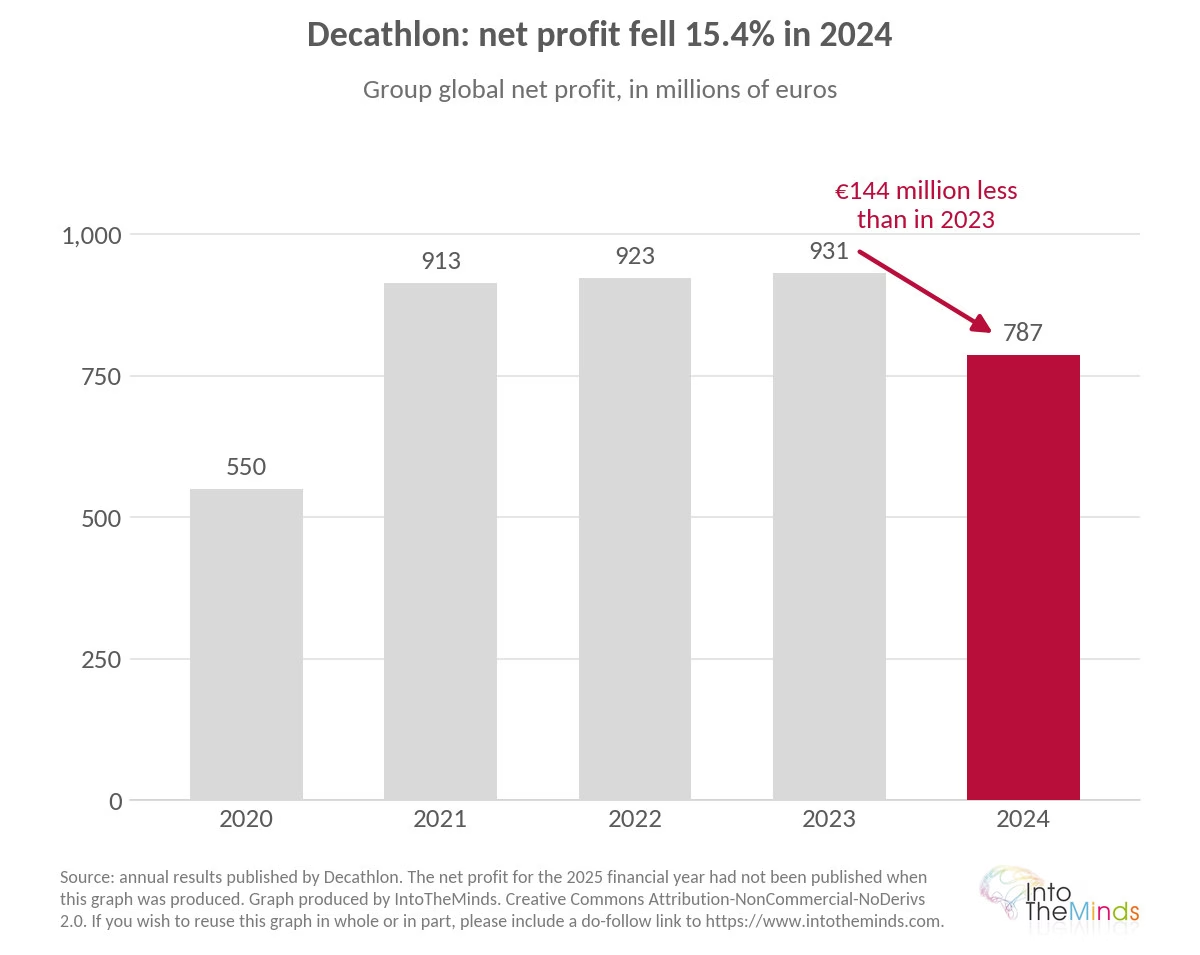
This change in marketing strategy led to heavy investments that directly weighed on the company’s financial results. Global net income fell from €931 million in 2023 to €787 million in 2024, representing a 15.4% decline.
Portfolio consolidation: reducing the number of brands
Rationalising the portfolio of private labels is one of the most structurally important aspects of Decathlon’s new strategy. The group had counted nearly 80 brands at its peak, with obvious overlaps. The offering has been reorganised around:
- Decathlon: umbrella brand and private label for athletics, health, nutrition and connected products
- 9 specialist brands by category: Btwin (mobility), Quechua (mountains), Rockrider (outdoor cycling), Domyos (fitness), Tribord (water sports), Kuikma (racket sports), Kipsta (team sports), Inesis (golf and precision sports), Caperlan (nature and horse riding)
- 4 expert brands by discipline: Kiprun (running), Van Rysel (road cycling), Simond (climbing and trekking), Solognac (hunting)
Six sports account for more than 50% of global revenue: running, fitness, hiking, road cycling, urban mobility and football. The offering is based on around 15,000 “super models” manufactured in factories spread across 45 countries.
2025: strategy shift and a return to accessibility
Disappointing results led to radical decisions regarding the group’s management. Barbara Martin Coppola was replaced in April 2025 by an executive who had risen through the company’s ranks and joined the business in 1999. The messaging changed radically: “sport is not a privilege; it should be accessible to everyone.” In 2025, the price of 1,000 products was reduced, with an average decline of 6 to 7% depending on the category. The Kipsta football went from €3.99 to €2.99 at the beginning of March 2026, triggering an 85% increase in unit sales over fifteen days. In France, 7,300 products are now offered for less than €10, and a further 1,070 price reductions are planned for 2026.
Decathlon’s unique business model
Decathlon’s strategy is based on a business model that few players in global retail have managed to replicate. Its effectiveness rests on three interdependent pillars: vertical integration, pricing policy and the management of distribution formats.
Vertical integration: integrated design, manufacturing and distribution
Decathlon designs more than 60% of the products sold in its stores. This control over the creative and production process enables it to
- cost every stage of manufacturing down to the minute
- reduce intermediaries
- absorb cost increases without immediately passing them on to prices.
In a world where margins are shrinking, where inflation is driving all kinds of knock-on effects (including shrinkflation), this integrated approach has become a competitive advantage. Believe me, though, when I say that adopting it required a considerable amount of courage. The figures today are dizzying. The global supply chain, as described in 2020, is based on
- approximately 120,000 containers shipped annually from Asia
- seven European continental warehouses
- 30 regional warehouses supplying 1,070 stores.
As early as 2020, the group undertook a logistics overhaul aimed at reducing its CO2 emissions by 40% over five years. This involved dividing Europe into two zones from 2022, and then into four zones in 2026, which should make it possible to reduce kilometres travelled by 25% and CO2 emissions by 25%.
Pricing strategy and evolving formats
Decathlon’s French store network illustrates the diversification of formats that has been underway since 2020. In 2024, it consisted of
- 265 traditional stores
- 27 Essentiels stores
- 9 City stores
- 5 Contact stores
- 7 design centres.
The first Decathlon Running store opened in Bordeaux on May 14, 2025. It is a 150 m² retail outlet seeking to capitalise on the rapidly expanding running market.
The strategy of operating stores within third-party locations, initiated during the health crisis, has become permanent. A 1,188-square-metre space opened inside the Ikea store in Croydon, UK, in spring 2026, and a 1,000-square-metre store opened inside a Media Markt in Munich in March 2026. This model provides access to locations that would have taken four years to reach through conventional expansion.
A customer who uses Decathlon’s repair services comes back to the store 3 times more often.
The pillars of Decathlon’s strategy for tomorrow
I see three areas that will shape Decathlon’s strategy in the medium term:
- sustainability and the circular economy
- digitalisation and artificial intelligence
- investment in brand equity
I suggest looking at these three topics in greater depth below.
Sustainability and the circular economy
The circular economy has evolved from a communication argument into a genuine commercial growth driver. Here are some statistics:
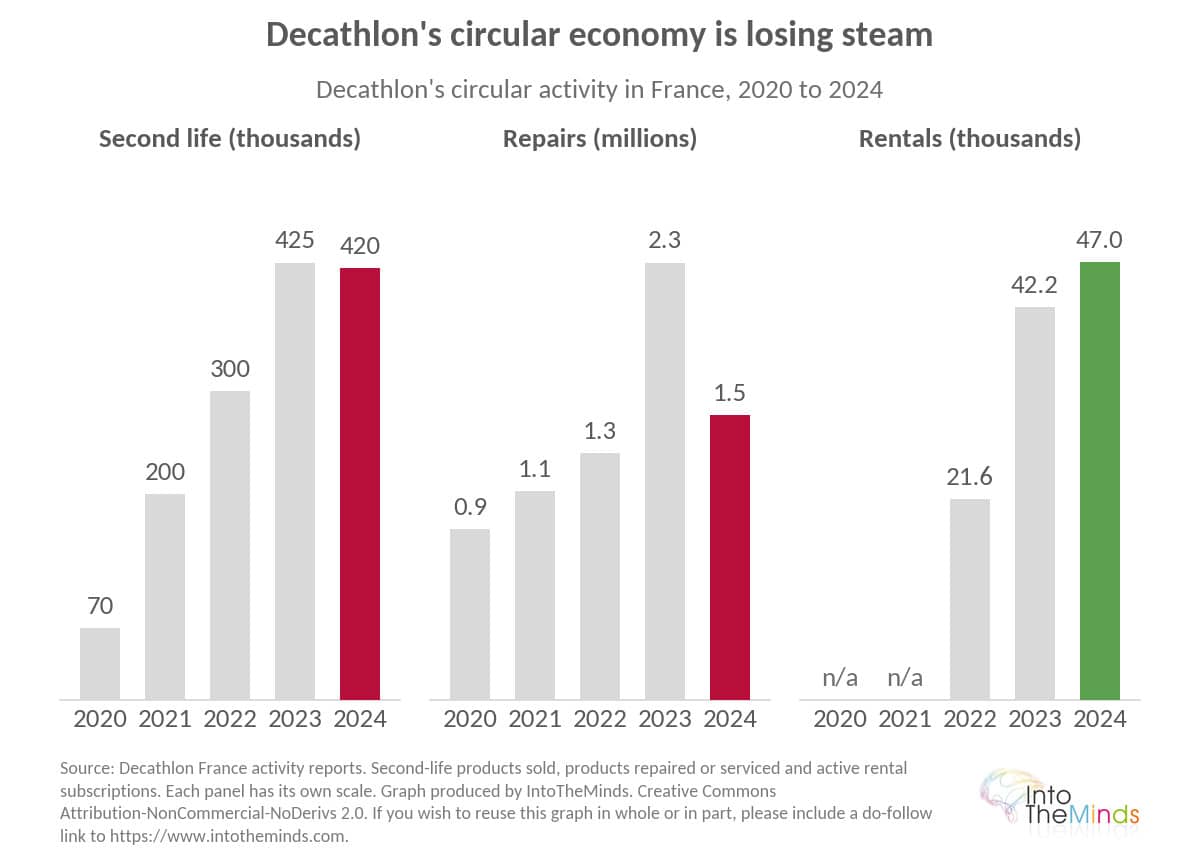
- In France, 420,000 second-life products were sold by Decathlon in 2024
- 1.5 million products were repaired in its 317 French workshops
- Worldwide, 1.35 million second-hand products were sold in 2024 across 39 countries
- 3 million products were repaired in 1,730 Decathlon workshops worldwide.
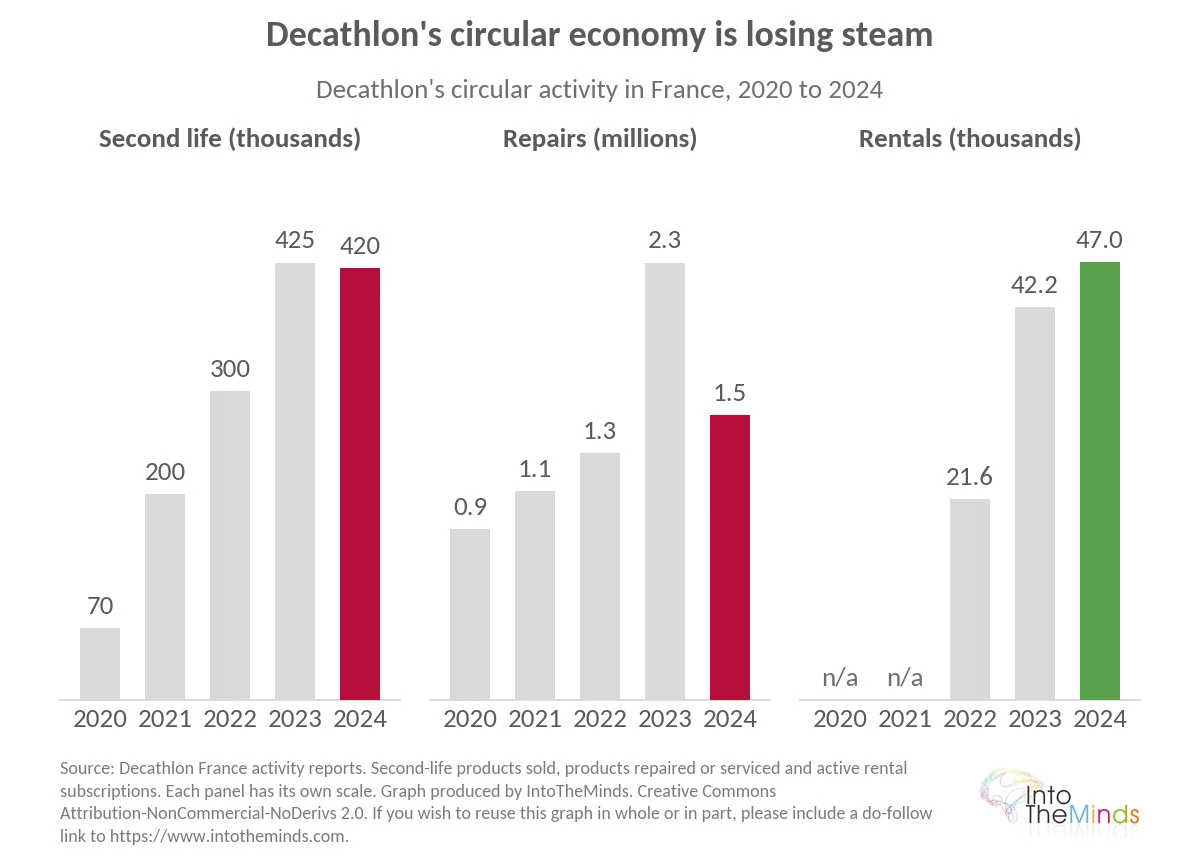
There is one figure in particular that I find especially revealing from a commercial perspective: a customer who uses repair services comes back to the store three times more often.This conviction explains a capital transaction that went relatively unnoticed. After initially acquiring a stake at the end of 2024 through its venture capital subsidiary Decathlon Pulse, as part of a €13 million funding round, the group took majority control in January 2026 of German refurbished e-bike specialist Rebike Mobility, with more than €10 million in fresh capital. Rebike generated more than €40 million in revenue in 2025 from 25,000 refurbished bikes, and is targeting 30,000 bikes and more than €50 million in revenue in 2026. The young company already operates four shop-in-shop stores within German Decathlon locations, with the aim of increasing this number to at least ten by the end of 2026, with further expansion planned in France, Belgium and Switzerland. The circular economy is thus becoming a vehicle for geographic expansion as much as an environmental commitment.
The sustainability of the model is also expressed through measurable operational commitments:
- a target of reducing CO2 emissions from the logistics chain by 40% over five years, initiated as early as 2020
- a sobriety plan launched in October 2022, which reduced electricity consumption by 12.5%, representing a saving of 26 tonnes of CO2 equivalent, and gas consumption by 42.3%, representing 78 tonnes, while increasing renewable energy produced at the sites by 2.55%
- 21% of eco-designed products in France in 2022, compared with 9% in 2021, and 60% of shoes and textiles displaying their carbon footprint.
Digitalisation and artificial intelligence as drivers of competitiveness
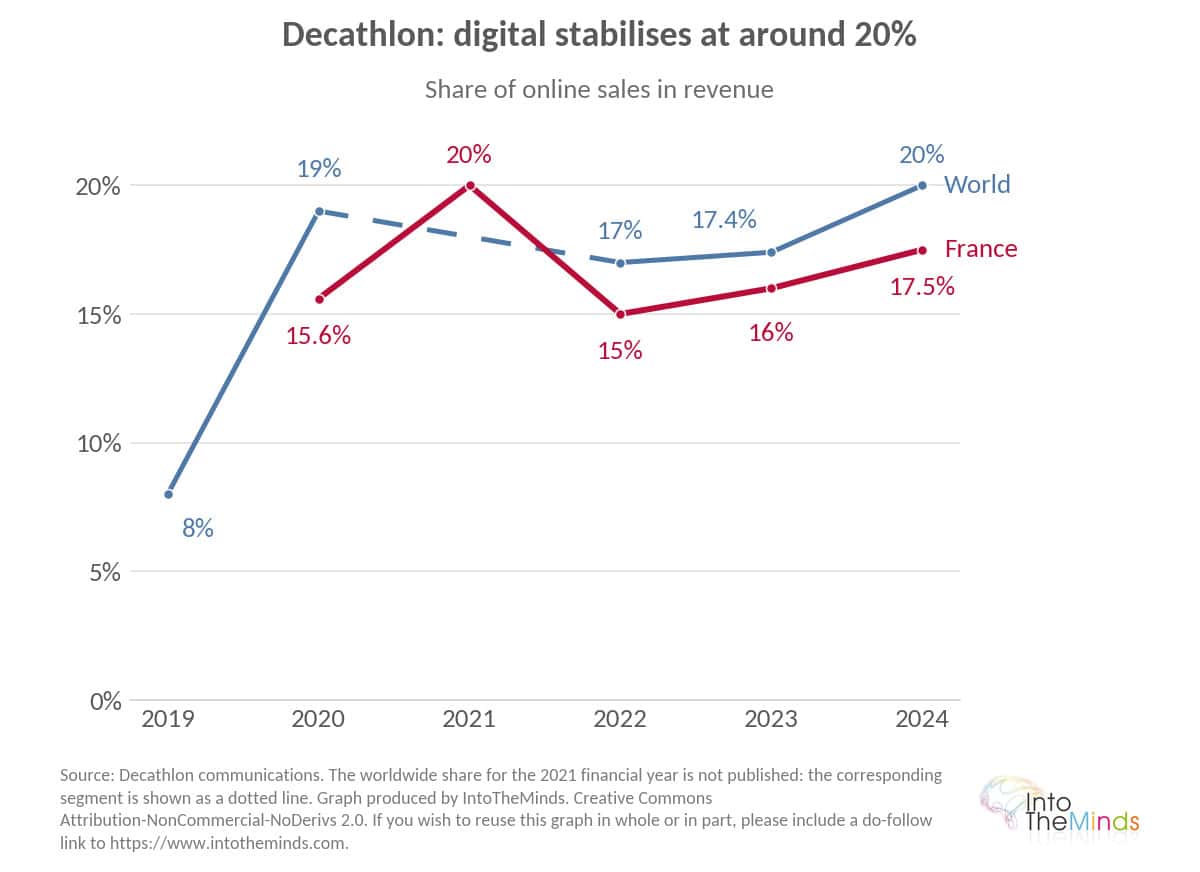
The share of digital in global revenue reached 20% in 2024, compared with 8% in 2019. In France, it stood at 17.5% in 2024, up 5.78%, compared with 16% in 2023, representing €760 million that year. The workforce dedicated to data increased sevenfold, from 70 employees in September 2020 to around 500 in 2024.
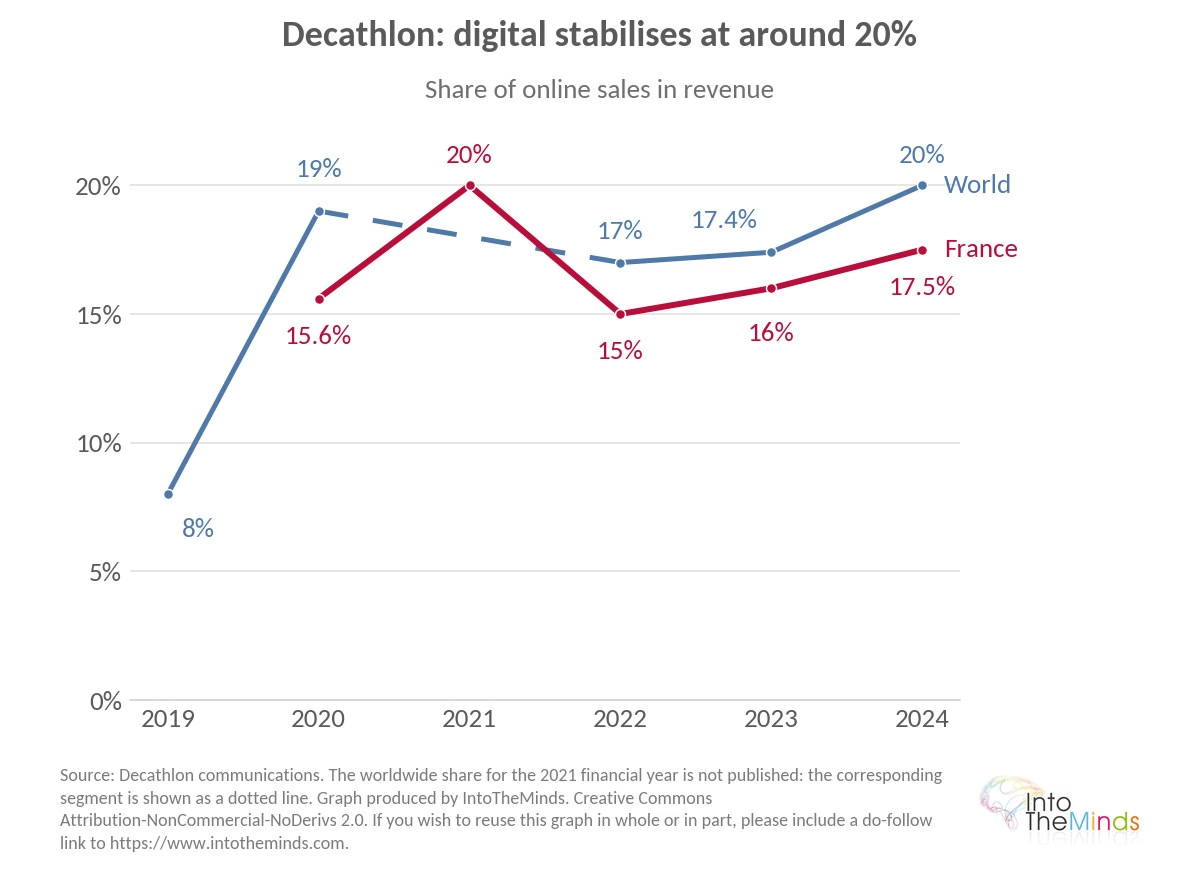
This digital shift was built through acquisitions and platformisation well before the 2024 brand overhaul. The 2019 acquisition of bicycle pure player Alltricks, which at the time generated €65 million in revenue and was targeting €80 million the following year with 250,000 products and 600 brands, gave the group e-commerce and marketplace expertise that it previously lacked. The Decathlon marketplace itself was launched in Belgium in mid-November 2020, with the aim of quadrupling the national assortment from 40,000 to 50,000 products to more than 200,000, before being rolled out in France. It is now the only channel through which Nike products are available at Decathlon following their delisting in 2018.The result in terms of audience is tangible: in the fourth quarter of 2024, Decathlon ranked 15th among the most visited e-commerce websites in France, with an average of 11,029,000 monthly unique visitors, a reach of 17.2% of the population and 722,000 daily unique visitors. It is the only sports specialist in this general ranking, in which the entire top 20 reaches 79.9% of French people.
The dynamic pricing engine, developed from September 2020 onwards, transformed price management: before its deployment, prices changed twice a year on average, compared with every two months or even every month for the most competitive products afterwards. The Visio Store service, launched on April 24, 2025, has achieved a 51% conversion rate across 1,618 appointments made since its launch. These advances are all the more critical as 42% of French 19- to 24-year-olds stated in 2026 that they systematically or most of the time use artificial intelligence to search for or compare products.
Commitment to brand equity and employer branding
The third pillar is the least quantified, but probably the most differentiating. Decathlon is the retailer whose employees report the highest level of satisfaction worldwide: a market study covering 3.2 million employee ratings from the world’s 50 largest retailers, with an average of 36,600 reviews per company, ranked the retailer first in the third quarter of 2025 with a score of 4.00 out of 5, ahead of Costco at 3.93, within an overall range of 3.02 to 4.00. 89% of employees say they are proud to work for the retailer.
This human capital is not, however, invulnerable. Internal French measures reveal the tension caused by the transformation: 92% of team members were happy in 2022, 93.9% in 2023, but only 85.5% in 2024, the year in which the group lost 1,000 employees in France in connection with its digitalisation. Attractiveness nevertheless remains massive, with 500,000 applications submitted in France in 2023.
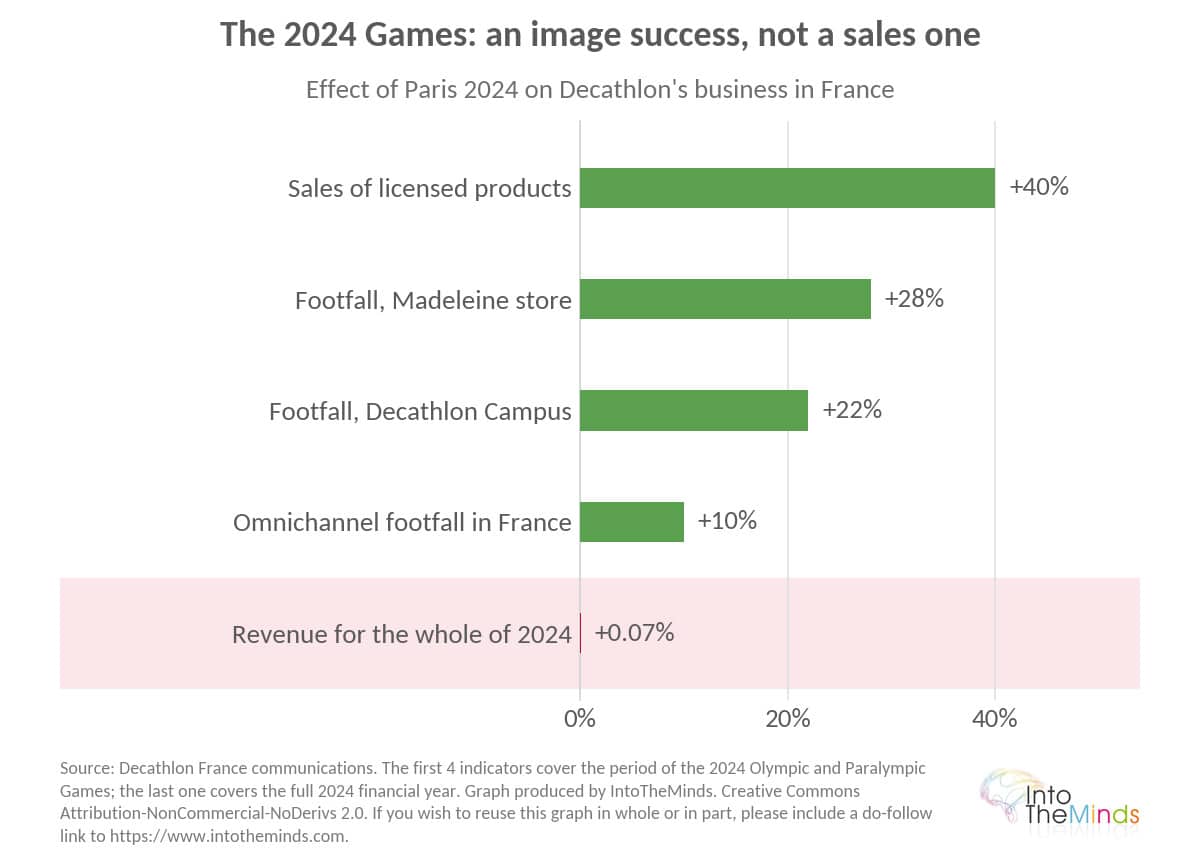
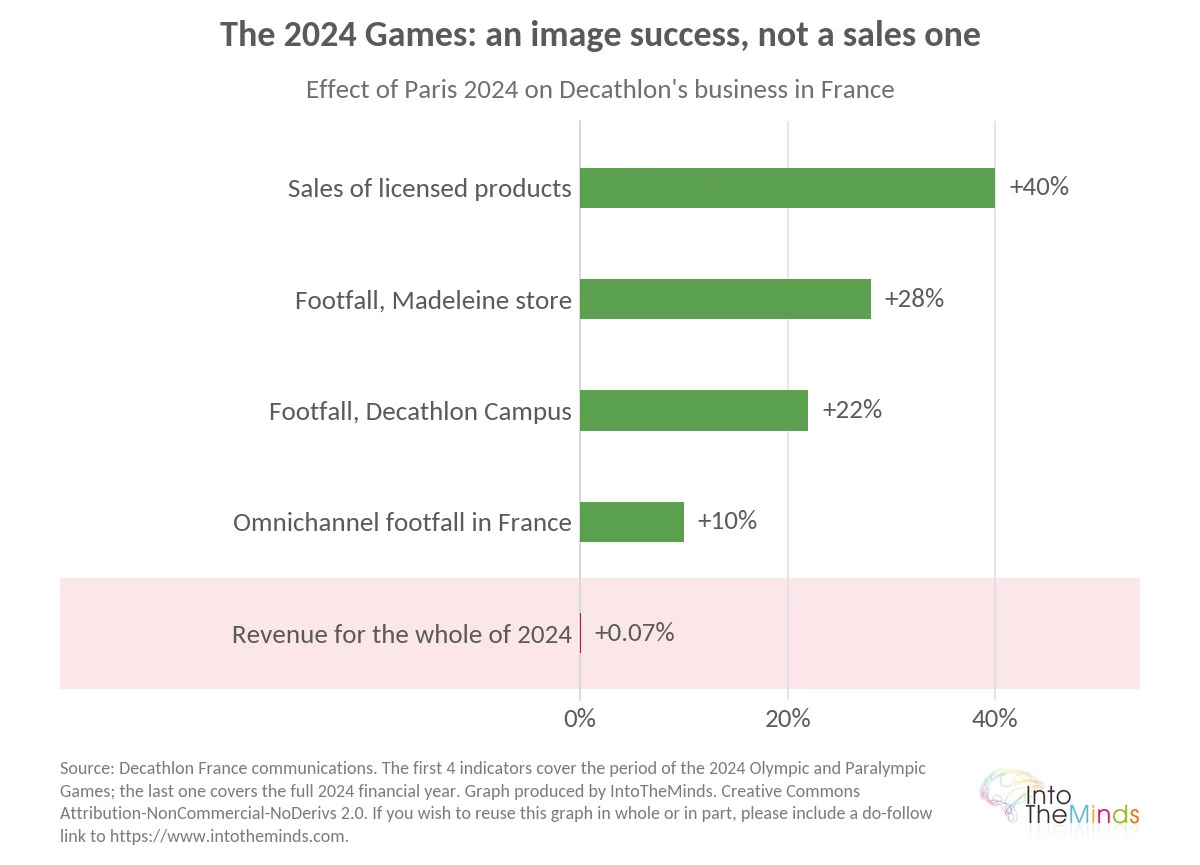
In terms of brand activation, the Paris 2024 Olympic and Paralympic Games represent a textbook case. The partnership generated a 10% increase in omnichannel traffic over the period, despite this already being a seasonal peak, a 28% increase for the Paris Madeleine store, a 40% increase in sales of licensed products, and nearly 200,000 visitors to the Decathlon Playground, with an average of 9,500 visitors per day. But this image success did not translate into commercial performance: French sales volume increased by only 0.07% over the whole of 2024. Worse still, the event provided a springboard for running specialists such as Salomon, Hoka and On to establish themselves in Paris and intensify competition in city centres. The lesson is worth considering for any advertiser: awareness does not automatically translate into revenue.
The challenges and resilience of Decathlon’s strategy
Decathlon’s strategy is unfolding in a difficult market environment. In France, the sports market declined by 0.3% in 2025 to €20 billion. In Germany, it declined by 2% in 2024 to €13.8 billion. A market study published in 2026 found that 40% of French consumers primarily make purchasing decisions based on their purchasing power, 7 percentage points more than in 2022.
Increased competition and differentiation
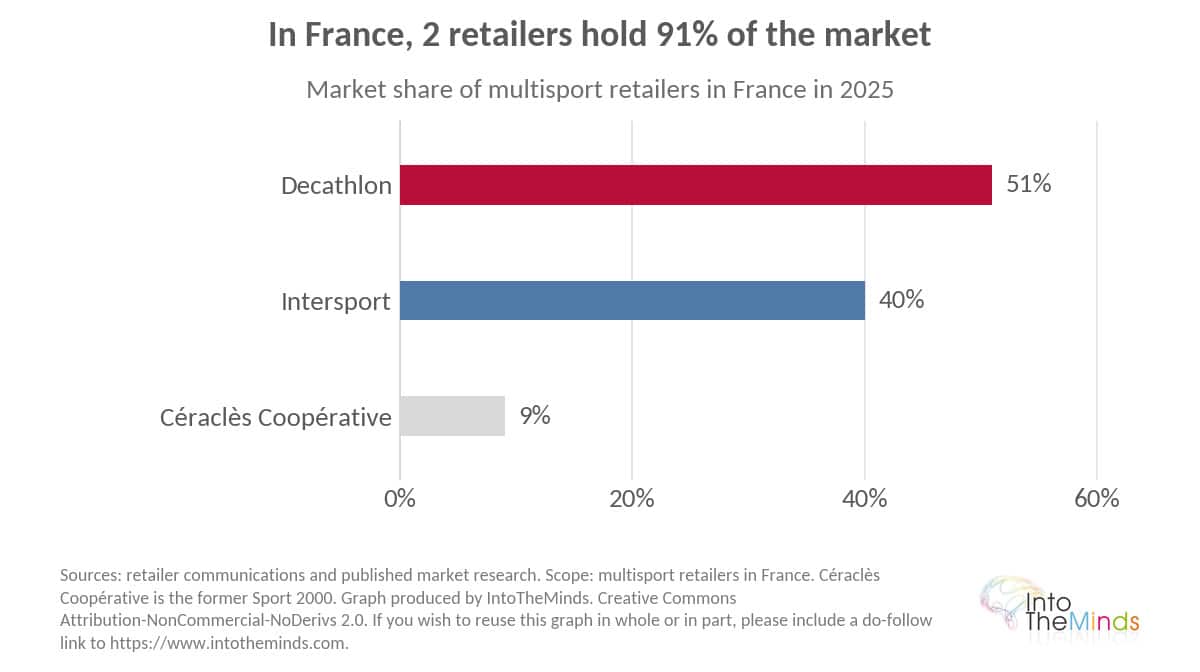
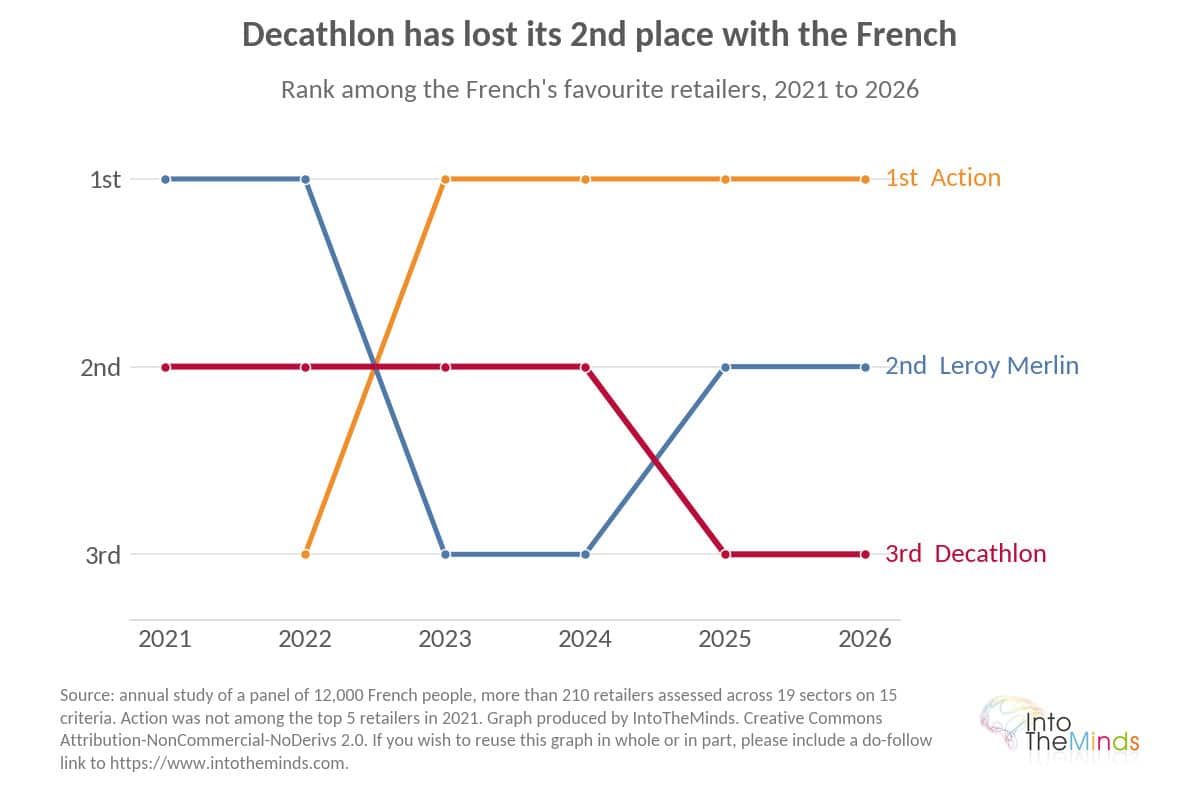
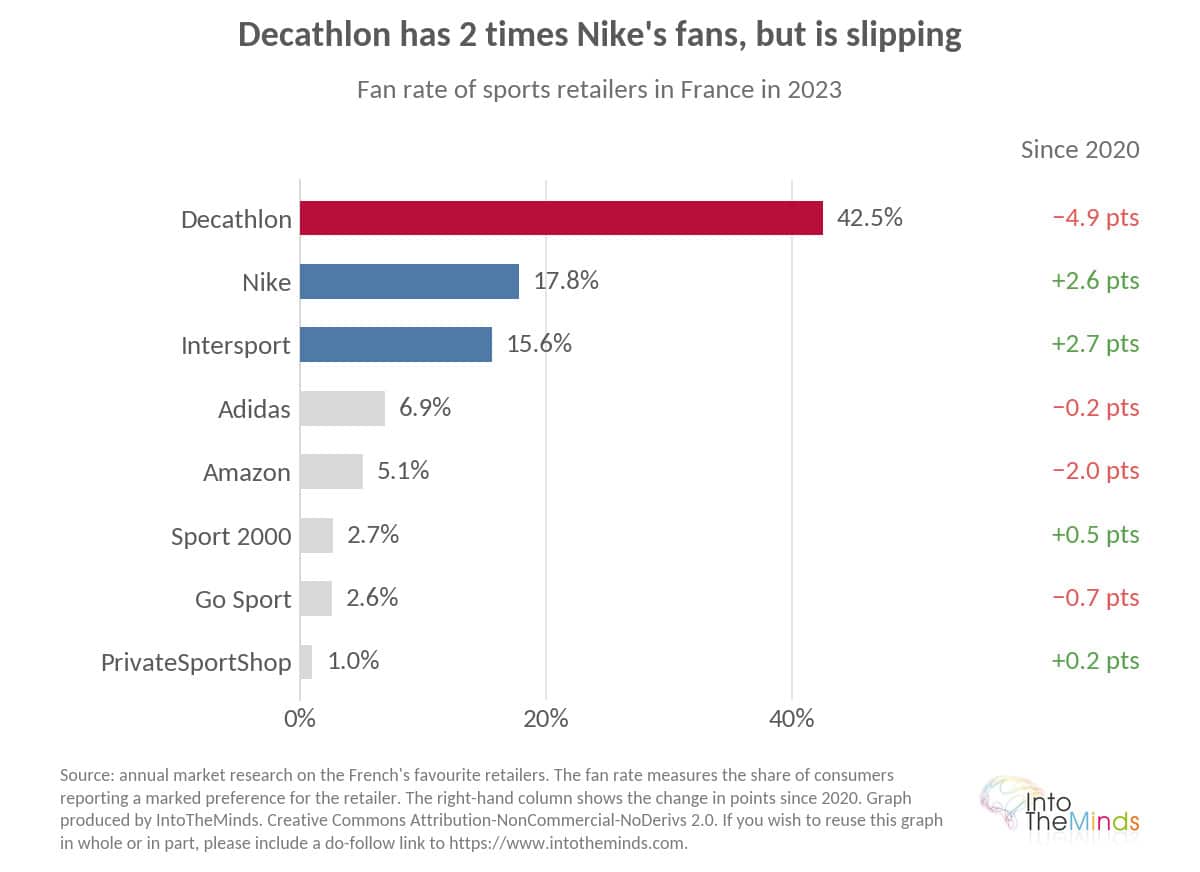
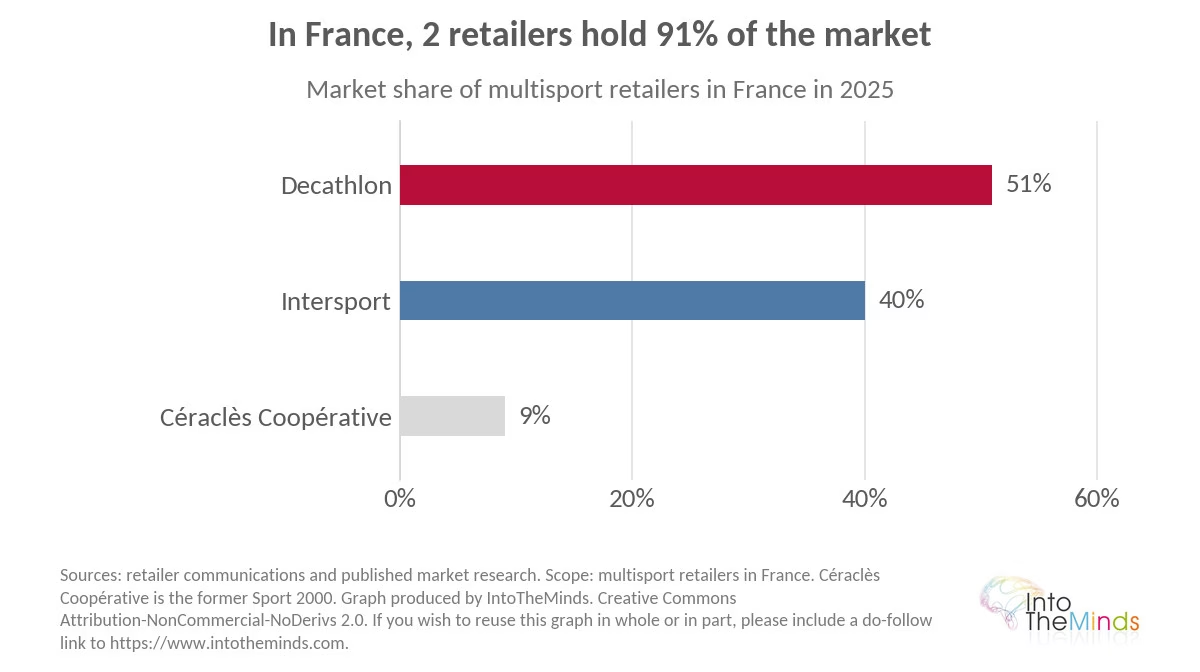
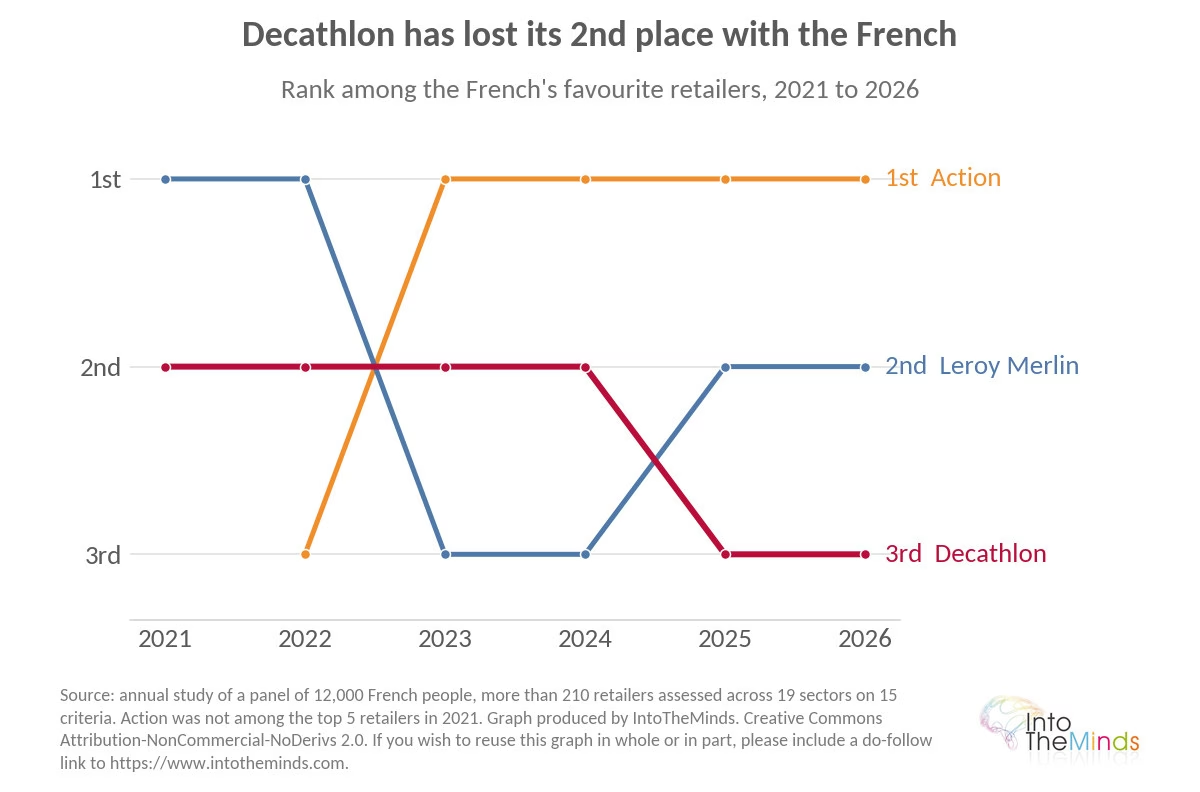
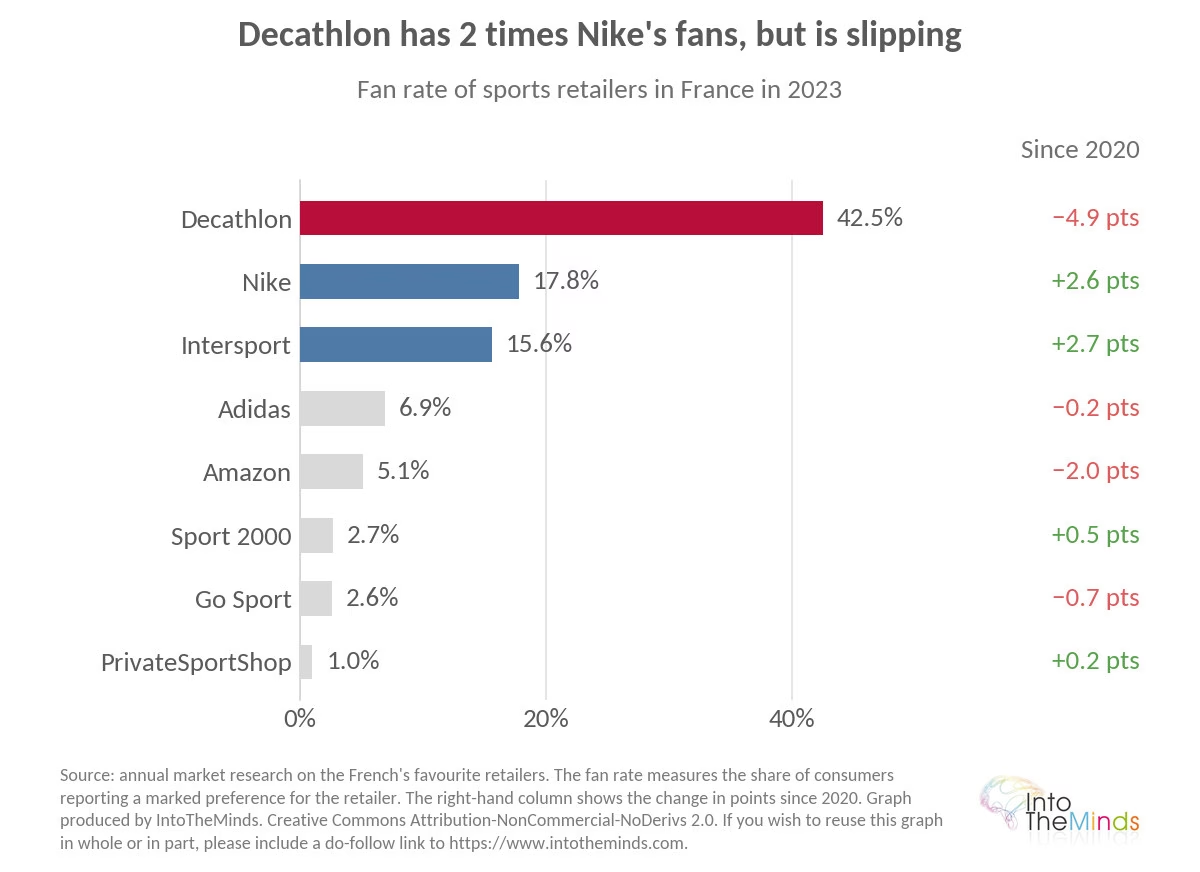
In France, Decathlon held a 51% market share among multisport retailers in 2025, ahead of Intersport at 40% and Céraclès Coopérative at 9%. But this concentration should not obscure the relative erosion: in the sports retailer ranking, Decathlon’s fan rate fell by 4.9 percentage points between 2020 and 2023, while Nike gained 2.6 points and Intersport 2.7 points over the same period. Across all sectors, Decathlon ranked as the third favourite retailer among French consumers in 2025 and 2026, behind Action and Leroy Merlin, with 36.2% of fans compared with 44.8% for Action.
Intersport’s competitive response is symmetrical: in August 2025, it launched “committed prices” and “performance entry prices”, with more than 1,000 products priced below €10 and major-brand shoes sold below the recommended retail price. Unit sales of Intersport’s products under the committed-price programme increased by 30% between August and December 2025.
The four structural tensions
Four tensions are shaping the future of Decathlon’s strategy:
- Positioning: the tension between a premium sports brand logic and an accessible retailer logic remains unresolved, and Nike is only available at Decathlon through the marketplace following its delisting in 2018.
- Geography: France, the group’s largest market, accounting for 24.5% of group revenue in 2024, offers declining room for further growth. Growth will come from Germany, the Iberian Peninsula, China, Asia and India, where €100 million is planned over five years.
- Formats and profitability: the expansion into city centres faces high rents, while third-party hosting partnerships fragment the brand experience.
- Regulatory competition: Decathlon France paid €28 million in environmental taxes in 2024, an expense that did not exist three years earlier, while Chinese platforms are expanding their sports offering without equivalent constraints.

FAQ: The questions you may have
What is Decathlon’s main strategy for remaining competitive in 2026?
Decathlon’s strategy in 2026 is based on a clear return to price accessibility, following an attempt to move upmarket in 2024 that weighed on profitability. The group lowered the prices of 1,000 products in 2025 and has scheduled 1,070 additional price cuts in 2026, while accelerating digitalisation with 500 data specialists and a dynamic pricing engine. The franchise model, announced in April 2026, is intended to accelerate international expansion without requiring as much capital.
How does Decathlon manage its own brands following the 2024 rationalisation?
The portfolio has been reduced from nearly 80 brands to 14, organised around Decathlon as the umbrella brand, 9 specialist brands by category (Quechua, Kipsta, Domyos, Tribord, etc.) and 4 expert brands by discipline (Kiprun, Van Rysel, Simond, Solognac). The offering is structured around 15,000 “super models” available in different sizes and colours, with a long-term objective of eliminating 10% to 15% of product references. This simplification aims to make the offering easier for customers to understand and reduce costly production duplication. A B2C market study can help measure consumer perceptions of these brands.
What role does sustainability play in Decathlon’s strategy?
Sustainability has become a fully-fledged commercial pillar rather than merely a communication commitment. In 2024, 1.35 million second-hand products were sold worldwide, and 3 million products were repaired across 1,730 workshops. Global circular-economy revenue reached €420 million in 2023, including €180 million in France, the country where this share is highest at 3.8% of national revenue. The group is also targeting a 40% reduction in CO2 emissions from its logistics chain over five years, a commitment launched as early as 2020.
How can Decathlon’s brand awareness and brand preference be measured against its competitors?
Two complementary measures are available. In the ranking of sports retailers alone, Decathlon had a 42.5% fan rate in France in 2023, more than twice that of the second-largest player, but down 4.9 percentage points since 2020. In the ranking across all sectors, the retailer ranked third among French consumers’ favourite retailers in 2026, with 36.2% of fans, behind Action (44.8%) and Leroy Merlin (40%). These two figures are therefore not directly comparable. For any company wishing to measure its own brand awareness in the sports or retail sector, IntoTheMinds offers brand awareness surveys and customer satisfaction surveys to accurately assess its position on these indicators.
What are Decathlon’s main growth markets beyond France?
Germany has been identified as the main growth opportunity, with only a 5% market share compared with 20% or more in mature markets. The group is investing up to €100 million there by 2027 and aims to have at least 150 stores. India is the subject of a €100 million investment over five years, while China and Asia have been designated as priorities in 2026. The long-term objective is to reach 2 billion people by 2035, representing 20% of the world’s population. For companies analysing their own expansion potential, IntoTheMinds conducts B2B market studies and B2C market studies to assess geographic opportunities.