In my 20 years in the franchise industry, I’ve seen many mistakes made—some of them fatal. That’s why I wanted to create a concise yet detailed guide to the steps you need to take to stack the odds in your favor.

I have been denouncing for years the lack of preparation among entrepreneurs who launch without a solid project and, in 90% of cases, without a market study. My visit to the franchise fair convinced me of one thing: creating a franchise provides a framework that increases the chances of success. Of course, there are costs. But which is better? Paying to increase your chances of success, or going in without a safety net and losing everything?
In this guide to creating a franchise, I have compiled all my knowledge on the subject to help you get started. Most franchises offer essential businesses, immune to AI disruption. Eating, repairing, sleeping, shopping… all these activities will persist, and I find that in 2026 they provide a reassuring framework for anyone wanting to start their business. I am particularly qualified to speak on franchising because I myself had a project as a franchisor. It never came to fruition, but it still allowed me to gain substantial experience, which I now use in my marketing consulting firm.
Contact IntoTheMinds for guidance
Key points to remember before getting started
- Franchising is not a shortcut to entrepreneurship – it requires as much preparation as a traditional startup
- Total investment far exceeds the entry fee – plan for at least 30% personal contribution
- Your profile must match the network culture – total autonomy does not exist in franchising
- Location remains crucial – even the best concept can fail with a poor site
- The Pre-Contractual Information Document (DIP) is your protection – never sign without analyzing it

Step 1: Analyze Your Motivations
Before diving into the colorful brochures of franchisors, I invite you to do some introspection. Why choose a franchise rather than creating your own concept? This question is not trivial. Franchising is ideal for entrepreneurs who want a structured framework, a recognized brand, and proven know-how. However, if you dream of total freedom in business choices, pricing, or communication, you may feel constrained.
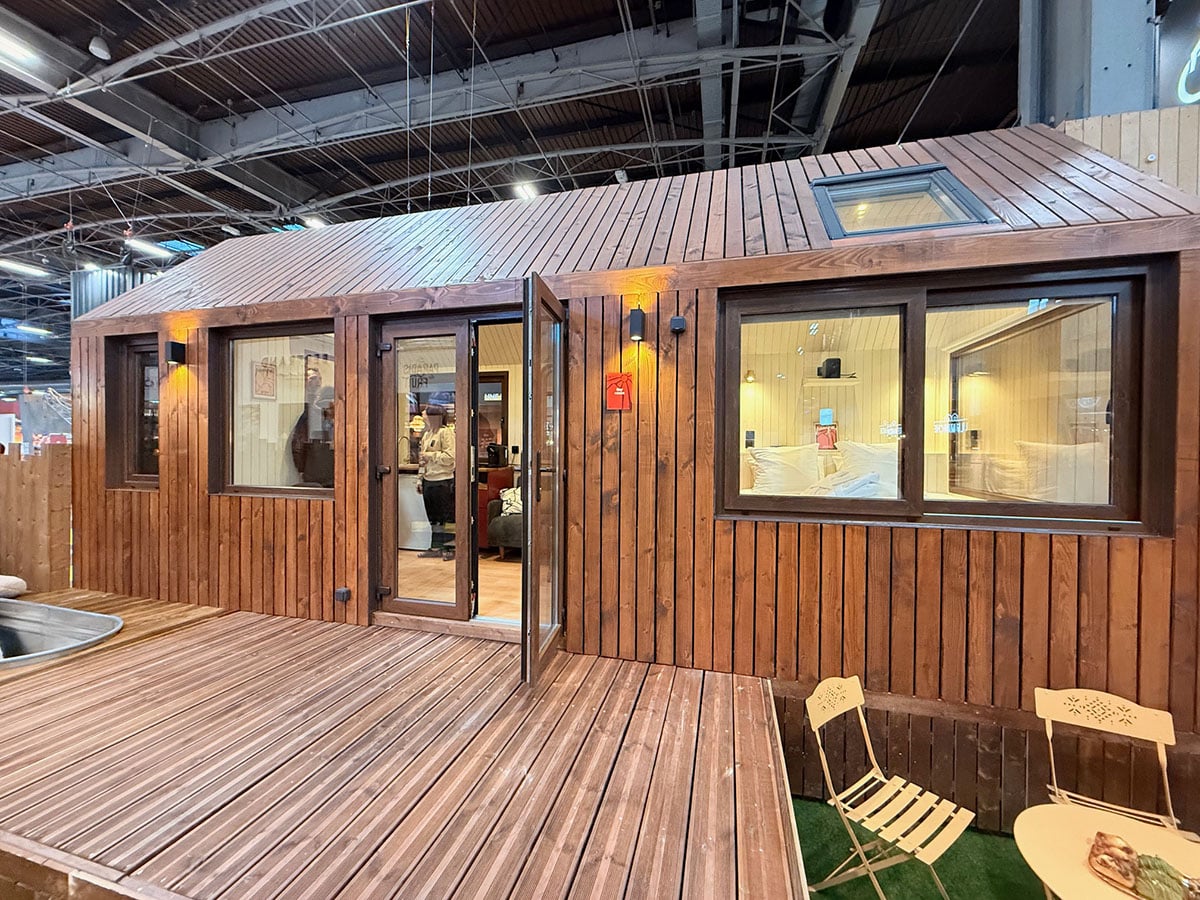
Contrary to what most people think, there are many franchise concepts. It’s not just about food. At the 2026 Franchise Fair, I spotted Pampa Lodges, a franchise based on “tiny houses”.
Joining a franchise network means agreeing to follow procedures, respect standards, and work collectively. In my opinion, franchising is very reassuring for project owners, provided the rules are respected. This requires a solid market study and business plan (as discussed below). Ultimately, the reward is business profitability and sustainability. The usual risks of failure are reduced.

Step 2: Choose According to Your Means
Not all franchise sectors have the same financial requirements or operational complexity. In France, food dominates with €31.6 billion in revenue, followed by fast food (€11.36 billion) and home equipment (€9.7 billion). But behind these figures lie very different realities. As shown in this market study, traditional restaurants are losing market share to the fast food segment.
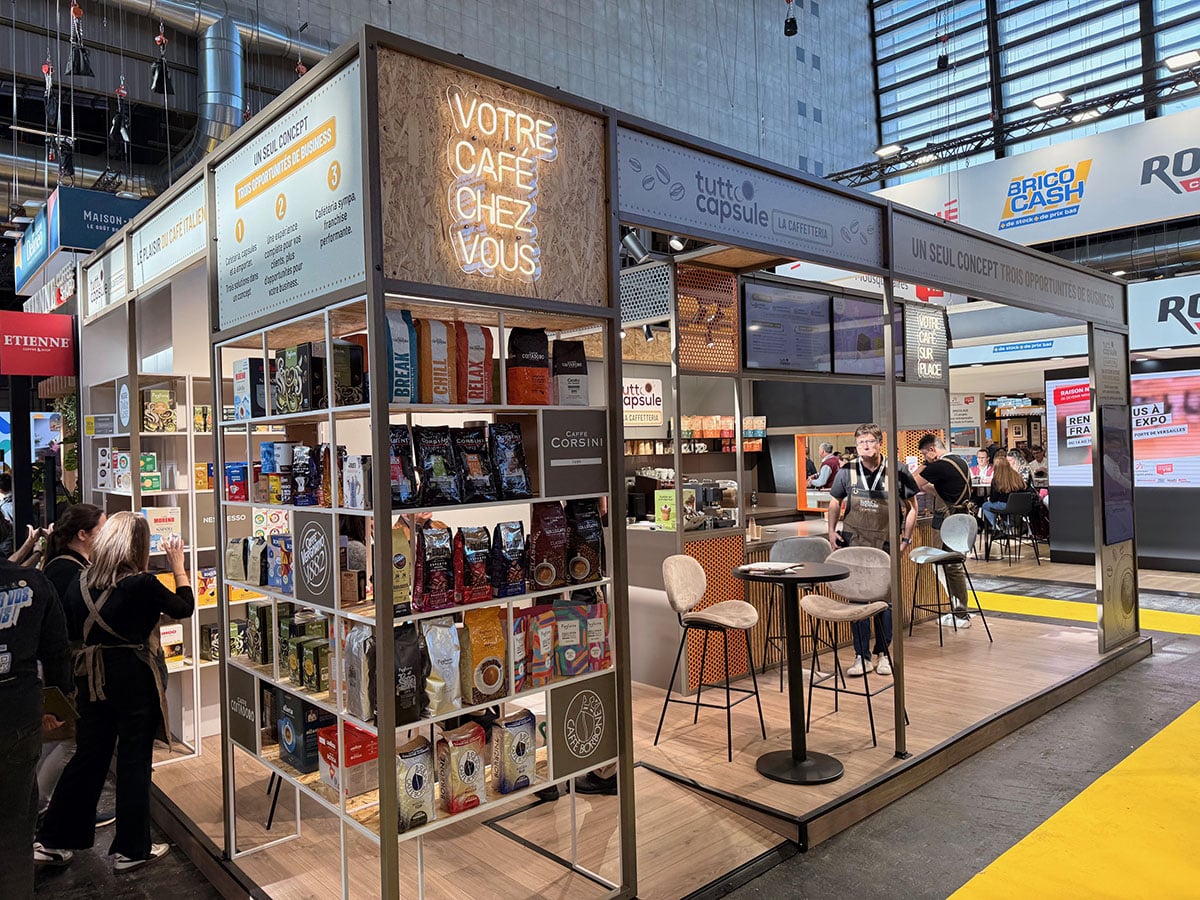
Tutto Capsule is an Italian franchise network offering 4 different formats with a very reasonable personal investment.
A fast food concept does not carry the same constraints as a specialty shop or home service. Fixed costs, staffing needs, opening hours, and capital intensity vary significantly. I recommend starting with three fundamental questions:
- What amount of personal contribution can you realistically mobilize?
- What level of risk are you willing to assume?
- What type of professional lifestyle are you seeking?
Following the 2026 Franchise Fair, I updated my comparative study of franchise costs, and as you can see below, the differences between brands are significant.
| Brand | Entry Fee | Royalties | Marketing | Personal Contribution | Investment | Break-even Time |
|---|---|---|---|---|---|---|
| Naturalia | €0 | Not disclosed | 0% | €15,000 | Not disclosed | 2 years |
| Le Kiosque à Pizzas | €0 | 0% | 0% | €30,000 | €123,900 excl. VAT | 2-3 years |
| Tutto Capsule | €10,000 | 3% | Not disclosed | Not disclosed | €25,000–60,000 | Not disclosed |
| Homebox | €20,000 | 7% | 3% | €100,000 | €220/m² excl. VAT | 18–24 months |
| Moustache | €25,000 | 5% on purchases | Not disclosed | €25,000–30,000 | €500/m² renovation | 365 days |
| Enjoy Tacos | €25,000 excl. VAT | 5% | 2% | €50,000 | €150,000 excl. VAT | Not disclosed |
| Lounge Car | €25,000 excl. VAT | 3.9% | €300 excl. VAT/month | Not disclosed | Not disclosed | Not disclosed |
| Picard | €25,000 | 2.5% | Not disclosed | €100,000 | From €380,000 renovation | Not disclosed |
| Mersea | €30,000 | 4% | 1% | €80,000 | Not disclosed | Not disclosed |
| My Beers | €30,000 | 3.5% | 1% | €130,000 | €530,000 | Not disclosed |
| Doppio Malto | €52,000 | 5% | 2% | €200,000 | €2,500/m² | Not disclosed |
| Pokawa | €35,000 excl. VAT | 6% | 2% | Not disclosed | €2,300–2,500 excl. VAT/m² | Not disclosed |
| Pitaya | €35,000 + €15,000 training | 6% | 2% | €150,000–250,000 | Not disclosed | Not disclosed |
| Matsuri | €40,000 excl. VAT | 7% | 2% | Not disclosed | €650,000 | Not disclosed |
| Au Bureau | €45,000 + €15,000 training | 5% | 1% | €300,000 | Not disclosed | Not disclosed |
| Hippopotamus | €45,000 + €15,000 training | 5% | 1% | €300,000 | Not disclosed | Not disclosed |
| Léon | €45,000 + €15,000 training | 5% | 1% | €300,000 | Not disclosed | Not disclosed |
| Volfoni | €45,000 + €15,000 training | 5% | 1% | €300,000 | Not disclosed | Not disclosed |
| Jōyō | €45,000 + €15,000 training | 5% | 2% | €300,000 | Not disclosed | Not disclosed |
| Le Paradis du Fruit | €45,000 + €15,000 training | 6% | 2% | €300,000 | Not disclosed | Not disclosed |
| Burger King | €50,000 | 9% | Not indicated | €250,000 | Not indicated | Not disclosed |
Step 3: Calculate the Total Investment
This is the most common mistake I see among franchise candidates: focusing only on the entry fee. This amount, which can range from €0 to €50,000 depending on the brand, represents only part of the total investment. You also need to include store setup, initial stock, equipment, launch marketing, and especially the working capital requirement.
To give you a concrete idea, here are some examples of total investments I have recently analyzed:
| Brand | Entry Fee | Total Investment | Minimum Personal Contribution |
|---|---|---|---|
| Light Concept (Services) | €15,000 | €60,000 | €25,000 |
| Fast Food | €25,000 | €150,000 | €50,000 |
| Specialty Store | €35,000 | €300,000 | €100,000 |
| Traditional Restaurant | €45,000 | €650,000 | €200,000 |
This comprehensive approach will allow you to seriously compare different opportunities and avoid unpleasant surprises.

Franchises of the Bertrand group such as “Au Bureau” require significant investments.

Step 4: Analyze royalties and their justification
Beyond the initial investment, a franchise generates recurring costs in the form of royalties. In France, these royalties usually range from 0% to 9% of revenue (see table above and my full study), often with an additional marketing contribution of 1% to 3%.
The question is not only how much you will pay, but also what this payment funds. A 7% royalty may be justified if it covers quality network management, effective management tools, continuous training, and real commercial support. Conversely, a 3% royalty can be excessive if the franchisor leaves you on your own in difficult situations.
My advice: choose a franchisor with experience and a well-established network. Personally, I would avoid signing with a brand that is still in its early stages as a franchisor. You might bear the consequences.

Step 5: Check the training content
Training is the core of the franchise promise. It transforms you from a novice entrepreneur into a competent operator of the concept. I have observed considerable differences between networks: some offer 5 days of training while others provide 5 weeks of support.
A quality training program should cover the technical, commercial, and managerial aspects of your future activity. It should include a practical period in a real-life setting and provide follow-up after opening. Be wary of trainings that are too short or too theoretical—they often indicate a poorly structured network.
During the 2026 Franchise Expo, I received very positive feedback about “on-the-job” training. The best way to learn remains hands-on experience. However, remember that fieldwork is not the only task; administrative work is also important. Training should cover both aspects, especially for “new entrepreneurs.”

Step 6: Carefully read the Pre-Contractual Information Document
The DIP (Pre-Contractual Information Document) must be provided to you at least 20 days before signing the contract. This document is not an administrative formality but your primary protection tool. It contains crucial information about the network’s history, financial health, number of openings and closures, and key contractual clauses.
Pay special attention to the following: the age of the concept, the evolution of the number of outlets, contract renewal rates, and termination conditions. Do not hesitate to have this document reviewed by a business law professional, as in practice, many DIPs are just summaries of approximate information found online.

Step 7: Meet active franchisees
No brochure can replace real-life testimonials. I strongly recommend meeting several franchisees of the network, ideally in different regions and at different maturity stages. Ask them concrete questions:
- Is the reported turnover realistic?
- Is the promised support actually provided?
- Are there hidden costs?
This approach will help you detect discrepancies between the franchisor’s commercial claims and the reality experienced by operators. Often, the true strengths and weaknesses of a network are revealed at this stage.
If you are unsure about which concept to adopt, attend a trade show. Keep in mind, however, that a franchisor usually only presents their best franchisees.

Step 8: Build a realistic business plan
A business plan is not only to convince your bank—it is the tool that allows you to verify the economic coherence of your project. It should include all financial elements: initial investment, financing plan, revenue assumptions, operating costs, and ramp-up period.
Test several scenarios, including a conservative scenario. In the current context, caution is especially important as some sectors remain under pressure. In the restaurant sector, for example, 2025 data show only a 2% revenue increase in France, driven more by price increases than higher footfall.

Step 9: Analyze the location
The location can make or break your franchise project. This is particularly true for proximity concepts, restaurants, and specialized retail. A good concept can fail in a poor location, while an excellent location can compensate for certain weaknesses. See my article on the market study for a fitness center to understand the importance of location analysis.
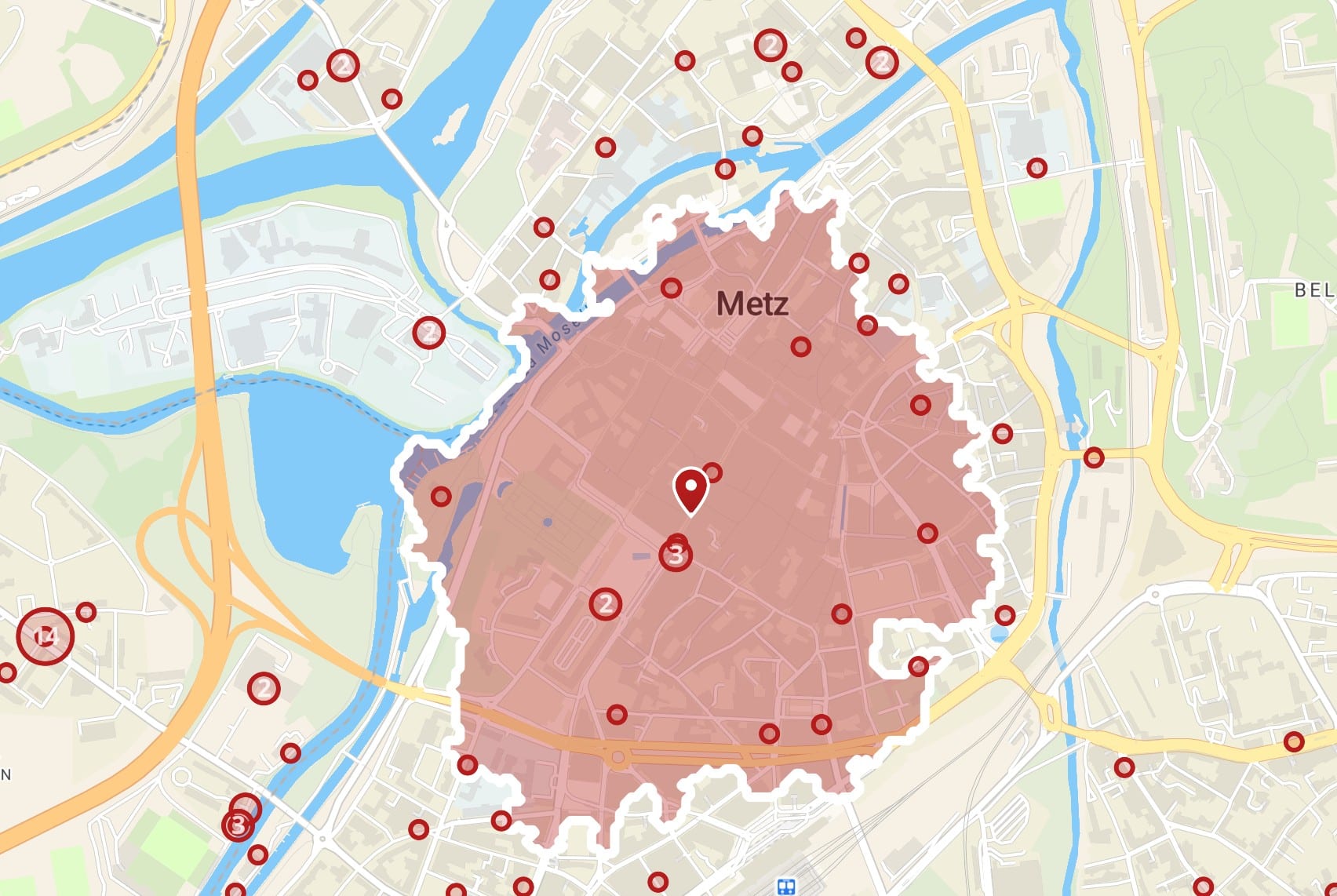
The choice of your franchise location should primarily be based on a correct definition of the trade area.
Analyze systematically the trade area, foot traffic, direct and indirect competition, visibility, and accessibility. This is called a location study. Also check the coherence between the concept and the neighborhood—a high-end restaurant will struggle in a working-class area, and vice versa.
If desired, we conduct this type of study starting from €1,500.

Step 10: Anticipate your future development
A notable trend in the sector is the rise of multi-franchising. At Franchise Expo Paris 2026, organizers highlighted growing interest in profiles capable of managing multiple units. This trend changes the game for newcomers.
Even if you start with a single outlet, consider expansion possibilities now. Some networks now favor candidates with a medium-term growth vision, as they better understand the model’s challenges and create more synergies.

Frequently Asked Questions about Starting a Franchise
What is the minimum amount to open a franchise?
There is no universal minimum amount. Personal contribution ranges from €15,000 for some service concepts to over €300,000 for high-end restaurant brands. Generally, count about 30% of the total investment as personal contribution.
How long does it take to open a franchise?
The average timeframe is 6 to 12 months, from contract signing to opening. This includes training, site search and setup, and administrative procedures. More complex concepts may require up to 18 months.
Can franchise contract terms be negotiated?
Negotiation margins are usually limited on core elements (royalties, duration, territory). However, some aspects can be discussed: payment terms for the entry fee, renewal conditions, or specific clauses related to your situation.
What happens if the franchisor goes bankrupt?
Franchisor bankruptcy does not automatically close your outlet, but it can complicate operations (loss of supply, technical support, etc.). That’s why analyzing the network’s financial stability before committing is crucial.
Can a franchise be resold?
Franchise resale is generally possible, but must comply with contract terms. The franchisor often has approval rights over the buyer and may impose certain conditions (training, minimum financial contribution, etc.).