How can we explain the crisis facing Volkswagen? By the combination of three factors, which we analyze in this article. The market research firm IntoTheMinds leverages its expertise in the automotive sector to offer you a current perspective on the problems of the German automotive flagship.
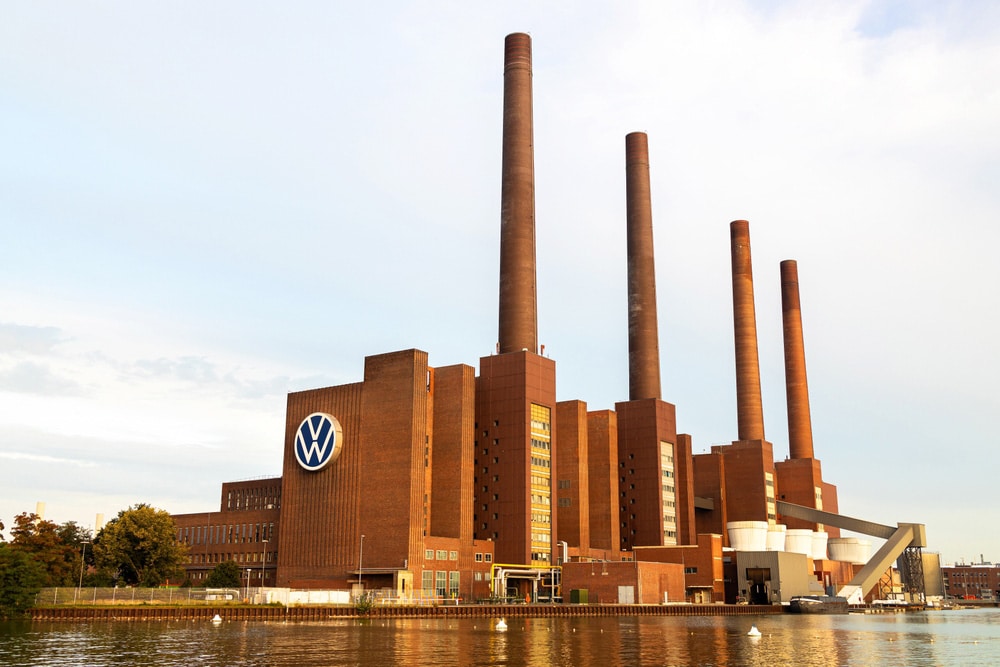
I started my career in the automotive industry. Volkswagen was the first group I worked for as a young graduate. I therefore have a particularly strong personal and emotional connection with the brands within the Volkswagen Group, and it is with great sadness that I watch the downfall of a flagship of European industry unfold before my eyes. Volkswagen is indeed going through the most severe crisis in its history since the diesel engine scandal. In just two financial years, its operating margin has fallen to its lowest level since 2015. But this crisis goes beyond Volkswagen alone: it affects the entire European automotive industry. In this analysis, I combine my expertise in the automotive sector with that of my market research firm. In this analysis, I therefore examine the origins of the crisis, its social consequences, and the outlook for the years ahead.
Contact IntoTheMinds for your market research projects
The essentials
- Volkswagen Group’s operating margin fell to 2.75% in 2025, compared with 6.99% in 2023.
- The German social plan provides for the elimination of 35,000 positions at Volkswagen AG by 2030, without compulsory redundancies.
- Operating income attributable to the Group’s Chinese joint ventures fell drastically between 2020 and 2025, under pressure from BYD, SAIC, Geely, and Changan.
- US tariffs weighed several billion euros on the Group’s accounts for the 2025 financial year.
- Renault, Mercedes-Benz, and Michelin are facing comparable pressures, although their levels of profitability differ, confirming the structural nature of the crisis affecting Europe’s automotive industry.
What is the Volkswagen crisis and how did it emerge?
Understanding the Volkswagen crisis requires looking back at the Group’s financial trajectory over more than a decade. The figures tell a precise story: revenue has remained stable, but profitability has collapsed year after year.
The roots of a structural crisis
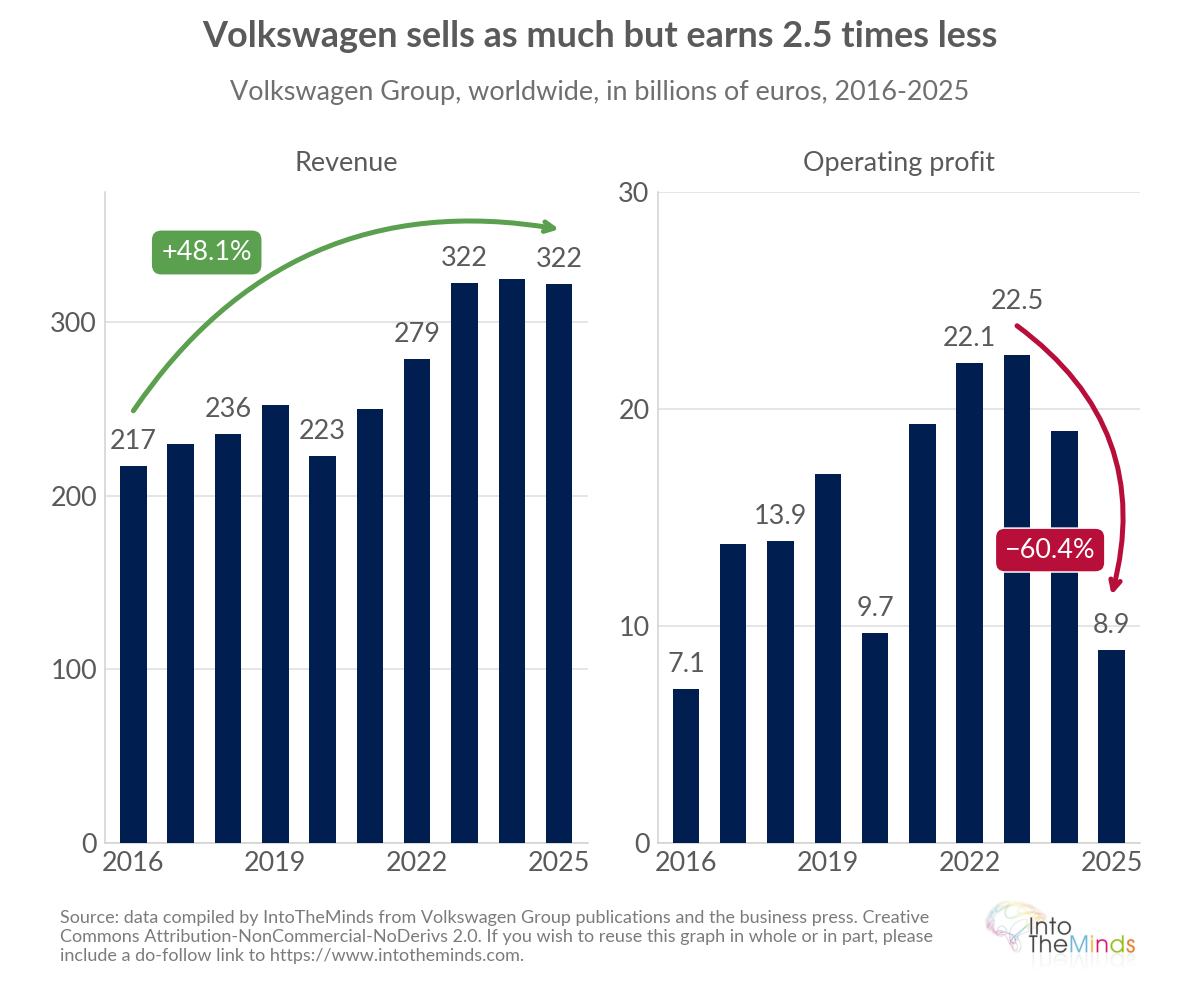
In 2023, Volkswagen reported revenue of €322.3 billion and operating profit of €22.5 billion, before reaching its record revenue the following year at €324.7 billion. Two years later, according to the 2025 annual results published by the Group, revenue remained almost unchanged at €321.9 billion, but operating profit collapsed to just €8.9 billion. The Group is therefore selling almost as many vehicles (8.98 million in 2025 compared with 9.24 million in 2023) but earning around 2.5 times less on each one. This disconnect between stable volumes and falling profitability lies at the heart of the problem.
The energy transition as a catalyst
The shift towards electric vehicles is weighing heavily on the company’s financial results. The MEB platform, currently Volkswagen’s most widely used platform, generates a significantly lower margin than internal combustion technology. Profitability is only expected with the SSP platform, whose timeline has been pushed back from 2026 to 2029 (see chart below)! The battery alone can account for up to 40% of the production cost of an electric vehicle, which explains the pricing strategy behind the €25,000 ID.2 and €20,000 ID.1, in a market where the European outlook remains uncertain. Legislators still want to make Europe a green continent. The European regulation on CO2 emissions from passenger cars imposes binding targets backed by financial penalties. In practice, however, Europeans’ purchasing power has never been under such pressure. Every year, we conduct market research for Car Pass, and we observe that the share of used cars continues to increase. It is therefore legitimate to question whether the profitability targets set for 2029 are themselves achievable.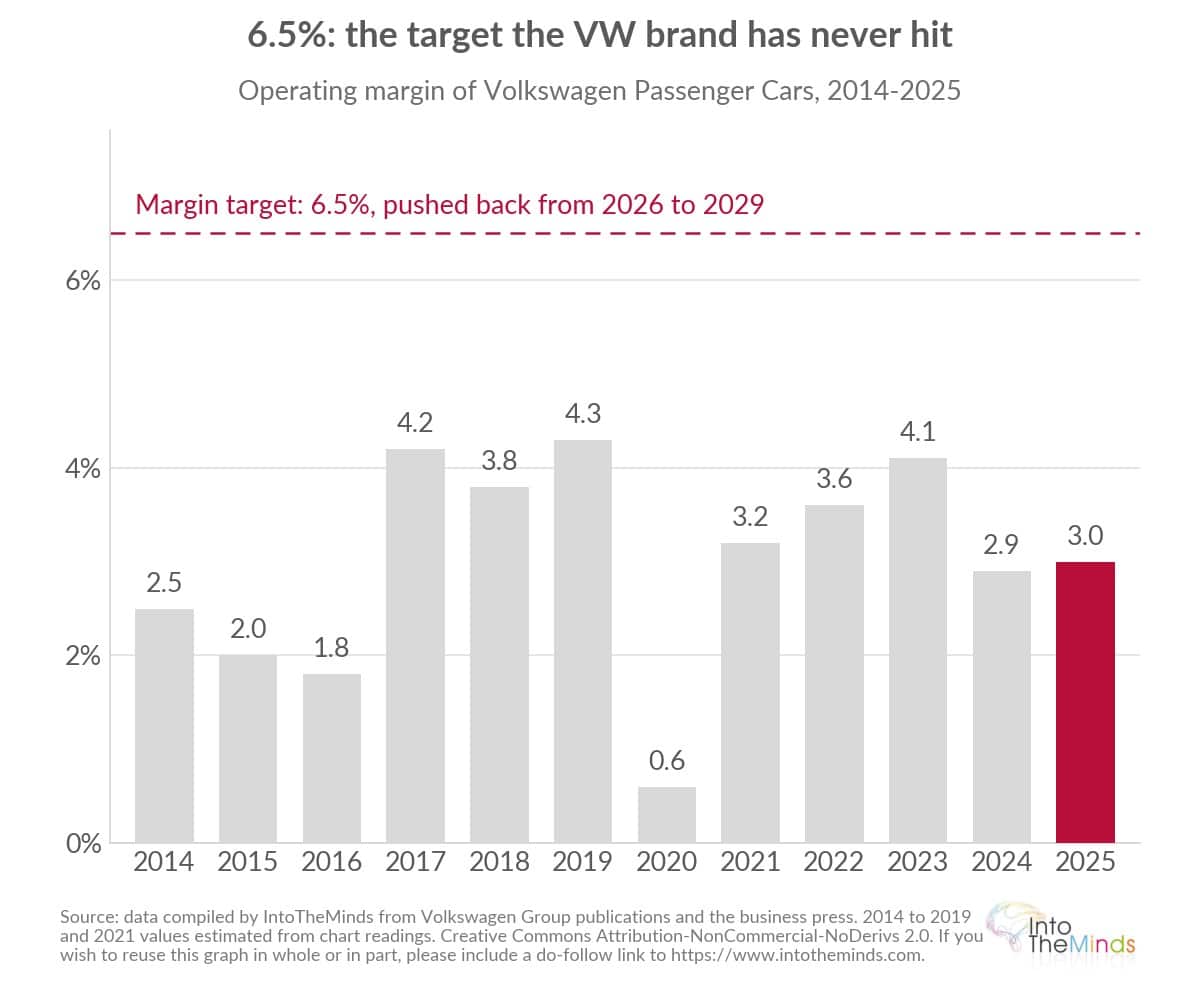
A Weakened Business Model
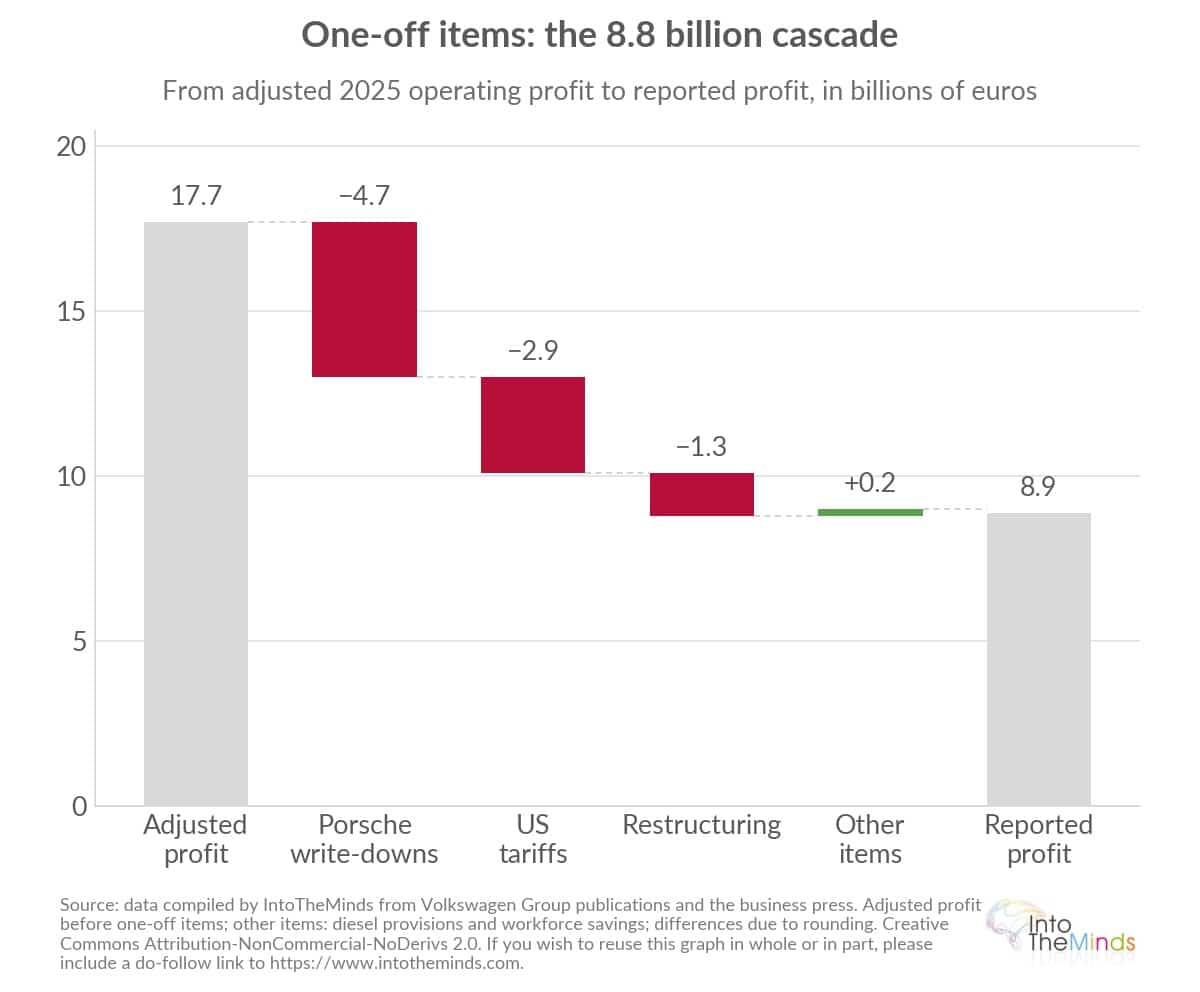
Volkswagen’s situation is also the result of exceptional provisions. In 2025, the Group generated €8.9 billion in operating profit despite €8.8 billion in net exceptional charges:
- Porsche impairments of €4.7 billion
- US tariffs of €2.9 billion
- restructuring costs of €1.3 billion
- diesel-related provisions of €0.1 billion
This was only partially offset by €0.3 billion in savings related to workforce reductions. Without these items, Volkswagen would have generated approximately €17.7 billion, representing a margin of around 5.5%. The crisis therefore reflects both an accounting correction and a genuine deterioration in business performance.
On a €40,000 car sold in 2025, Volkswagen generates only around €1,120 in operating profit.
Why is Volkswagen going through such a critical period?
Three factors explain the German automaker’s crisis:
- the loss of ground in China
- a German cost structure that has become incompatible with international competition
- the cost of electrification.
Here is how they interact.
Chinese competition: an underestimated threat
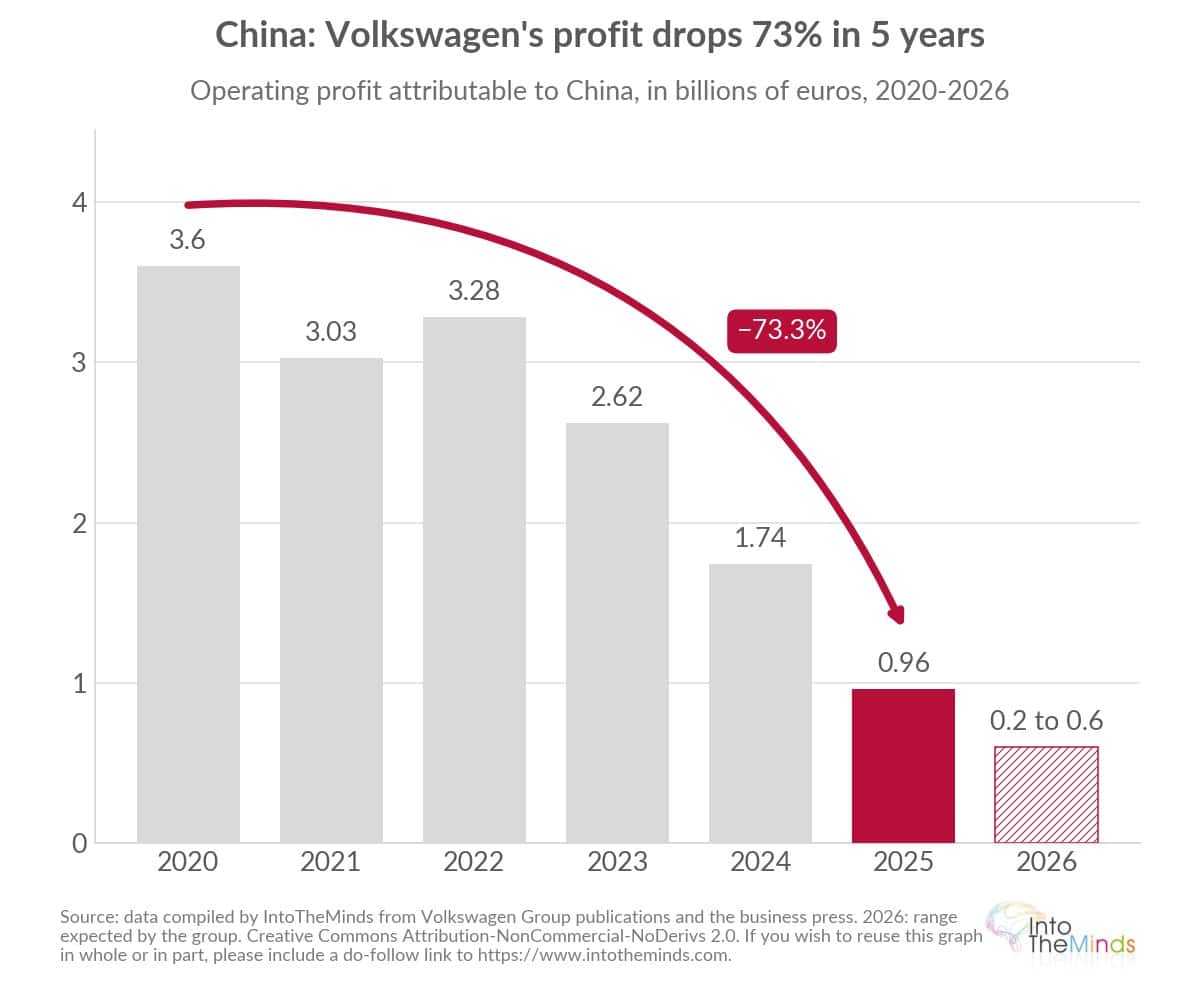
Operating profit attributable to Volkswagen’s joint ventures in China fell from €3.6 billion in 2020 to just €0.96 billion in 2025. The decline is therefore massive: -73.3%, as illustrated by the chart below.
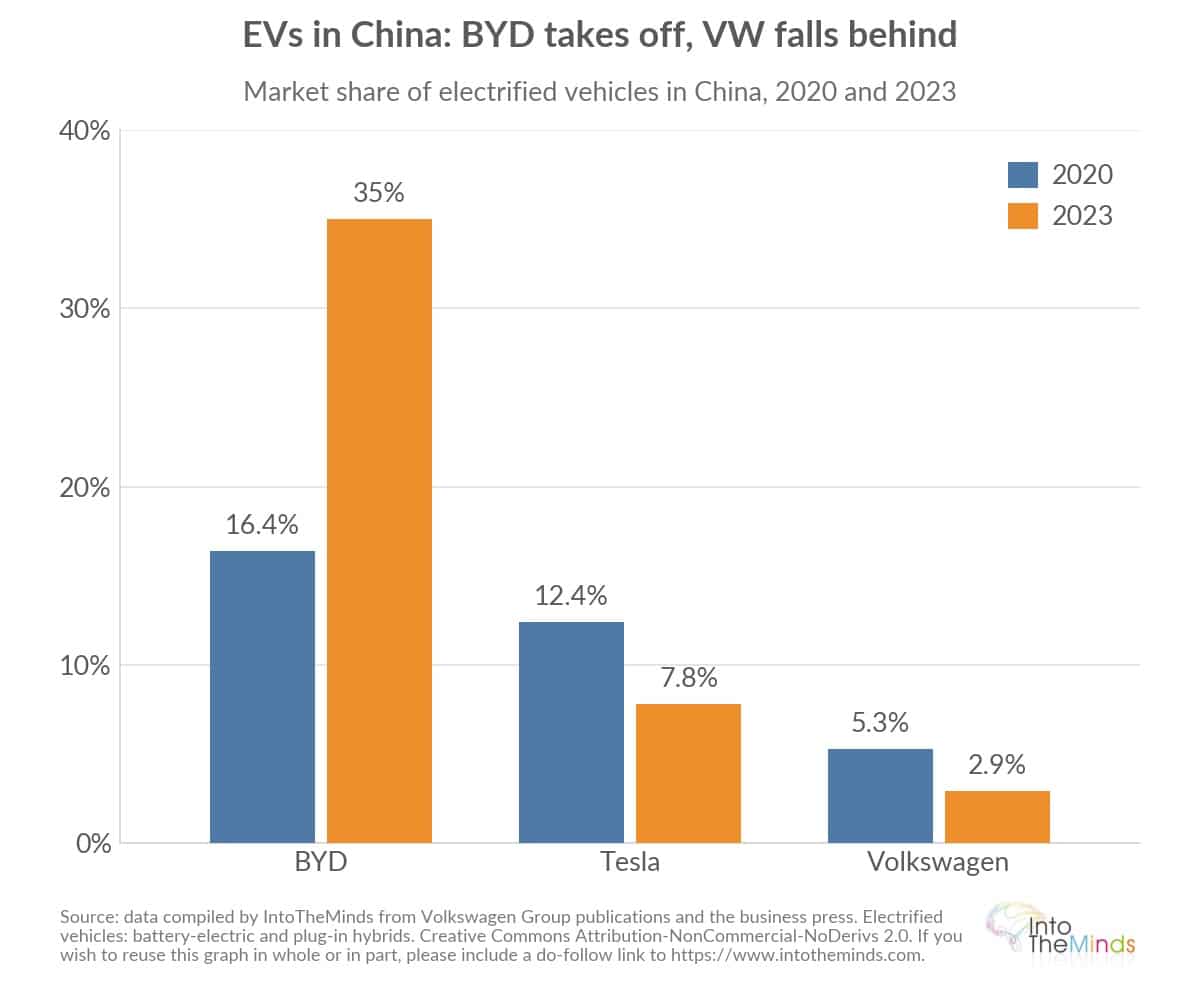
In 2024, Volkswagen delivered only 2.93 million vehicles in China, its lowest level since 2012, with the Group’s market share falling to 12.7% versus a target of 15%. In China’s electric vehicle segment, Volkswagen’s market share fell from 5.3% in 2020 to 2.9% in 2023, while BYD’s share surged from 16.4% to 35%.
 I discussed in a February 2025 analysis the Chinese nightmare facing German carmakers. Since then, the trend has intensified further. Volkswagen, Mercedes-Benz, BMW and Porsche have all recorded significant declines in this market. Faced with this competition, Volkswagen has shifted part of its development work to China, where its teams can design a vehicle in 30 months compared with around 50 months in Wolfsburg, at a cost 40% lower.
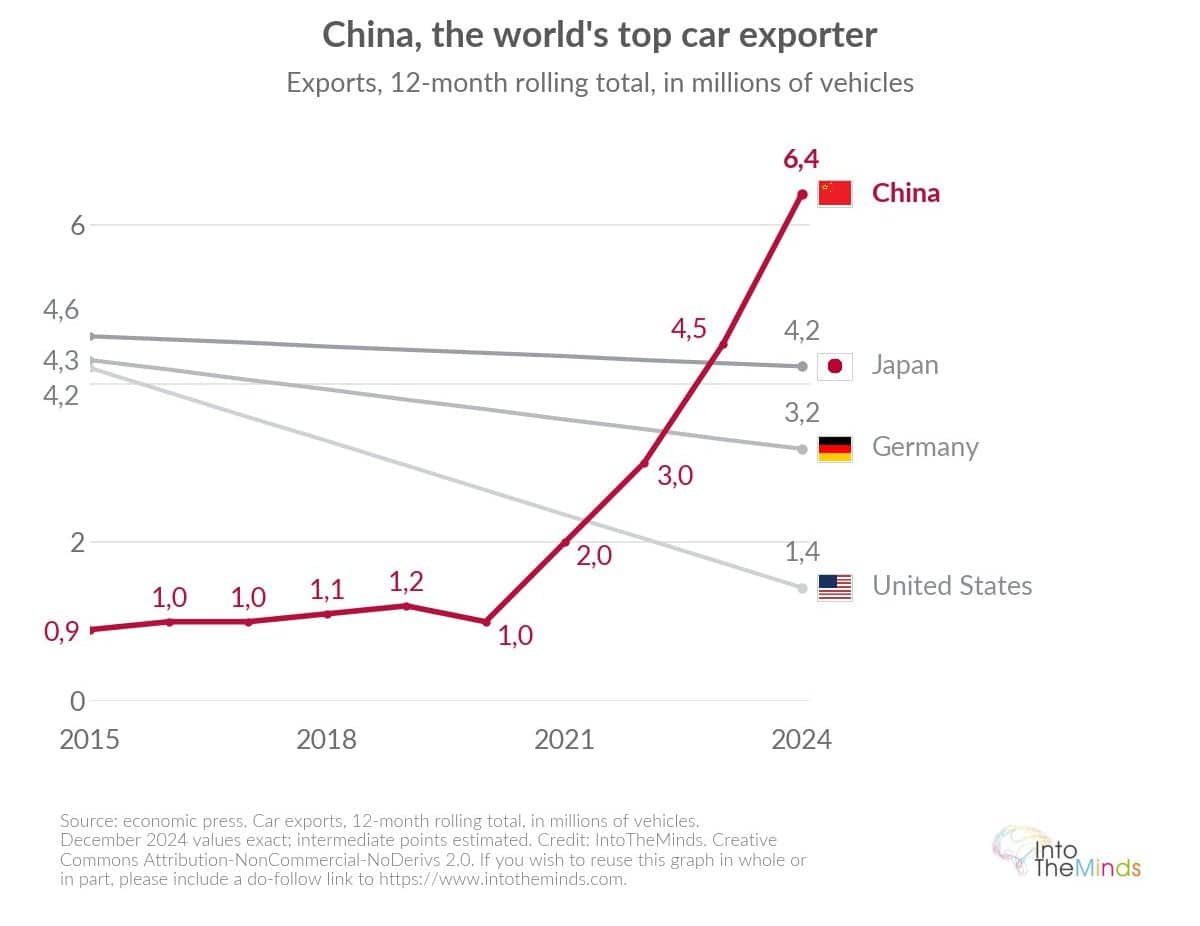
At the same time, Chinese carmakers have grown spectacularly (the Chery Group, with its Jaecoo and Omoda brands, is in fact one of our clients). You only have to look at the export curve (graph below) to be convinced.
Production costs in Germany
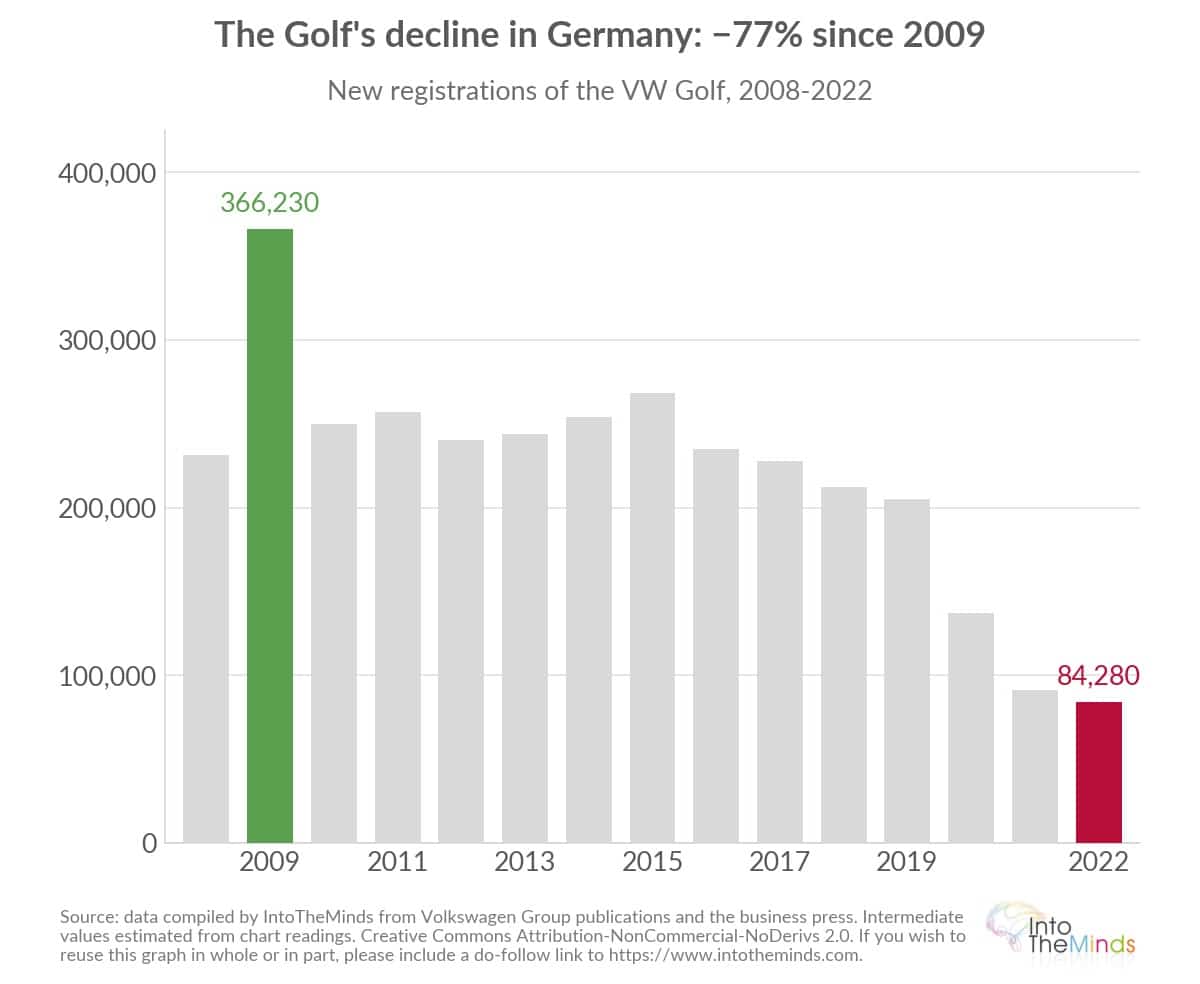
The group’s personnel costs reached €49.8 billion in 2024, while operating profit per employee stood at approximately €27,906 in the same year. Toyota, by comparison, generated €76,772 per employee in 2024. In the mass-market car segment, it is the undisputed champion (see graph below).
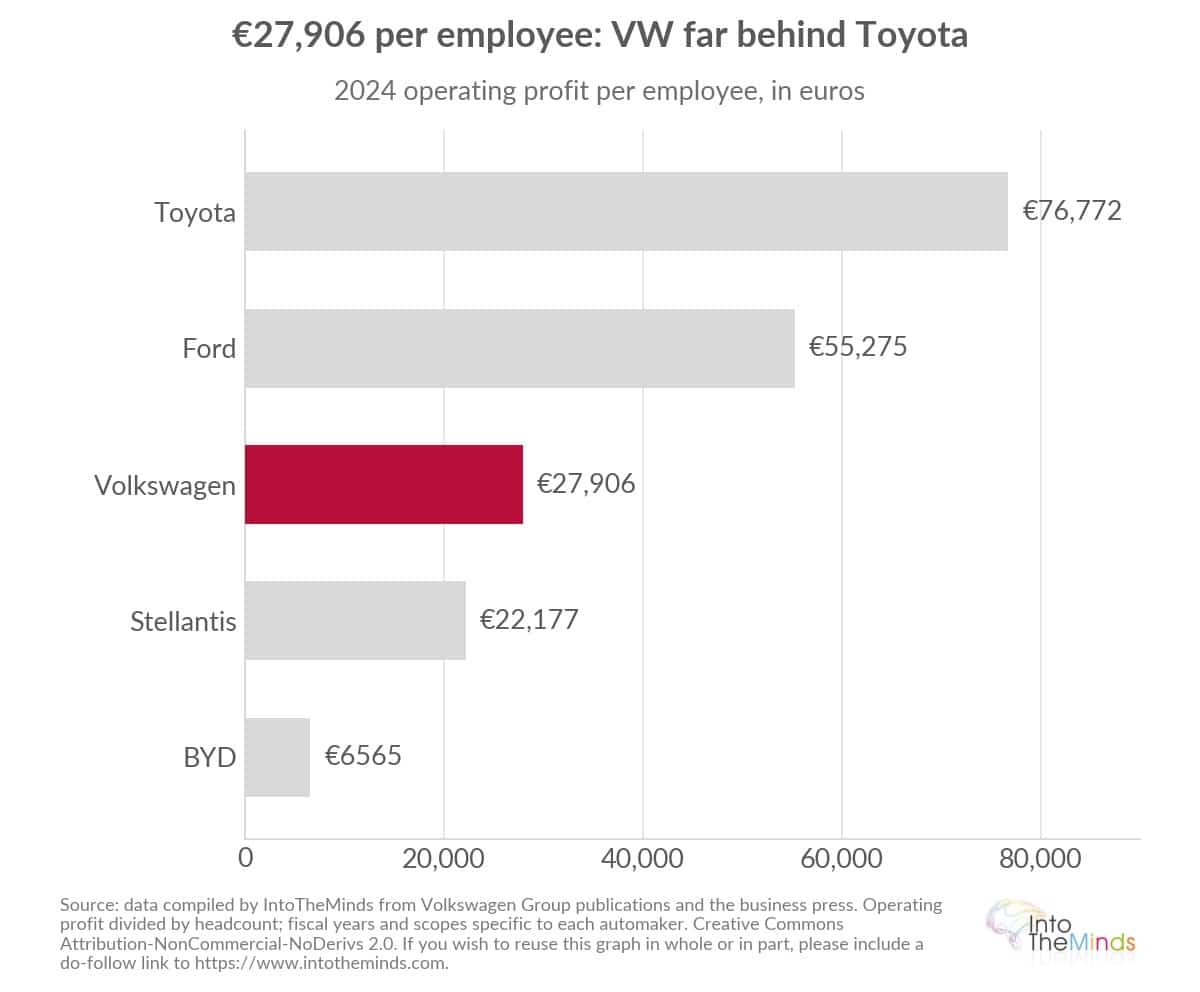
In fiscal 2023, Stellantis posted an operating margin of 12.8% with a workforce 2.4 times smaller than Volkswagen’s, while the latter was hovering around 7%. This productivity gap largely explains the pressure weighing on the group’s German plants and, more broadly, on the German automotive industry.
Electrification: a massive and risky investment
The group’s five-year investment plan has been revised downward twice. It fell from €180 billion in September 2023 to €165 billion in March 2025, and then to €160 billion at the end of 2025.
Research and development spending has now reached €21 billion per year, compared with approximately €14 billion in 2020. Two-thirds of these amounts are directed toward electrification and digitalization. The problem is that there is no guarantee of a rapid return on investment given the delayed timetable for the new platforms. Nevertheless, the bet remains consistent with the global trend described by the International Energy Agency’s Global EV Outlook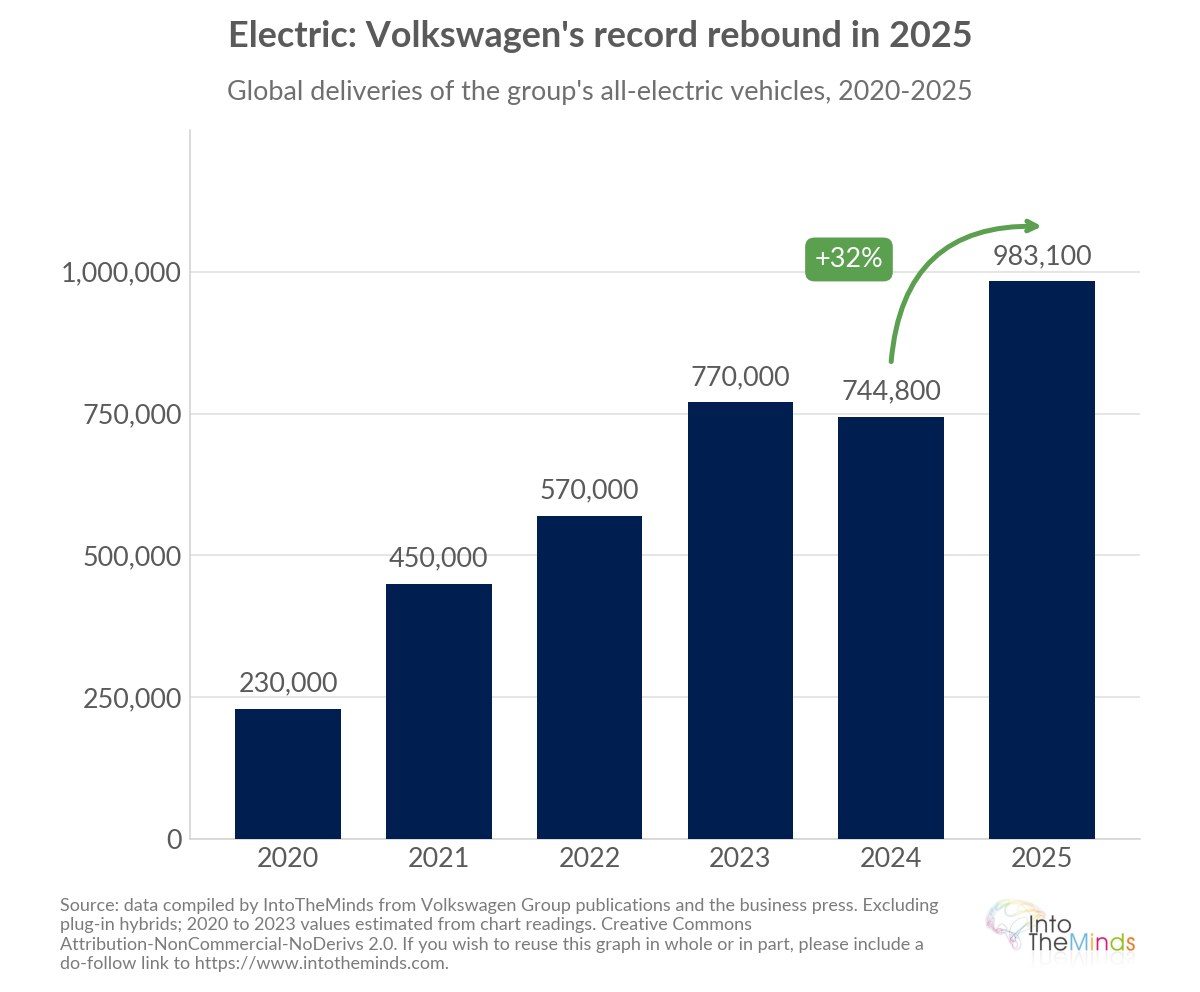
The social and economic consequences of the crisis
The group’s financial deterioration has resulted in an unprecedented workforce restructuring plan in Germany. Here are the key figures to remember regarding employment and the carmaker’s value chain.
50,000 jobs to be cut by 2030
The agreement reached in late December 2024 with the IG Metall trade union provides for the elimination of 35,000 jobs in Germany by 2030. The breakdown published in March 2026 brings the total to 50,000 positions across all the group’s brands, including 35,000 at Volkswagen AG itself, divided into 23,000 at the Volkswagen brand and 12,000 across commercial vehicles, components and central functions in Wolfsburg.
The measure is accompanied by a reduction in production capacity of 734,000 vehicles per year and an employment guarantee maintained until the end of 2030. Departures will primarily take place through phased early retirement, which allows employees to retain up to 95% of their previous net salary. At the beginning of 2026, more than 37,000 departures had already been contractually agreed. The associated cost-saving target amounts to approximately €15 billion.
Dependence on suppliers and subcontractors
The crisis does not stop at the gates of Volkswagen’s factories. The failure of KLS Ljubno, a Slovenian supplier of ring gears following the floods in summer 2023, disrupted several internal-combustion engine production lines for weeks. The consequence was short-time work. This is where we realize that JIT (Just In Time) has advantages but also drawbacks.
The Nexperia semiconductor crisis had similar effects on supply. This further strained logistics chains that had already been weakened by the ongoing industrial restructuring.
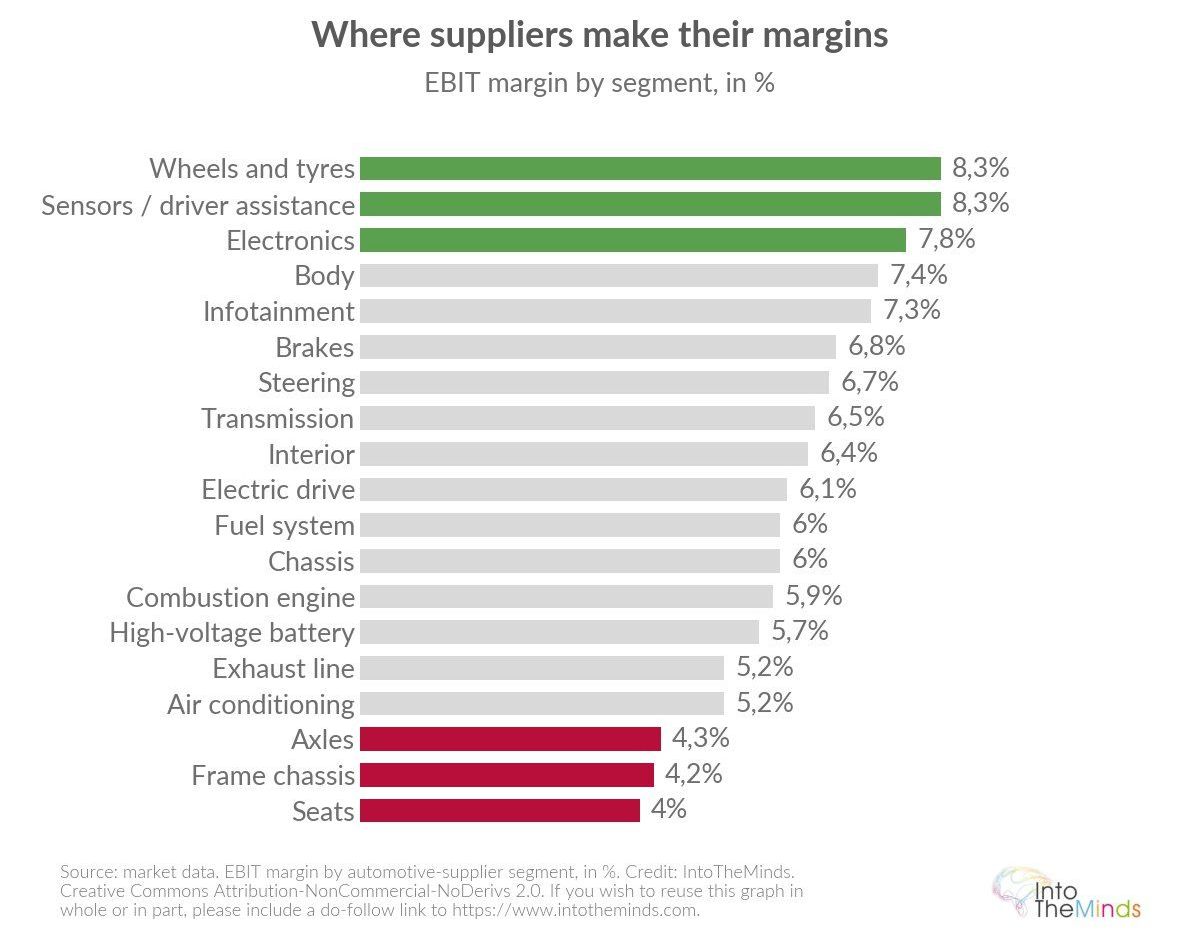
If you take a broader perspective, you will realize that the situation of suppliers to the automotive industry is also heavily influenced by Chinese competition. Chinese suppliers are targeting the European market, starting with components where margins are lowest (see graph below).
The repercussions for the European automotive ecosystem
Beyond Volkswagen, an entire network of German and European automotive suppliers is suffering from the effects of declining production. Capacity closures, hiring freezes and voluntary departure plans are spreading from one link to another along the value chain, from component suppliers to dealer networks.
The European automotive industry faces the same challenges
The situation at Volkswagen illustrates a broader crisis affecting the European automotive sector. Other major names in the automotive industry are facing similar difficulties, although their responses sometimes differ considerably.
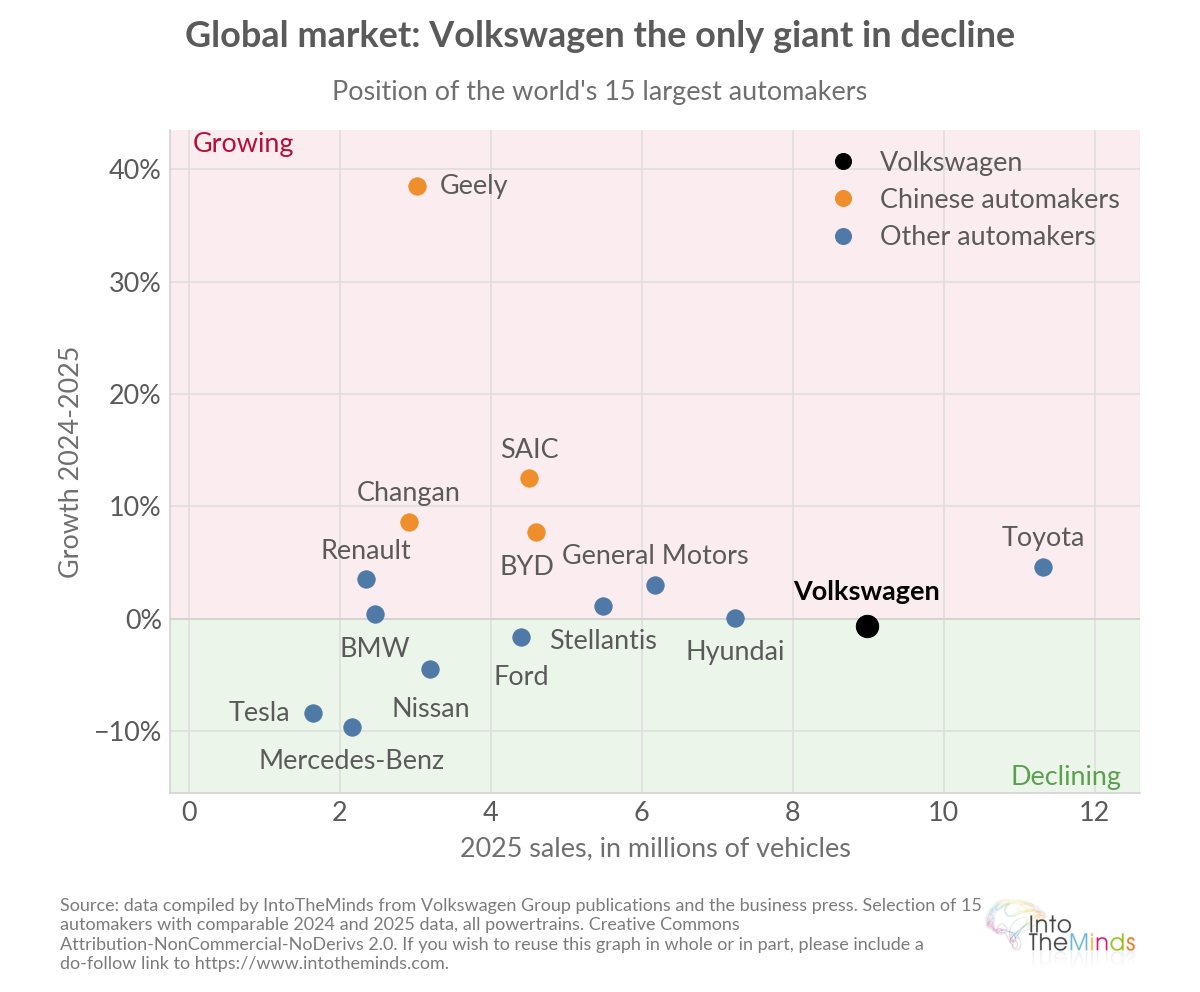
Renault, for its part, is targeting 800 departures among its 5,500 engineers based in France, representing approximately 14.5% of this workforce. Profitability levels nevertheless remain varied: in the first half of 2026, Mercedes-Benz reported a group margin of 5.4% and BMW 5.8%, compared with 3.8% for Volkswagen and 3.7% for Renault, while Stellantis and Volvo Cars stood at 1.7% and 1.6%, respectively.
Diverging strategies among carmakers
Faced with these difficulties, carmakers are not choosing the same path. Volkswagen is focusing on reducing product complexity, while Mercedes-Benz is betting on longer working hours. Michelin is closing industrial sites, while Renault is targeting a voluntary departure plan strictly limited to engineering functions. This diversity of responses reflects the absence of a single solution to a crisis whose causes — Chinese competition, German costs and the transition to electric vehicles — do not affect every group in the same way.
| Volkswagen Group indicator | 2023 | 2024 | 2025 |
|---|---|---|---|
| Revenue | €322.3 billion | €324.7 billion | €321.9 billion |
| Operating profit | €22.5 billion | €19.0 billion | €8.9 billion |
| Operating margin | 6.99% | 5.87% | 2.75% |
| Profit attributable to Chinese joint ventures | €2.62 billion | €1.74 billion | €0.96 billion |
How should Europe respond to this crisis?
The Volkswagen Group crisis has revived the debate over European industrial policy in response to China and the United States. If we had to summarize the possible approaches for the future of the automotive industry, there would be three.
The need for a European industrial policy
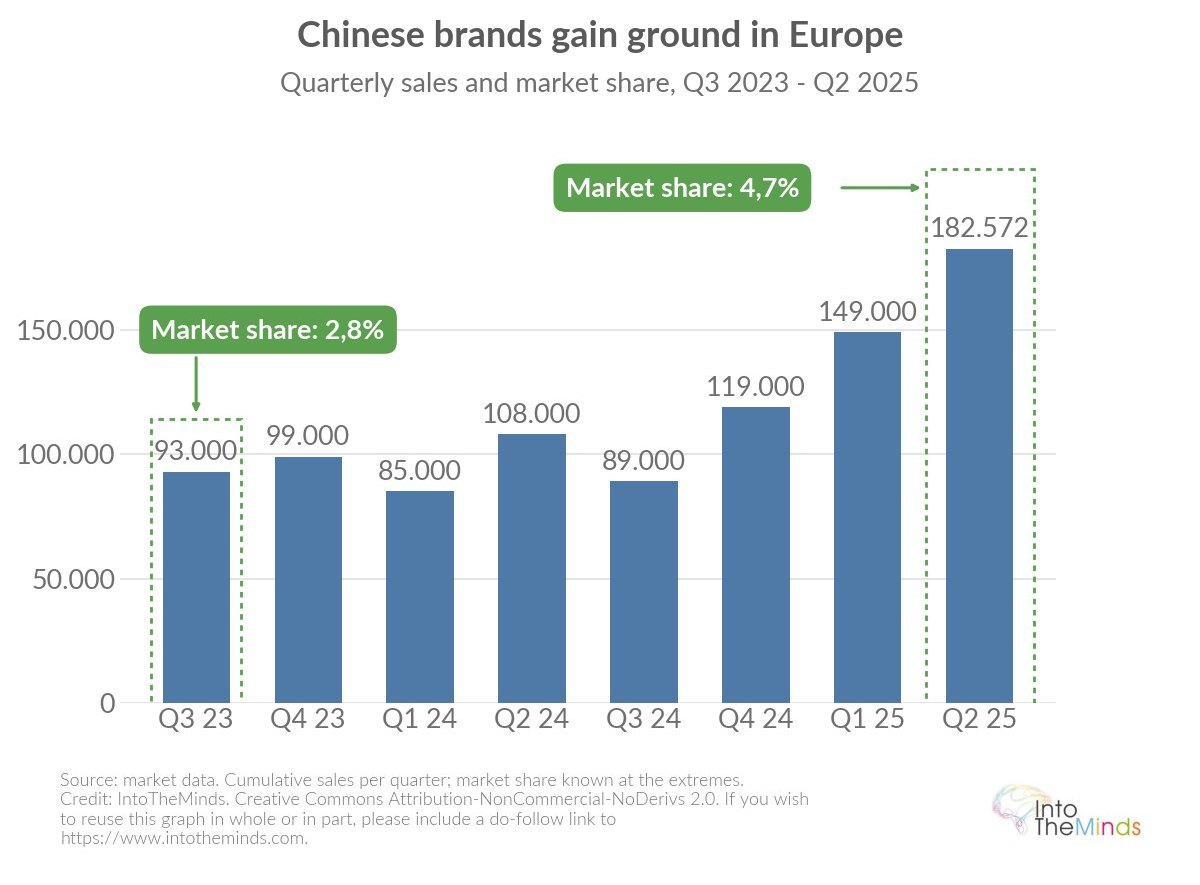
The market share of Chinese carmakers in Europe has risen from 6.6% to 10% in one year, driven in particular by BYD, whose sales in Germany surged by 315% in the first six months. This progress was already visible over the 2023–2025 period (see below). It is the natural continuation of the policy of Chinese car exports to Europe. In response, the European Union is preparing the Industrial Accelerator Act, an initiative designed to support technologies and products manufactured on the continent, whose entry into force is not expected until 2029.
Protectionism or competitiveness: the debate
In Germany, the reform plan presented by Chancellor Friedrich Merz favors a liberal approach: reducing bureaucracy, restricting certain workers’ rights and raising the retirement age. This approach runs counter to part of the European debate, which calls for greater protectionism in response to dumping and subsidies granted to Chinese and American carmakers.
Betting on “Made in Europe” and sites outside Germany
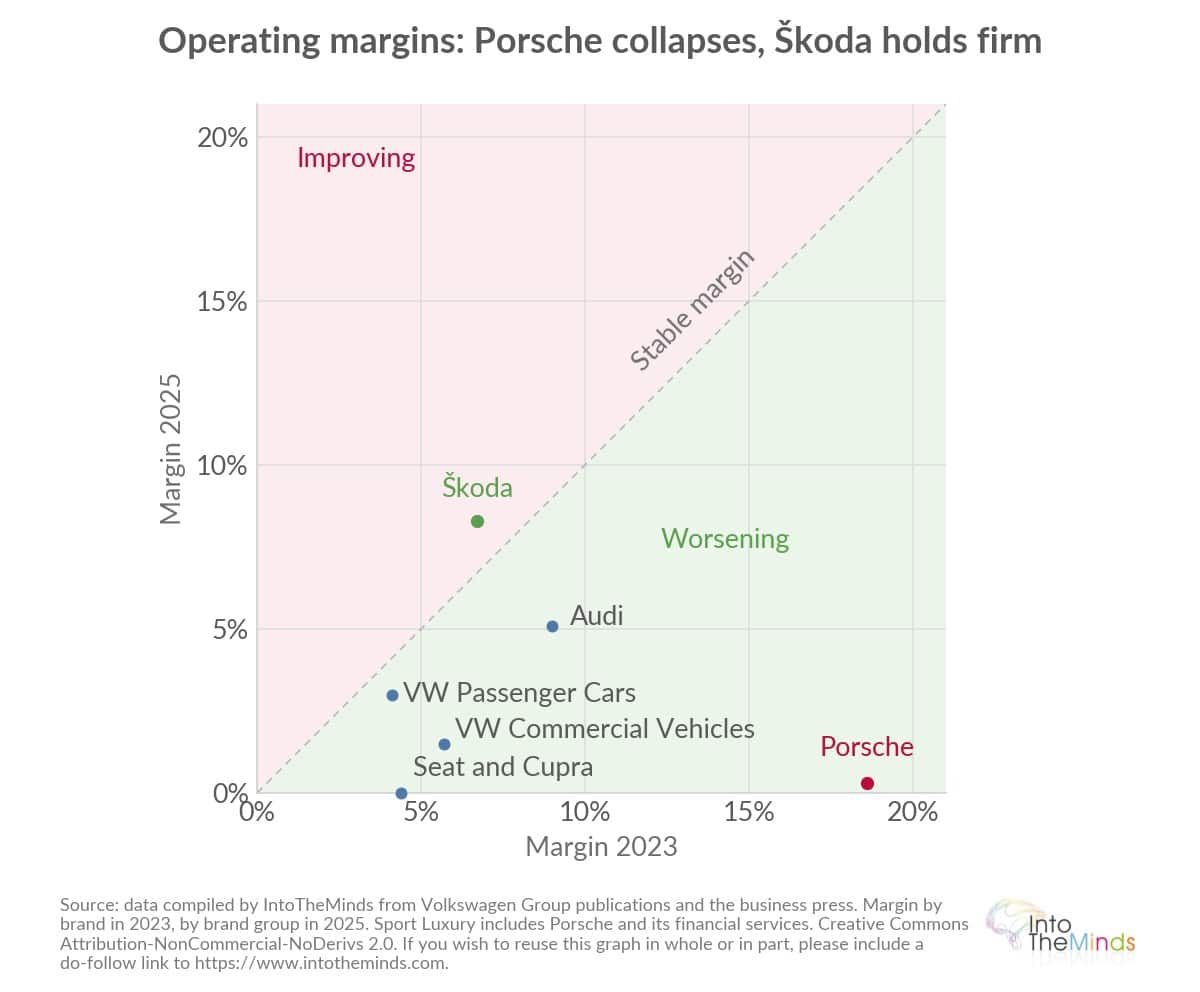
The comparison between the group’s brands illustrates what is at stake. In 2025, Škoda generated an 8.3% margin on revenue of €30.1 billion, while the Volkswagen brand was limited to 3.0% on €86.6 billion. In other words, Škoda generates approximately as much operating profit as the group’s flagship brand with revenue nearly three times lower. This reality is prompting some observers to recommend partially relocating production to lower-cost sites, including within the Volkswagen Group itself.
What does the future hold for Volkswagen and the European automotive industry?
Despite the scale of the crisis, several indicators suggest that an operational recovery is underway. Here are the levers identified by the carmaker for the coming years.
Restructuring scenarios
Since February 2026, strategic management has been recentralized in Wolfsburg and strengthened within the group’s leadership. Some iconic sites are being repurposed: the Gläserne Manufaktur in Dresden, which was producing only 5,500 vehicles per year with around 300 employees, is becoming an innovation campus, while Zwickau is developing a recycling business.
Innovation and strategic repositioning
In China, the Hefei research center, with an investment of €1 billion and 3,000 developers, illustrates the group’s determination to develop vehicles locally that meet Chinese consumer expectations, with development times reduced by 40% compared with Germany. The group plans around 40 new models in China between 2025 and 2027, more than half of them electric, including eleven models developed with FAW from 2026 and two mid-range models designed with Xpeng. The objective is to return to four million vehicles sold in China by 2030.
Geographical diversification as a growth driver
Brazil illustrates a more favorable trajectory: sales increased by 29.5% in 2023 to reach 345,039 vehicles, and planned investment through 2028 was increased to approximately €3 billion. Conversely, the impact of US tariffs on the group’s results and the halt in ID.4 production in Chattanooga, following the elimination of the $7,500 federal tax credit, highlight Volkswagen’s vulnerability to US political decisions: only 338 units were sold there in the first quarter of 2026, a collapse of 95.6%. Volkswagen’s future stability will largely depend on its ability to diversify its markets while reducing its dependence on the most volatile regions.
FAQ: Frequently Asked Questions
What triggered the crisis at Volkswagen?
The crisis results from the combination of three factors: the collapse in sales and earnings in China, a German cost structure that has become too high in the face of competition, and the cost of the transition to electric vehicles. The group’s operating margin thus fell from 6.99% in 2023 to 2.75% in 2025.
How many jobs are actually being cut?
The December 2024 labor agreement provides for the elimination of 35,000 positions in Germany by 2030, with the breakdown published in March 2026 bringing the total to 50,000 across all the group’s brands. These reductions are being implemented without redundancies on economic grounds, through phased early retirement, regular retirement, and mutual termination agreements.
How can Europe save its automotive industry?
Several options are being considered: accelerating the Industrial Accelerator Act to support European production, strengthening measures against Chinese dumping, and encouraging the relocation of production to sites on the continent where manufacturing costs remain competitive.
Can Volkswagen recover quickly?
There are encouraging signs: in the first half of 2026, the group’s automotive business margin reached 4.1%, the best performance ahead of BMW, Mercedes-Benz, Renault, Stellantis and Volvo Cars, with the highest net cash flow in the panel at €3.17 billion. A full recovery will nevertheless take several years, as the new electric platforms and the Chinese market recovery need time to deliver results.