In this article, we provide an in-depth study of dynamic pricing. Our firm has combined its expertise in price studies with the latest statistics available on the subject to offer you a comprehensive and up-to-date overview.

Have you ever noticed that the price of a plane ticket can double between two searches? Or that your Uber ride suddenly costs three times more on a rainy evening? This is what is called dynamic pricing. It is a commercial strategy that continuously adjusts prices according to demand, your behaviour and a multitude of other factors. Far from being anecdotal, this practice now extends well beyond the pioneering sectors to affect our daily lives as consumers. Our market research firm, specialised in pricing studies, provides you with a summary of the latest developments in dynamic pricing.
Contact IntoTheMinds for your pricing studies
Dynamic pricing: some surprising statistics
- Dynamic pricing adjusts prices in real time according to supply, demand and customer profile
- It generates gains of 2.5% for retailers while reducing waste by 30%
- Price differences can reach 400% during exceptional demand peaks
- 1500: number of individual variables that can be provided by certain data brokers to retailers
- >1000: number of possible price variations in a single day on Expedia for a given accommodation
- 2 million: number of daily price changes carried out by Amazon according to cited articles
- 50: number of price variations observed over a year for a fan sold on Amazon
- 20% to 30%: surcharge observed on Orbitz for Mac users compared to other users
- 300%: price increase observed on Uber during London Underground strikes
- 400%: maximum increase level reached by Uber during exceptional demand peaks
- 50%: share of references found more expensive on Sunday than Saturday afternoon in Casino hypermarkets in France
- 15%: average homogeneous price increase observed on Sunday in Casino stores in France
- 100: maximum number of daily price adjustments on certain fresh products at REMA 1000 in Norway
- 90000: number of price changes per day made possible by electronic labels in certain French, German and Scandinavian networks
- 2.5%: increase in revenue and profits observed in test stores equipped by Market Hub
- 30%: reduction in food waste measured in these same stores equipped with electronic labels allowing dynamic pricing
- 2: number of prices initially practised per room at Premier Inn before generalisation of yield management
- 10000: number of different possible prices today for a room at Premier Inn
The fixed price, the first revolution
The Guardian drew the portrait of a man everyone has forgotten who nevertheless initiated a revolution in retail: John Wanamaker. He invented the concept of “fixed prices”. As incredible as it may seem, until 1861, prices were set “according to the customer’s appearance”. If the seller thought you had money, you were likely to pay more than your neighbour. This little revolution was moreover at the origin of immense fortunes, such as that of Frank Woolworth who seized the principle of fixed prices to build an empire.

John Woolworth was so rich that he had what was for a few years the tallest skyscraper in the world built. I visited it and what struck me, besides the height of the building, are the Italian mosaics in the entrance hall which are an ode to work and capitalism.
It must be noted that today we are going backwards. The rule of “one price for all” seems to be giving way again to a price setting mechanism “according to the customer’s appearance”: “dynamic pricing”. How is this possible? Simply thanks to Big Data.
On the one hand, data available on individuals allows better segmentation; on the other hand, advances in computing allow real-time processing of this data at reduced cost. Online advertising has largely exploited these computing advances, leading in particular to the creation of online auction systems for displaying advertising on the user’s computer. In its wake, “retargeting” practices have also developed which constantly subject the user to invasive advertising for sites visited in the past. But physical stores are not left out with more and more technological devices that “monitor” the customer in their movements inside the point of sale. I had talked about the Amoobi path tracking device, and of course you will also have in mind Amazon Go and autonomous stores.
A new wave is about to reach the shores of connected commerce: prices that adapt to your profile. Follow me into the wonderful world of dynamic pricing.
From yield management to generalised tariff revolution
Dynamic pricing draws its roots from yield management, born in the airline industry in the 1980s. This revolutionary approach started from a simple observation: how to optimise revenues when you have a fixed and perishable stock? An unsold plane seat at takeoff represents a definitive loss.
Today, this logic has become spectacularly sophisticated. In hospitality, certain chains have gone from 2 prices per room to nearly 10,000 distinct rates, modulated according to date, occupancy rate, booking anticipation or customer segmentation. Airlines no longer reason in terms of load factor but in terms of revenue per available seat.
This evolution is explained by a tense economic context. Post-crisis periods have seen a 10 to 15% reduction in available capacities in aviation, mechanically creating upward tensions as soon as demand picks up. Dynamic pricing then becomes a tool for economic survival as much as an optimisation strategy.
E-commerce: up to 2 million adjustments per day
E-commerce has democratised these practices on an industrial scale. Certain sector giants like Amazon make more than 2 million price changes daily. For seasonal products like fans, rates can change nearly 50 times in a year.
This intensity reveals the power of modern algorithms. Online booking platforms sometimes display thousands of tariff variations in a day for the same stay, depending on your geographical location and time of consultation. This granularity was unthinkable just ten years ago.
But beware of misconceptions: not all merchant sites necessarily use this strategy. Some still prefer fixed prices or less frequent adjustments, particularly to preserve customer trust or simplify their commercial management. A more pragmatic reason is simply that dynamic pricing requires technological capacities in which not all e-commerce platforms can invest. It is therefore a practice reserved for the most sophisticated platforms.
Amazon makes up to 2 million price changes every day
Retail: when your shopping basket costs more on Sunday
Even if we perceive prices in store as stable, reality is quite different. Tariff differences between brands for an identical product commonly reach 27%, revealing historically very wide price corridors. I had moreover echoed this in an article I wrote thanks to data provided by PingPrice.
Even more disturbing: surveys have shown that around half of references can be more expensive on Sunday than Saturday afternoon. These increases, relatively homogeneous around 15%, can climb to 36% on certain everyday products. These practices, although legal, provoked strong reactions in an inflationary context, pushing certain brands to publicly abandon these Sunday surcharges.
Internationally, stores equipped with electronic labels reveal the potential of this approach. Distributors observe a combined improvement in revenue and profitability of 2.5%, while reducing food waste by around 30%. Prices of fresh products can be adjusted up to a hundred times a day, depending on residual stock and proximity to expiry date.
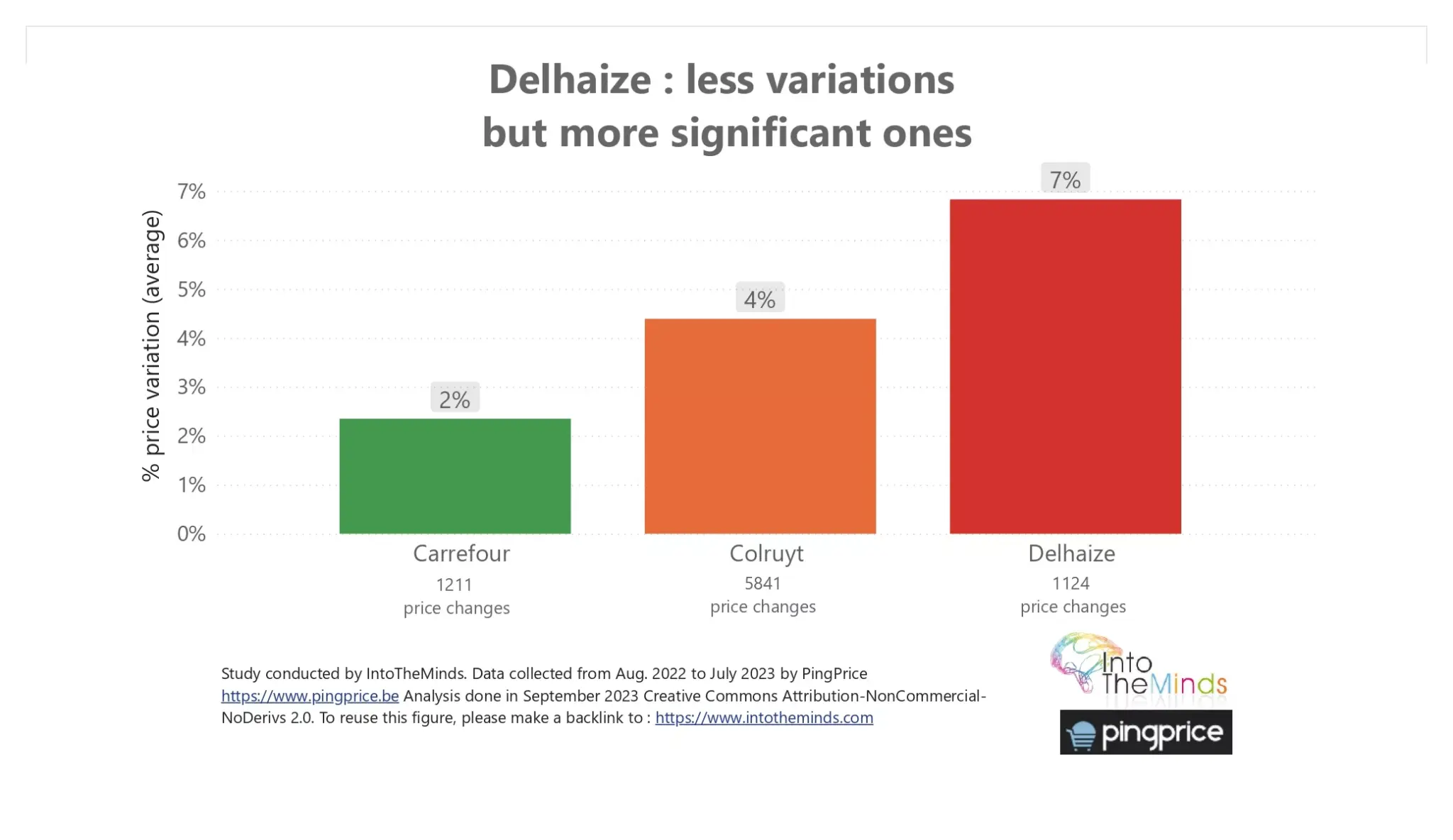
Study carried out by IntoTheMinds (link in the article) on price changes in retail in Belgium. Colruyt is the champion of dynamic pricing.
Personalisation taken to the extreme: 1500 variables per profile
The most worrying evolution concerns price personalisation. Data available on each individual has literally exploded. Certain digital players have around 100 data points per user, while specialised intermediaries aggregate more than 1,500 variables from purchase history, geolocation or online behaviour.
These capacities already allow price differences of 20 to 30% between consumers for an identical service, based solely on perceived profile. In mobility services, surge pricing mechanisms have led to increases of up to 300% or 400% during exceptional peaks, illustrating the extreme logic of this pricing when supply becomes rigid.
Concretely, if you consult the same flight or hotel several times, the algorithm can interpret this interest as strong purchase motivation and adjust the price upwards. Your IP address, previous searches, even the device used can influence the proposed rate.
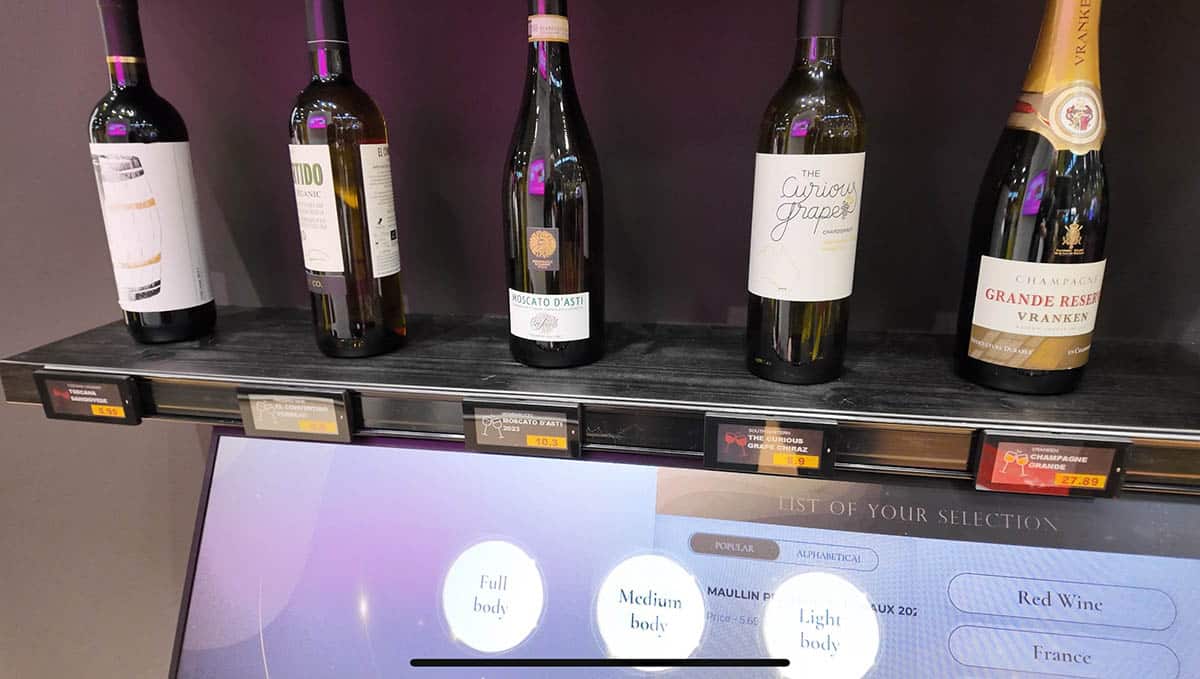
In retail, dynamic pricing has been made possible by the democratisation of electronic labels. Manufactured with “e-ink”, they allow automatic changing, without human intervention, of thousands of prices in a fraction of a second in a point of sale. Prices can therefore be permanently adjusted to supply and demand.
Emerging sectors: sport, leisure and services
Dynamic pricing is conquering new territories. In sport and leisure, it accompanies demand growth, with federations announcing increases of 15 to 20% in new practitioners. The associated technological ecosystem is experiencing marked acceleration: annual fundraising now exceeds €60 million, compared to €32 million the previous year.
Certain sector companies already display €9 million in recurring annual revenue, more than 2,000 customers and objectives of €30 million in revenue by 2027. Dynamic pricing becomes a key feature of their solutions, allowing optimisation of slot occupancy and equipment profitability.

At the NRF 2018 show, the company AWM had presented a connected shelf that analysed consumer characteristics, including emotions, live. This device opened the way to dynamic pricing according to emotions, which of course raised a whole series of ethical questions.
Limits and controversies: between efficiency and equity
This generalisation raises fundamental questions. On one side, dynamic pricing improves economic efficiency: it optimises resource allocation, reduces waste and can even democratise access to certain services by offering lower prices in off-peak periods.
On the other, it questions equity. Two consumers can pay radically different prices for the same service, creating a feeling of injustice. Transparency is often lacking: adjustment criteria remain opaque, and consumers struggle to understand why they pay more.
In the Guardian article, the author, Tim Adams, argues that “customer appearance” dynamic pricing is also made possible thanks to electronic labels, devices fixed on shelves that display a remotely controlled price. Thanks to this system it becomes indeed simpler to change prices, to adapt to competitors’ promotions. Adams reports on an experiment that raises questions in ethical terms.
“A few years ago, B & Q tested electronic price tags that display the price of an item according to the customer using data collected from the latter’s mobile phone, with the aim, declared the store +of rewarding loyal customers with discounts and special offers+ rather than identifying those who could pay a higher price for a product based on their purchase history.”
B&Q also experimented with dynamic pricing as early as 2013. Here is how it worked:
“The wifi-connected price tags identify shoppers passing near them thanks to mobile phone chips then access loyalty card data or purchase history to offer an appropriate price displayed next to the object”.
This strongly resembles a real-time promotion (couponing) system, much more effective than current systems which are always time-shifted relative to the purchase act (coupons are either produced before the visit to the point of sale, or just after payment is made, which in all cases significantly reduces their effectiveness and does not lead to the hoped-for impulsive behaviour). The real question is whether such systems are ethical and whether they constitute a threat in terms of equity between customers.
Discrimination risks have indeed become real since 2013. When algorithms integrate sensitive data such as age, gender or location, they can reproduce or amplify social biases. The boundary between commercial optimisation and tariff discrimination becomes blurred. A few years ago I had moreover described a connected shelf equipped with cameras that opened the door to such excesses by measuring in particular customer emotions.
How would you react seeing a customer who, approaching a product you have just put in your basket, would see a lower price displayed? Would you find that fair?
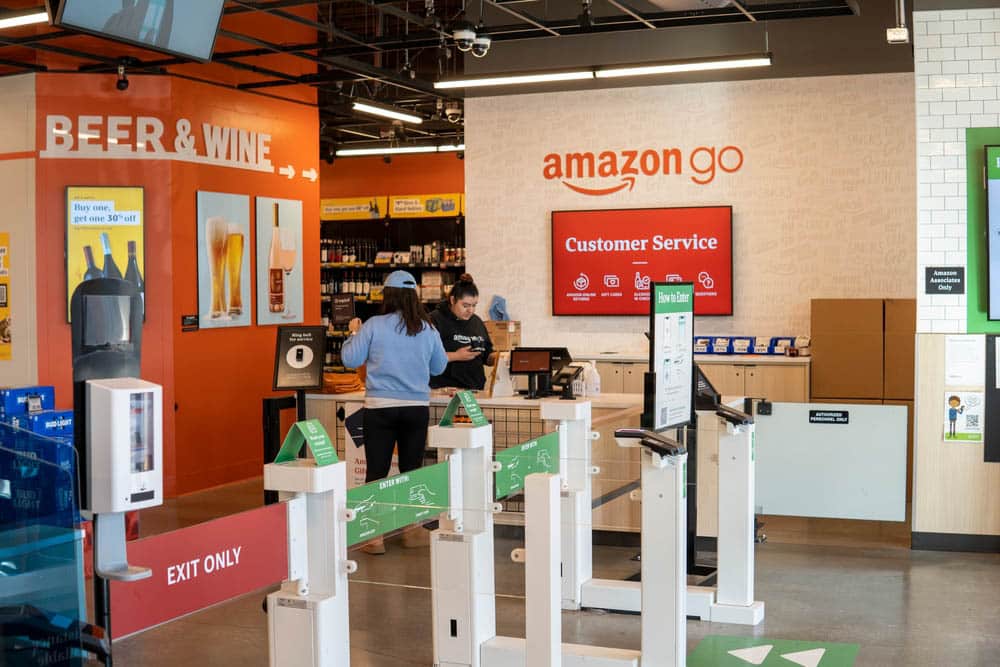
Amazon Go opened the way to the invasion of technology in points of sale. Now, all kinds of data are captured permanently in stores which opens the way to new types of interactions. Dynamic pricing is one of them.
How to protect yourself? Practical strategies and tips
Fortunately, countermeasures exist. Private browsing can limit tracking, even if it is not infallible against sophisticated tracking methods. Asking a relative to do the search from their computer remains one of the most effective techniques.
Advanced users can resort to VPNs to change their apparent location, companies sometimes adjusting their prices according to the country’s wealth level of origin. Comparing prices on several devices and at different times can also reveal significant differences.
Refusing cookies helps, but partially: many tracking methods work without them. The essential remains to keep a critical eye on proposed prices and not hesitate to look for alternatives.

Frequently asked questions about dynamic pricing
Is dynamic pricing legal in France?
Yes, this practice is perfectly legal as long as it does not constitute illicit discrimination. Companies have the right to adjust their prices according to supply and demand. However, regulation is evolving to frame certain excesses, particularly in the protection of personal data used to personalise prices.
Can we really escape this pricing?
Completely, no. Partially, yes. Techniques like private browsing, using VPN or comparison on several devices can limit the impact. But algorithms are becoming more and more sophisticated. The best defence remains vigilance and systematic price comparison.
Do all sectors use this strategy?
No, far from it. If it is rapidly generalising, many sectors maintain fixed prices or less frequent adjustments. Basic food, certain public services or local shops often maintain stable pricing to preserve customer relations.
Will this practice intensify?
Very probably. Improved computing capacities, explosion of available data and competitive pressure push towards more tariff sophistication. However, consumer resistance and regulatory evolution could temper certain excesses.
Are there advantages for consumers?
Paradoxically, yes. Dynamic pricing can offer lower prices in off-peak periods, improve service availability and reduce waste. It also allows better matching between supply and demand. The challenge is to preserve these benefits while maintaining equity and transparency.
The future of our consumption habits
Dynamic pricing represents much more than a simple technical evolution: it fundamentally redefines our relationship to price and consumption. This generalisation of yield management to the entire market economy transforms every purchase into a silent negotiation between algorithms and consumer profiles.
The figures speak for themselves: 27% differences between brands, punctual increases of 36% in store, adjustments up to a hundred times a day on perishable products, millions of daily changes in e-commerce. This price variability has become a structural reality of our economy.
The challenge is no longer technical but societal: how to preserve acceptability, transparency and the trust contract between distributors, brands and consumers? The answer will determine whether this tariff revolution will be perceived as progress or as excess. It is up to us, informed consumers, to remain vigilant and assert our rights in this new commercial deal.




![Illustration of our post "Remote work: are employees cheating? [Survey]"](/blog/app/uploads/telework3-120x120.png)