The complete guide to the marketing mix written by a Doctor of Marketing, illustrated with numerous concrete examples and a downloadable PDF guide.

Starting a business and hearing about the marketing mix everywhere? Don’t panic! This method, which may seem complex at first glance, is actually your best ally for building a commercial strategy that stands the test of time. Far from being a purely theoretical concept, the marketing mix is a concrete tool that helps you make the right decisions for your business.
Whether you are a beginner entrepreneur or want to optimise your commercial approach, this guide gives you all the keys to mastering this essential marketing strategy. Ready to turn your idea into commercial success?
The essentials in 30 seconds
- The marketing mix is your commercial toolbox: 4 main levers (product, price, distribution, communication) to conquer your market
- Constant evolution: from the original 4P to 7P and even 10P depending on your sector
- Global coherence is mandatory: each element must be consistent with the others to create an effective marketing strategy
- Adaptation to digital: the new P’s take modern challenges into account (partnerships, permission marketing, innovation)
- Customer-centric: the shift to the 4C places customer value at the heart of your commercial strategy
The 4 fundamental P’s: your marketing foundation
It all started in 1960 with Jérôme McCarthy, professor of marketing management, who laid the foundations of what would become THE reference in commercial strategy. His 4P concept revolutionised the way companies think about their market approach. But what does this actually change for you?
Imagine building a house: you need solid foundations. That is exactly the role of these four pillars in your marketing strategy. Each one answers an essential question every entrepreneur asks themselves.
Product: what are you really selling?
First crucial question: does your product or service meet a real need? Beyond its technical features, your offer must create value for your customers. This is where you define not only what you sell, but above all why someone should buy it.
Take the time to analyse your competition: what makes you different? Your design, your quality, your innovation? This product policy determines the rest of your marketing mix.
Focus on explaining the product features that make it unique and distinctive. Also think about packaging, which is often an integral part of the customer experience, as with Apple.
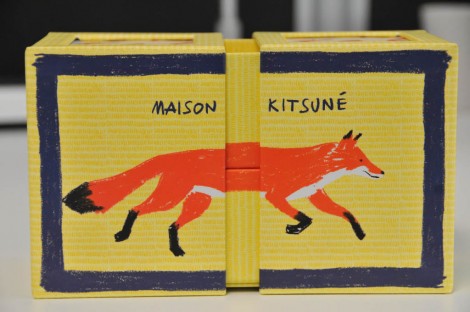
Chocolatier Pierre Marcolini materialised his collaboration with Kitsuné with a highly original packaging.
In some sectors, such as luxury, packaging plays a special role. As we demonstrated in this study, packaging becomes a product in its own right with sometimes considerable intrinsic value. The packaging must be consistent with the positioning of the product it contains. Differentiating, packaging can be a vector of emotions and brand persistence in the consumer’s mind. Orange has thus become synonymous with Hermès and Vuitton stages its packaging in its advertisements.

In its “Holiday 2020” campaign, Vuitton staged its packaging alongside actress Alicia Vikander. Proof that product and packaging are one.
Price: the pricing strategy that makes the difference
Setting prices is an art! You can opt for a skimming strategy (high price at launch, then gradual decline), penetration (low price to gain market share) or competitive alignment.
Each approach has its advantages: premium positions you on quality, low-cost on accessibility. The important thing is that your pricing policy is consistent with your positioning and business goals.
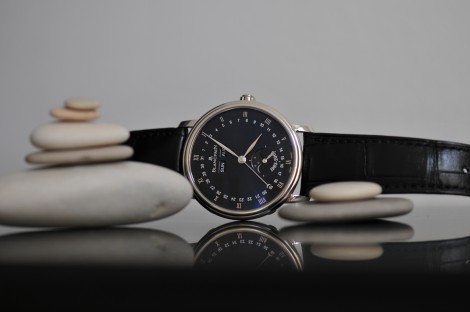
In the marketing mix of luxury watch brands, the pricing strategy is “value based”. The price is determined according to the value perceived by the customer and not the sum of the cost of the components used.
Here it is about describing how the company manages the different facets of “price” in its market. This begins with a description of the pricing strategy adopted by the company. The best known are:
- cost + margins: you add a margin to your production costs
- “value based”: the price is determined according to the consumer’s perception of value
- competitive: you first carry out a competitor analysis and set your price according to that of your competitors
Place (distribution): how do your customers find you?
Today, distribution seamlessly blends online and offline. Your distribution channel must facilitate access to your offer: e-commerce, physical stores, marketplaces, direct sales… The possibilities are numerous.
The trick? Think customer journey: where do your prospects usually buy? How can you be present in these strategic places? Good distribution policy means being in the right place at the right time.
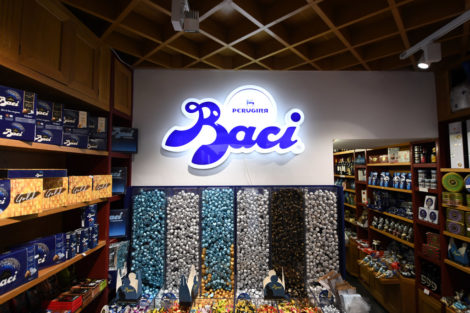
Perugina sells its “Baci” in mass distribution but also has a few own-brand stores (here the one in Perugia)
In this part it is a question of analysing how the product or service is distributed.
Three major distribution strategies exist:
- direct distribution
- distribution via a third-party network
- hybrid (a mix of the previous two)
Nespresso distributes its coffee capsules through its own boutiques (direct distribution). Most food product manufacturers sell their products via third-party networks (retailers). Some of these manufacturers nevertheless invest in own-brand stores (Perugina, Lindt, M&M, etc.). This is then a hybrid strategy.
Promotion (communication): making your value known
Your communication policy encompasses far more than traditional advertising. Social media, content marketing, press relations, events… Everything counts to make your brand known and create bonds with your customers.
The secret of successful communication? Adapt your message to each channel while maintaining overall consistency. Your tone, values and promise must be found everywhere.
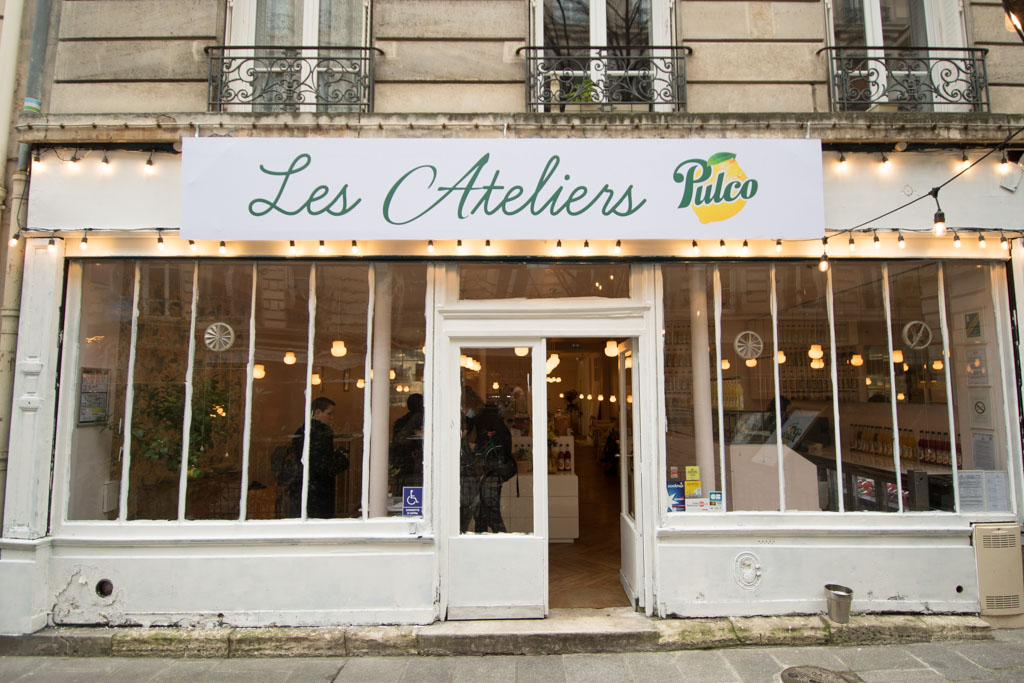
The syrup brand Pulco used a popup store as part of its marketing mix to reconnect with its target audience and teach them the different possible uses of its product.
It is useful to start by describing, in broad terms, the communication strategy followed by the company. What is its position regarding advertising and does it invest in this area? If so, which channels are favoured (digital, radio, TV, press, Out-Of-Home) and according to what logic are these channels selected? Are particular channels used (sponsoring, influencers, etc.)?
Under the “Promotion” P, we will also find specific “offline” communication operations such as popup stores. We analysed here the strategic interest of the popup store for an FMCG brand.

The electric hypercar manufacturer Rimac promotes its Nevera model using YouTubers. Here Many Koshbin tests the vehicle in one of his YouTube videos (YouTube screenshot)
The evolution to the 7P: when services change the game
The 1980s marked a turning point: the service economy exploded. The traditional 4P showed their limits in the face of the intangible. How do you sell something you can’t touch? This is where three new P’s come in, particularly relevant if you operate in the service sector.
People (staff): your teams, your best ambassadors
In services, your employees ARE your product. Their professionalism, attitude and expertise directly influence the perception of your brand. An unpleasant salesperson can ruin months of marketing efforts in minutes.
Investing in training your teams means investing in your brand image. Every customer interaction is an opportunity to strengthen your positioning.
In this part of the marketing mix, we will therefore seek to understand how the company’s marketing positioning can materialise through its human component. We will study the role of the human element in the company’s success and customer satisfaction, as well as the role played by employees in transmitting the brand’s values.
The relational policy is no longer, in the digital age, only B2C. It also materialises through C2C (Consumer to Consumer) interactions. Customers become ambassadors of the company and sometimes even play important roles there. Ryanair, for example, set up a customer advisory panel.
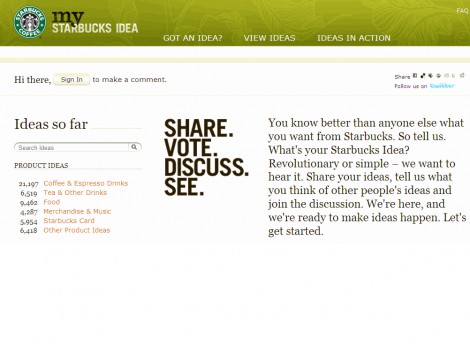
Starbucks had set up a co-creation platform allowing customers to submit ideas to the company. Interactions between customers were also possible.
Process: the optimised customer experience
How does a purchase take place with you? How many clicks to order? How long is the wait on the phone? Your sales process must be fluid and pleasant.
Map your customers’ journey: identify friction points and simplify as much as possible. A well-thought-out process turns purchasing into pleasure rather than a chore.

Processes are a central component in the success of Ryanair’s “low-cost” business model.
Physical evidence: making the invisible tangible
When selling a service, the intangible must be materialised. Certificates, customer testimonials, guarantees, well-maintained premises… Everything that can reassure your prospects about the quality of your service.
These physical proofs reduce the risk perceived by your customers. The more complex or expensive your service, the more crucial these elements become.

The Vuitton flagship store on the Champs-Élysées in Paris, photographed in February 2023 during the collaboration with Yayoi Kusama. The already famous store for its spectacular windows was adorned with an absolutely unique temporary decoration. The façade was dotted with round motifs, symbols of Yayoi Kusama’s work, and a huge inflatable effigy of her.
The 3 modern P’s: adapting to new challenges
The 2000s brought their share of revolutions: internet, globalisation, collaborative economy… The marketing mix is further enriched to integrate these new business realities.
Partnership: strength in numbers
Today even giants collaborate: think of the Samsung-Microsoft or Apple-Nike alliances. For you too, partnerships can multiply your impact: co-branding, cross-distribution, joint development…
Think about possible synergies: which companies reach your target with a complementary offer? How to create win-win situations that benefit everyone?
Permission marketing: respect for consent
No more intrusive marketing! Your prospects must accept to receive your communications. Newsletter, push notifications, remarketing… Everything must be based on explicit consent.
This more respectful approach also generates better results: a prospect who voluntarily subscribes to your newsletter will be more receptive to your messages.
Purple cow: the art of standing out
Seth Godin explains it perfectly: in a field full of ordinary cows, only the purple cow attracts attention. Your challenge? Create this remarkable differentiation that makes people talk about you.
Product innovation, exceptional customer service, offbeat positioning… Find your purple cow! In a world saturated with similar offers, originality becomes your best commercial asset.
From the 4P to the 4C: putting the customer at the centre
Some experts today advocate abandoning the 4P in favour of the 4C, a more customer-value-centred approach:
- Customer value replaces Product
- Cost (total cost) replaces Price
- Convenience replaces Place
- Communication (bidirectional) replaces Promotion
This evolution reflects a fundamental change: moving from a product logic to a customer logic. Rather than starting from what you want to sell, you start from what your customers want to buy.
Pricing strategies: choosing the right approach
Your pricing policy deserves special attention. Here are the main strategies available to you:
| Strategy | Principle | Advantages | Disadvantages |
|---|---|---|---|
| Skimming | High price then gradual decline | Maximises margin, premium image | Limited volume at the start |
| Penetration | Low price to conquer the market | Rapid growth, competitive barrier | Low margins, price war |
| Alignment | Price similar to competition | Secure, avoids price wars | Little differentiation |
| Global price | Advantageous bundled offer | Increases average basket | Management complexity |
How to build your marketing mix?
Now that you know all the elements, how do you put them together intelligently? Here is my method in 5 steps:
1. Analyse your market: Who are your customers? What do your competitors do? What are the trends in your sector?
2. Define your positioning: What place do you want to occupy in your customers’ minds? Premium, accessible, innovative?
3. Build your mix: Choose the P’s relevant to your activity and ensure they are coherent with each other.
4. Test and adjust: Launch tests on small segments before rolling out massively.
5. Measure and optimise: Track your KPIs and regularly adjust your strategy according to the results.
The mistakes to absolutely avoid
After supporting many companies, I often see the same mistakes coming back. Here are the most common pitfalls:
Incoherence between the P’s: Selling premium with low-cost communication, or offering a high-end service in outdated premises. Your customers are not fooled!
Blindly copying the competition: What works for them will not necessarily work for you. Be inspired, but adapt to your context.
Neglecting market evolution: Your marketing mix is not set in stone. It must evolve with your customers, competitors and market trends.
Underestimating the importance of digital: Even if you sell physical products, your online presence influences your image and sales.
FAQ: your questions about the marketing mix
How many P’s should I use for my company?
Excellent question! It all depends on your sector. The basic 4P are often sufficient for physical product companies. If you sell services, the 7P are more suitable. For digital or innovative companies, the 10P can bring added value. The important thing is not the number, but the relevance for your business.
Marketing mix: what is the difference between 4P and 7P?
Digitalisation has seriously aged the 4P. The 4P were indeed well suited to a “physical” world but much less to e-commerce. They were therefore supplemented by 3 new “P”:
- People: aspects related to human interactions through the multiple channels now available (especially digital)
- Process: processes put in place to guide interactions, particularly those related to services.
- Physical evidence: tangible elements highlighted to convince the customer (store layout, customer reviews, etc.)
How often should I review my marketing mix?
I recommend a full review at least once a year, with quarterly adjustments according to your results. But stay vigilant: if your market evolves quickly (tech, fashion, etc.), more frequent adaptations may be necessary. The idea is to remain agile without changing strategy every four mornings!
How to measure the effectiveness of my marketing mix?
Define KPIs for each P: conversion rate for your product, price elasticity, satisfaction rate for your processes, ROI of your communication actions… The important thing is to be able to isolate the impact of each element to optimise your mix over time.
Is the marketing mix still relevant in the digital age?
More than ever! Digital has not killed the marketing mix, it has enriched it. Your traditional 4P adapt: your product can be an app, your distribution goes through digital platforms, your communication uses social networks… The fundamentals remain, the tools evolve.
Can I apply the marketing mix to a startup?
Absolutely! It is even recommended. A startup needs structure to avoid going in all directions. The marketing mix forces you to think coherently about your commercial strategy. Start simple with the 4P, then enrich according to your needs and growth.
Ready to build your winning strategy?
The marketing mix is not just a theoretical concept: it is your roadmap to conquering your market. Whether you choose the classic 4P or opt for a more modern approach with 7P or 10P, the essential thing is the coherence of the whole.
Remember: your marketing mix must evolve with your company and your market. What works today may need to be adapted tomorrow. Stay attentive to your customers, observe your competitors, and do not hesitate to test new approaches.
Your commercial success depends on this ability to intelligently orchestrate all these elements. So, which P will you start with?
Detailed examples
Here are a few concrete examples of marketing mix analyses that I have covered in specific articles.
- electric car (Rimac)
- high-end watchmaking (Richard Mille)
- fruit juice (Alain Milliat)
- cosmetics (Lush).
And below you will find a downloadable guide in PDF format. I hope it will be useful and if you still have questions, do not hesitate to contact me.