We have analyzed the 271 products shortlisted by the organizers of the SIAL Innovation 2026 competition. By examining these products, we have identified current trends in the agri-food sector as well as key areas of innovation. We also present our top 10 list of products that we believe have the greatest potential for market success.

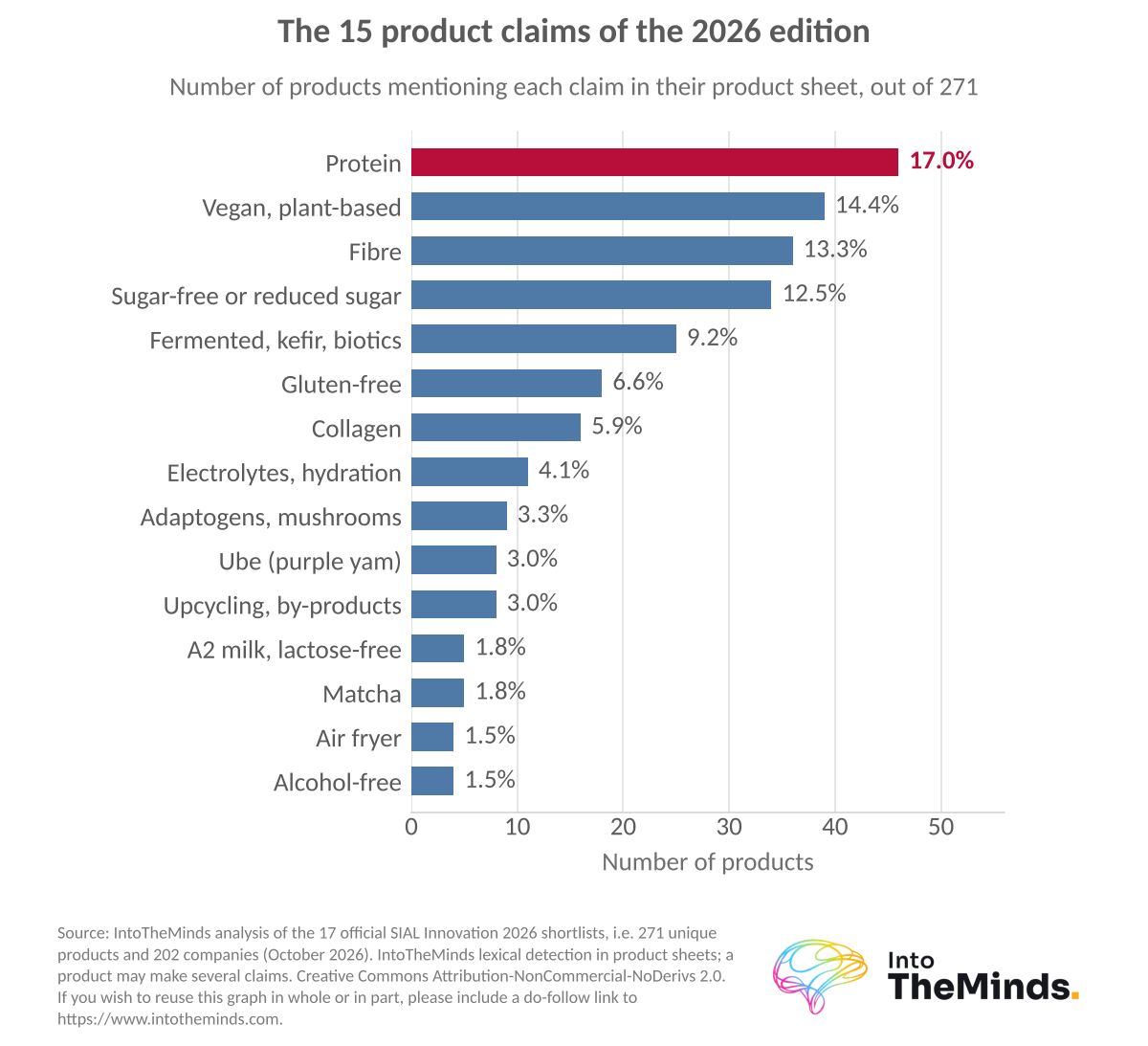
On October 5, 2026, the SIAL Innovation competition published its 17 official shortlists. More than 2,750 products applied for the SIAL Innovation competition. Among them, 775 were selected and presented to the competition’s various juries, resulting in 300 product sheets. This represents 271 unique products supported by 202 companies from 41 countries. Nutraceuticals is the largest category, with 42 products. These figures provide an initial measure of the scale of global food innovation in 2026. But they do not tell which trends have the highest chance of succeeding, nor why small businesses remain behind large groups. That is why our market research agency, leveraging its experience in the agrifood sector and as a loyal visitor to SIAL for 18 years, analyzed all product sheets to offer you an insight into food innovation through the lens of SIAL Innovation 2026.
You will find the full downloadable report at the end of this article. Please note that differences between this article and the report may persist because the report is also updated following our interviews with SIAL exhibitors.
Contact the IntoTheMinds institute
Key takeaways
- World, 2026: 271 unique innovations (300 sheets) selected across the 17 SIAL Innovation shortlists, supported by 202 companies from 41 countries.
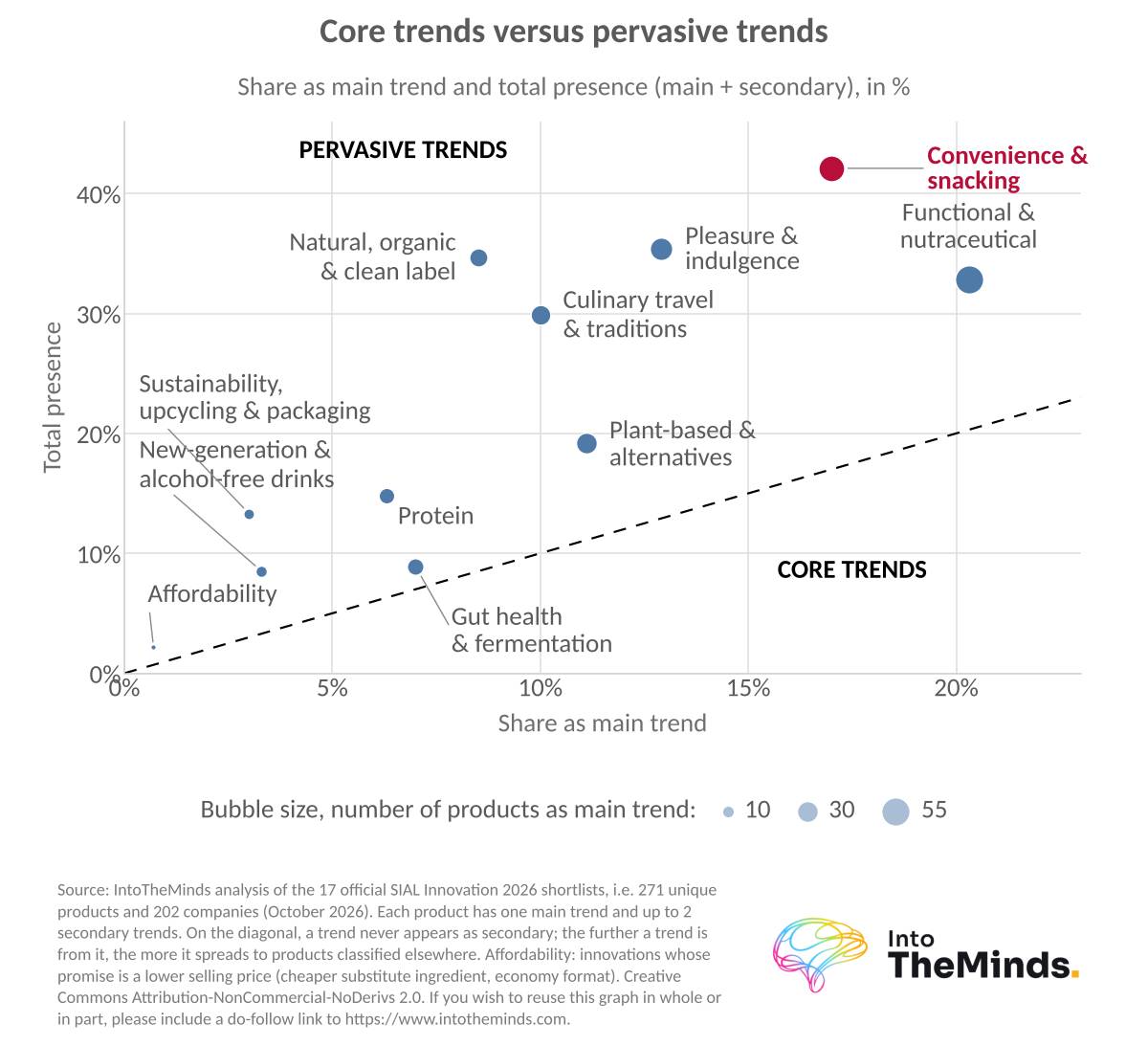
- Functional and nutraceutical products top the trends with 19.6% of products. Convenience is present in 42.1% of product sheets.
- 65% of products represent cosmetic or incremental innovation. Only 17 products (6.3%) achieve high (14) or radical (3) disruptiveness.
- 71% of exhibitors are VSEs or SMEs. Their products are more disruptive, but their success score (61.2/100) remains lower than that of large companies (70.6/100).
- France, 2026: leading country in the competition with 70 products (25.8% of the selection), for an average score of 65.6/100 (IntoTheMinds grid).
- Top 1 in our ranking: siggi’s Fruit & Fiber skyr from Lactalis (87/100), ahead of precision fermentation lactoferrin from Armor Protéines, Savencia group (85/100).
Major trends in food innovation in 2026
You will find in this section the hierarchy of trends shaping the global selection, as well as their potential for success. We coded each of the 271 products against a grid of 11 trends, then assigned each innovation a success score out of 100 and a disruptiveness rating from 1 to 5 (see our methodology at the bottom of the article to learn more). These results complement our analysis of consumer trends in 2026 and our study of developments in the food market.
Let us start with the timeline. Among the 271 products
- 188 (69.4%) were launched in 2026
- 56 in 2025
- 9 in 2024
- 18 are announced for 2027, such as Magic Soba noodles (Ourhome, South Korea) or Snöo frozen marshmallows (ONORE, France).
This concentration is primarily due to competition rules, reserved for products launched within the past 2 years. It therefore does not measure a recovery in innovation following the decline in launches in 2022 that we reported on, but it confirms that the competition captures the immediate realities of global agrifood innovation.
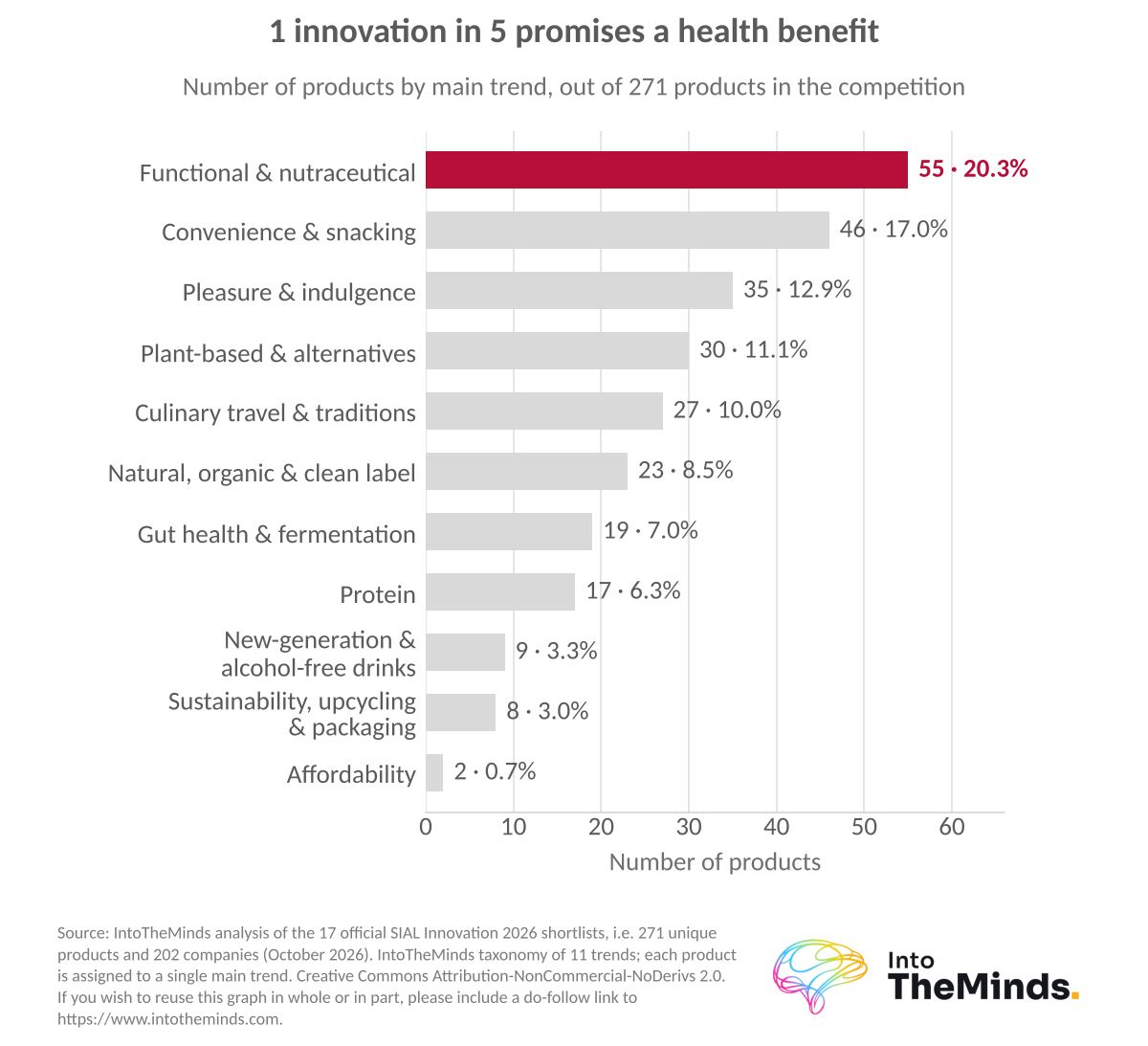
| Main trend (world, 2026) | Products | Share | Total presence | Average score /100 | Disruptiveness (1 to 5) |
|---|---|---|---|---|---|
| Functional and nutraceutical | 53 | 19.6% | 32.1% | 63.8 | 2.21 |
| Convenience and snacking | 47 | 17.3% | 42.1% | 66.1 | 2.15 |
| Pleasure and indulgence | 35 | 12.9% | 35.4% | 62.8 | 2.06 |
| Plant-based and alternatives | 30 | 11.1% | 19.2% | 59.3 | 2.63 |
| Culinary journey and traditions | 27 | 10.0% | 29.9% | 63.0 | 2.22 |
| Naturalness, organic and clean label | 24 | 8.9% | 34.7% | 62.2 | 2.29 |
| Digestive health and fermentation | 19 | 7.0% | 8.9% | 67.7 | 2.74 |
| Proteins | 17 | 6.3% | 14.8% | 72.8 | 2.18 |
| New generation and alcohol-free beverages | 9 | 3.3% | 8.5% | 62.4 | 2.56 |
| Sustainability, upcycling and packaging | 8 | 3.0% | 13.3% | 61.4 | 3.25 |
| Price accessibility | 2 | 0.7% | 2.2% | 74.0 | 2.00 |
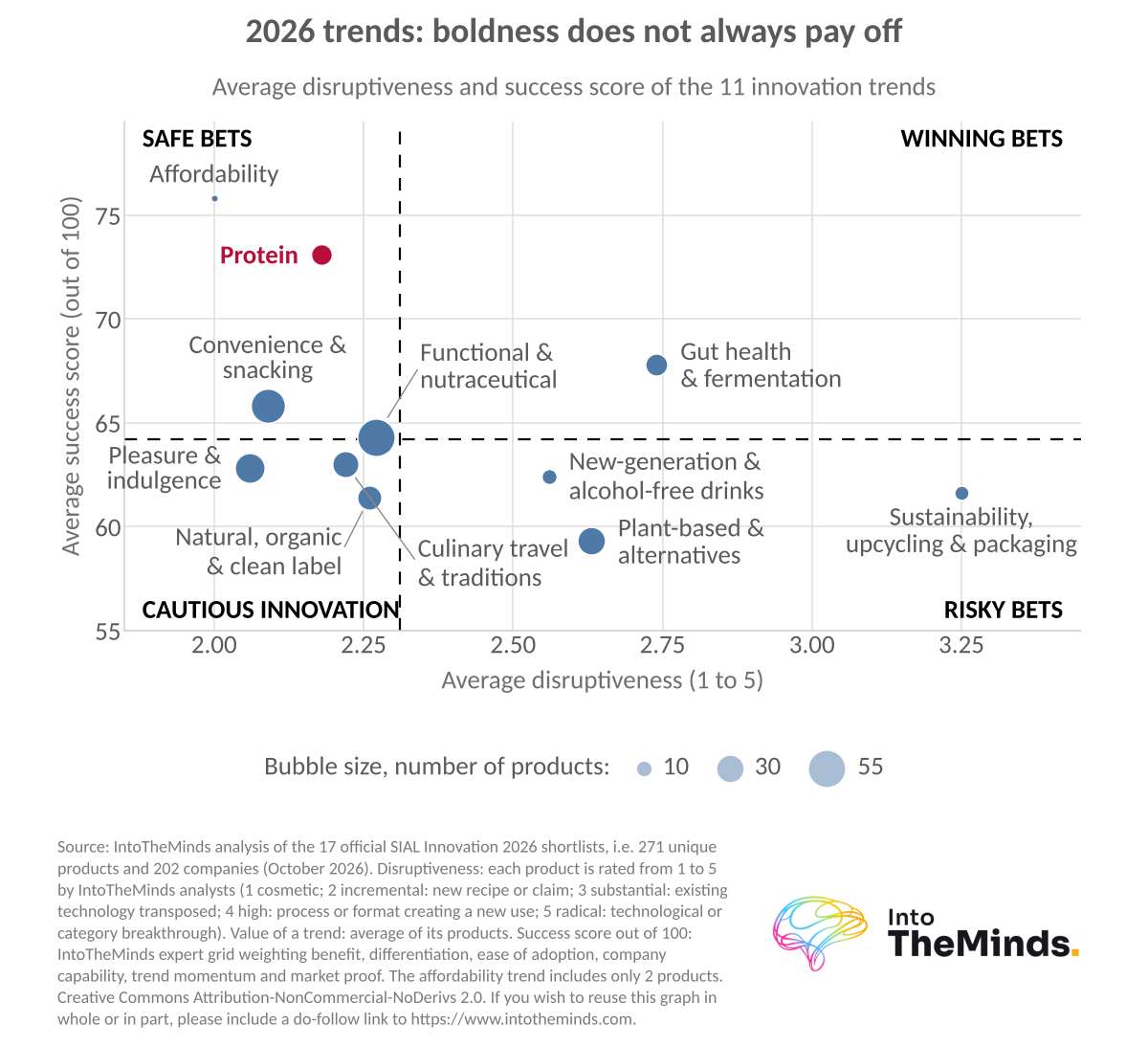
Cross-analysis is fairly straightforward:
- The functional dominates in volume
- proteins dominate in potential (72.8/100)
- sustainability dominates in disruptiveness (3.25/5).
To visualize these gaps, below is a chart positioning each trend along these two axes.
One in five products promises a targeted health benefit.
Functional health and nutraceuticals
Let us now turn to the trends of SIAL Innovation 2026. First, we observe that one in five products promises a targeted health benefit. Food supplements are entering the food trade show through the front door. Here are a few examples from the 2026 selection:
- Trésors de la Ruche functional honey from Famille Michaud Apiculteurs (Lune de Miel brand, France);
- a collagen fruit spread providing 22 g of protein per jar (CIMA 99, Tru Balance brand, Bulgaria);
- Welsom shots (Chias Brothers Europe, Poland), one of which contains 10,000 mg of collagen;
- LIFILL collagen from Nongshim (South Korea), backed by clinical studies.
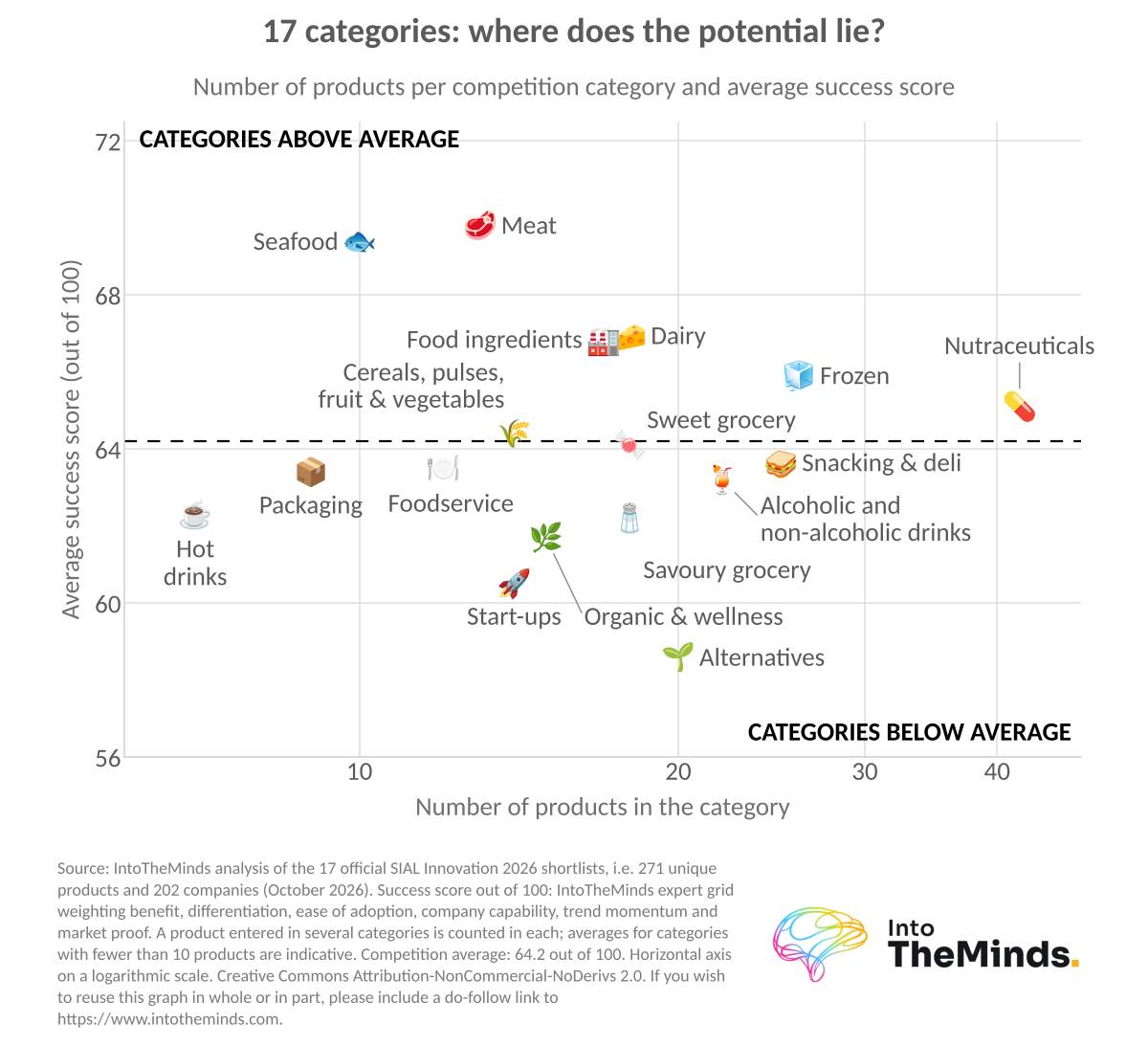
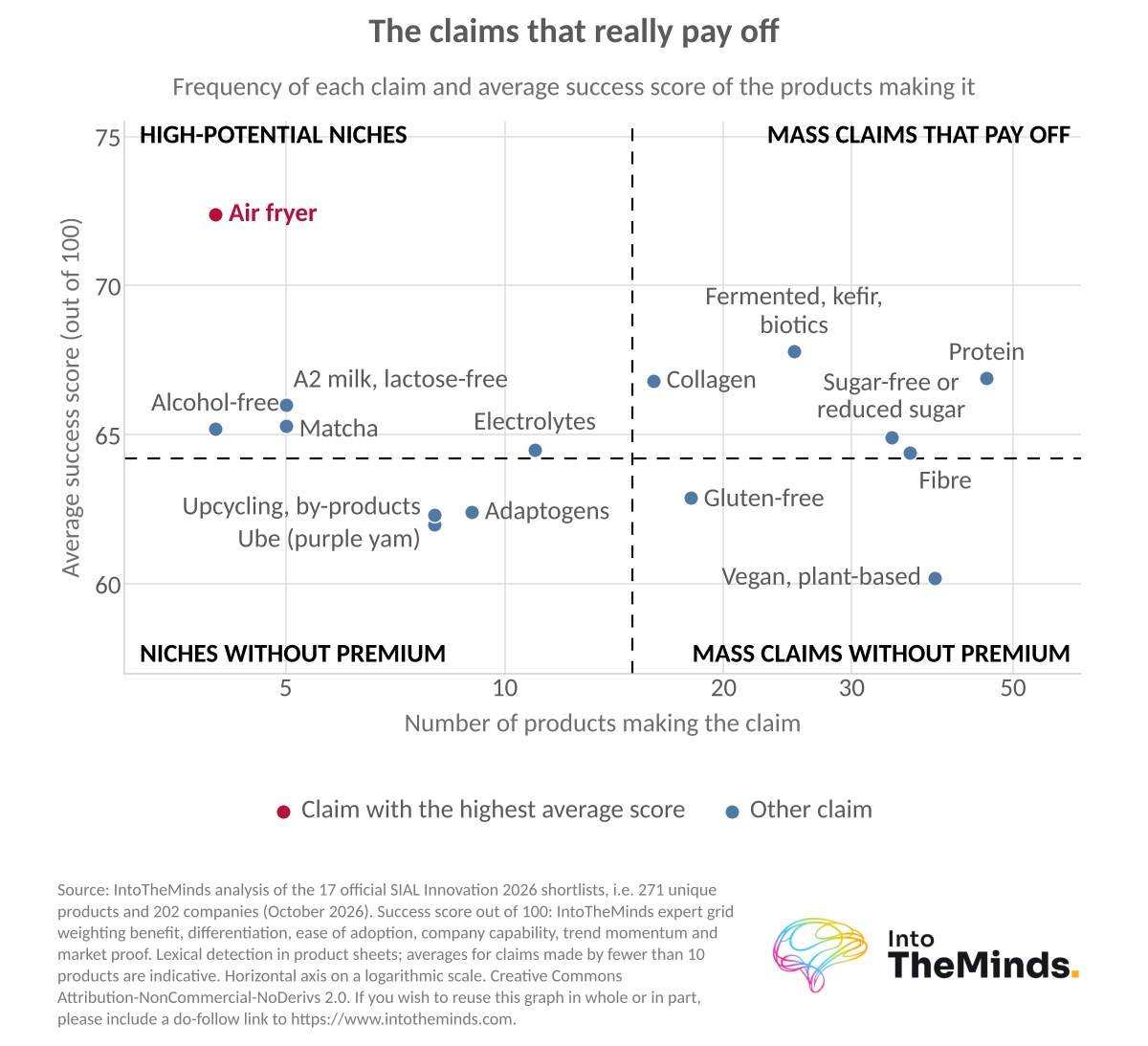
The words used on the product sheets confirm the scale of the movement. Out of 271 products (world, 2026)
- 46 mention proteins (17%)
- 36 mention fiber (13%)
- 34 mention sugar-free or reduced sugar (13%)
- 25 mention fermentation or biotics (9%)
- 16 mention collagen (6%).
If you had any doubts about the agrifood trend to follow in 2026, now you know.
Digestive health deserves a special mention. With an average score of 67.7/100, it boasts the best ratio between volume and potential after proteins. Examples include Bufala Cuore di Kefir mozzarella with a kefir center (Ponte Reale, Italy) and Belgian sodas Yass (Nature Innovation International) and Sweet-Switch Pops (Belgium Premium Brands II), the latter containing 20 g of fiber per can. Tepache from Labo Dumoulin (France), Startup Special Award winner, illustrates for its part the rise of fermented beverages. This territory is still narrow, and it pays off.
Convenience, snacking and pleasure
Convenience is the most cross-cutting trend in the competition, as it affects 42.1% of products. For example, we discovered that the success of the air fryer was serving as a catalyst for innovation. Compatibility with this cooking device is becoming a selling point, albeit still marginal since it is mentioned on only 4 product sheets: Zakee’s Kebab@home fresh domed kebab (Herbert Ospelt Anstalt, Liechtenstein), Pop Cheese Brazilian cheese ready in 7 minutes (Savencia Brazil, Quatá brand). Mousline, for its part, offers pan-fry gnocchi preserved for 12 months at room temperature.
Pleasure plays on texture and color, extending the movement of comfort food. MeloMochi triple-texture mochis (Amos Food, China), Culinary Clouds micro-foam condiment (Chef Seasons, Turkey) and Snöo frozen marshmallows (ONORE, France) seek to stand out on shelves through the element of surprise. Culinary journey follows the same logic with ube, mentioned on 8 product sheets, from Aniwa pure powder (Pacific Synergy, Philippines) to coconut-ube goat cheese by Die Käsemacher (Austria), not to mention Pom’Aligot de l’Aubrac PGI by Jeune Montagne (France).
Only 17 out of 271 products, or 6.3%, achieve a high or radical level of disruptiveness.
Technologies and agrifood
This section measures the share of real breakthrough in the selection, then contextualizes these innovations within the major families of agrifood technologies, from field to factory. The initial observation is clear: the 2026 competition is cautious, aligning with the range rationalization undertaken by manufacturers since the inflationary crisis.
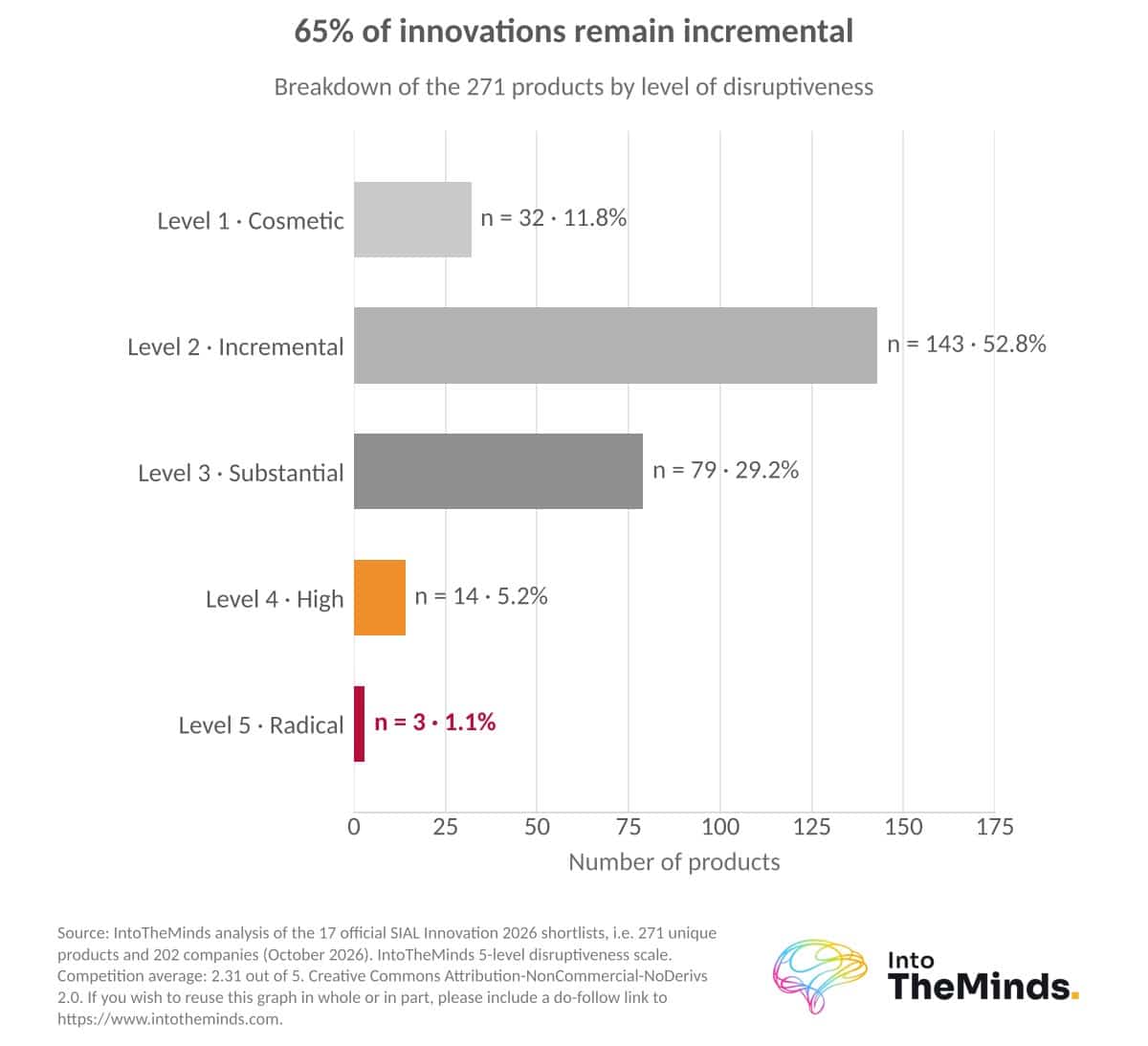
| Level of disruptiveness (world, 2026) | Products | Share | Average success score /100 |
|---|---|---|---|
| 1. Cosmetic | 32 | 11.8% | 62.5 |
| 2. Incremental | 143 | 52.8% | 64.2 |
| 3. Substantial | 79 | 29.2% | 64.4 |
| 4. High | 14 | 5.2% | 63.3 |
| 5. Radical | 3 | 1.1% | 72.8 |
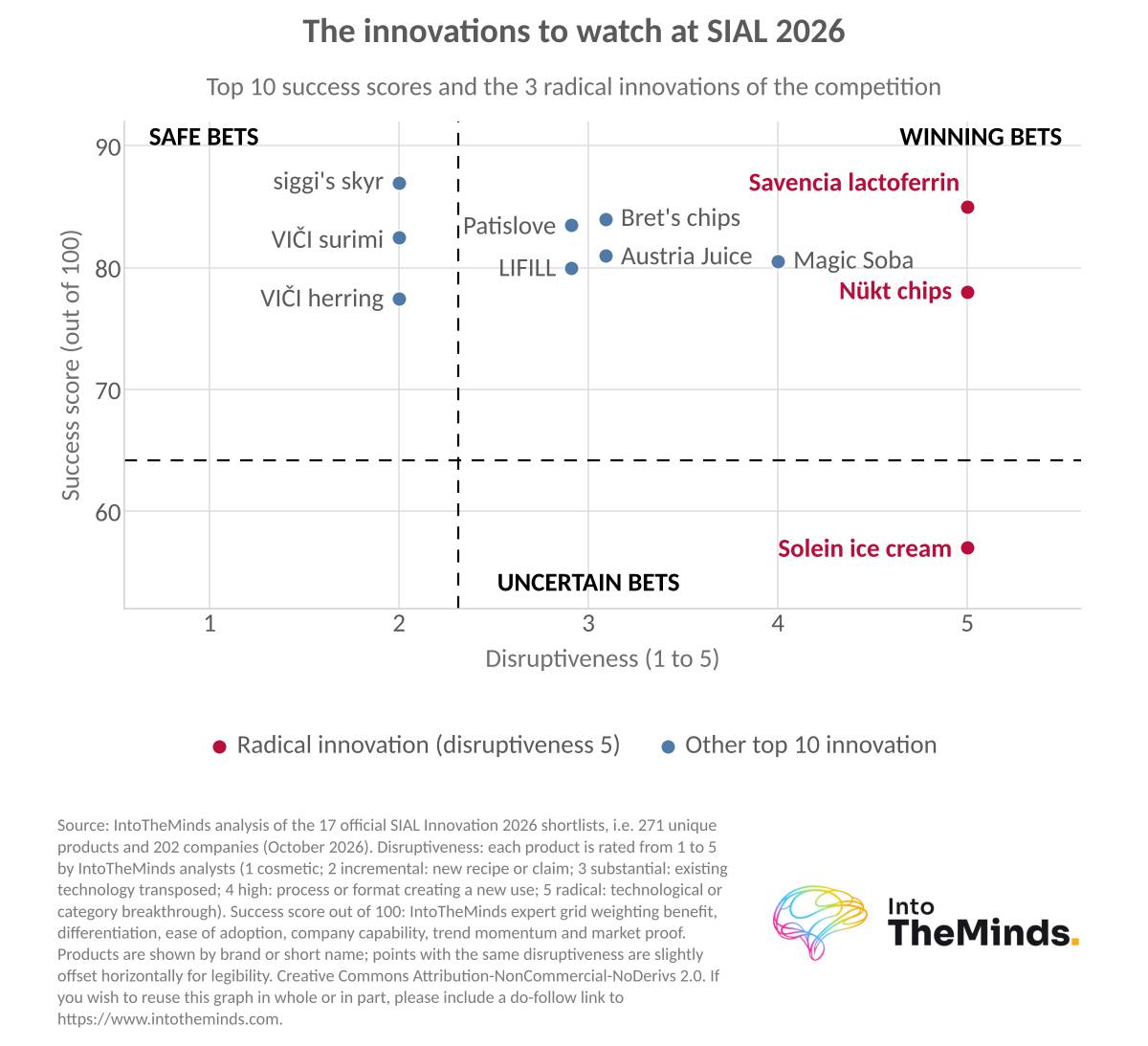
Average disruptiveness stands at 2.31/5. Scores for levels 1 to 4 range between 62.5 and 64.4, and only the 3 radical products take off on average (72.8). Furthermore, rank correlation between disruptiveness and success score is zero (0.03): boldness does not guarantee success. According to the applied calculation rules, these 3 breakthroughs are
- lactoferrin from precision fermentation by Armor Protéines (Savencia group, France, 85/100)
- water-fried chips with no added oil by Nükt (Nuekt AG, Switzerland, 76.5/100)
- a freeze-dried ice cream with microbial protein Solein (Geld Baltic, Star Candies brand, Lithuania, 57/100).
The high average score of radical products masks a 28-point gap between them: breakthrough pays off when backed by a clear benefit and market access, as with Savencia, and remains a gamble when consumer adoption is uncertain, as with Solein protein. Details of our disruptiveness scale appear in the methodology section.
Precision agriculture and modernization of farming practices
Upstream of food production, precision agriculture mobilizes drones, connected sensors and GPS systems. These technologies are used to monitor crops, detect pests and diseases before they spread, and adjust irrigation based on real-time data.
Plant genetics is also advancing through genomic selection and high-throughput phenotyping (near-infrared spectra, image analysis, aerial imagery). Crop rotations make more room for legumes and cover crops. In livestock farming, research focuses on animal welfare, fighting epizootics such as avian influenza, and new biosynthesis pathways for animal nutrition supplements.
Biotechnology, genetics and precision fermentation
Agricultural biotechnologies encompass CRISPR-type gene editing aiming for more resistant crops, as well as biofertilizers and biopesticides. At the other end of the chain, precision fermentation produces molecules once reserved for animal-derived foods, such as lactoferrin from Armor Protéines (Savencia group), the only breakthrough in the 2026 selection brought by a large group. In France, the innovation center Ferments du Futur was inaugurated on October 10, 2024 on the Saclay plateau. Preservation processes are also evolving: high-pressure cold pasteurization (HPP) extends food shelf life without chemical preservatives, and smart packaging indicates freshness.
Digitalization, agritech and foodtech
Since 2016, La Ferme Digitale association has federated Agritech and Foodtech startups in France. Their tools leverage big data, spatial data, robotics and artificial intelligence for decision support. In factories, the food industry must catch up in process automation, predictive maintenance and end-to-end supply chain data traceability.
To explore these technologies further, we offer a short video below.
Sustainability and environmental impact
Here you will see why sustainability is both the most disruptive trend in the competition and one of the least represented. According to INSEE, agriculture accounted for 19% of national greenhouse gas emissions in France in 2022, making it the second largest emitting sector after transport (30%). But proper soil management can also capture and store carbon, making agriculture part of the solution.
In the SIAL Innovation 2026 selection, sustainability accounts for only 8 products as a main trend, but it appears on 13.3% of sheets and reaches an average disruptiveness of 3.25/5. It is supported 87.5% by small companies. Here are 4 examples of upcycling and packaging:
- raspberry seed flour and oil (Oleowita Oil, Oleje Milo brand, Poland);
- shoyu sauce made from upcycled camelina press cake (Olimega, Signé Caméline brand, Canada);
- label made from tomato waste (Agromonte, Italy);
- cheese aged in its clay shell Sei di Coccio (L’Antica Cascina, Italy).
Agroecology meets the same demand in the field: agroforestry, crop rotation, cover crops, reduction of chemical inputs. Aquaponic and hydroponic systems consume less water and enable cultivation in urban environments. For agrifood companies, decarbonization actions are organized from farm to fork:
- in the field: lower-emission raw materials, water efficiency, agrivoltaics, waste recovery;
- at the plant: eco-design, waste heat recovery, low-carbon electrification, reduction of HFCs in the cold chain;
- downstream: distribution and end-of-life of products.
Price accessibility, finally, accounts for only 2 products as a main trend (0.7%) and 6 sheets in total (2.2%). Their high average score (74.0/100) relies on only 2 products and allows no generalization. It mainly signals that the competition, which rewards demonstrable novelty, leaves little room for accessibility innovation.
Proteins and food alternatives
This section compares two opposing responses to the protein question, linking them to public health expectations. On one side, optimized proteins from animal sources. On the other, plant-based alternatives, more technical but less certain of their market.
The protein trend accounts for 17 products and the highest average success score among major trends, at 72.8/100. It is also the trend of large groups, with only 35.3% small companies, in a high-protein food market they know well. siggi’s Fruit & Fiber skyr from Lactalis (14 g of protein per serving, launched in the United States in June 2026) takes first place in our global ranking with 87/100. It precedes VIČI high-protein surimi (CS France, Vičiūnai group), KKODANMYEON chicken noodles (S Foods, JCDM brand, South Korea) and La Daria Proteica mozzarella (Caseificio Andriese, Italy). The protein and fiber duo of siggi’s skyr also aligns with products gaining ground alongside GLP-1 type appetite suppressant treatments.
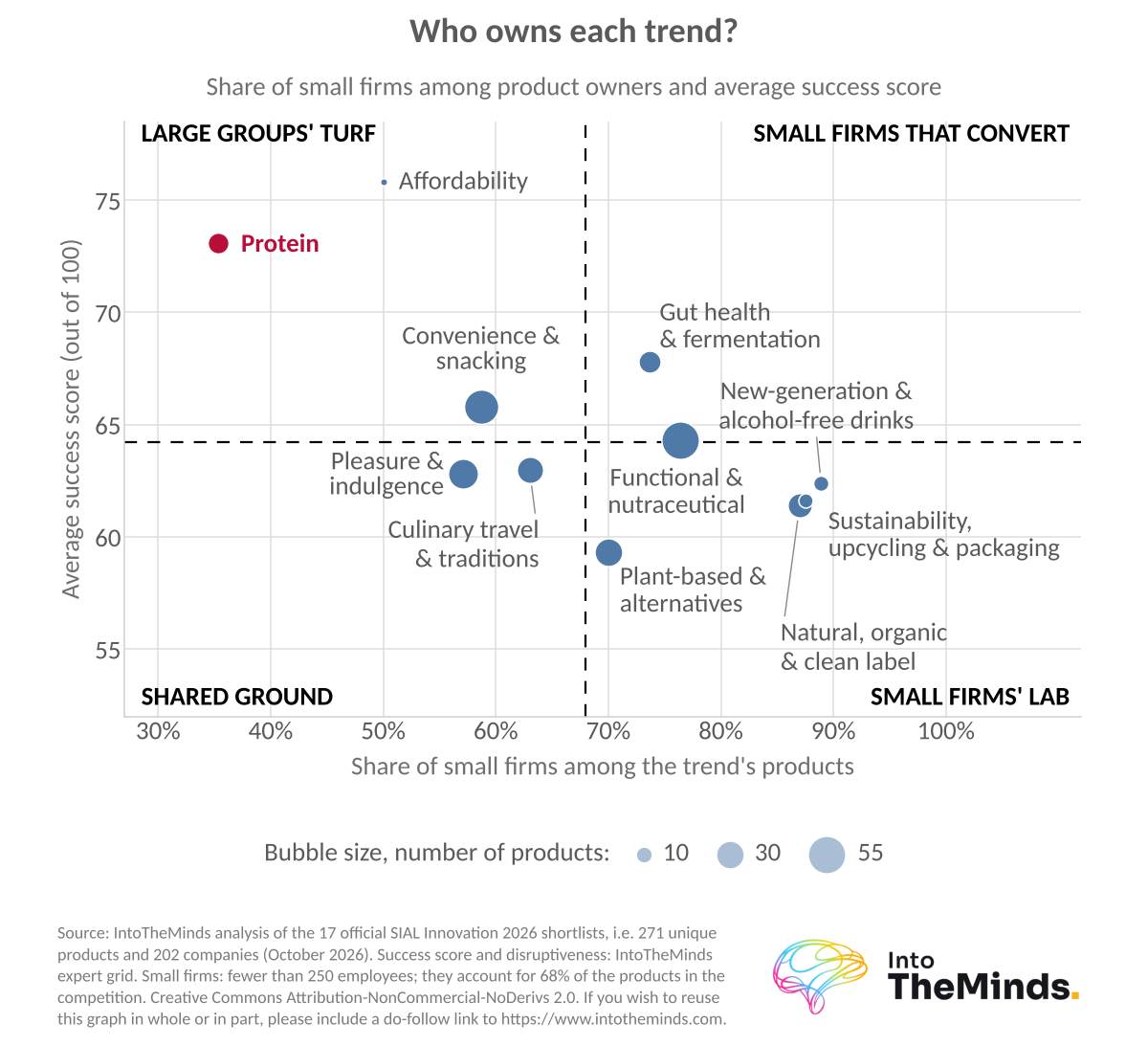
Plant-based alternatives, in a struggling plant-based meat market, account for only 11.1% of main trends, for an average score of 59.3/100, but their disruptiveness reaches 2.63/5. The fibrous-texture plant steak from Rival Foods (Plant Meat Makers, Netherlands), the dairy-plant hybrid Le Végé du Fromager (Fromagerie Dongé, France) and the SÜVY sugar substitute (Innovi Group, France) are the most accomplished examples. Hybrids combining plant proteins and dairy ingredients are a pathway to watch to replace part of animal proteins. Other alternative protein sources (insects, cultivated meat from animal cells) are absent from the 2026 selection.
Public health runs through all these innovations, especially through the reduction of sugar, salt and additives, and through ‘free-from’ claims: nitrite-free chicken chorizo matchsticks (LDC, Le Gaulois brand, France) or apple juice with 30% reduced sugar through fermentation (Austria Juice, Austria, 80/100).
Nutri-Score remains discreet: only 3 product sheets highlight it, Maharajah spread (Salles Frères, Tarti brand), wrap with plant strips (Mix Buffet, Monique Ranou brand) and Pop Comedy popcorn (Re.Snack), all French.
Top 10 SIAL 2026 innovations
Here are the products achieving the highest success scores on our grid, out of the 271 analyzed. This score combines clarity of benefit, differentiation, ease of adoption, company distribution capacity, trend dynamism and early market proof (see our methodology). 2 products are tied for 7th place.
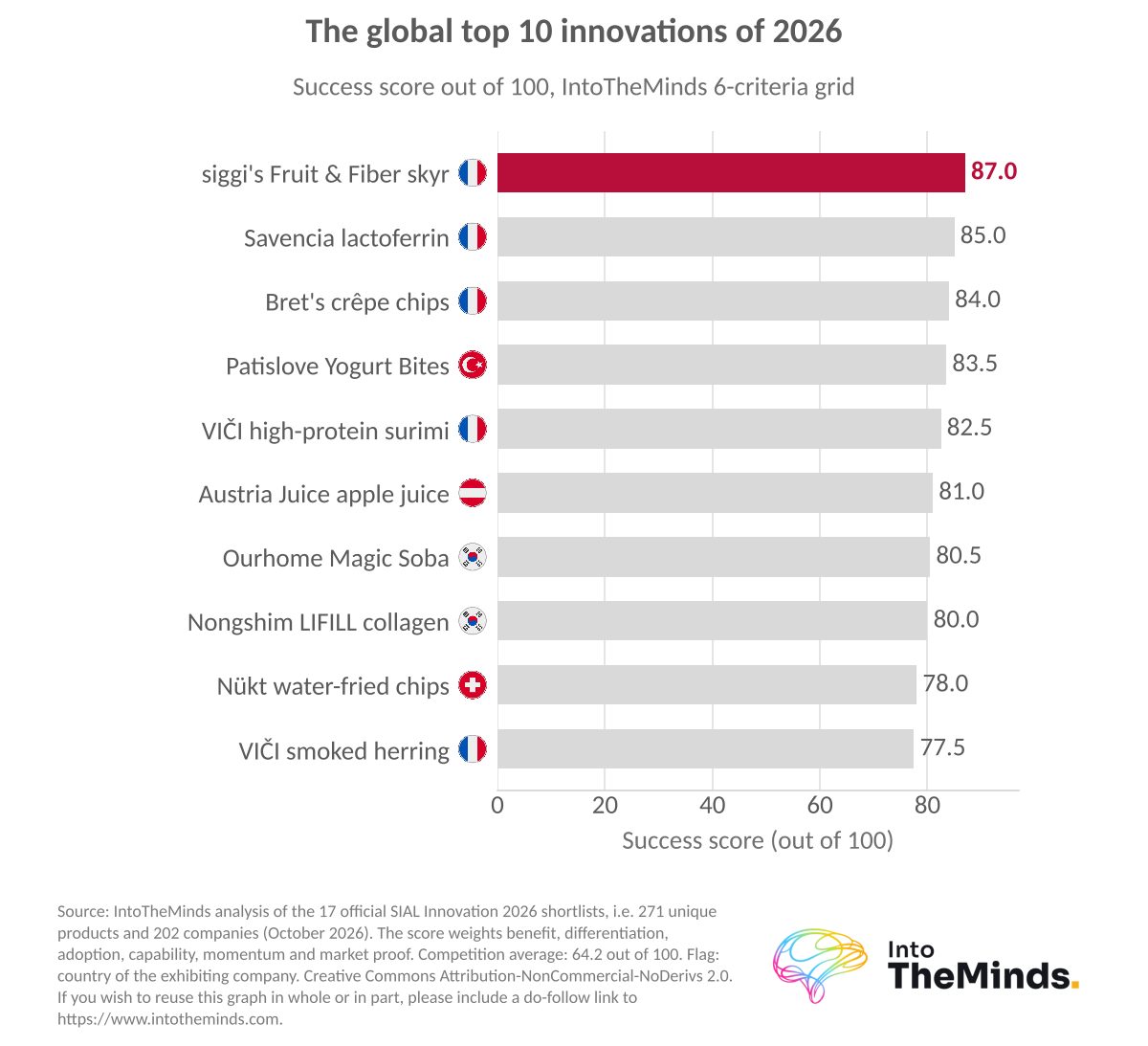
| Rank | Product | Company (brand) | Exhibitor country | Size | Main trend | Disruptiveness (1 to 5) | Score /100 |
|---|---|---|---|---|---|---|---|
| 1 | siggi’s Fruit & Fiber Nonfat Skyr | Lactalis (siggi’s) | France | Large group | Proteins | 2 | 87.0 |
| 2 | Precision fermentation lactoferrin | Armor Protéines (Savencia group) | France | Large group | Functional and nutraceutical | 5 | 85.0 |
| 3 | Salted butter caramel flavor crepe chips | Altho (Bret’s) | France | Mid-cap | Pleasure and indulgence | 3 | 84.0 |
| 4 | Three-Biotic Yogurt Bites Collection | Patislove | Turkey | Mid-cap | Digestive health and fermentation | 3 | 83.5 |
| 5 | Magic Soba | Ourhome | South Korea | Large group | Convenience and snacking | 4 | 80.5 |
| 6 | Reduced-sugar apple juice | Austria Juice (AGRANA group) | Austria | Large group | Naturalness, organic and clean label | 3 | 80.0 |
| 7 (tied) | LIFILL Derma Collagen Signature RN | Nongshim (LIFILL) | South Korea | Large group | Functional and nutraceutical | 3 | 79.0 |
| 7 (tied) | VIČI High-Protein Surimi Stick | CS France, Vičiūnai group (VIČI) | Lithuania* | Mid-cap | Proteins | 2 | 79.0 |
| 9 | Pop Cheese | Savencia Brazil (Quatá) | Brazil | Large group | Convenience and snacking | 2 | 77.5 |
| 10 | VIČI Protein Surimi Noodles | CS France, Vičiūnai group (VIČI) | Lithuania* | Mid-cap | Proteins | 3 | 77.0 |
* VIČI products are presented by CS France, French office of the Lithuanian group Vičiūnai; we attribute them to Lithuania, the group’s country.
The winning profile is easy to read:
- the benefit is understood in a single sentence
- the target category is a mass market
- distribution access is already resolved
On this last point, it should be noted that all 10 products in this ranking are supported by large groups or mid-caps, and none come from a VSE, SME or startup. Water-fried chips by Nükt, a Swiss VSE, narrowly miss the top 10 (11th, 76.5/100). Only one of the 10 products is a radical innovation (lactoferrin): disruptiveness helps, but it is not enough. To go further on what makes a launch succeed or fail, read our analysis of the recipe for success of innovative products. And if you are visiting the trade show from October 17 to 21, our SIAL visit guide will help you organize your itinerary.
With 70 products, France accounts for 25.8% of the SIAL Innovation 2026 global selection.
Geography of food innovation
We present below a funnel-down analysis: global, then Europe, followed by 3 countries analyzed in detail. The table covers the 13 countries presenting at least 5 products.
| Country (2026) | Products | Share of competition | Average score /100 | Disruptiveness | % small companies |
|---|---|---|---|---|---|
| France | 70 | 25.8% | 65.6 | 2.24 | 60.0% |
| Italy | 26 | 9.6% | 64.6 | 2.35 | 84.6% |
| Poland | 18 | 6.6% | 63.1 | 2.22 | 83.3% |
| Turkey | 14 | 5.2% | 65.8 | 2.36 | 35.7% |
| Belgium | 13 | 4.8% | 63.8 | 2.15 | 92.3% |
| Spain | 12 | 4.4% | 62.7 | 2.33 | 58.3% |
| Lithuania | 12 | 4.4% | 65.1 | 2.50 | 50.0% |
| South Korea | 11 | 4.1% | 67.1 | 2.64 | 36.4% |
| Slovakia | 10 | 3.7% | 58.4 | 2.30 | 100% |
| Taiwan | 8 | 3.0% | 58.4 | 1.88 | 87.5% |
| Netherlands | 6 | 2.2% | 62.8 | 2.50 | 100% |
| Czech Republic | 6 | 2.2% | 66.4 | 2.17 | 100% |
| Portugal | 5 | 1.8% | 64.5 | 2.40 | 60% |
On a global scale, South Korea stands out. It displays the highest average disruptiveness among these countries (2.64) with the most large-group oriented contingent in the competition: Nongshim, Ourhome and SPC Samlip. Ourhome’s Magic Soba reaches 80.5/100.
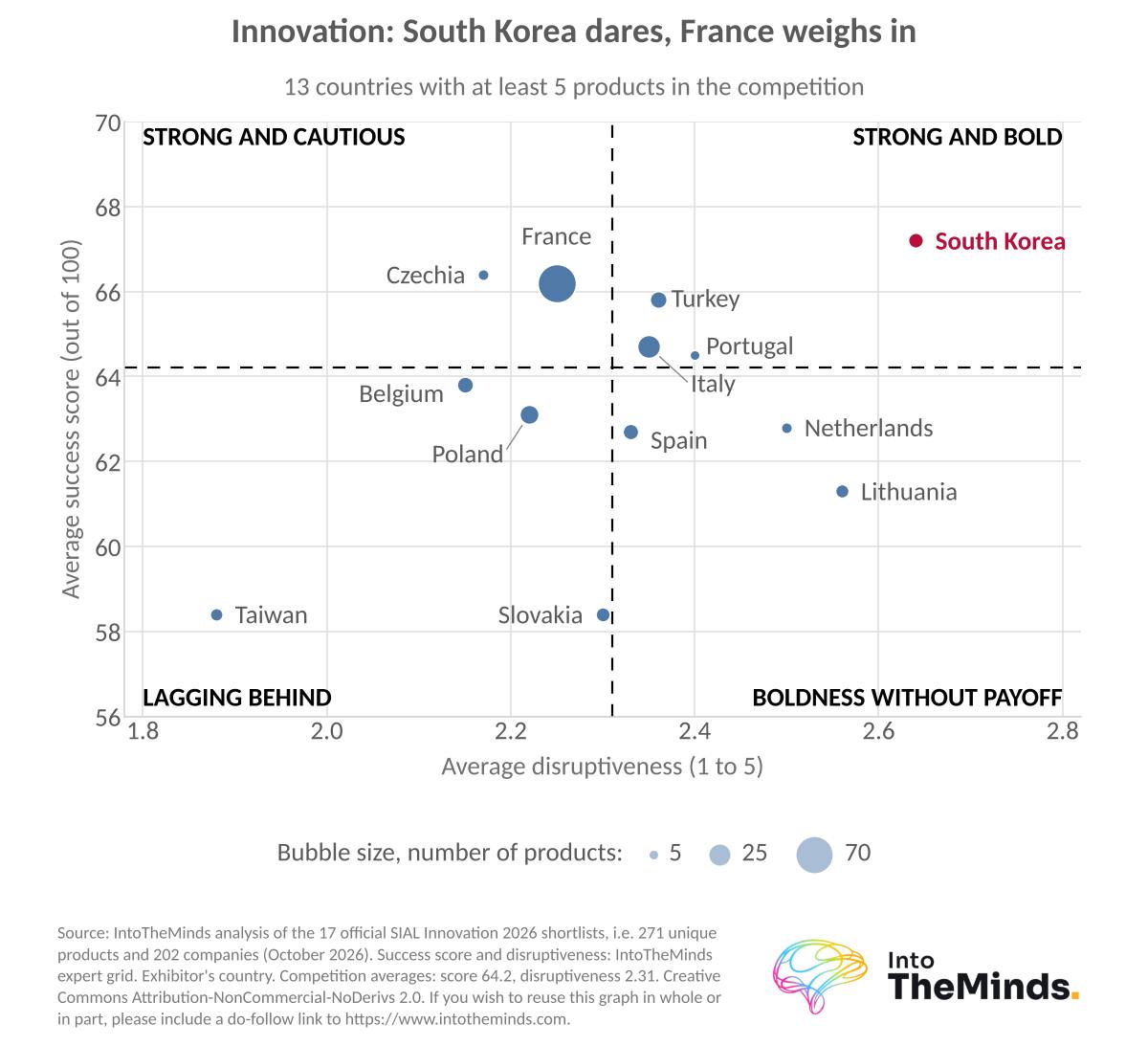
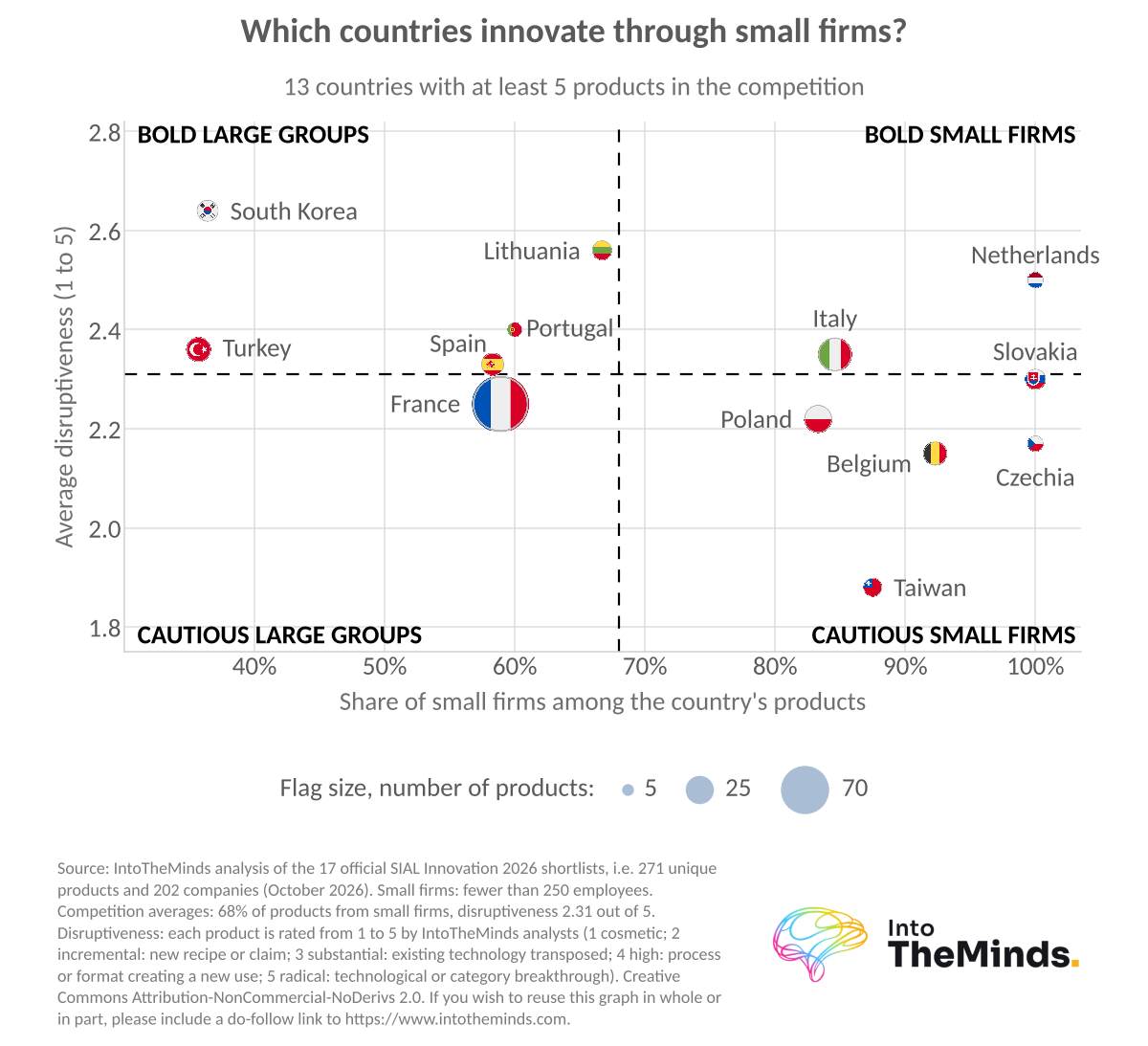
Europe concentrates most volumes (79% of products excluding Turkey, 84% including), with distinct models. Western Europe (153 products) represents established industrial players, with an average score of 64.7. Eastern Europe and the Baltic states (61 products, 82% small companies) form the European functional workshop: 46% of their products fall under this trend, compared to 11% in the West. Italy bets on indulgence and revisited dairy, while Belgium (92.3% small companies) specializes in fiber sodas, natural powdered ingredients and beverages. To visualize this distribution, below is a map.
France: more than a quarter of food innovation in the competition
In 2026, France is by far the leading country in the competition, with 70 products out of 271. This is expected for a trade show organized in France.
The average score of French products presented for SIAL Innovation 2026 (65.6/100) exceeds the selection average (64.1). We measured an average disruptiveness of 2.24.
The French contingent consists of companies of all sizes:
- Large groups: LDC and its duck pastrami (Jean Routhiau brand), Savencia with Armor Protéines lactoferrin and Valrhona Inspiration Matcha, Lactalis with siggi’s;
- Mid-caps: Altho (Bret’s) and its salted butter caramel crepe chips (84/100), Cofigeo (William Saurin), ONORE (Boncolac), Famille Michaud, Famille Mary (Léa Nature group);
- SMEs and cooperatives: Mousline, Jeune Montagne, Labo Dumoulin and its tepache, Fromagerie Dongé;
- Food-tech startups: Edonia and its Cocoriton spirulina fingers, Panacea (founded in 2024) with the MYÜ brand, Innovi Group with SÜVY.
Only 60.0% of French products come from small companies, compared to 83 to 100% in most other European countries. Large French manufacturers play at home, and it shows.
Italy: an SME market focused on indulgence
Italy has always been fertile ground for the agrifood sector. Transalpine companies present 26 innovations this year
- 84.6% are supported by small companies
- they obtain an average score of 64.6/100 according to our success score.
Dominant trends are convenience (7 products) and pleasure (6 products). Revisited dairy holds a prime position with Sei di Coccio (L’Antica Cascina, Packaging Special Award), Bufala Cuore di Kefir (Ponte Reale) and a chili burrata (Sanguedolce). The best Italian score goes to Probiotica probiotic pasta from Pastificio Liguori (74.5/100, Press Choice Award).
Poland: the European functional workshop
Poland aligns 18 products in 2026, including 8 in functional and nutraceuticals. They are mostly the work of small companies (83.3%). This illustrates a broader regional dynamic. Slovakia places 7 of its 10 products in this same territory, entirely via small companies, but its average score caps at 58.4/100. Eastern Europe innovates in functional foods but still struggles with market access.
VSEs and SMEs represent 71% of exhibitors and support 67% of products.
Profiles of innovative companies
This section answers 2 questions:
- who drives food innovation
- how to finance it.
We qualified the 202 exhibitors through documentary research from October 6 to 11, 2026.
| Company size (world, 2026) | Companies | Products supported | Average disruptiveness | Average score /100 |
|---|---|---|---|---|
| VSEs (fewer than 10 employees) | 55 | 69 | 2.41 | 58.8 |
| SMEs (10 to 249 employees) | 88 | 113 | 2.36 | 62.7 |
| Mid-caps | 41 | 60 | 2.00 | 69.5 |
| Large companies | 13 | 22 | 2.41 | 73.6 |
| Unknown size | 5 | 7 | – | – |
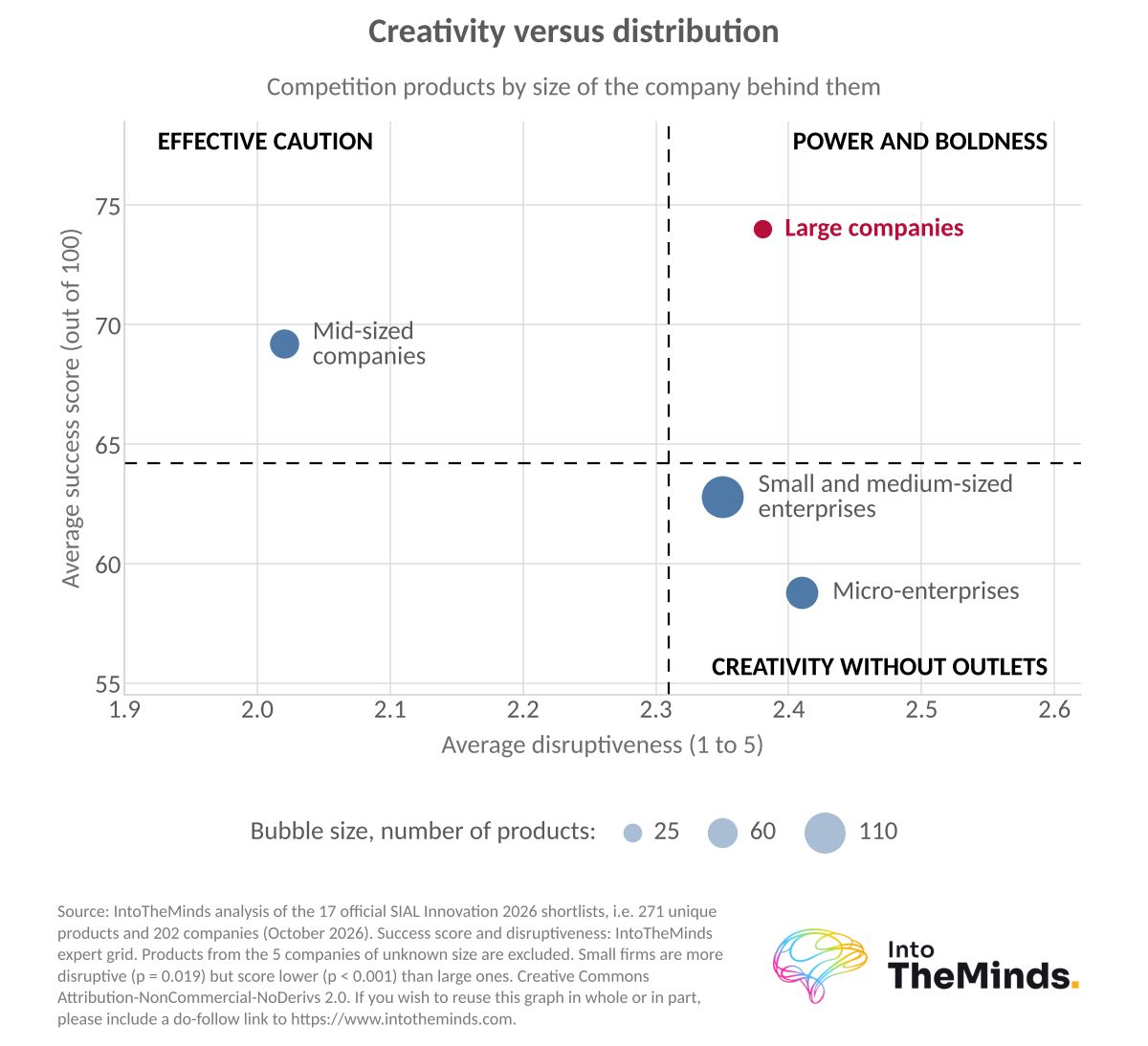
VSEs and SMEs represent 71% of exhibitors and support 67% of products. Their innovations are significantly more disruptive (2.38 vs 2.11, p = 0.005). But their success score is lower by 9.4 points (61.2 vs 70.6). The gap comes neither from clarity of benefit nor from differentiation, which are virtually identical. It stems from ease of adoption (3.28 vs 3.62) and distribution capacity, which weighs on the score by design and alone explains about 8 of the 9.4 point gap. The bottleneck for small companies is distribution, not creativity.
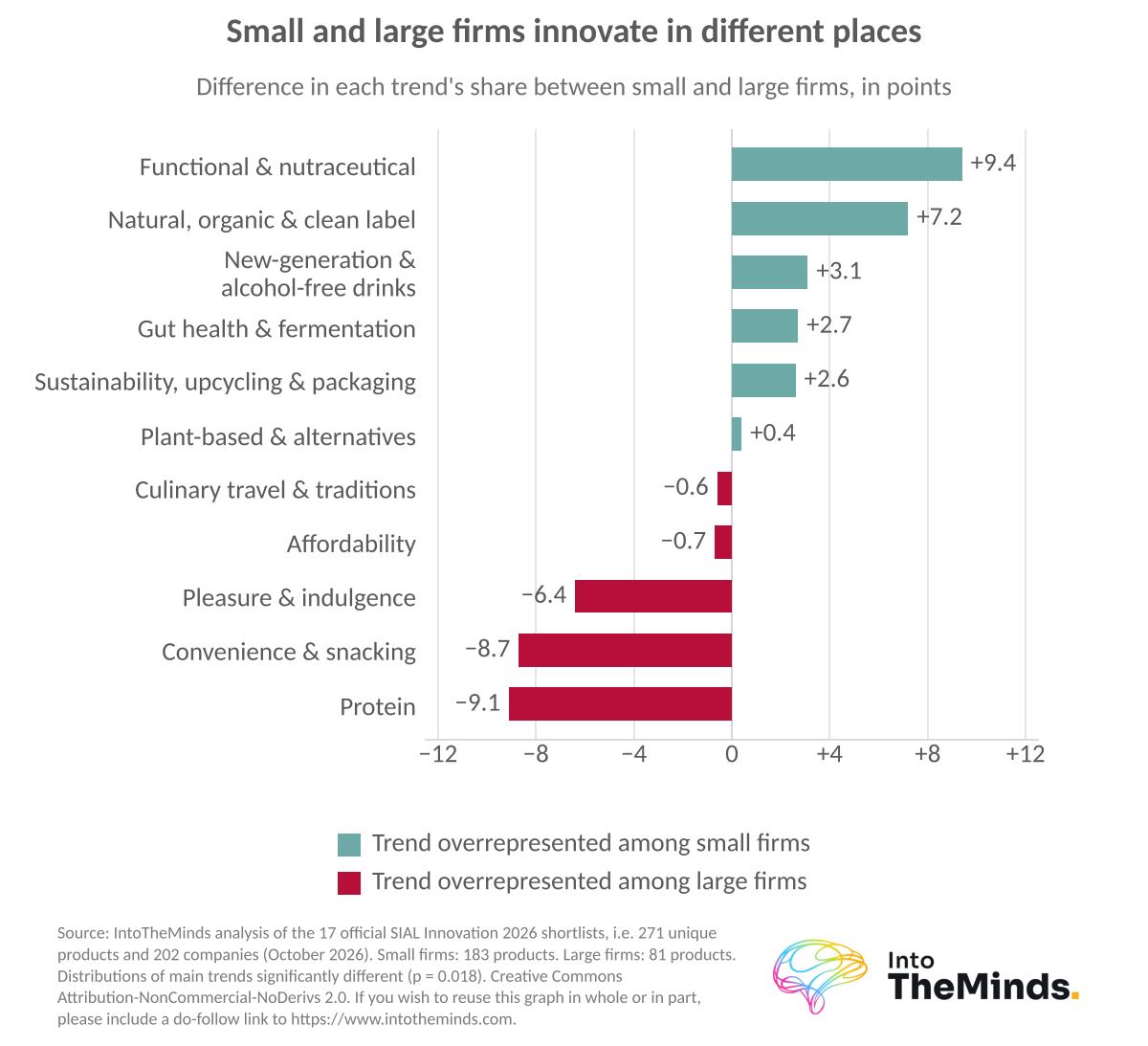
Innovation territories are also divided (chi², p = 0.03).
Small companies invest in functional foods (22.0% of their products, vs 13.4% among large ones) and naturalness, including organic, categories with low industrial barriers and strong storytelling.
Large companies lock down the protein market (12.2% of their products, vs 3.3% among small ones), snacking and indulgence, which are volume and shelf space games.
For an SME, testing consumer adoption through a B2C market research prior to launch reduces this handicap and increases chances of success.
Methodology
This section details where our figures come from, how we measured innovation disruptiveness and how we calculated their success score. It also outlines the limitations of the exercise.
Data analyzed
- Product sheets: we extracted 300 sheets from the 17 official shortlists published on October 5, 2026. The 27 products appearing in 2 or 3 shortlists were counted only once, leaving 271 unique products. For each product, we utilized the description, category, launch date and country, selection committee review, exhibitor, manufacturer and brand. The “innovative character” field was empty on all sheets.
- Companies: we qualified the 202 exhibitors through documentary research from October 6 to 11, 2026 (national company registries, official websites, trade directories, press): headcount, turnover, group affiliation, creation year. We classified them according to European thresholds for VSEs (fewer than 10 employees) and SMEs (10 to 249), and French definition for mid-caps (250 to 4,999 employees, with turnover not exceeding 1.5 billion euros or total balance sheet not exceeding 2 billion), with large companies beyond. VIČI products, presented by CS France, French office of Lithuanian group Vičiūnai, are attributed to Lithuania. 136 headcount classes rest on sourced data, 61 were estimated from circumstantial evidence, and 5 remain unknown.
- Trends: each product received a main trend and up to 2 secondary trends, on a grid of 11 trends built from major international food innovation barometers published for 2026.
Measuring disruptiveness
Disruptiveness measures the gap between a product and what already exists on shelves. We rated it on a scale of 1 to 5, product by product, based solely on the official sheet (description and selection committee review). For each sheet, we attempted to answer 3 questions:
- does the product rely on a new technology or process?
- does it create a new use or consumption experience?
- does it open a new category or combine previously separate categories?
The level retained reflects the most marked gap observed across these 3 dimensions. Here are two examples to illustrate our approach:
- a new flavor on a known product remains at level 1, even if very well executed.
- a process that changes what the product is reaches level 5, even if the recipe remains simple.
| Level | Definition | Examples from the 2026 selection | Products | Share |
|---|---|---|---|---|
| 1. Cosmetic | New flavor, new variation or minor format of an existing product | Chili burrata (Sanguedolce), smoked mozzarella balls (Nonno Nanni) | 32 | 11.8% |
| 2. Incremental | Improved recipe, added claim, adaptation of a market standard | siggi’s fiber-enriched skyr (Lactalis), sliced smoked herring VIČI | 143 | 52.8% |
| 3. Substantial | Unprecedented association of ingredients or categories, or existing technology transposed into a new category | Crepe chips (Bret’s), mozzarella with kefir center (Ponte Reale), tri-biotic bites (Patislove) | 79 | 29.2% |
| 4. High | Process, format or packaging creating a new use or consumption experience | Magic Soba (Ourhome), A2 milk yogurt pearls in seaweed shell (Vomond), cheese aged in clay shell (L’Antica Cascina) | 14 | 5.2% |
| 5. Radical | Technological breakthrough or category creation | Precision fermentation lactoferrin (Armor Protéines), water-fried chips (Nükt), Solein protein ice cream (Geld Baltic) | 3 | 1.1% |
Disruptiveness says nothing about product quality or commercial potential: a level 2 product can be an excellent product, and a level 5 product a risky gamble. That is why we calculated it separately from the success score. Coding was conducted with AI model assistance, based exclusively on official sheets and by a single coder; it was not double-coded.
How we calculated the success score
The success score, out of 100, combines 6 weighted dimensions:
| Dimension | Weight | How it is measured |
|---|---|---|
| Clarity of consumer benefit | 20% | Score from 1 to 5 assigned product by product |
| Differentiation from existing offer | 15% | Score from 1 to 5 assigned product by product |
| Ease of adoption (taste, habits, perceived price) | 20% | Score from 1 to 5 assigned product by product |
| Company ability to distribute | 20% | VSE 1.5; SME 2.5; Mid-cap 4; Large company 5; Company controlled by a group, holding or fund at least 4.5 (5 if the group is a large group); Unknown size 2.5 |
| Trend dynamism | 15% | Value from 3 to 5 assigned to each trend based on 2026 barometers: 5 for functional and proteins, 4.5 for digestive health, convenience and new generation beverages, 4 for naturalness, pleasure, culinary journey and price accessibility, 3.5 for sustainability, 3 for plant-based |
| Market proof | 10% | Base 2.5; +1 if product is already launched; +1.5 if SIAL Innovation 2026 sector winner; +0.5 for a special competition prize or documented external reward; capped at 5 |
The formula is: score = (0.20 × benefit + 0.15 × differentiation + 0.20 × adoption + 0.20 × capacity + 0.15 × dynamism + 0.10 × proof) / 5 × 100. Across 271 products, average score reaches 64.1/100, median 64, and scores range from 48 to 87. Half of products fall between 59 and 69.
To compare small and large companies, we used the Mann-Whitney test (adapted to ordinal scale scores) and, for trend distribution, the chi-square test (p-value calculated by simulation when counts are low), and Spearman’s rho for correlation between disruptiveness and score, at a 5% threshold.
Limitations of the study
- The success score is a transparent, reproducible expert grid. It is not a predictive model calibrated on sales or product survival data.
- Distribution capacity accounts for 20% of the score: the gap between small and large companies is therefore partly mechanical. That is why we also compare sub-scores for benefit and differentiation, which are virtually identical between both groups.
- Analyzed products were selected by a committee: they do not form a representative sample of all global launches.
- 61 company sizes were estimated and 5 remain unknown; figures by size therefore carry a margin of uncertainty.
- Dynamism is assigned by trend: score differences between trends are partly assumed by hypothesis.
- The score evaluates chances of success in the launch market indicated on the sheet (United States for siggi’s, South Korea for Magic Soba and LIFILL, Brazil for Pop Cheese), not in Europe.
- Scoring was conducted after sector winners were announced (official list updated October 7, 2026); Gold, Silver and Bronze Grand Prizes, awarded October 17, are not integrated.

FAQ: questions you may have
What are the most promising food innovations currently?
According to our analysis grid of the SIAL Innovation 2026 selection, proteins display the best average potential (72.8/100). siggi’s Fruit & Fiber skyr from Lactalis tops the list with 87/100, ahead of precision fermentation lactoferrin from Armor Protéines (85/100). Digestive health and fermentation follow with 67.7/100.
How did you measure the disruptiveness of SIAL 2026 innovations?
Each product was rated from 1 (cosmetic) to 5 (radical) based on its official sheet, according to 3 questions: technological novelty, new use, new category. The level retained reflects the most marked gap. Result: 65% of the 271 products are cosmetic or incremental, and only 3 are radical.
How do small companies innovate against large agrifood groups?
They bet on disruptiveness and niches with low industrial barriers. Their products are more disruptive (2.38 vs 2.11) but obtain 9.4 points less in success score due to lack of distribution access. A B2B market research with retail buyers helps overcome this hurdle.
What is the real impact of innovation on agricultural sustainability?
It remains limited in volume. Sustainability is the most disruptive trend in the 2026 selection (3.25/5), but accounts for only 8 products as a main trend. Agroecology, upcycling and eco-design are the most advanced avenues.
Where can funding be found to launch a food innovation?
In France, main funding schemes are France 2030, CIR, CII, Bpifrance, FranceAgriMer and ADEME. In 2021, the government announced that France 2030 would allocate more than 2.3 billion euros to agricultural and food transitions.
How can consumer reception of a new food product be measured?
Through a survey of the target audience before and after launch. In our grid, ease of adoption weighs 20% of the success score, as much as clarity of benefit. A brand awareness survey or an opinion survey then measures product spread.