Over the past 20 years, I’ve worked on numerous ideas that have allowed me to publish thousands of articles on this blog. Creativity isn’t innate. In this article, I analyze 3 factors that help nurture it.

In today’s blog post, I wanted to step away a little from the marketing and data topics I usually cover. If you read this blog, you know that I launched it nearly 20 years ago, and finding topics to write about three times a week is a real challenge. It requires discipline but also a certain dose of creativity. Moreover, creativity is also an essential ingredient in my marketing consulting work. Clients indeed want new and differentiating solutions. But where does creativity come from? How does the ability to invent and renew arise? In the era of generative AI, often thought to be gifted for creation, I focused on the factors that foster creativity.
Contact the IntoTheMinds consulting firm
If you only have 30 seconds
- creativity and simplicity are closely linked: striving for simplicity allows for breakthrough (“disruptive”) innovations
- economy of means allows one to reach the essence of things and catalyze innovation
- creativity depends on the convergence of fertile minds: it can flourish intensely in one place, or sometimes spread over time or space
 Factor 1: Simplicity as a driver of innovation
I keep telling our clients that a good innovation—meaning an innovation whose primary goal is to satisfy and retain customers—must be simple. Simplicity is a virtue that technophiles often forget. While most current innovations seem to come from technology, technology should not become the central argument of a marketing strategy. Simplicity and elegance of the solution must prevail so that the focus remains on customer satisfaction. As Leonardo da Vinci said: “Simplicity is the ultimate sophistication.”
Simplicity is the ultimate sophistication.
Leonardo da Vinci
Innovating simply may be the most difficult task. Excessive sophistication is a disease that affects 99% of innovations. To convince yourself, just look at the smartphone market. What has happened since the launch of the iPhone in 2007: screens got bigger, cameras became more powerful. Yet the 2007 iPhone still meets the needs of 2020. The very essence of disruptive innovation is its simplicity. Achieving simplicity is a challenge. As Vincent Van Gogh once wrote to Paul Gauguin: “How difficult it is to be simple.”
This quest for simplicity is also a common concern among artists. To illustrate this, here are two examples.
Brancusi
The theme of the bird is present from 1910 in Brancusi’s work, which he devoted himself to for nearly 30 years. He declared: “All my life, I have sought only the essence of flight.” This pursuit of essence compelled him to “be simple.” Aware of this connection between simplicity and the search for the essential, he added: “Simplicity is not a goal in art, but we arrive at simplicity despite ourselves, by approaching the true meaning of things.”
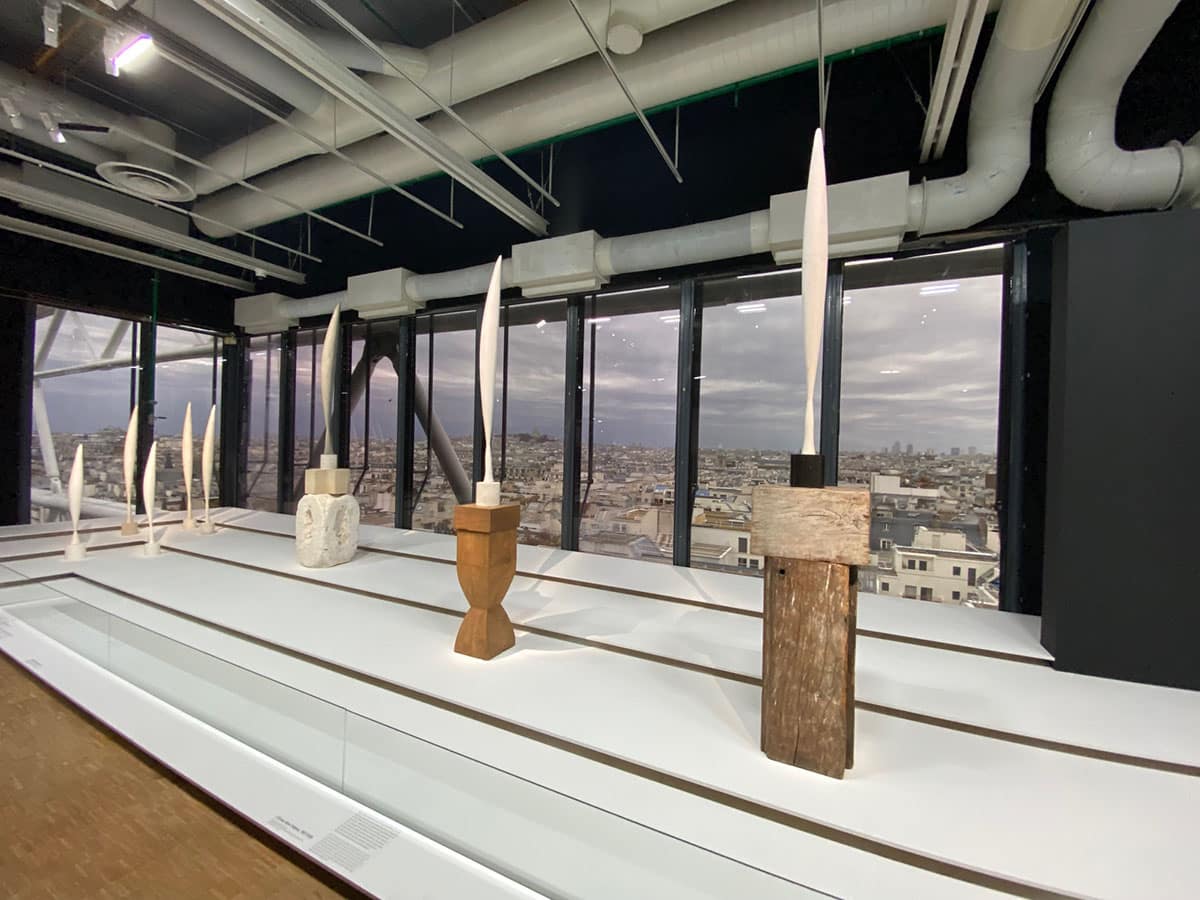
“Bird in Space” is a recurring theme in Brancusi’s work. He sought to capture the essence of flight through this series. Photo taken during the retrospective at the Georges Pompidou Center.
Miro
Miro’s work, dreamlike, is full of creations that seek to express an emotion or a sensation. In 1924, Miro rejected realism (copying the visible world). He created a new mode of expression, a new visual language. The sign becomes meaningful. “To conquer freedom is to conquer simplicity. So, ultimately, a line, a color is enough to make the painting,” he said.
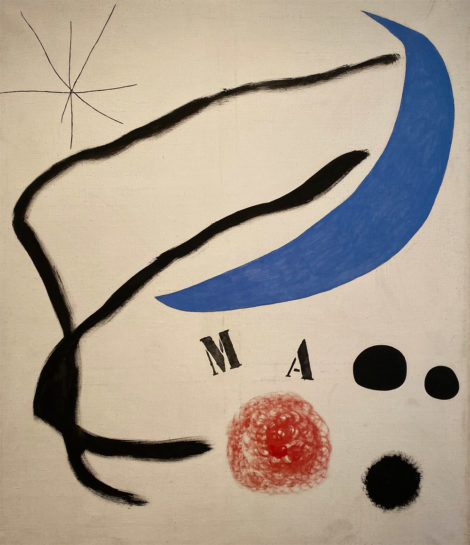
The names Van Gogh, Brancusi, and Miro are remembered for the strength of their artistic creations, just as we remember Steve Jobs and James Dyson for their technological creativity. Therefore, the parallel between apparently distant fields is worth making.
 Factor 2: Networks, essential for sparking ideas
This paragraph focuses on creativity that arises from interactions with other people. In other words, it shows that concentrating fertile minds can boost creative capacity.
It’s no secret that creativity is inspired by other artists. In another article, I discussed how artists reinvented the work of their predecessors or contemporaries, taking Caravaggio and Rubens as examples. It is well established that the course of art was also influenced by creative hubs—melting pots where artists feed their inspiration and develop their ideas. Think, of course, of the Netherlands in the 17th century. The so-called Golden Age was built on the extraordinary wealth generated by trade with the Indies and the rise of several generations of artists “sponsored” by that wealth.
Venice was another important center of creativity for the same reasons. At the crossroads of maritime trade routes, the city’s wealth attracted the most talented artists, who contributed to an unprecedented creative flourishing: Bellini, Titian, Tintoretto, Veronese, and Tiepolo left their mark on the city. They brought along lesser-known artists who spread throughout the country (like Carlo Crivelli and Lorenzo Lotto, who built his career in the Marche after leaving Venice), or others who found success elsewhere (like El Greco).
Monetary wealth, however, is not a necessary condition to foster this creative stimulation. In New Guinea, the Sepik River valley is recognized for the intensity of its artistic creation. Wealth, in the Western sense, is a foreign concept in this remote area (even today). One can also think of Cubism, which emerged in Paris among artists living modestly, mostly émigrés (Picasso, Modigliani, Gris…).
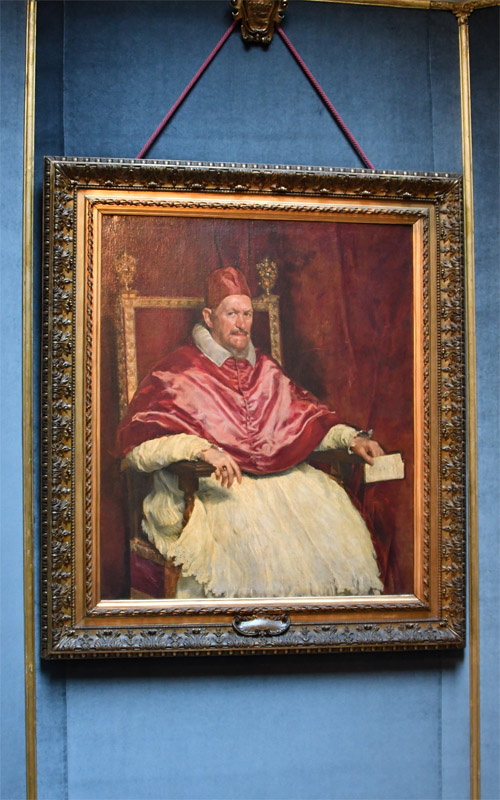
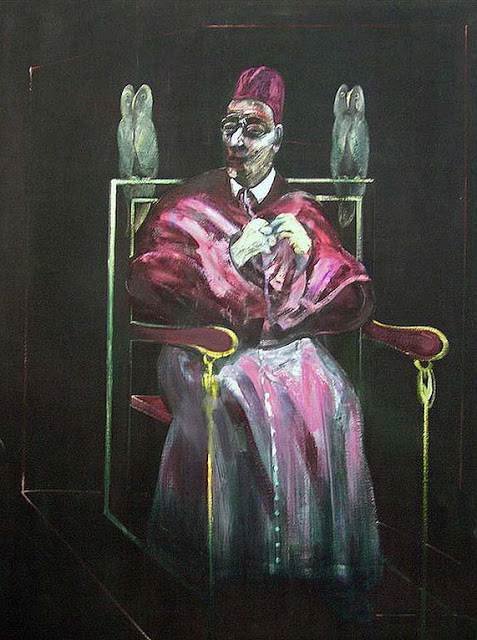
From left to right: Portrait of Innocent X by Velázquez (1650, Galleria Borghese, Rome); The Pope with Owls by Francis Bacon (1958, Royal Museums of Fine Arts, Brussels)
Yet this collision of ideas sometimes extends across long temporal or geographic distances. Temporally, as shown by Bacon’s obsessive work following Velázquez (above). Geographically, as shown by the Cubists’ interest in what were still called “primitive” arts at the end of the 19th century.
How could one not see this influence when comparing the Mahongwé mask (Congo, below) with Picasso’s Les Demoiselles d’Avignon? Yet the Catalan artist never had the chance to see this specific mask. It was documented and brought to Europe after Les Demoiselles d’Avignon had been painted. An interesting artistic trajectory, bringing artists together who are separated—if not by decades, at least by thousands of kilometers.
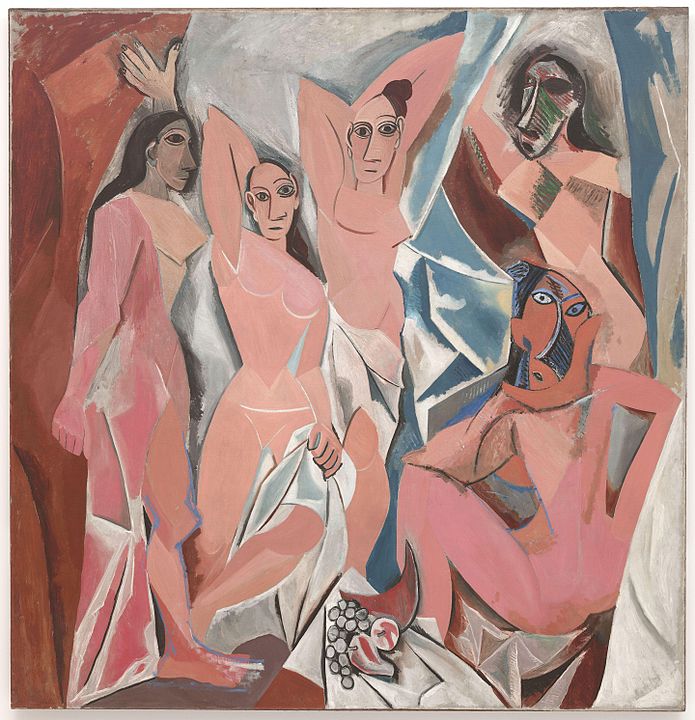
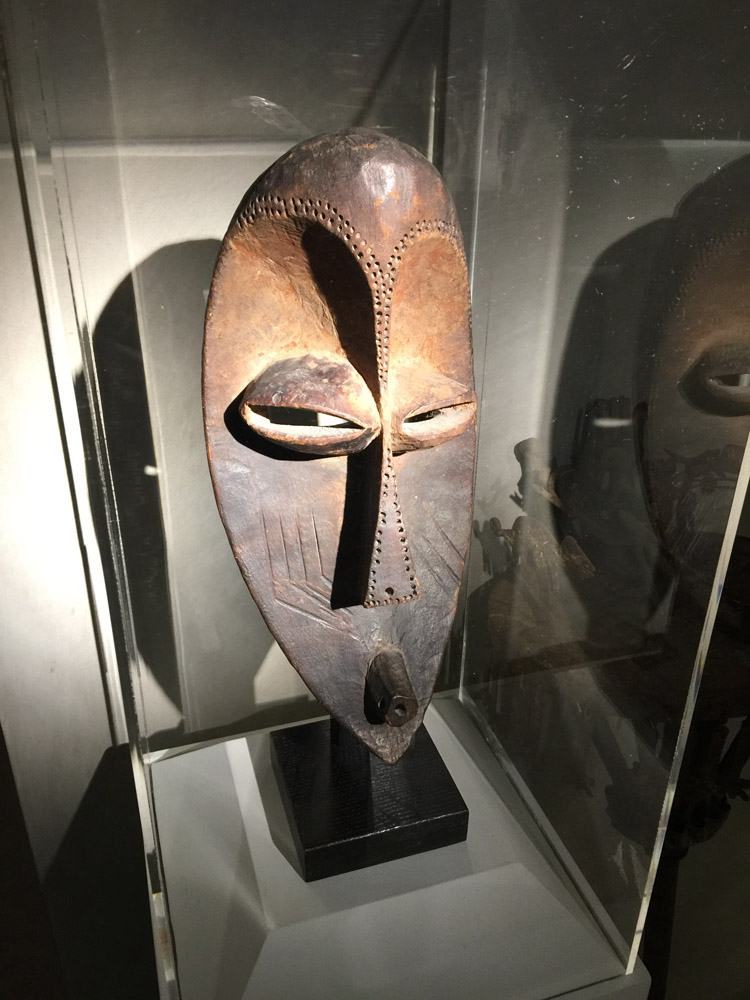
From left to right: Les Demoiselles d’Avignon, Pablo Picasso (1907, MoMA, New York); Mahongwé mask, Congo (undated, Fondation Barbier-Müller, Geneva)
It seems, then, that artistic creation converges at certain moments toward specific forms and motifs. Such convergence has also been observed in scientific and technological fields. As Ogburn and Thomas (1922) note in their article “Are Inventions Inevitable? A Note on Social Evolution,” sunspots were discovered simultaneously in 1611 by four scientists in four different countries: Galileo in Italy, Scheiner in Germany, Fabricius in Holland, and Harriott in England. Check this article to be convinced of one thing: when conditions are right, the same idea can emerge simultaneously in multiple locations.
 Factor 3: When you have nothing, you must be creative
The answer to this question became clear to me during a visit to the Louvre. In one of the rooms, objects of Cycladic art are displayed. This island group in the Aegean Sea gave rise, around 3300 BCE, to a civilization that produced white marble idols of remarkable aesthetic purity.

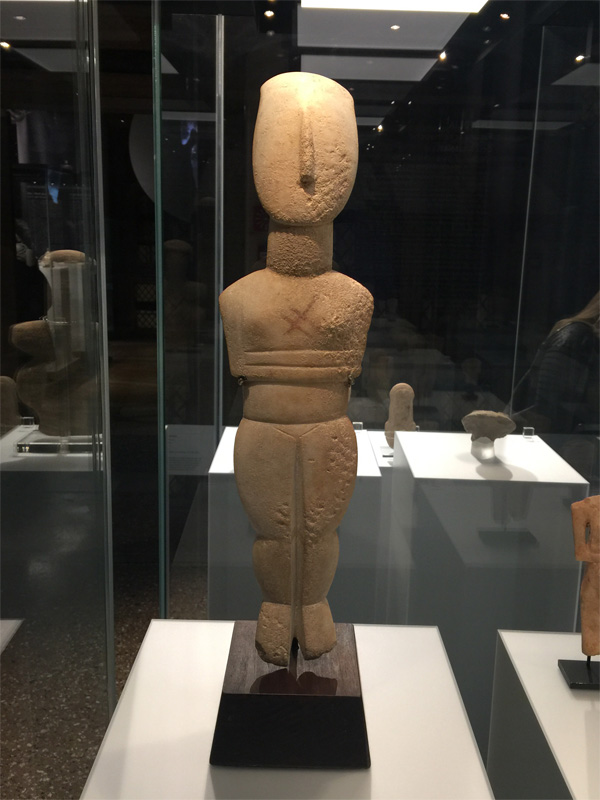
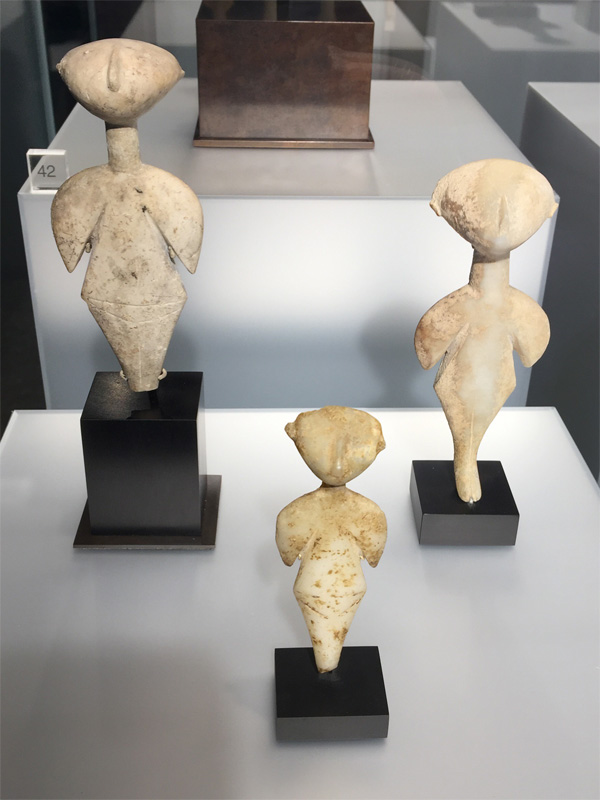
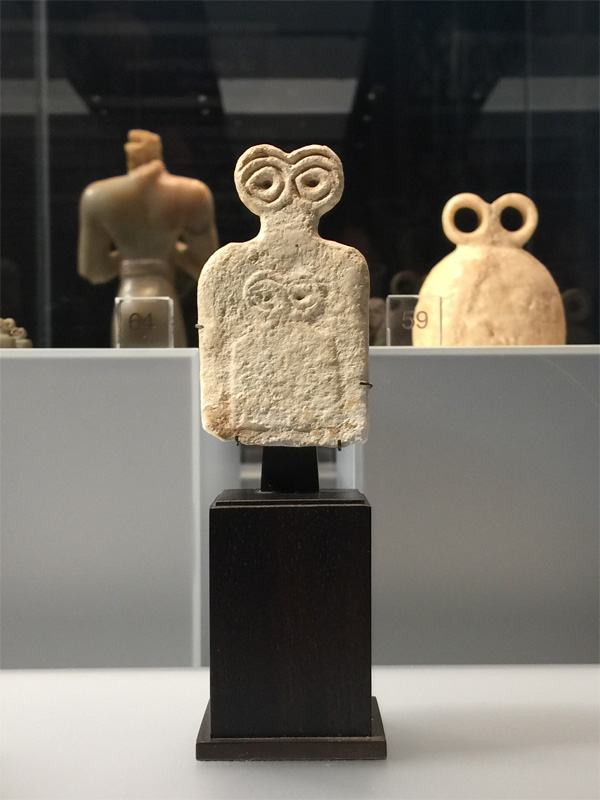
From left to right: violin-shaped figures (Cyclades, 3300–2700 BCE), idol (Cyclades, 3300–2700 BCE), Tipo Kilia figures (Western Anatolia, 3300–300 BCE), Eyeglass idol (Western Asia, 3300–3000 BCE)
Technical limitations in marble work likely imposed on Cycladic artists a sparing use of means in shaping their works. The same sparing approach is found in other figurines created at similar times in different parts of Europe and the Middle East: in Western Anatolia (ca. 3300–3000 BCE), Sardinia (ca. 4000–3000 BCE), Cyprus (ca. 4000 BCE). The aesthetic proximity of these female figures inspired a video (see below), encouraging reflection on the factors behind this similarity.
Scarcity of resources is a catalyst for creativity.
Of course, there could have been exchanges between these peoples. But wouldn’t it be more elegant to consider another hypothesis: that the constraints imposed by material and available technology in that remote era enforced economy of means and a requirement for simplicity?
Even in business, this economy of means is a source of creativity. Take the example of Timothy Prestero. He invented a neonatal incubator using car parts. The technology is simple. So simple that even in the most remote countries, local populations can perform repairs themselves. The added value is enormous, as high-tech incubators last only a few years in these countries. Another true example is the Apollo 13 mission, where a CO2 filter had to be built from scratch to save the astronauts.
In other words: scarcity of resources is a catalyst for creativity. You innovate best in deprivation.

Conclusion
In this article, I tried to show that creativity requires several prerequisites:
- a network of people to exchange ideas so that they collide. This collision can occur in one location (Amsterdam in the 17th century, Venice in the 15th, Paris in the 20th) or across distances (Bacon-Velázquez, African Art-Cubism)
- a desire to seek the purest form of expression (the essence)
- economy of means
Being creative requires effort. Nothing is innate, and it would be wrong to assume that the creative act is spontaneous. In business, it’s the same. You become creative because you want to, because you need to. Companies must therefore instill a culture of creativity that motivates employees to move forward and want to innovate. The prerequisites must be present, but motivation arises within each of us.