Discover the latest figures in this study of the Prosecco market. We examine the key drivers behind its growth and explain why it overtook Champagne in France by 2026. Despite this spectacular expansion, our data indicates that the Prosecco market is now entering a phase of consolidation.
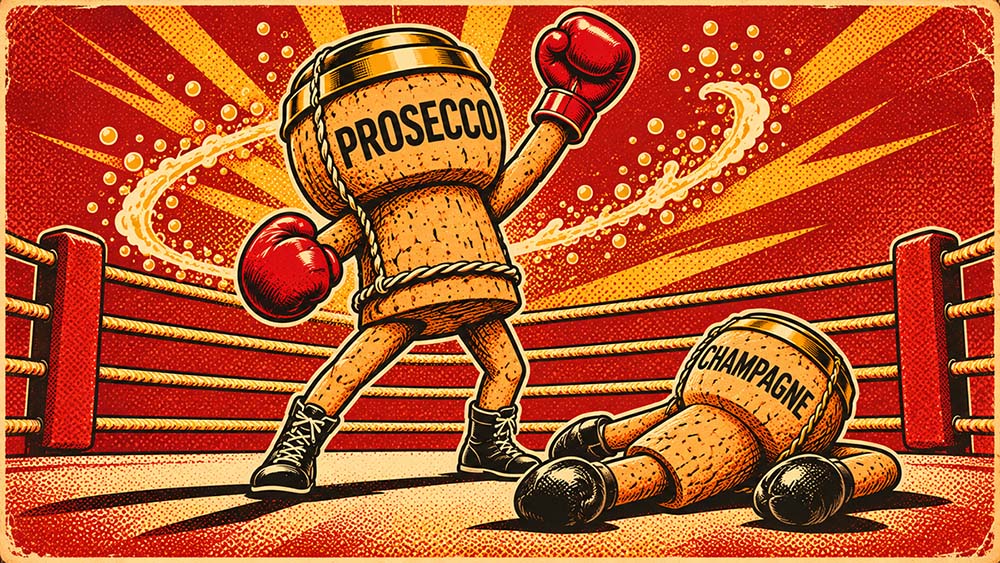
It’s an earthquake. For the first time, more bottles of prosecco than champagne were sold in supermarkets and hypermarkets in France! Bars and restaurants are following suit. In 2025, their purchases of prosecco from wholesalers surged by 22.6% in volume, while those of champagne declined by 5.5%. Globally, sales of Prosecco grew from 142 million bottles in 2009 to 667 million in 2025 (+500%!). Facing a declining champagne and weakened competing sparkling wines, prosecco has changed dimension. But its growth is maturing and its dominance is no longer guaranteed.
The figures you will find in the study below provide an initial measure of the scale of the prosecco market. The analysis was carried out by our market research agency, which has developed expertise in the agri-food sector, and in particular wines and spirits, for over 20 years (see for example the use of eye-tracking to analyze wine label effectiveness). Do not hesitate to contact us if you have any questions. We are happy to help.
Contact the IntoTheMinds institute
Key takeaways
- Global: 667 million bottles of Prosecco DOC sold in 2025 for €3.6 billion; more than 82% of volumes are exported to 164 countries.
- The United States is the leading export market (23.8% of exported volumes between January and September 2025), ahead of the United Kingdom, France, and Germany.
- France: for the first time, more bottles of prosecco than champagne sold in mass retail (25.31 million vs. 25.23 million over 12 months to end-July 2026); €159.7 million in sales across all channels over 12 months to P9 2025 (+11.6%), with volumes still up 9.3% over 12 months to end-May 2026, while champagne declined by 5.5%.
- French leader Riccadonna (Campari) went from 38% of the market in 2014 to 21.2 points in value in 2025; private labels capture 25.3% of volumes.
- Main risks: overproduction and banalization, climate, US customs duties, rise of moderation.
The prosecco market in figures
The global prosecco market is measured by its size, segmentation by type and channel, and the geography of its outlets.
In 2025, Prosecco DOC sold 667 million bottles for €3.6 billion in sales, a level comparable to that of 2024. Volumes have multiplied nearly 5-fold since 2009, representing an average annual growth of around 10%. The wine is exported to 164 countries according to the Prosecco DOC Consortium. The latter regulates production, controls quality, protects the designation, and funds worldwide promotion.
| Indicator | Value | Year |
|---|---|---|
| Prosecco DOC sales | 667 million bottles, €3.6 billion | 2025 |
| Prosecco DOC production | Just under 142 million bottles | 2009 |
| Prosecco share of sparkling wines sold worldwide | 1 in 4 bottles | 2019 |
| Share of exported volumes | More than 82% | 2025 |
| Prosecco rosé | Around 10% of sales, around 60 million bottles | 2025 |
The difference between spumante and frizzante
Prosecco varies according to its pressure. In 2019, 83.32% of production was spumante (at least 3.5 bar), 16.63% frizzante (maximum 2.5 bar), and 0.05% still wine. The wine is based on glera, present at a minimum of 85% in each bottle and cultivated over more than 30,000 hectares. The Extra Dry version contains 12 to 17 g/L of residual sugar, and the alcohol content revolves around 11 to 12% ABV.
Two levels of designation structure the offer:
- Prosecco DOC, obtained in July 2009, covers Veneto and Friuli Venezia Giulia (24,450 hectares)
- Conegliano Valdobbiadene DOCG and Asolo, on the hills, cover just over 6,000 hectares in 2019
Prosecco rosé is the newest segment. It obtained DOC status in 2020, and the first bottles, from the 2019 vintage, reached store shelves in late 2020. It blends glera with a maximum of 15% pinot noir. By the end of 2021, over 80 million bottles had already been sold worldwide, and in 2024, its sales grew by more than 20% compared to 2023, reaching around 60 million bottles. Andreas Brokemper, CEO of Henkell Freixenet, considers it “the most successful launch of all time” in sparkling wines.
Sales channels
Offline distribution dominates: supermarkets, wine merchants, restaurants, and bars. Online sales are growing strongly with home delivery. The health crisis played a role in this trend: the closure of bars and restaurants caused demand to plummet, and consumption shifted to the home and retail before rebounding in 2021. In France, click-and-collect (drive) sales grew by 37.2% in sparkling wine sales between 2020 and 2021, compared to an 11.4% decline for hypermarkets.
Germany, the United Kingdom, France: the major prosecco markets
The United States is the leading export market. It accounts for 23.8% of exported volumes between January and September 2025, a period when shipments there were up 8%.
The ranking of the main export markets for Prosecco DOC in 2025 is as follows:
- 1st place: United States
- 2nd place: United Kingdom
- 3rd place: France
- 4th place: Germany
In 2017, 75% of Prosecco DOC was exported, and the United Kingdom, the United States, and Germany alone absorbed about two-thirds of these exports.
As you will see below, each of these international markets follows its own dynamics.
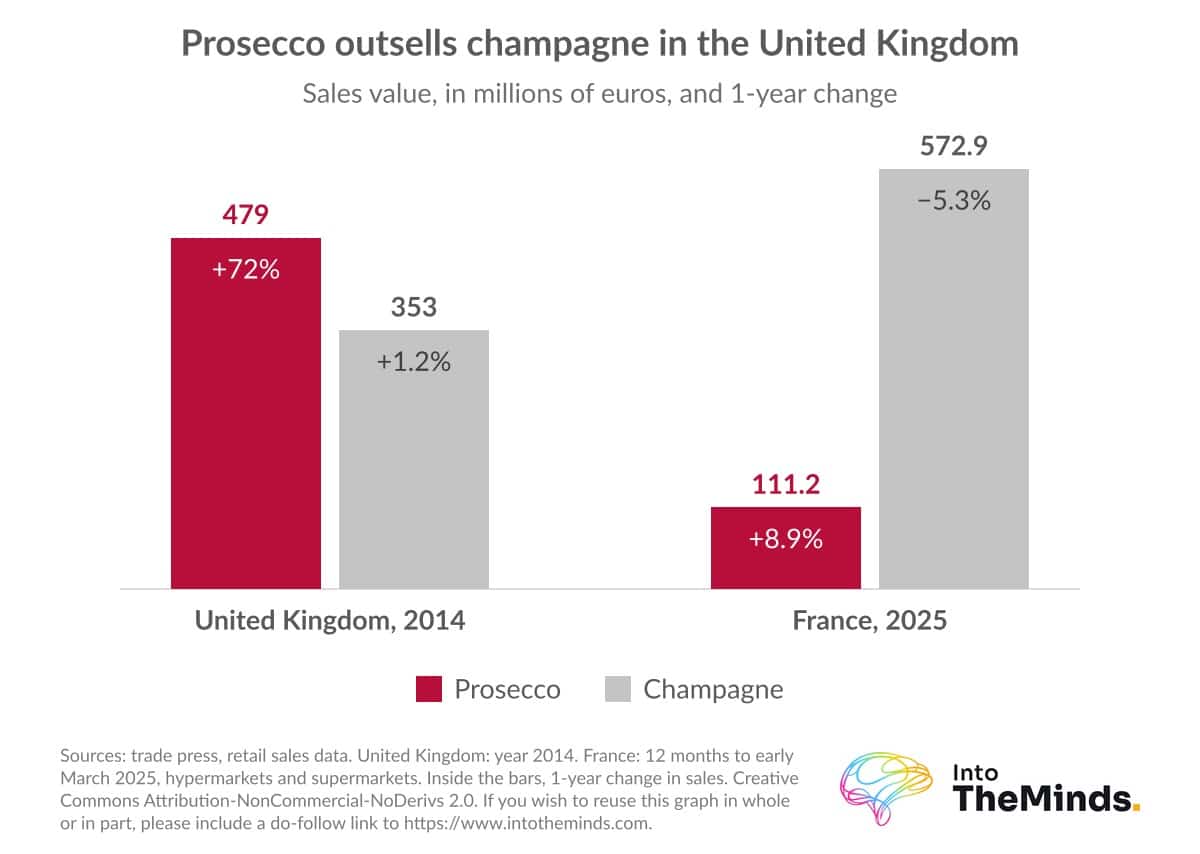
United Kingdom. This is the first major market where prosecco surpassed champagne in value. In 2014, its sales there jumped by 72%, to £338.6 million (€479 million), while those of champagne only grew by 1.2%, to £250 million (€353 million). In volume, 37 million liters were sold (+78.8%). Entry-level champagne was the main loser, while premium brands resisted. Later, in October 2021, the British government announced the abolition of the 28% surcharge that applied to sparkling wine excise duties.
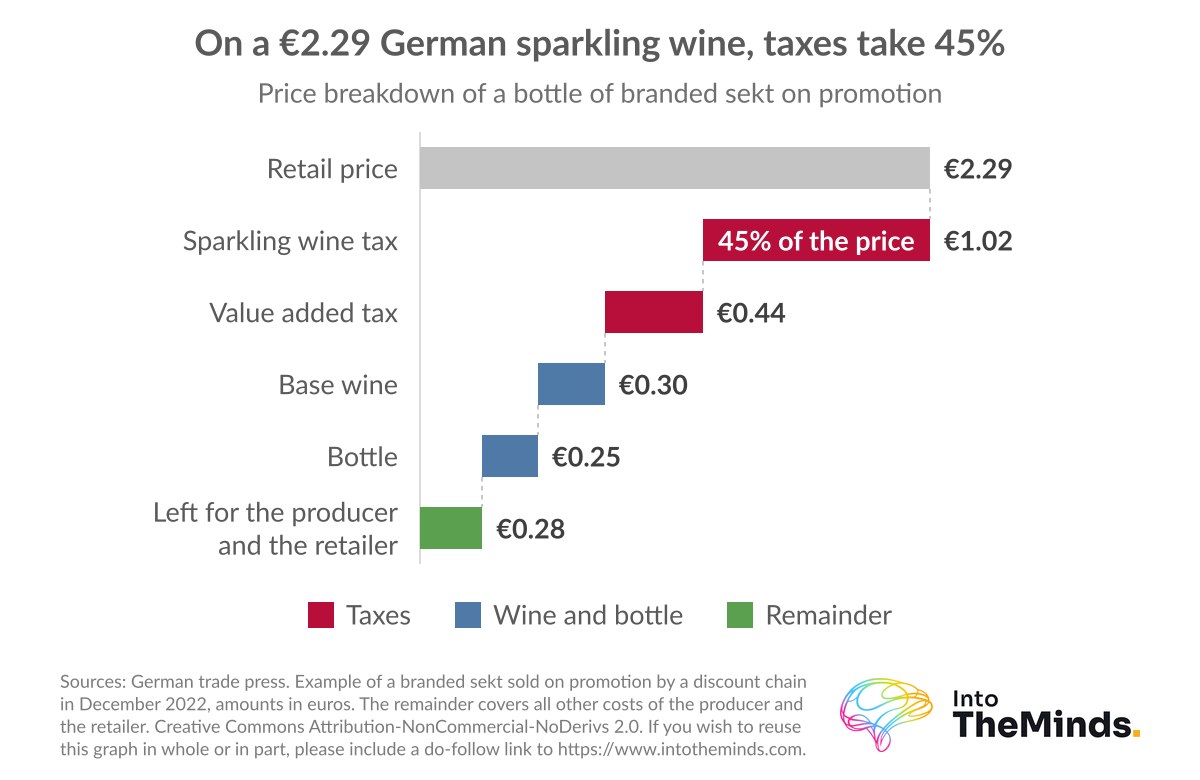
Germany. The world’s largest consumer of sparkling wine with 286 million liters in 2018, or about 16% of global consumption. Germans mostly buy prosecco frizzante, which is exempt from the sparkling wine tax. Germany is a market driven by low prices. Up to 70% of sparkling wines were sold on promotion in 2023. In 2022, the shortage linked to the popularity of rosé led to price increases of 20 to 30% on prosecco. Be careful, however! Per capita sparkling wine consumption is slowly declining. The German Wine Institute measured consumption at 3.5 liters per capita over the age of 16 in 2025.
France. Prosecco was worth barely a few million euros in 2014 and reached €159.7 million over 12 months in 2025 across all channels (+11.6% in value, +13.9% in volume). In number of bottles, it has now overtaken champagne in mass retail, with 25.31 million bottles compared to 25.23 million over the 12 months ending late July 2026! It is the leading foreign sparkling wine on the shelf, ahead of cava, with 2/3 of foreign sparkling wine volumes in 2025 compared to 1/4 for cava. Its penetration rate of 13.5 points in 2025 leaves room for further growth. We detail this French trajectory in the following section.
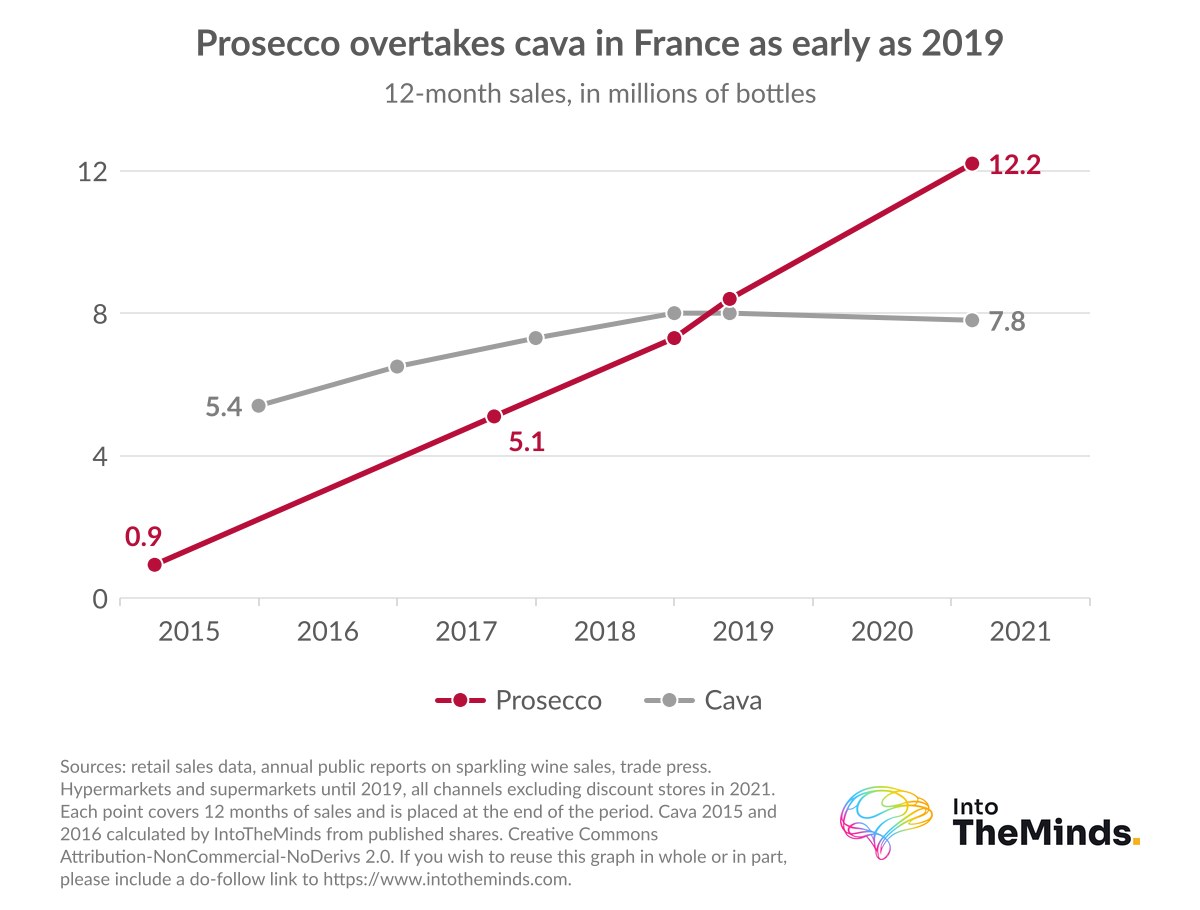
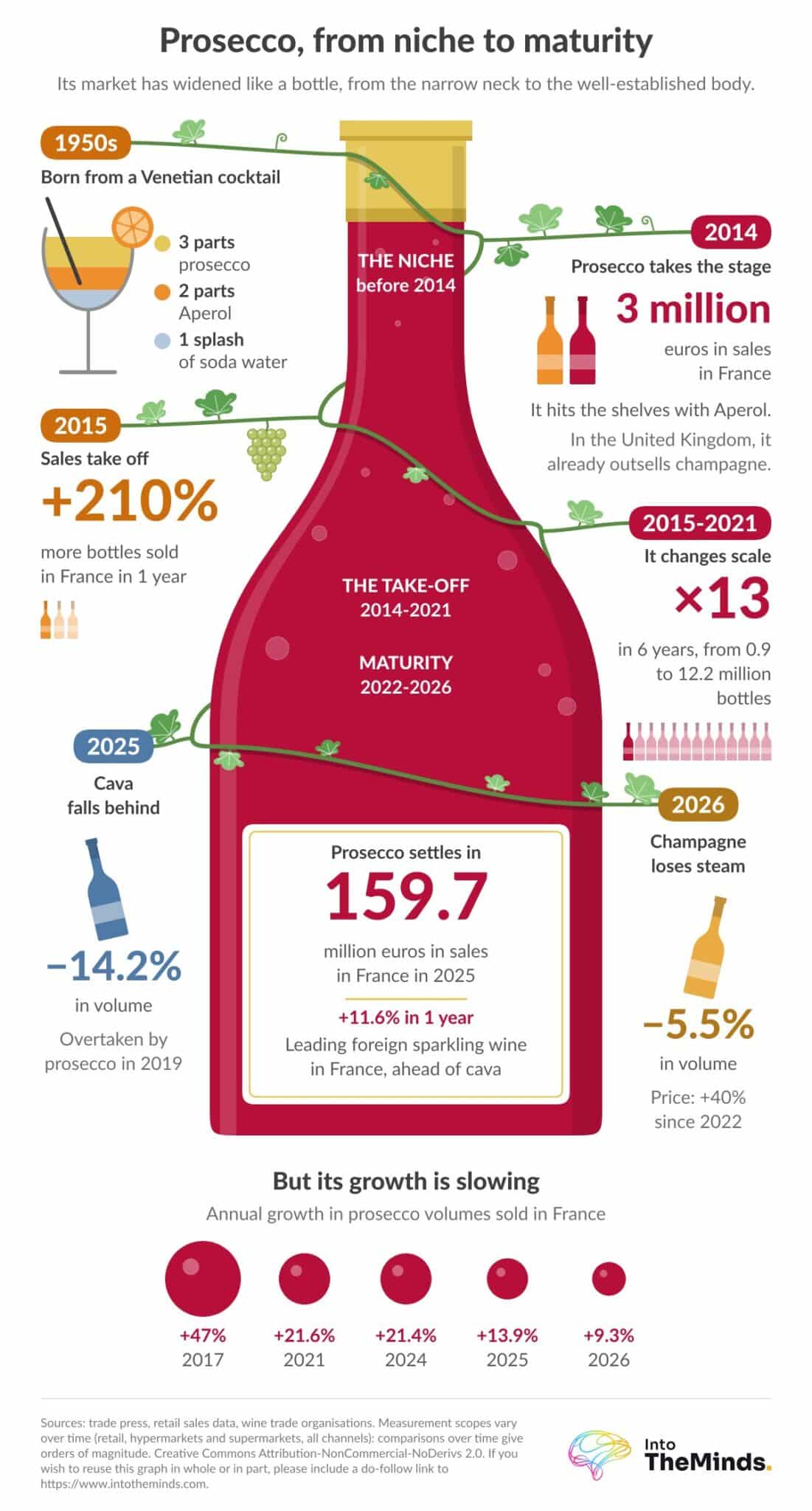
In France, prosecco sales grew from 933,000 bottles to 12.2 million bottles between 2015 and 2021.
Prosecco market: evolution 2014-2026
French statistics are the most detailed and have enabled us to carry out a very fine-grained analysis. In particular, we were able to reconstruct step by step the evolution of the prosecco market in France.
The “Spritz” effect
In early 2014, Campari’s distributor launched both Aperol and Riccadonna prosecco simultaneously in French mass retail. That year, prosecco accounted for only 0.4% of the sparkling wine market (valued at €1.37 billion), but it grew by 150% in value. It then established itself in hypermarkets and supermarkets at an average price close to 7 euros in early 2015, a level that would later decline to 6.40 euros in 2021.
Here are the stages of this acceleration:
- 2017: 5.1 million bottles (+47%), leading Italian sparkling wine on the shelf, far ahead of lambrusco (3.1 million).
- 2018: +35.5% in value, but still 700,000 bottles behind cava (7.3 million vs. 8 million).
- 2019: overtaking cava, with 8.8 million bottles over the year (+20%).
- 2021: 12.2 million bottles (+21.6%), while cava fell back to 7.8 million bottles (-11.7%).
The health crisis worked in favor of prosecco. Non-champagne sparkling wines lost 7.5% in value due to the absence of weddings and parties, but home apéritifs took over. Prosecco then recorded, at +42.7%, the strongest growth of all Italian products sold in mass retail.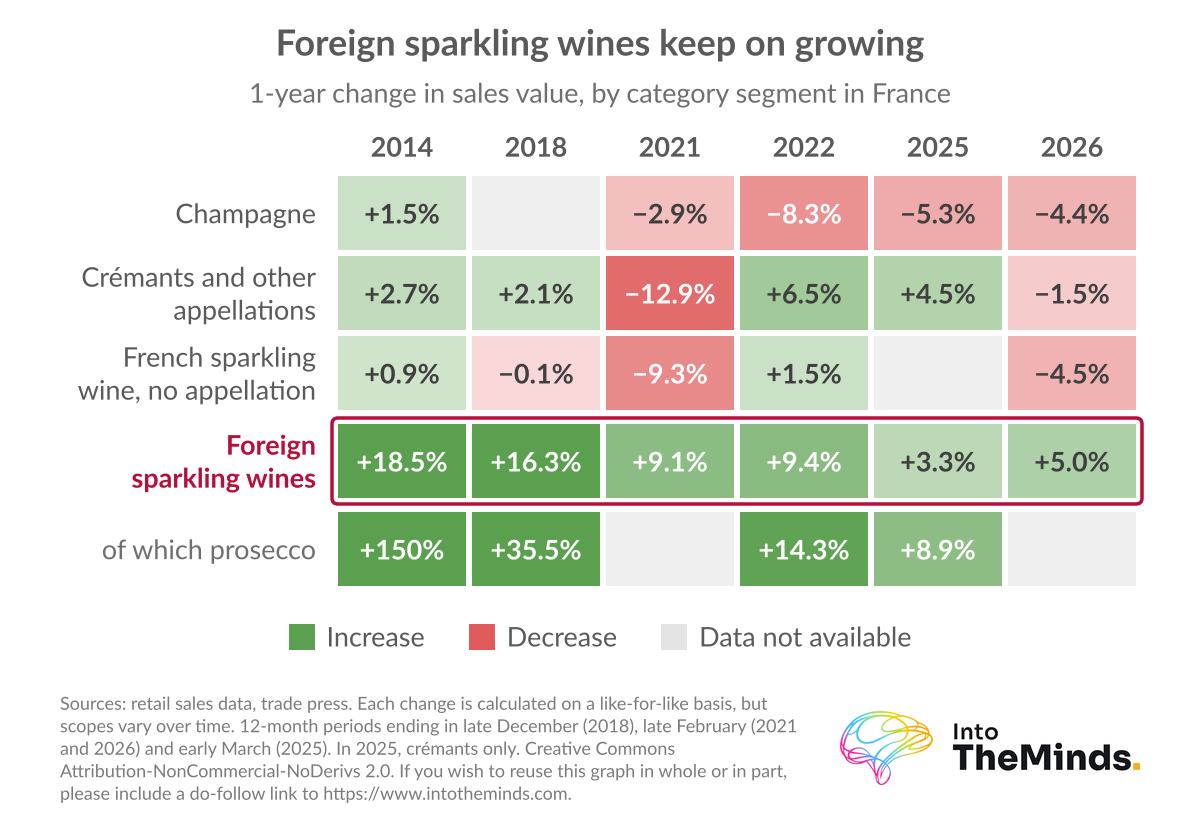
Since 2022: the market is reaching maturity
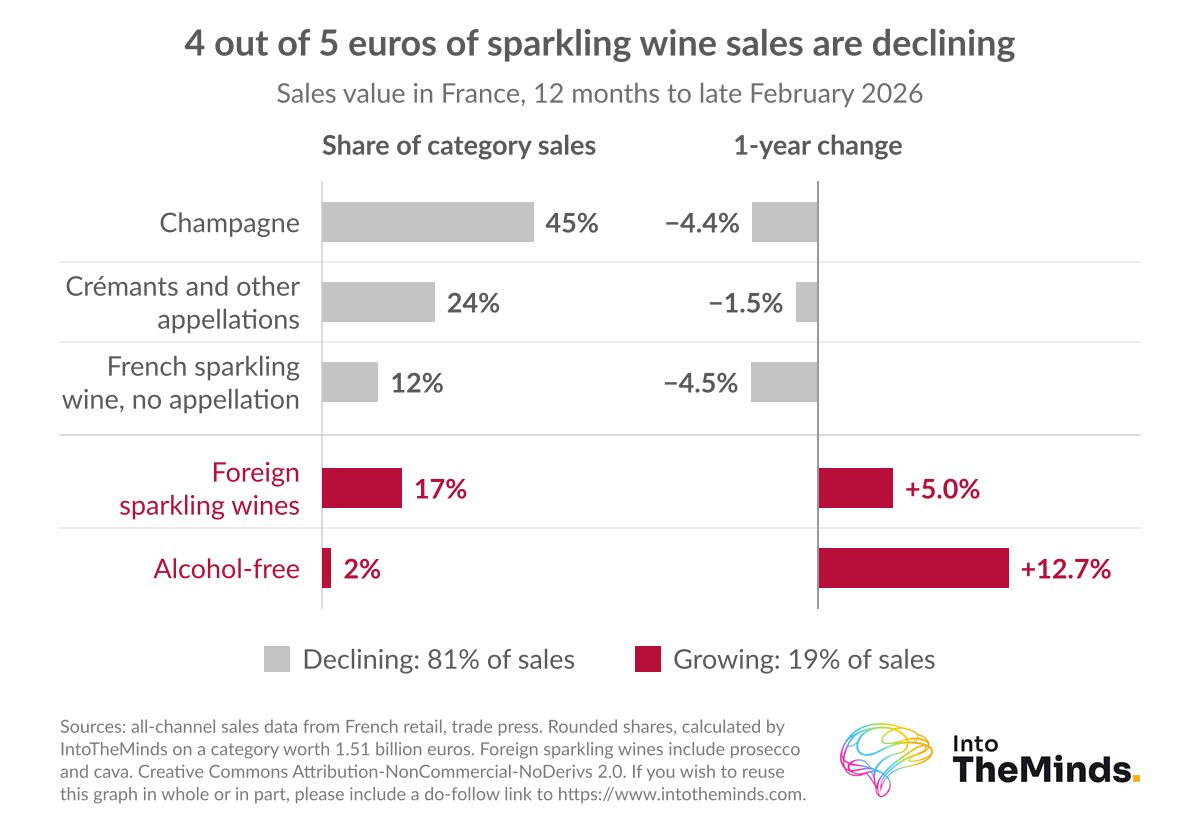
In 2022, prosecco sales neared €100 million in hypermarkets and supermarkets (+14.3%), while champagne declined by 8.3%. Growth remained sustained afterwards: +21.4% in volume over 12 months to P10 2024, then €111.2 million over 12 months to early March 2025 (+8.9% in value). Over 12 months to end-May 2026, volumes were still up by 9.3%.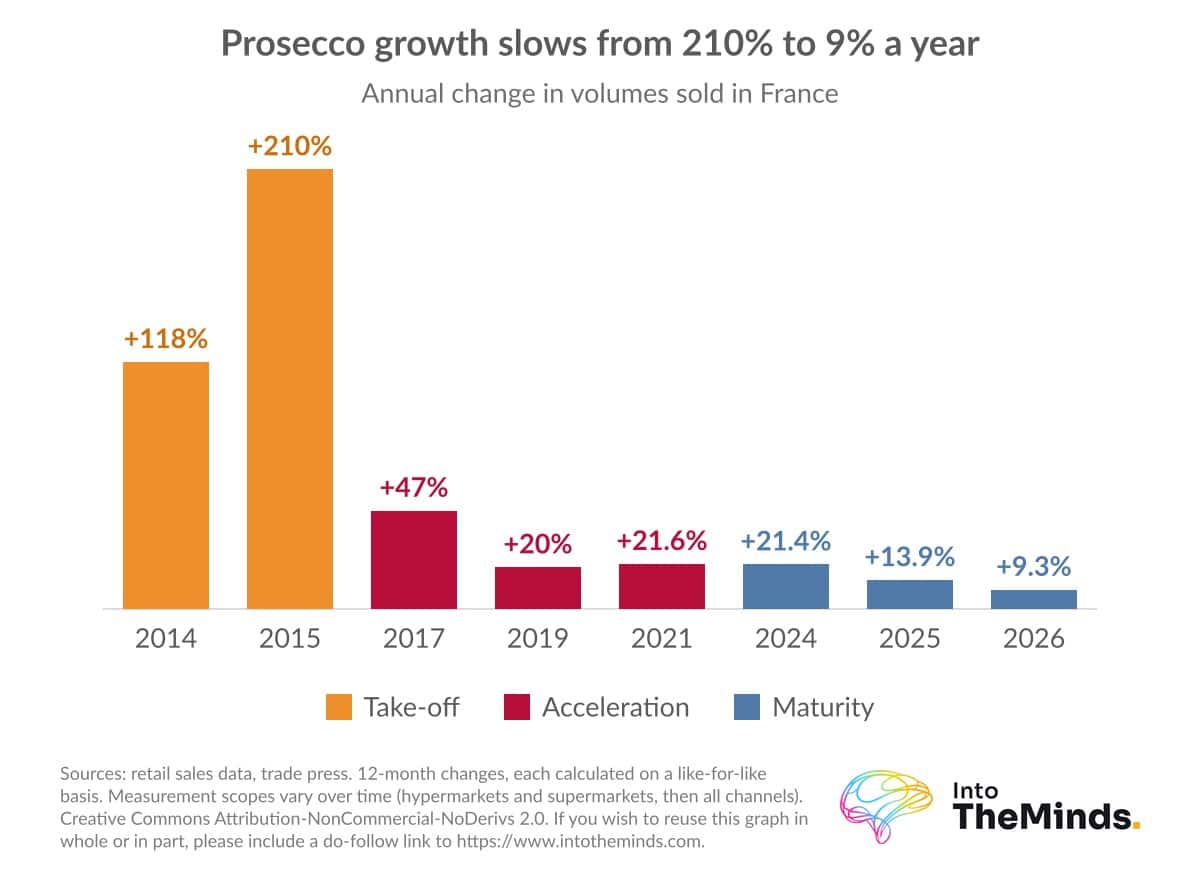 But the pace is slowing down and the market is changing nature. In 2026, prosecco and cava together account for €257 million at P2 (+5%), in a sparkling wine aisle worth €1.51 billion that declined by 1.9%. Private labels capture 25.3% of volumes in 2025. We interpret this phase as maturity: an established category that is still growing, but must now defend its value.
Analysis of demand drivers
The success of prosecco cannot be explained solely by its price. Here you will find the cultural drivers that supported demand in international markets.
The spritz
The primary driver is the spritz because it contains 3 parts prosecco, 2 parts Aperol, and a splash of sparkling water. Born in Venice in the 1950s, it became the sixth best-selling cocktail in the world in 2024.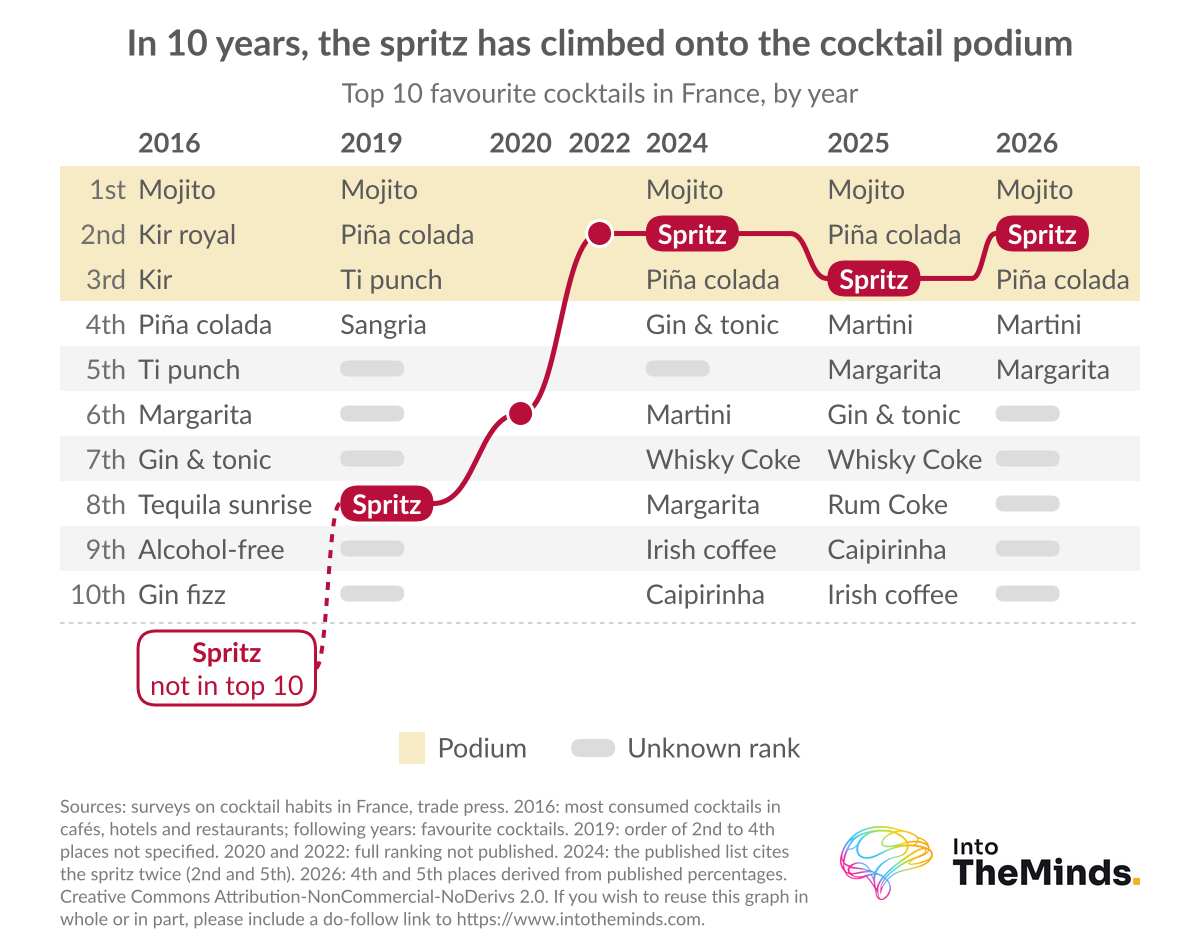
Aperol, acquired by Campari in 2003 for €50 million, accounts for 24% of the group’s revenue in 2024, or €746 million. Its sales multiplied by 12 between 2008 and 2023. Naturally, prosecco benefited from this surge. The spritz is simple to prepare, profitable for bars, and photogenic. This facilitated its spread on social media. In 2024, 1/3 of the world’s best-selling cocktails were low-alcohol sparkling long drinks.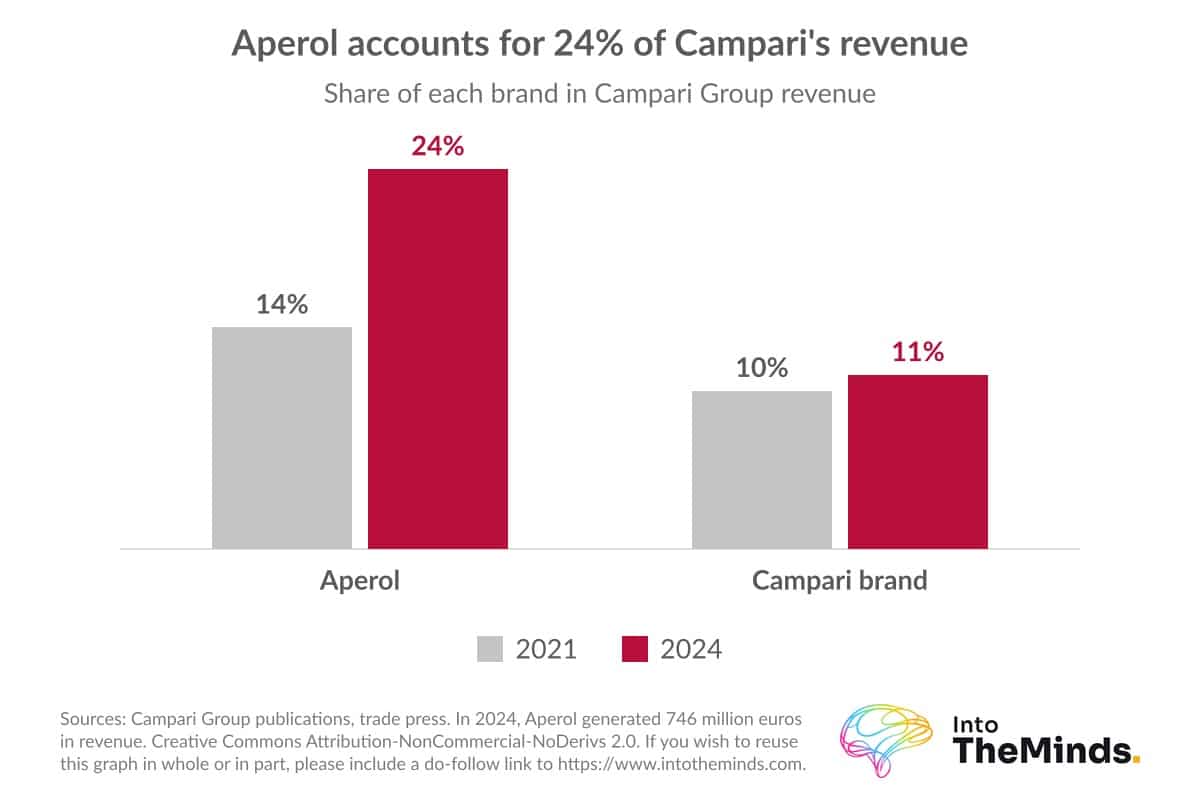
Celebrations and entertaining
Prosecco is also drunk for celebrations, brunches, informal gatherings, and other cocktails like the Bellini. In France, 55% of consumers drank it neat or mostly neat at the end of 2020, even if the spritz remained the majority by volume. In 2021, the French enjoyed 40 million home apéritifs per week, 3.8 million more than in 2019, and sparkling wines were the second largest product family for apéritifs at €1.52 billion.
Italian appeal
The final driver is its Italian appeal. In March 2019, 93% of French people praised Italian cuisine, and Italian products were worth €4 billion in mass retail at P4 2025 (+4.6%). Prosecco is a Made in Italy asset: in 2019, the hills between Conegliano and Valdobbiadene, an area of 197 km², became the 55th Italian site inscribed on the Unesco World Heritage list.
According to Coldiretti, Italy’s leading agricultural union, prosecco exports grew by 17% in 2019, making it the most widely drunk Italian wine abroad. Italian wine exports to France increased by more than 92% between 2007 and 2017, reaching €170 million thanks to the “prosecco effect.”
To understand how the spritz drove this success, you will find an explanatory video below:
Prosecco vs. champagne: the matchup
This question comes up among all players in the sector. Below we present the facts that help understand to what extent prosecco is replacing Champagne.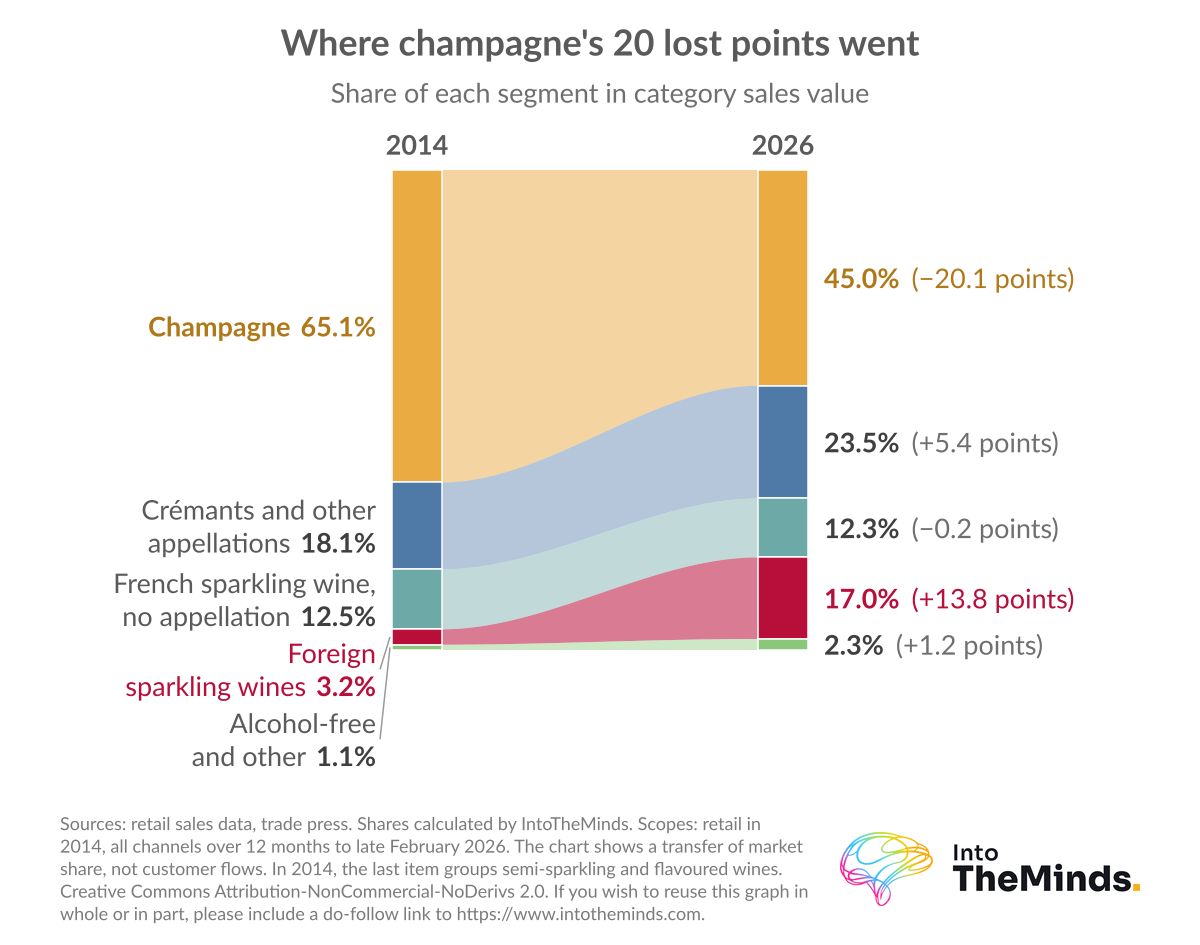
Champagne in a volume and price crisis
Let’s start with a few facts:
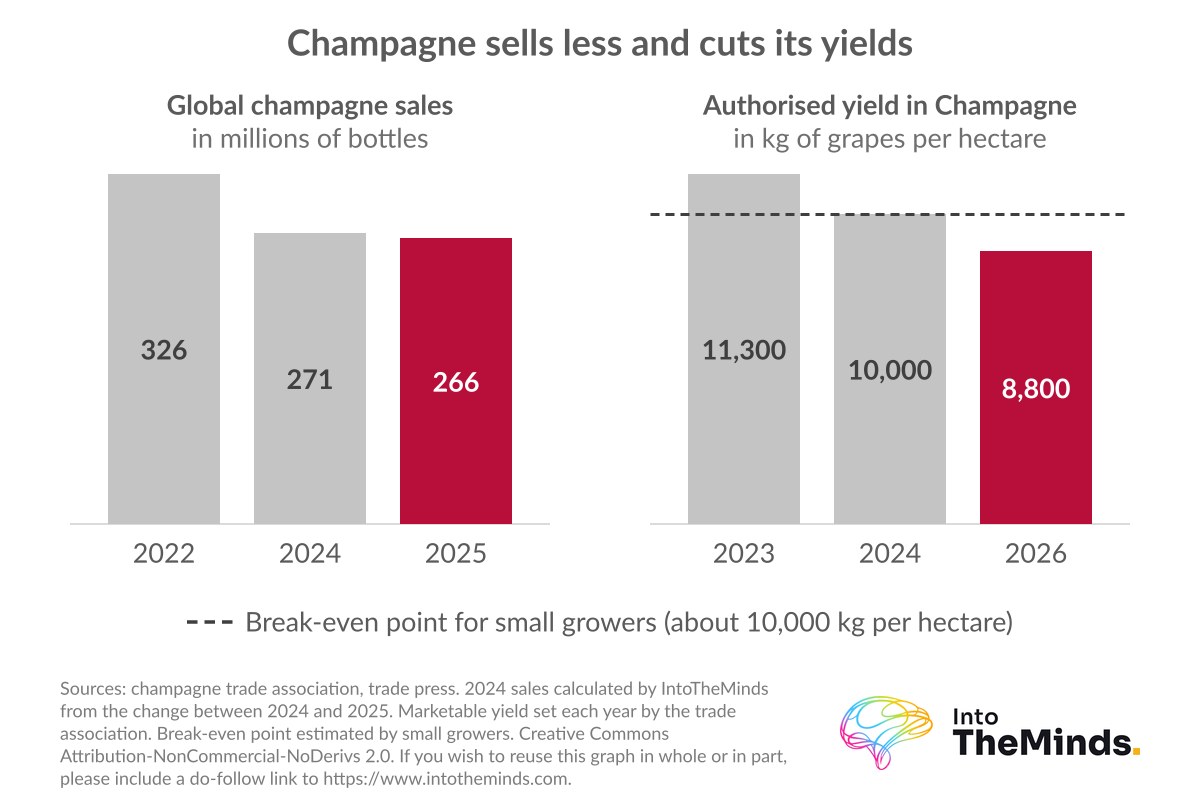
- Global sales of champagne fell from 326 million bottles in 2022 to 266 million in 2025
- Its prices have increased by 40% since 2022
- At the end of 2025, stocks reached 1.3 billion bottles, equivalent to 5 years of sales.
- The Comité Champagne lowered the marketable yield for the fourth consecutive year, to 8,800 kg per hectare in 2026. However, small houses and independent winegrowers say they need nearly 10,000 kg per hectare to be profitable.
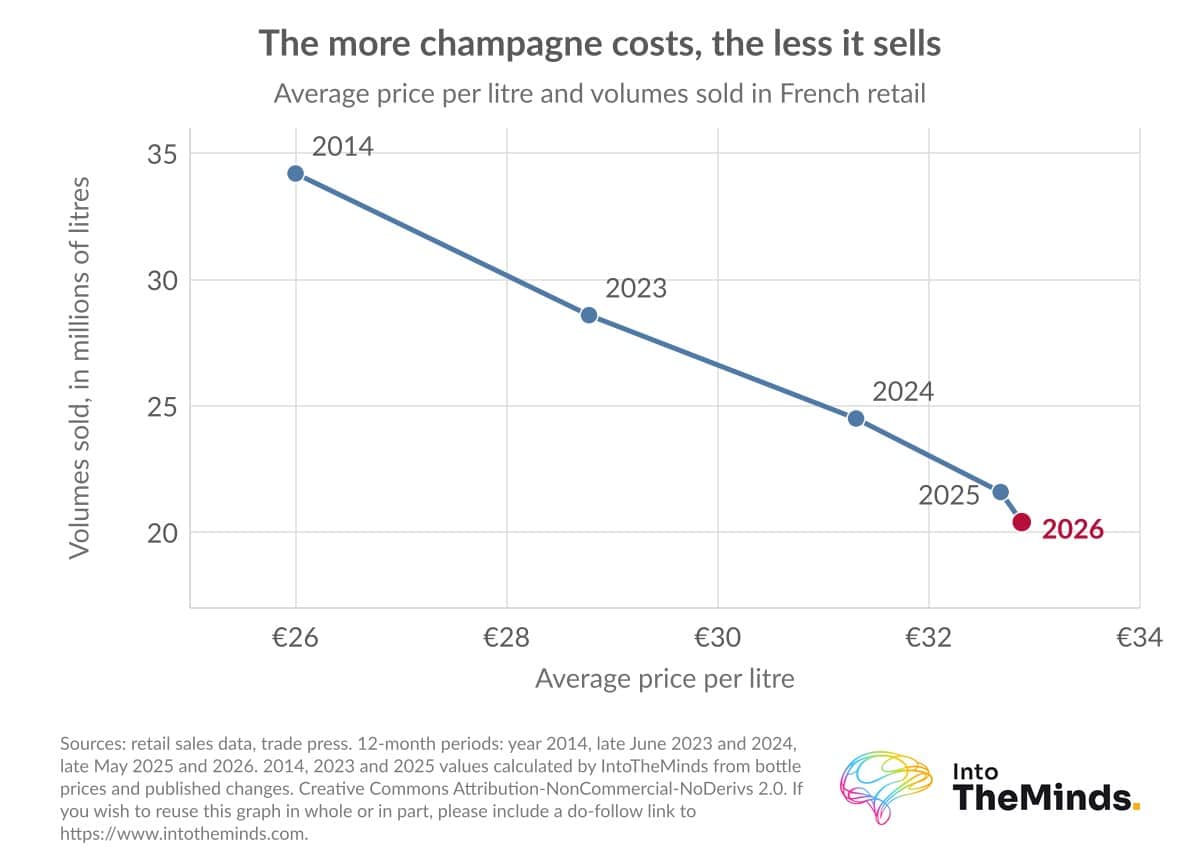
In France, over 12 months to end-May 2026, champagne volumes in mass retail declined by 5.5%, to 20.4 million liters, for the third year in a row. At the same time, those of prosecco grew by 9.3%. Consumer trade-offs are clearly reflected in these 2 figures.
A structural cost gap
Prosecco is 3 to 4 times cheaper than champagne for several reasons:
- The Charmat method: the second fermentation takes place in sealed pressure tanks, faster and at a lower cost than in the bottle.
- Raw materials: in 2015, a kilo of grapes cost less than €1 in Italy compared to more than €6 in Champagne.
In France, in mass retail, the average price of a prosecco was €6.40 in 2021, compared to €20.20 for champagne. This difference is largely due to production costs, which are lower with the Charmat method.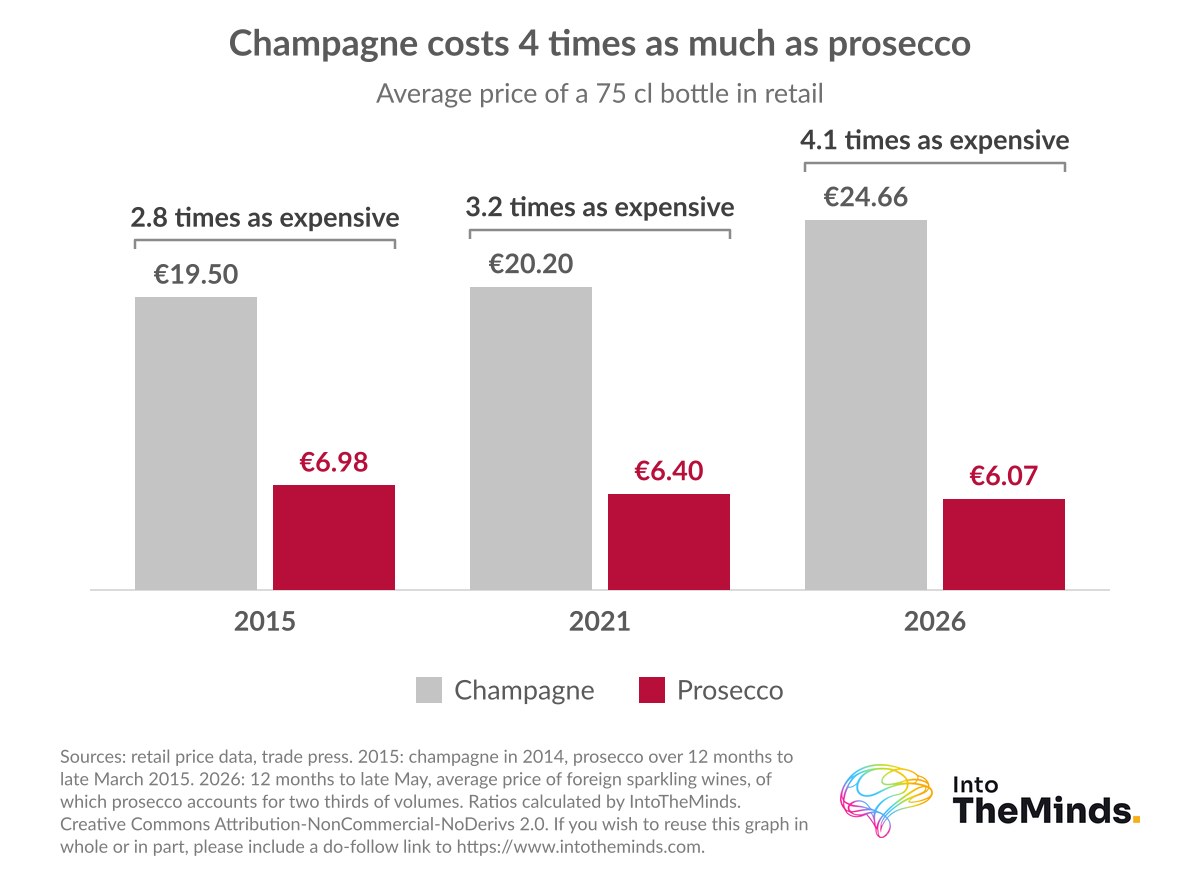
Where prosecco does not replace champagne
Champagne retains its premium brands and grand occasions. In the United Kingdom in 2014, its entry-level segment suffered while the major houses resisted. Prosecco mainly captures price-sensitive consumers and informal uses. For a brand, measuring this boundary requires a targeted brand awareness survey focused on sparkling wine buyers. Substitution exists, but it remains partial.
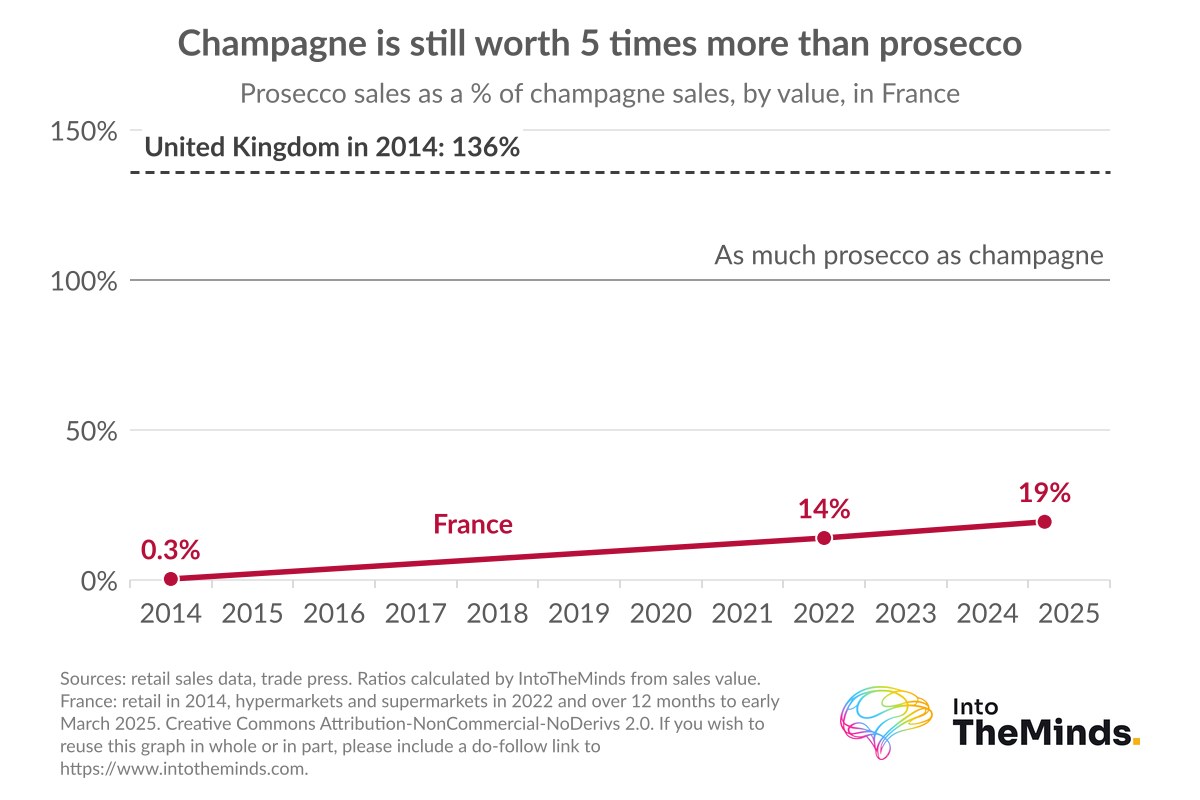
In France, a liter of foreign sparkling wine sells for 4 times less than champagne.
Prosecco: competitive analysis
The table below summarizes the positioning of the main competing sparkling wines and allows you to situate each category.
| Sparkling wine | Second fermentation | Reference volume | Recent trend |
|---|---|---|---|
| Prosecco | In closed tank | 667 million bottles sold (2025) | Volumes in France: +9.3% (MAT May 2026) |
| Champagne | In bottle | 266 million bottles (2025) | -1.8% between 2024 and 2025 |
| Cava | In bottle | 218 million bottles (2024) | -13.3% between 2023 and 2024 |
| Crémant | In bottle | 122.9 million bottles (2025) | +58% between 2015 and 2025 |
In French mass retail, prosecco sits above non-appellation French sparkling wines (€4.53 average in 2025) and cava, just below crémants (€7 to €8 in 2026), and very far from champagne (around €24 to €25 per bottle).
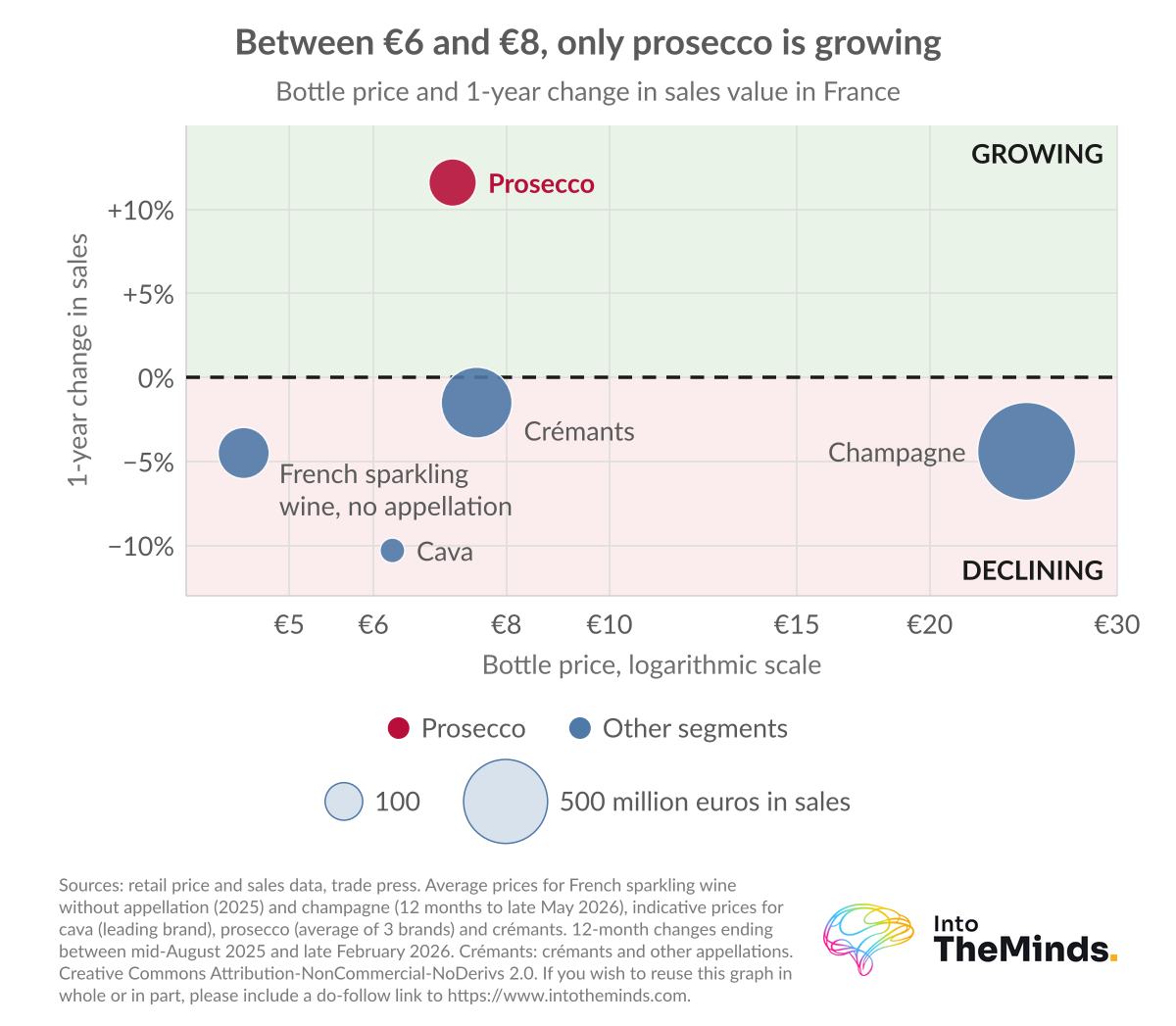
Paradox: it costs less to produce than cava but sells for more. Cava, hit by the Catalan drought which tripled the price of base wine, rose by about 1 euro per bottle. Its French sales fell to €43.4 million in 2025 (-10.3%).
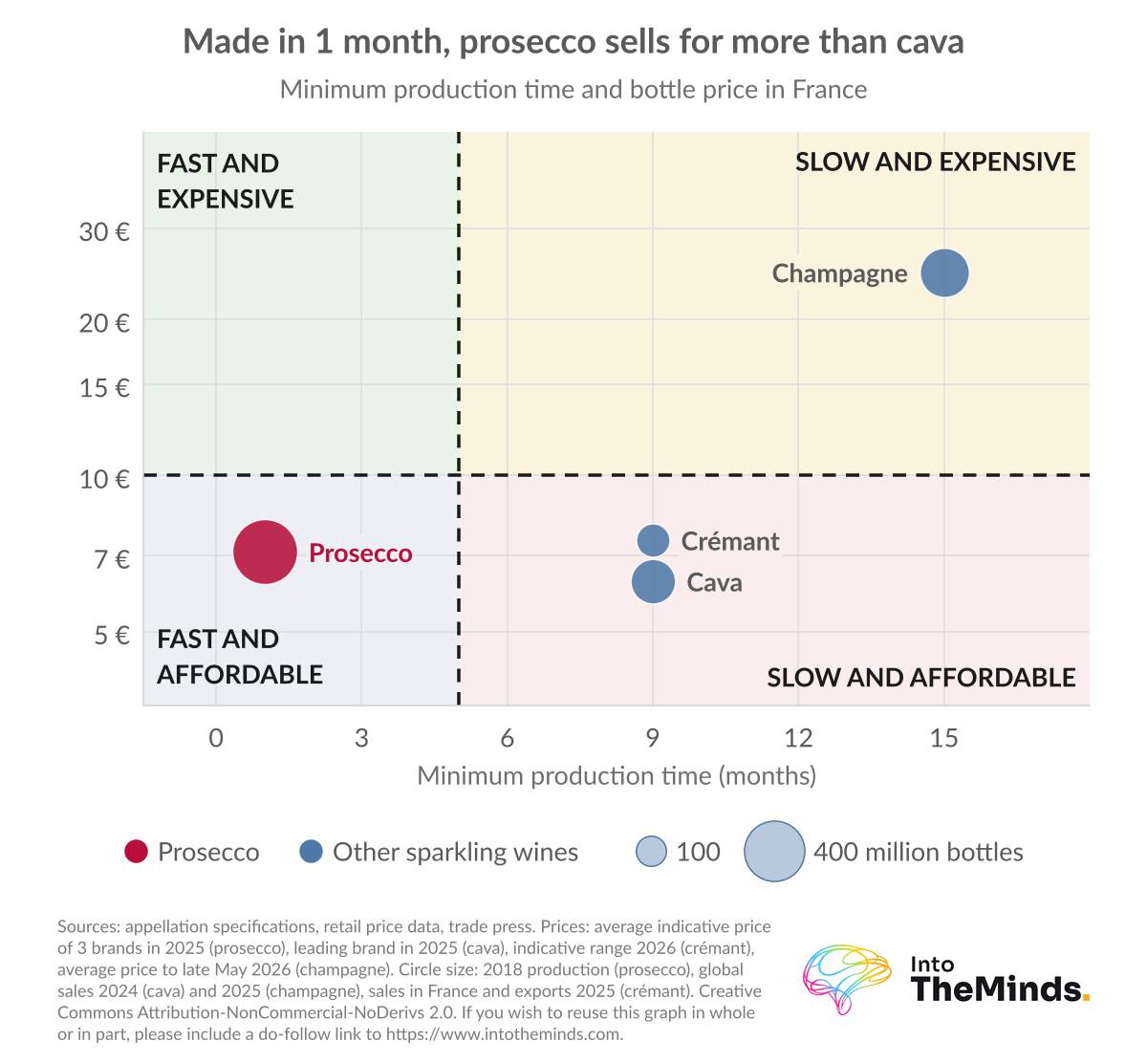
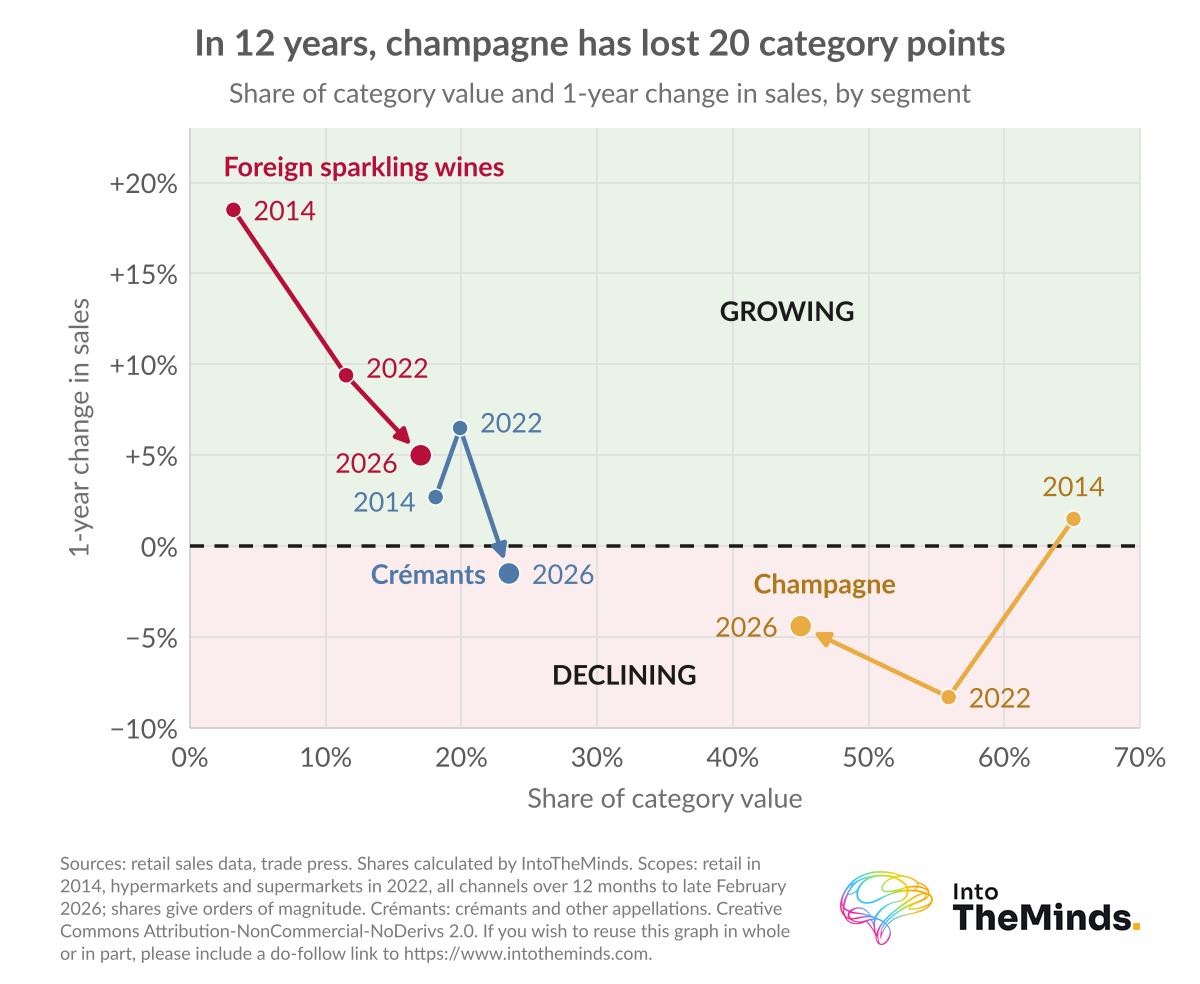
Crémant is the most direct competitor. In 2026, it was less dynamic than prosecco in mass retail (-1.5% in value for crémants and other PDOs, compared to +5% for proseccos and cavas over 12 months to P2 2026). Its producers refuse to exceed 10 euros and are also entering the spritz market.
Prosecco market: leading brands
Here is how power is distributed between groups and brands.
Henkell Freixenet and Campari, the two leaders
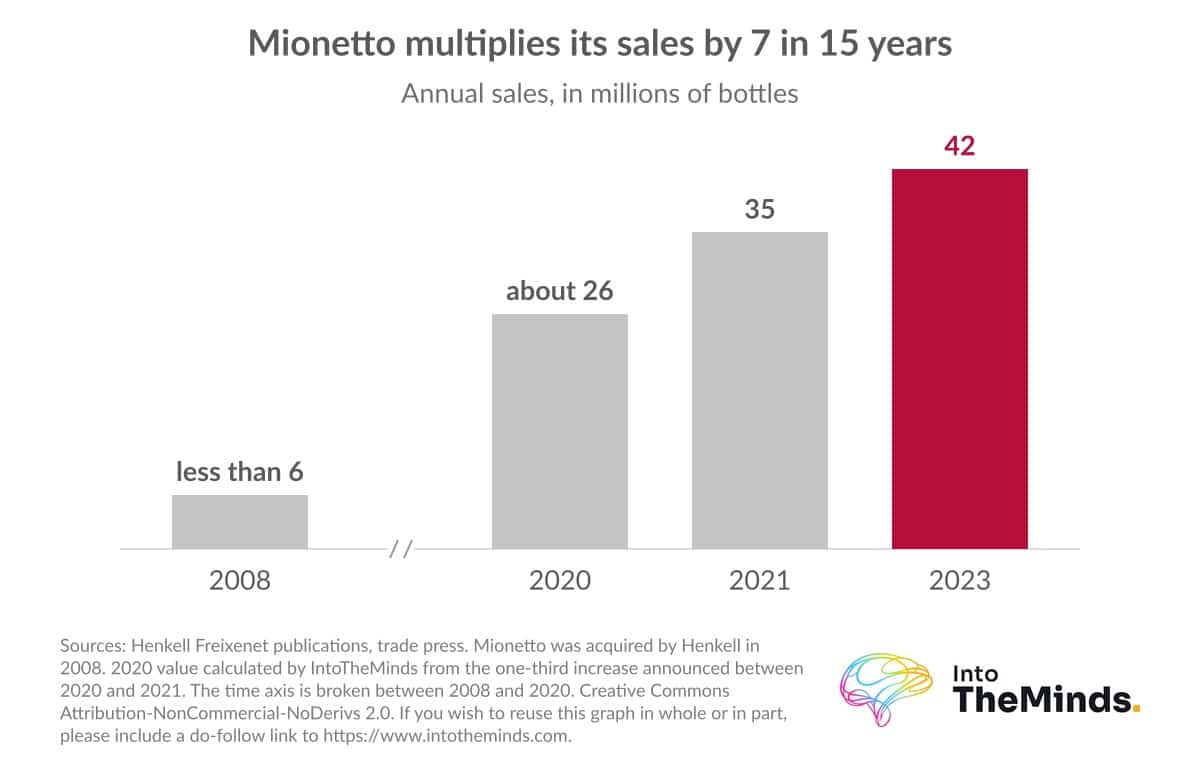
Henkell Freixenet is the world’s leading producer of sparkling wines, with around 9% market share. It achieved a record revenue of €1.23 billion in 2023. Its Mionetto prosecco, acquired in 2008 when it sold fewer than 6 million bottles, sold 42 million in 2023.
Campari, owner of Aperol, made Riccadonna the French market leader. Its net revenue reached €3.07 billion in 2024, up from €1.77 billion in 2020.
Other groups rushed into the category: La Martiniquaise with Perlino (acquired in 2015), Castel with Villa Veroni, Les Grands Chais de France with Signore Giuseppe, Bacardi-Martini, and MGM Mondo Del Vino with Luna Argenta.
National brands and private labels
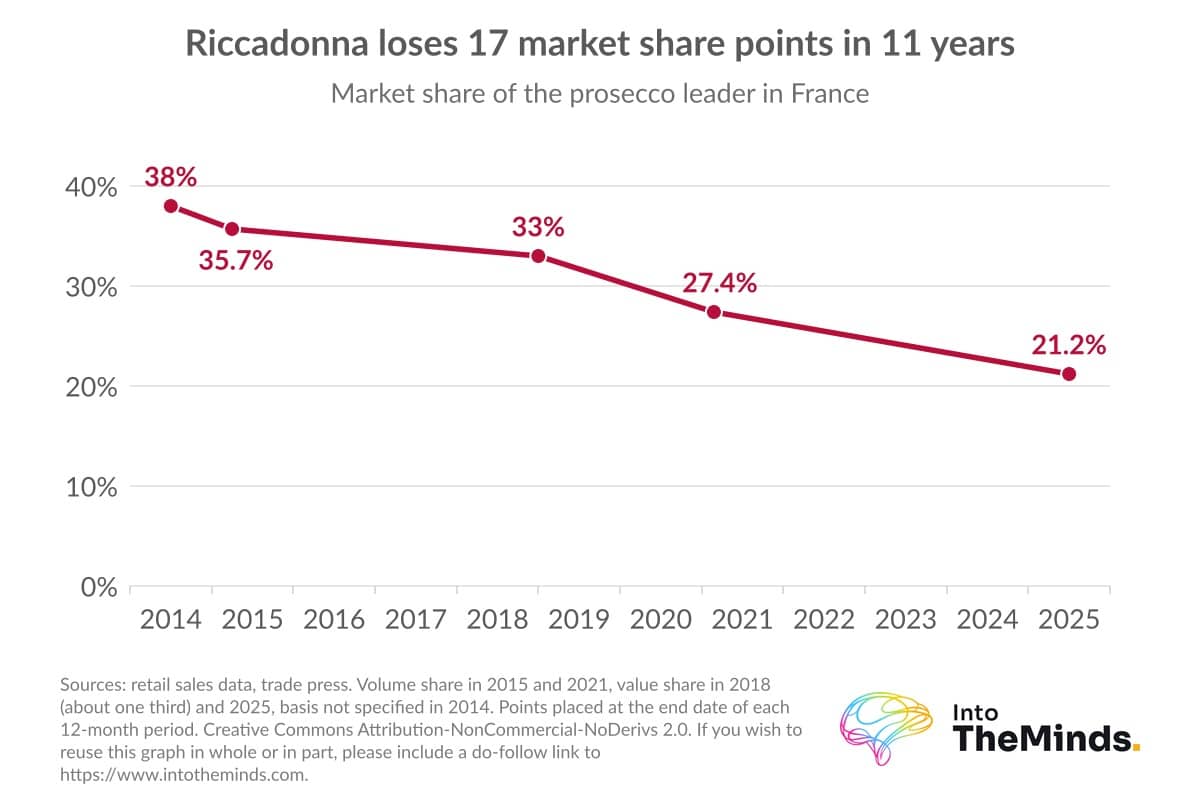
In France, Riccadonna has dominated since 2014, but its share declined from 38% to 21.2 points in value in 2025. About ten brands compete in the aisle, and private labels take 25.3% of volumes.
| Brand (group) | 2014 | Volume market share 2021 | Evolution in 2025 |
|---|---|---|---|
| Riccadonna (Campari) | 38% | 27.4% | 21.2 points in value |
| Villa Veroni (Castel) | 16% | 13.5% | Among the top 4 brands |
| Perlino (La Martiniquaise) | Absent from ranking | 10.3% | Strongest volume growth |
| Mionetto (Henkell Freixenet) | Absent from ranking | 7.3% | Among the top 4 brands |
| Private labels | Absent from ranking | Absent from ranking | 25.3% of volumes |
Competition is shifting toward cocktail bases: Mionetto Aperitivo (summer 2023), Sarti Rosa at Campari, spritz variations at Perlino. Freixenet is also pushing its own prosecco, within the standard price range of major brands. Apéritif brands are also launching ready-to-serve spritzes, which directly compete with prosecco in this cocktail.
Consumption and moderation: a demand profile that is changing
Demand is transforming. In this section, you will see who drinks prosecco today and how alcohol-free options are establishing themselves.
Health, Gen Z, and the decline of still wine
Prosecco first appealed to young people. According to a British survey published in 2017, 97% of 18-24 year-olds surveyed declared consuming it. Also in the UK, the share of regular wine drinkers consuming prosecco rose from 8% in 2007 to 15% in 2010, according to a market study.
But the context is tightening. Global wine consumption has fallen back below its 2000 level, and the World Health Organization concluded in June 2024 that no alcohol consumption is risk-free. Sparkling wines resist better than still wine: in Germany, wine consumption fell to 21.5 liters per capita in 2025. According to the Pago brand, 40% of 18-35 year-olds were fans of alcohol-free or low-alcohol drinks in 2024. Low-alcohol proseccos, at 8 to 9% ABV, are in development.
Alcohol-free: growth engine and regulatory boundary
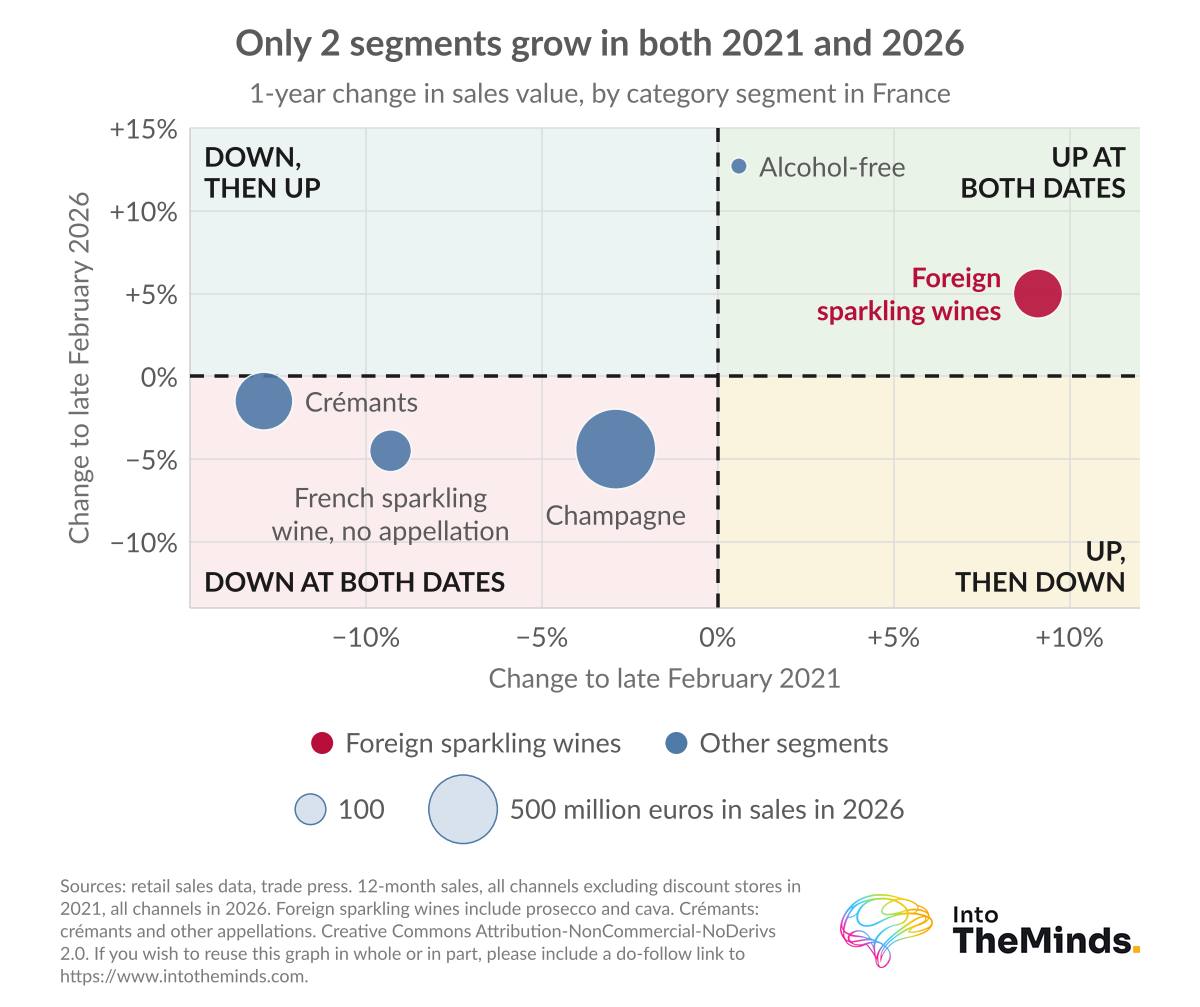
In France, alcohol-free sparkling wines reached €28.6 million in 2026 (+12.7% in value), compared to €16.7 million in 2021. In Germany, their market share in sparkling wine approached 8% in 2026. Henkell Freixenet launched an alcohol-free Mionetto. This stems from the growth of the non-alcoholic market.
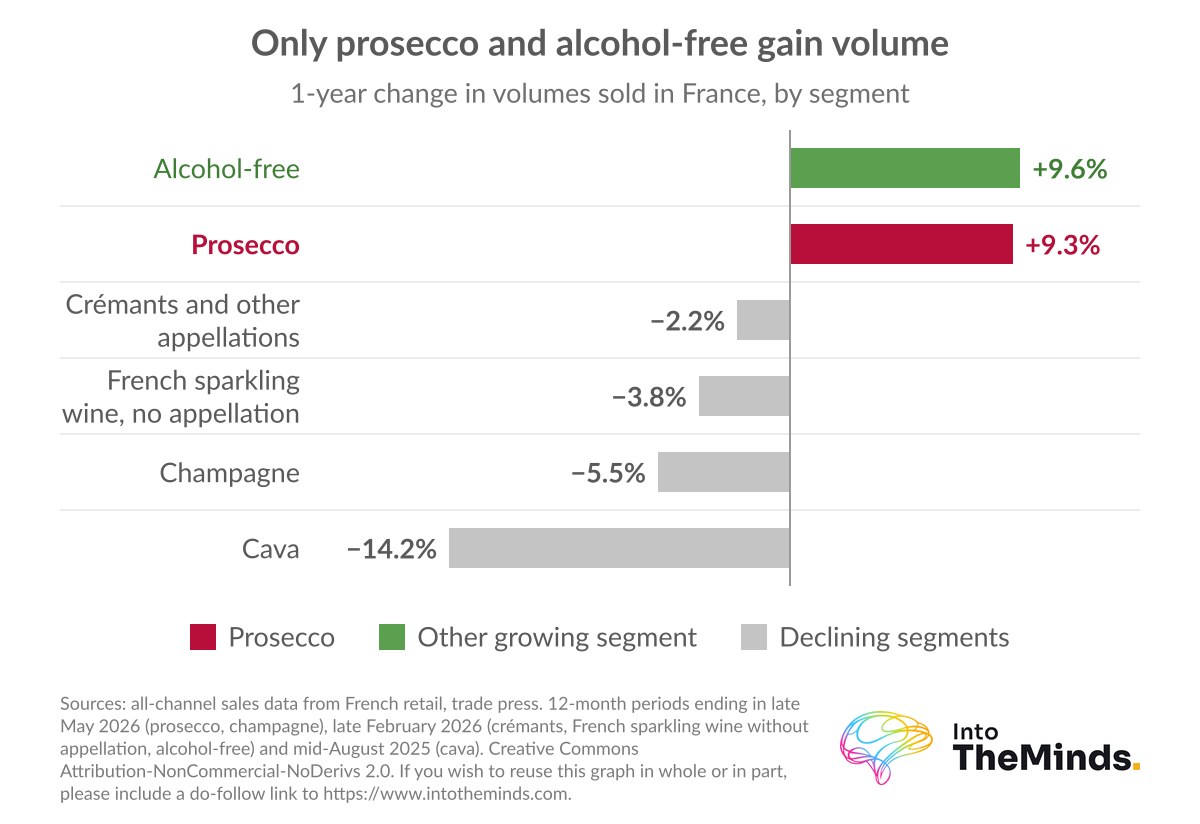
An additional duty of 10% hits European wines, including prosecco, at the US border.
Challenges and outlook
Prosecco growth remains solid, but several risks outline its limits. We review them below.
Overproduction and risk of banalization
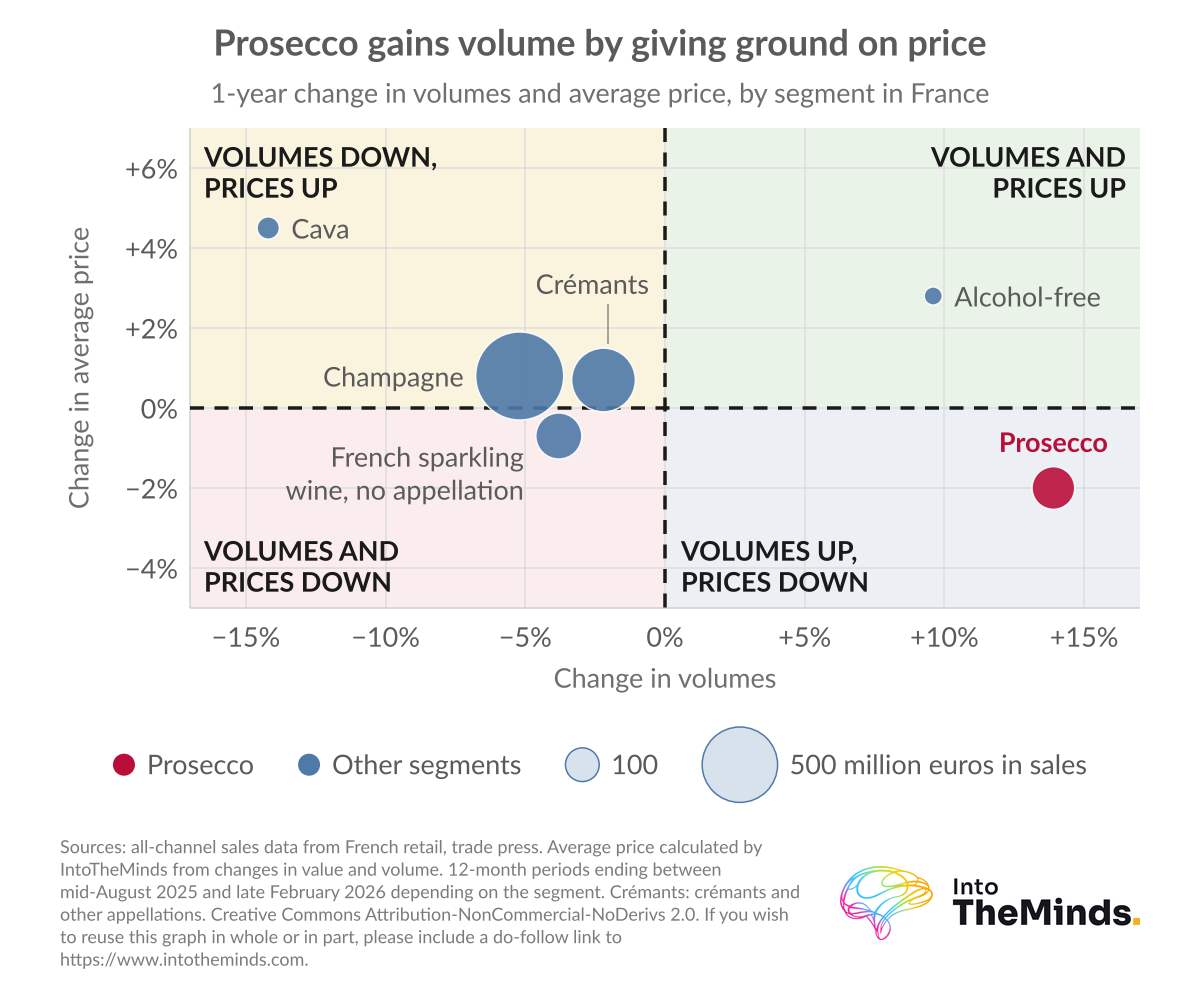
Overproduction can drive down prices and margins. In France, about ten brands, a quarter of volumes in private labels, and frequent promotions weigh on value. As early as 2019, producers in Valdobbiadene wanted to remove the word “prosecco” from their labels, considering it too commonplace. To protect the designation, the grape variety was renamed glera in 2009, so that the name prosecco is now reserved for the appellation and can no longer be used to designate a wine produced elsewhere. DOCGs remain a minority: in 2024, Conegliano Valdobbiadene (90 million bottles) and Asolo (30 million) accounted for about 15% of a “Prosecco system” of 780 million bottles.
Climate and vulnerability of appellations
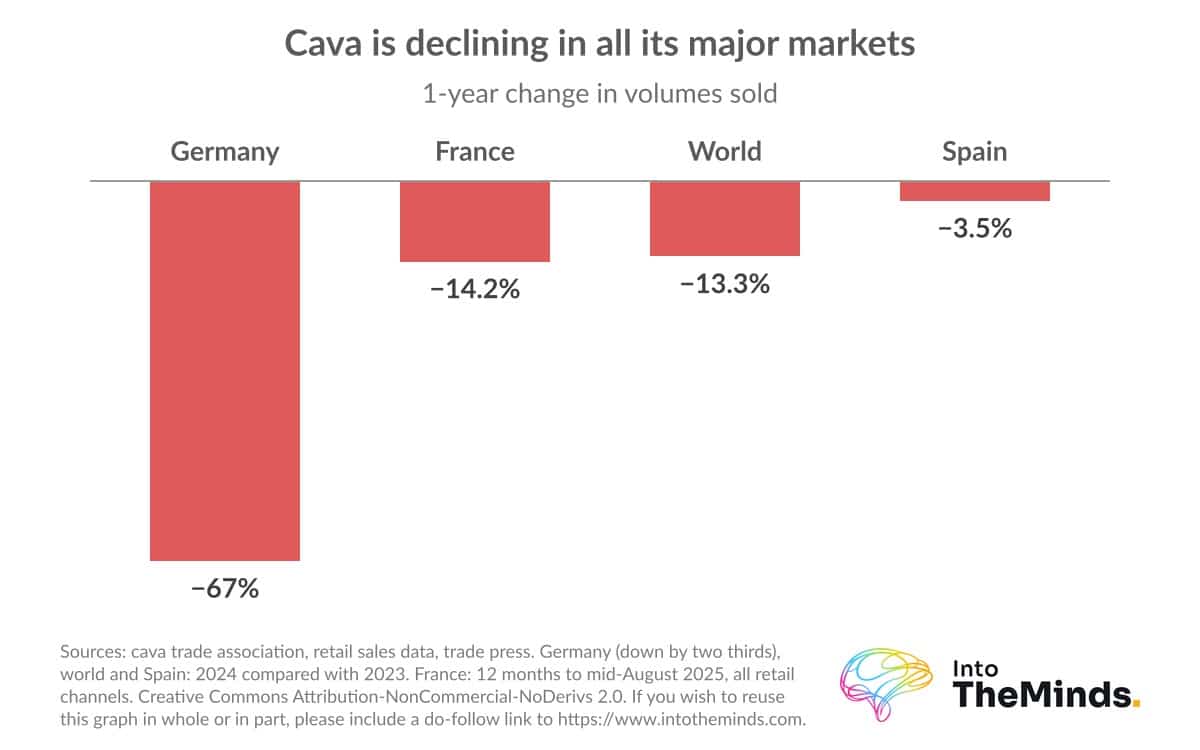
Prosecco vineyards are also exposed to climate variability (drought, heavy rain). There is a precedent. The Catalan drought demonstrated the vulnerability of an appellation:
- cava lost about 45% of its 2023 harvest
- Freixenet shifted about 30% of its production outside the appellation.
Customs duties and protection of the name
The United States, the leading export market, is also the riskiest. After a 15% duty applied starting in August 2025, European wines, including prosecco, have been subject to an additional 10% duty since February 2026, maintained under the new US customs regime that took effect on July 24, 2026. In 2024, the European Union exported €1.50 billion in sparkling wines there, representing 19% of US imports of this product. Name protection remains another front: EU-Australia negotiations failed in October 2023, with the Union demanding in particular the protection of the name “prosecco.” For an exporter, anticipating these risks involves conducting a B2B market research study among importers and distributors.
Our recommendation is clear: prosecco has won the battle of volume, it must now win the battle of value through premiumization (DOCG, rosé), neat consumption, and conquering the United States.
FAQ: questions you may ask
Does prosecco replace champagne?
Only in part. In France, more bottles of prosecco than champagne were sold in mass retail for the first time over the 12 months ending late July 2026 (25.31 million vs. 25.23 million), and over the 12 months to end-May 2026, prosecco volumes grew by 9.3% while champagne fell by 5.5%. Prosecco mainly captures entry-level and informal occasions, while champagne retains major celebrations and its premium brands.
What is the average price of a good prosecco?
In France, a prosecco sold for an average of €6.40 in 2021 in mass retail, compared to €20.20 for champagne, making it about 3 times cheaper in this channel. In 2025, in purchases by cafés, hotels, and restaurants, the gap reached 4-fold: €5.30 per 75 cl equivalent for prosecco, versus €21.16 for champagne. Major brands remain in a range of around €6 to €8, and DOCGs sold from €10 to over €60 in Germany in 2019.
What are the prosecco market trends in 2026?
Growth continues, but at a more moderate pace. The main growth drivers are rosé, neat consumption, ready-to-drink formats, and alcohol-free options. The main risks are banalization, climate, and US customs duties. A customer satisfaction survey among buyers helps a brand prioritize these levers.
Which brands dominate the prosecco market in France?
Riccadonna (Campari) remains the leader with 21.2 points of value market share in 2025. Perlino, Villa Veroni, and Mionetto follow, as well as seven or eight other brands. Private labels account for 25.3% of volumes.
What share of prosecco is exported?
More than 82% of Prosecco DOC volumes are exported to 164 countries. The United States is the leading export market, ahead of the United Kingdom, France, and Germany.