The strategy pursued by Mercedes-Benz since 2020 has proved disastrous for the Stuttgart-based manufacturer’s financial health. As you will see in this article, this strategy has come up against geopolitical realities and now calls for drastic measures to save Mercedes-Benz.
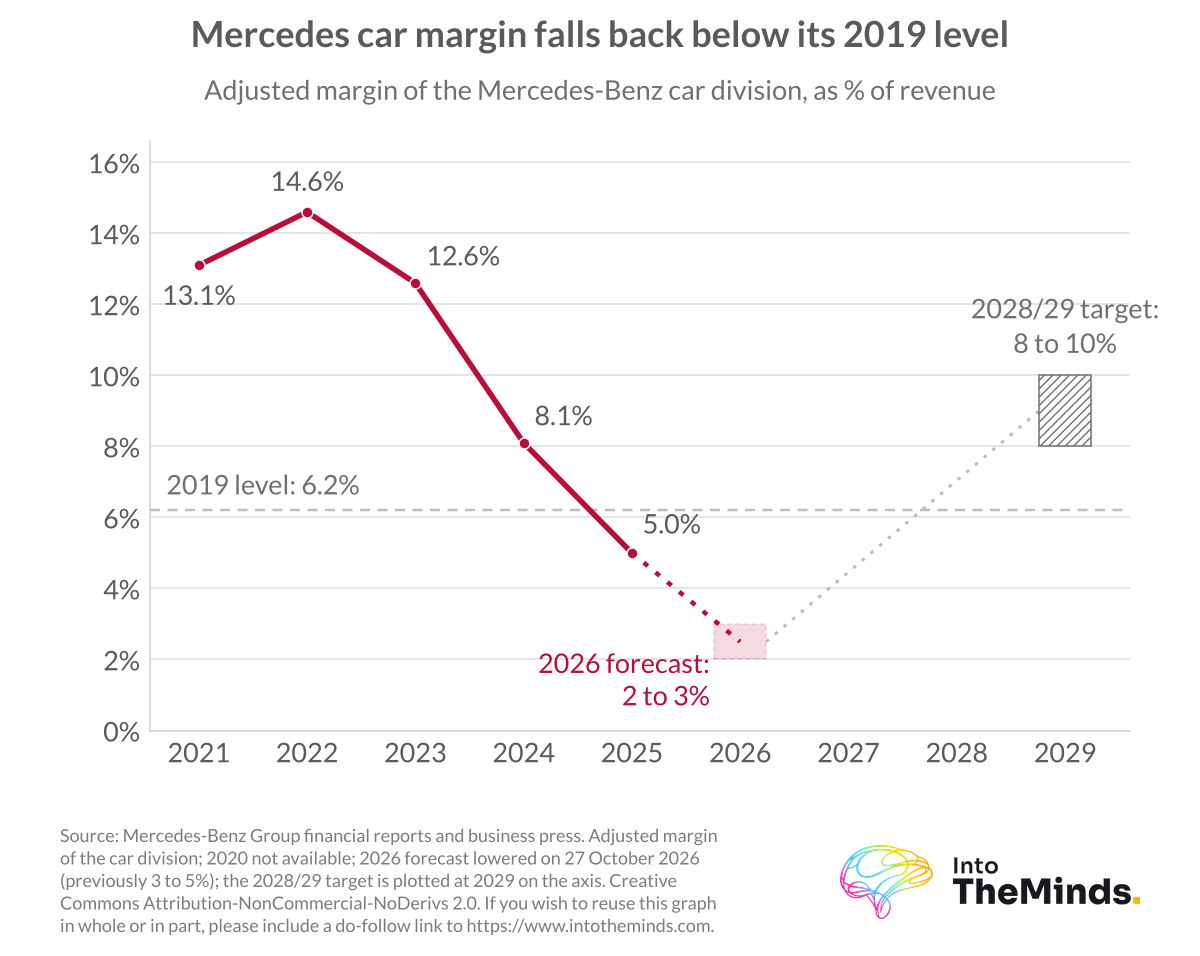
In 2022, Mercedes-Benz generated a 14.6% margin on its cars and was among the most profitable carmakers in the world. But in 2025, this margin fell to 5.0% and in the first half of 2026, before adjustments, Mercedes was making only €1,900 on a car sold for €100,000! This margin level is reminiscent of the situations at Volkswagen, BMW, and especially Porsche. Car deliveries also fell by 240,000 units over 2 years (from 2.04 million in 2023 to 1.80 million in 2025). And the decline is not over, as management is now targeting only about 1.7 million cars for 2026.
These figures provide an initial measure of the scale of the challenge that Mercedes’ strategy must address. Our market research agency, building on its experience in automotive sector studies, has analyzed all available data to offer you a synthetic overview of this strategy. You will find numerous charts as well as original positioning maps that will allow you to understand Mercedes’ situation at a glance.
Contact the IntoTheMinds institute
Key takeaways
- Mercedes-Benz’s 2020 strategy relied on 6 pillars: luxury, profitable growth, customer base expansion, recurring revenues, electric and software leadership, and cost reduction. This strategy largely explains the difficulties in which Mercedes finds itself today.
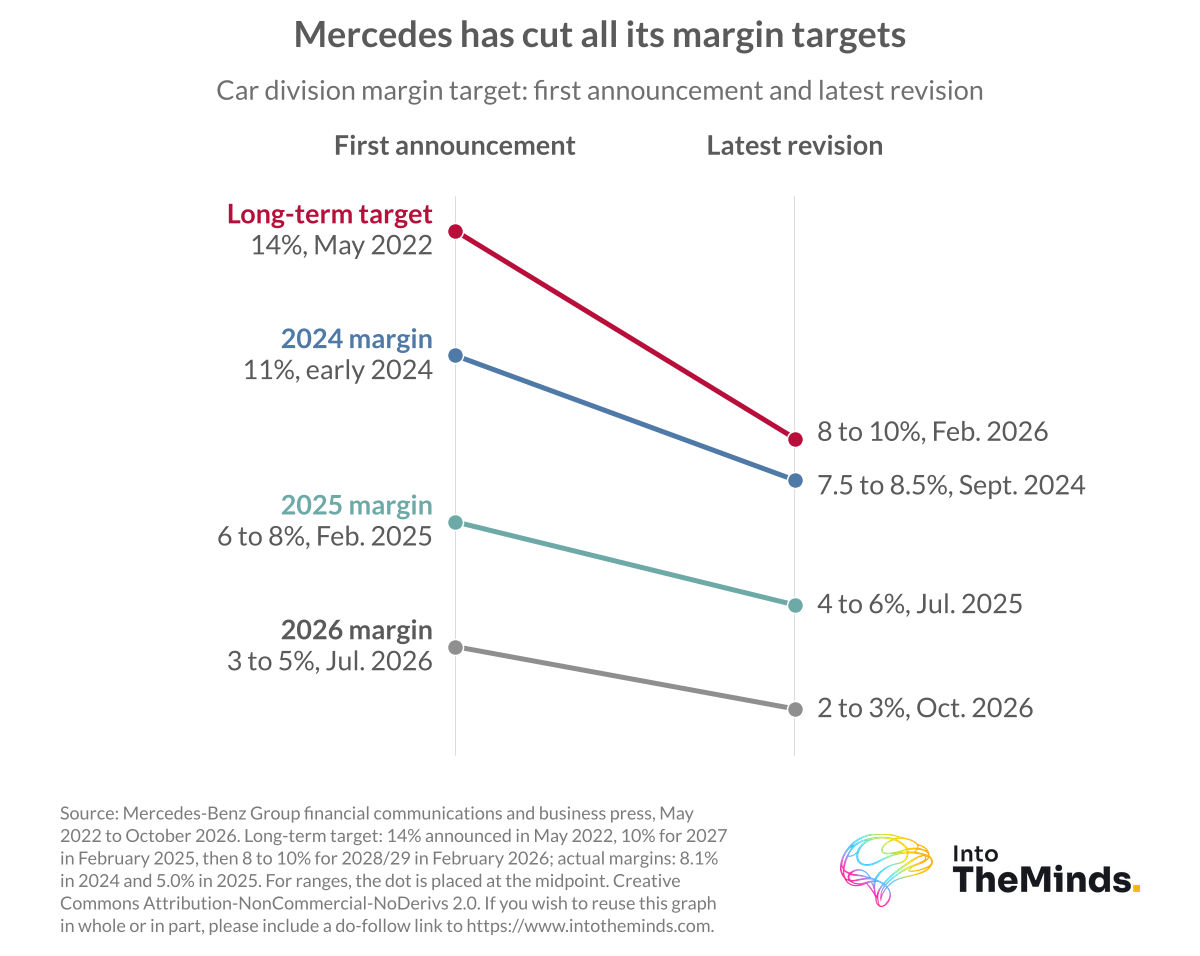
- The adjusted margin for Mercedes cars dropped from 14.6% in 2022 to 5.0% in 2025. On October 27, 2026, the 2026 forecast was lowered to 2 to 3%, down from 3 to 5% previously.
- In China, Mercedes-Benz deliveries fell by 27% between 2022 and 2025, and the BBAC joint venture swung to a loss in the first half of 2026.
- The “Electric only” doctrine targeted for 2030 has been abandoned: 70% of new Mercedes cars will still be combustion-powered in 2027.
- In the third quarter of 2026, Mercedes-Benz sold a record 68,400 electric cars (+61%), but its car margin reached only 2.5%.
Mercedes-Benz strategy: the 6 founding pillars
The origin of the current crisis lies partly in Mercedes’ new strategy announced on October 6, 2020. The latter relied on 6 pillars:
- Think and act like a luxury brand.
- Target the most lucrative segments.
- Expand the customer base through the AMG, Maybach, G, and EQ brands.
- Build customer loyalty and increase recurring revenues, particularly through subscriptions.
- Become a leader in electric motors and software.
- Reduce fixed costs by more than 20% by 2025 (compared to 2019) and the number of combustion engine variants by 70% by 2030.
I voluntarily summarized the wording of certain pillars to avoid making reading too complex. But the essence is there: luxury, affluent customers, profitability, and recurrence. It is easy to criticize, but I believe that in 2020, this strategy made sense. The problem is that in the automotive sector, a multi-year strategy copes poorly with the rapid evolution of the economic landscape. We will return to this.
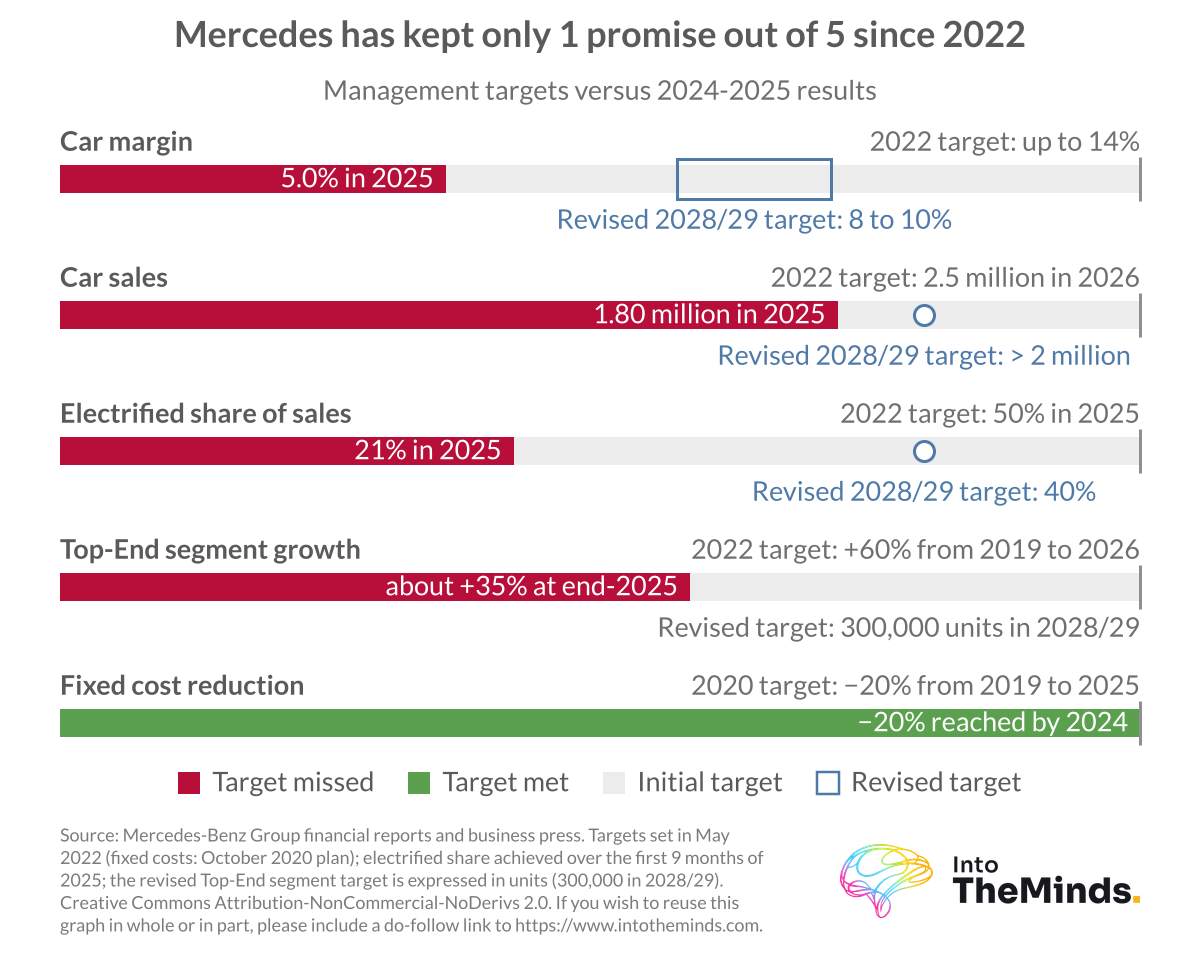
In the meantime, here is how, in May 2022, Ola Källenius, CEO of Mercedes-Benz, translated these pillars into targets. The table below compares these targets to the reality achieved.
| Indicator | May 2022 target | Achieved | Revised target |
|---|---|---|---|
| Adjusted car margin | Up to 14% | 5.0% in 2025 | 8 to 10% in 2028/29 |
| Car sales | 2.5 million in 2026 | 1.80 million in 2025 | More than 2 million in 2028/29 |
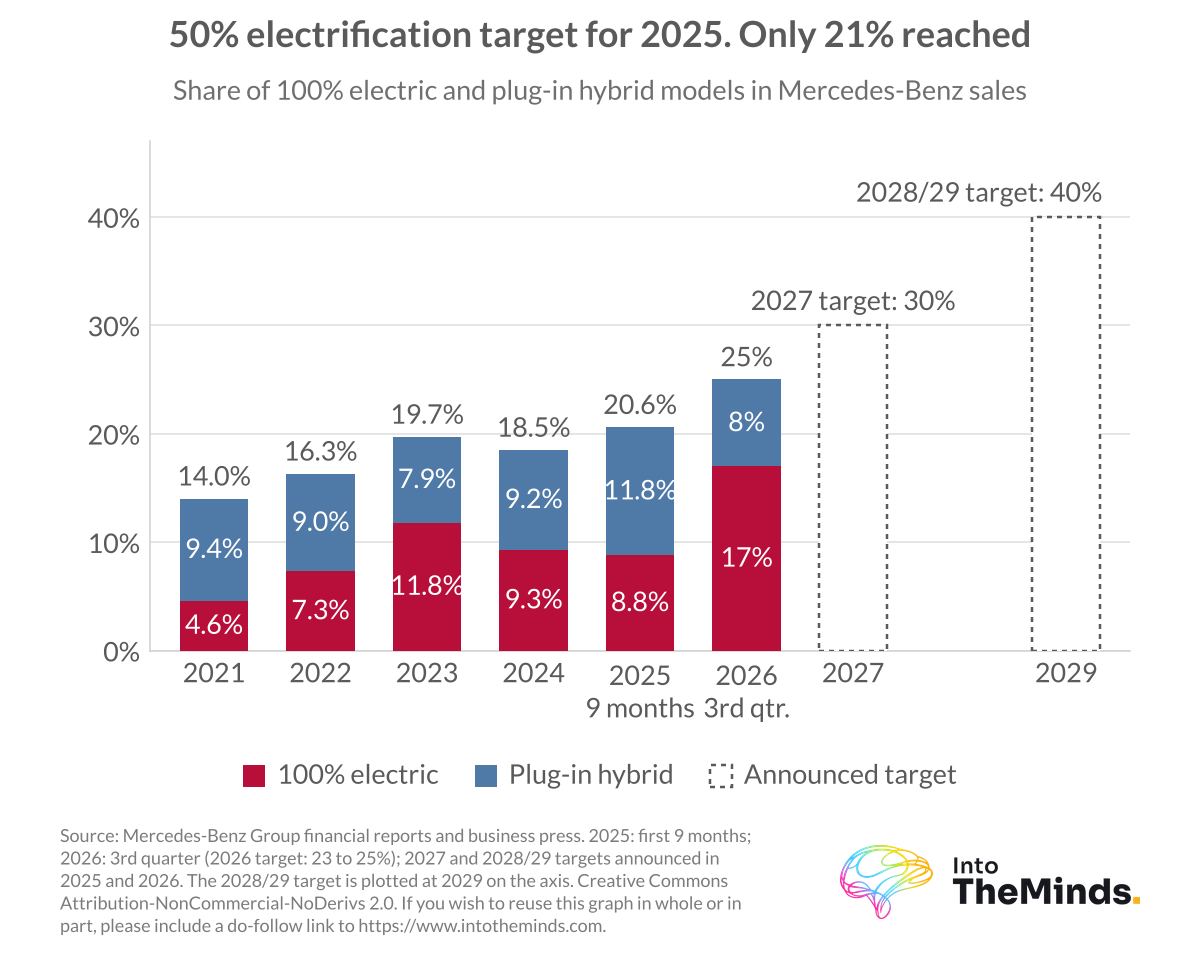
| Electrified share of sales | 50% in 2025 | 21% over 9 months 2025; 25% in Q3 2026 | 40% in 2028/29 |
| Top-End segment growth | +60% between 2019 and 2026 | Around +35% at end-2025 | 300,000 units in 2028/29 |
Only one pillar kept its promises: fixed costs indeed fell by about 20% between 2019 and 2024. The rest of the luxury strategy ran into market reality. And I would even go so far as to say that the targets revised in spring 2026 appear fragile.
Mercedes-Benz’s EBIT fell from 20.5 billion euros in 2022 to 5.8 billion in 2025.
Global profitability in freefall
Let us start with the broader perspective. As you will see, the deterioration in Mercedes-Benz’s situation is more pronounced than that of its rivals. A new strategy is therefore imperative.
Mercedes’ strategy facing collapsing margins
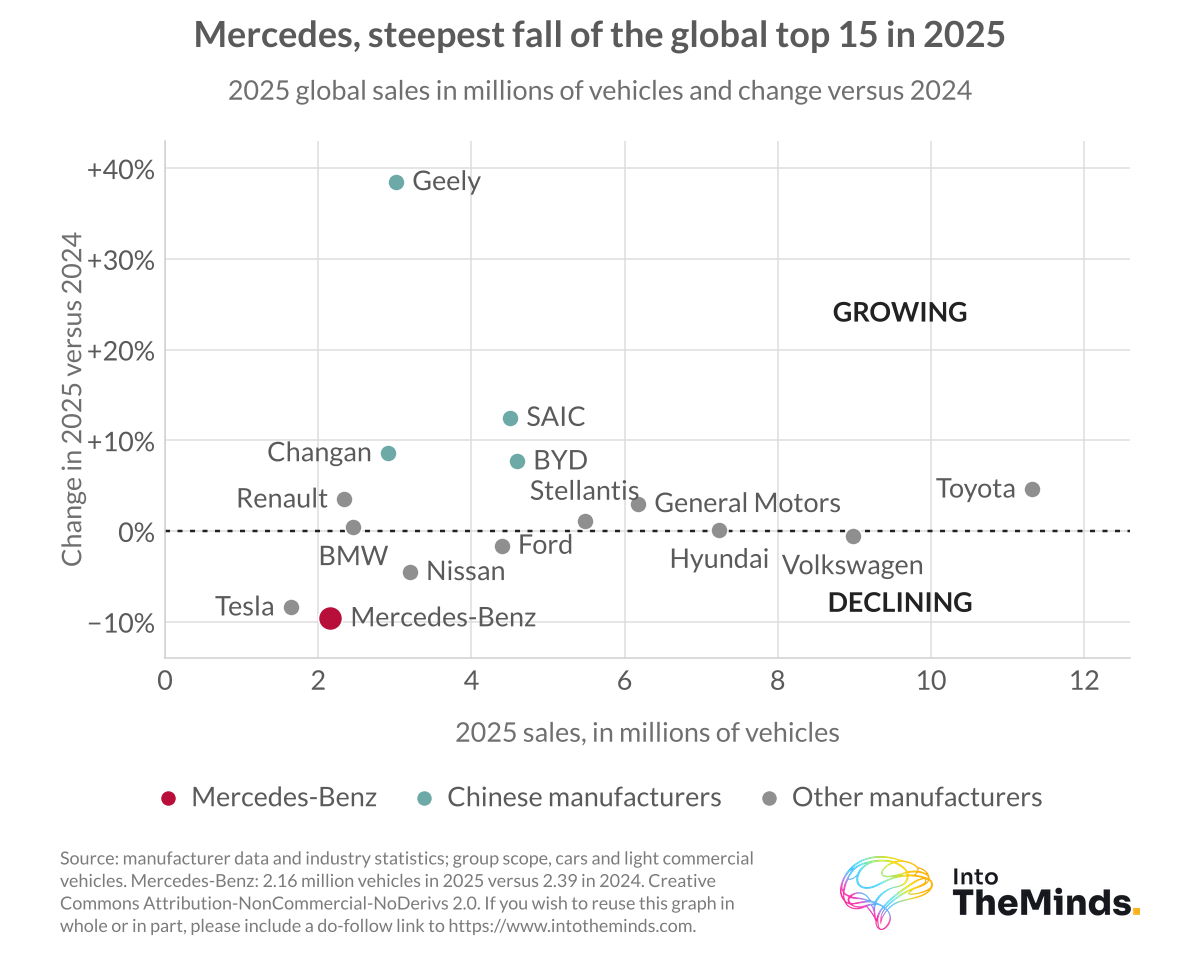
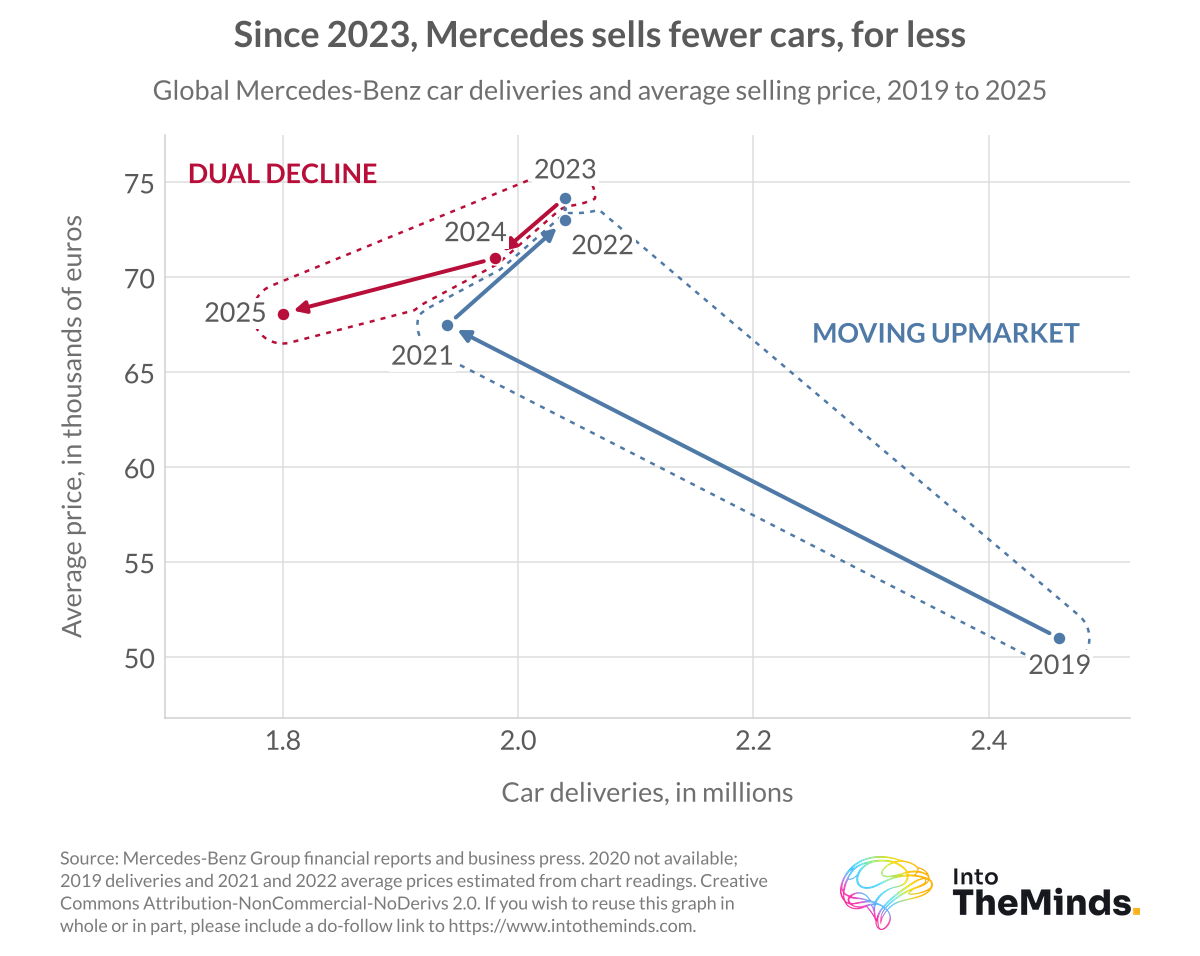
We compiled and analyzed official available data sources. They show a long cycle: global deliveries of cars and vans had peaked at 2.82 million units around 2017-2018, before declining to 2.16 million in 2025. Mercedes’ global market share thus fell from 3% in 2019 to 2.5% in 2025. Comparing 2025 to 2018, car sales fell by a quarter and automotive division profits were halved.
| Year | Car deliveries (millions) | Group EBIT (€bn) | Adjusted car margin | Average price (€) |
|---|---|---|---|---|
| 2019 | N/A | 1.64 | 6.2% | 51,000 |
| 2022 | 2.04 | 20.5 | 14.6% | N/A |
| 2023 | 2.04 | 19.7 | 12.6% | 74,200 |
| 2024 | 1.98 | 13.6 | 8.1% | 71,000 |
| 2025 | 1.80 | 5.8 | 5.0% | 68,100 |
| 2026 (forecast) | Around 1.7 | Similar to 2025 | 2 to 3% | N/A |
In 2025, revenue fell by 9% to 132.2 billion euros. Restructuring costs reached 1.6 billion. To place these results in context, below are 2 charts showing the evolution of deliveries and margin since 2019.
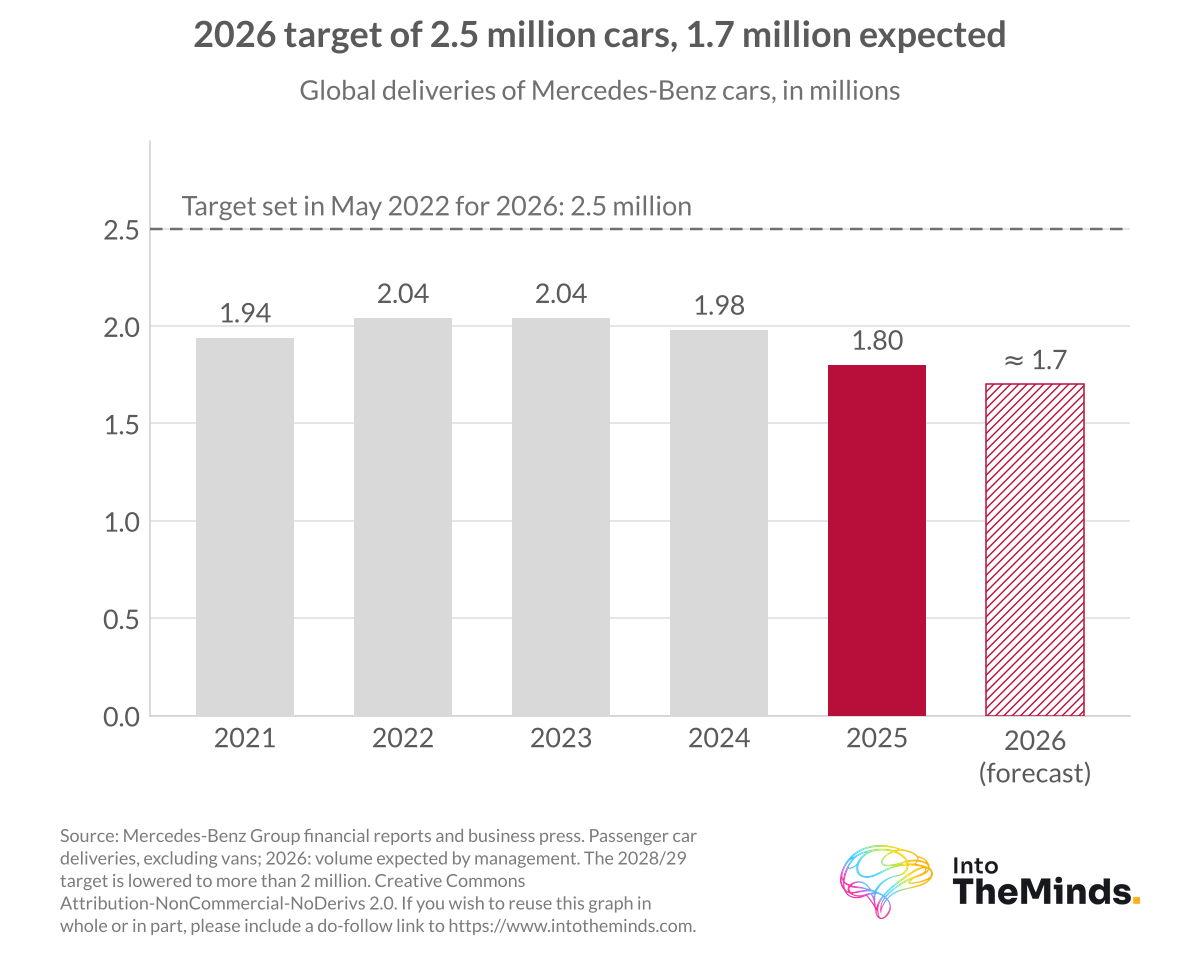
Between 2018 and 2025, car sales fell by a quarter and automotive division profits were halved.
But the most recent signal is ambiguous. In the second quarter of 2026, profit increased by 22%. Looking closer, this increase was driven by vans (+78% EBIT in H1) and financial services (+64%). On the passenger car side, EBIT collapsed again by 66% in the half-year. Before adjustments, the car division margin was just 1.9% in H1 2026, and 0.2% in Q2. The core business has not recovered.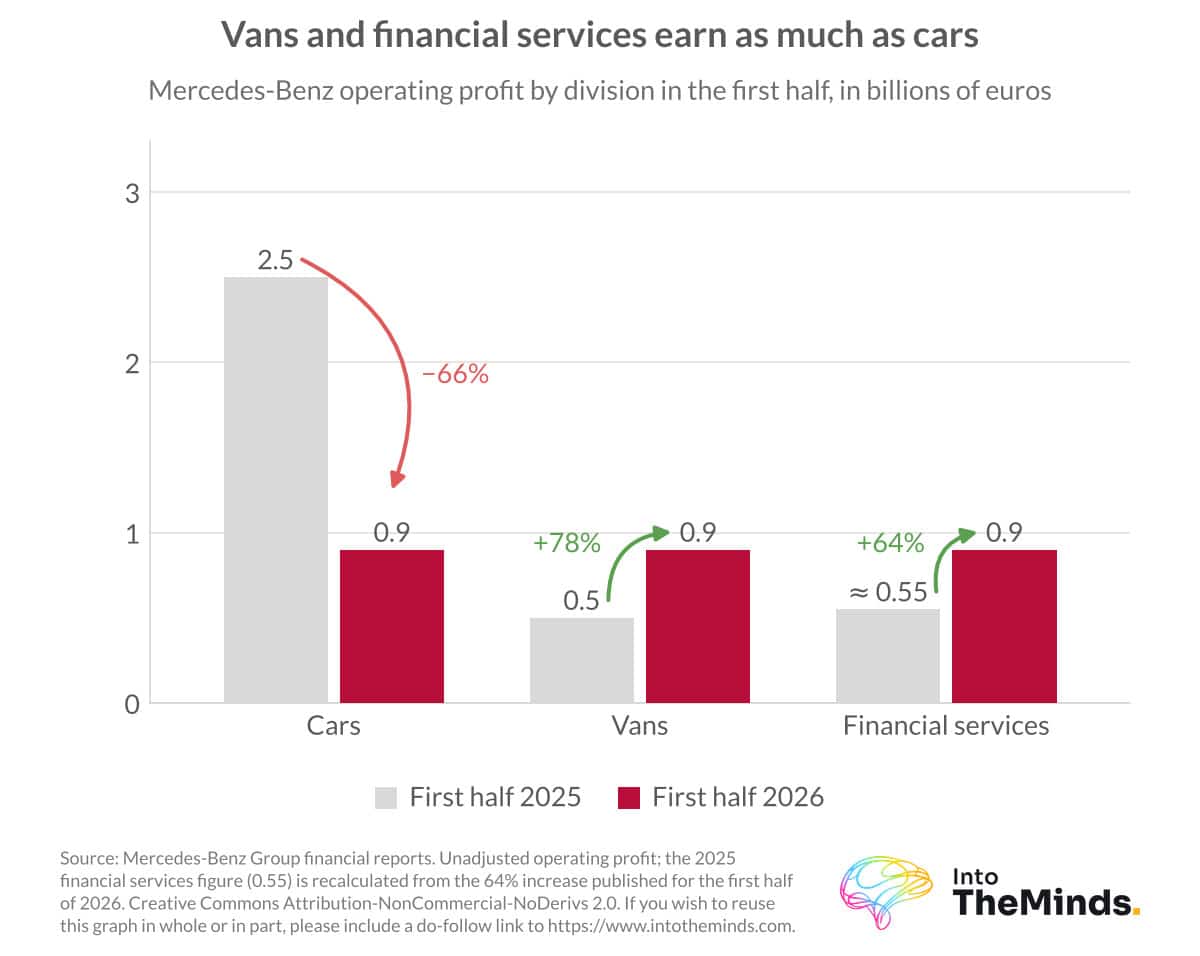
The third quarter confirmed this. In the first 9 months of 2026, Mercedes-Benz delivered only 1.24 million cars, 7% fewer than a year earlier and a fifth fewer than in 2023. On October 27, 2026, the group issued a new profit warning: according to preliminary figures, adjusted car margin fell to 2.5% in Q3, and the annual forecast was lowered from 3-5% to 2-3%, due to persistent weakness in the Chinese market and additional costs expected in Q4. The group no longer expects EBIT clearly above 2025 levels.
Mercedes-Benz versus BMW and Renault
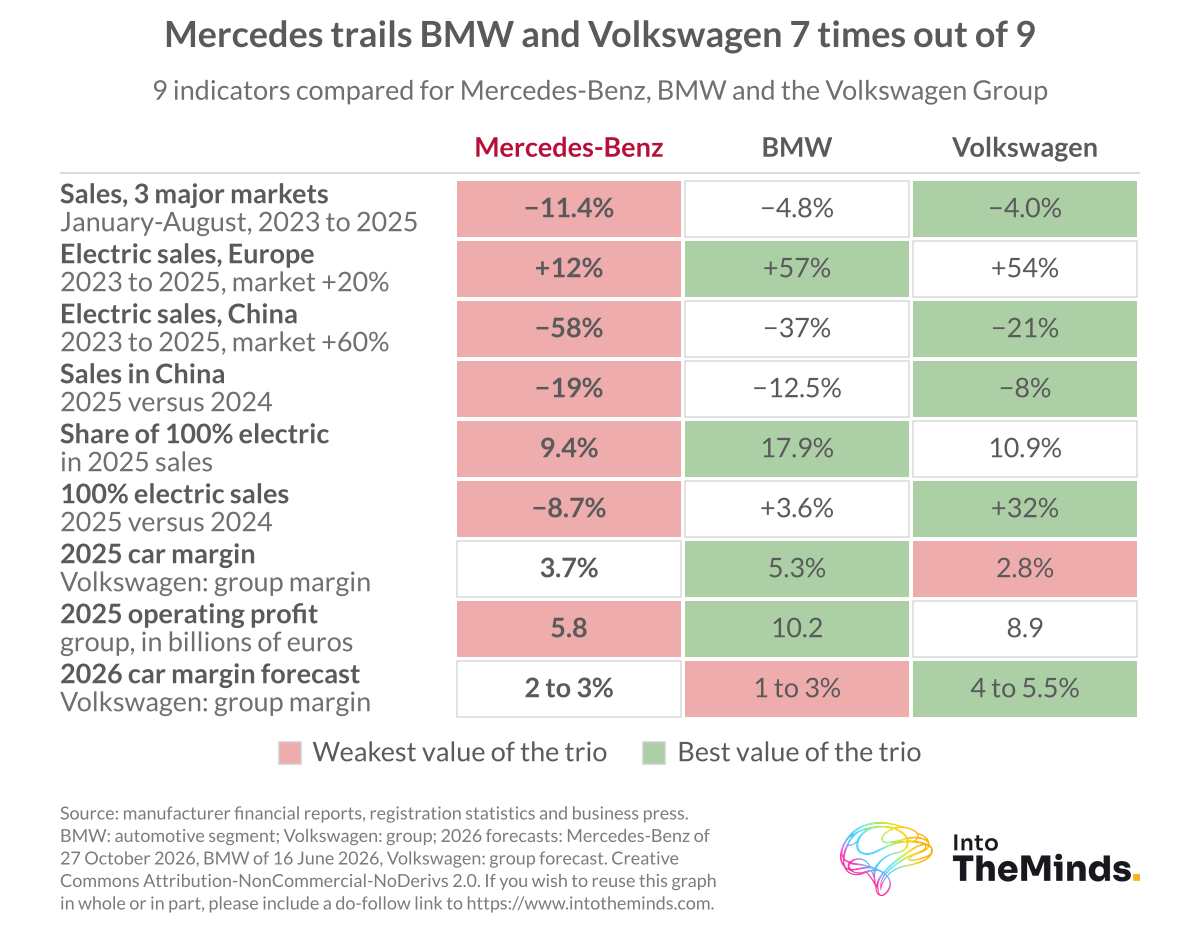
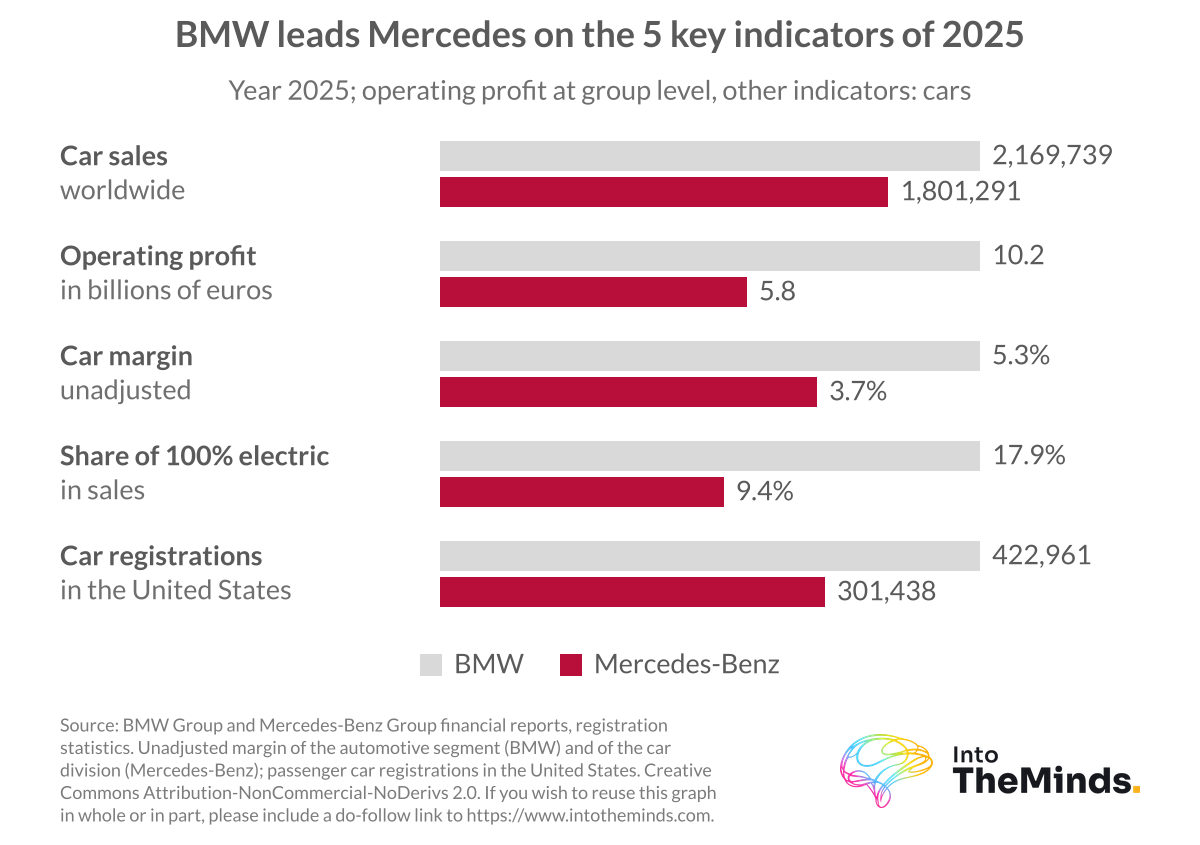
The entire German automotive industry is suffering, but Mercedes-Benz is lagging further behind. Here are some numerical indicators:
- In 2025, BMW sold 2,169,739 cars compared to Mercedes’ 1,801,291.
- In 2025, BMW’s unadjusted automotive margin was 5.3%, compared to 3.7% for Mercedes.
- In 2025, electric vehicles represented 17.9% of BMW sales, compared to 9.4% for Mercedes.
And to top it off, in the first half of 2026, Mercedes’ unadjusted passenger car margin was just 1.9%, below Renault Group’s operating margin (5.2%). This means that on a car sold for €100,000, Mercedes earns only €1,900! We are very far from the margins of a luxury industry player.
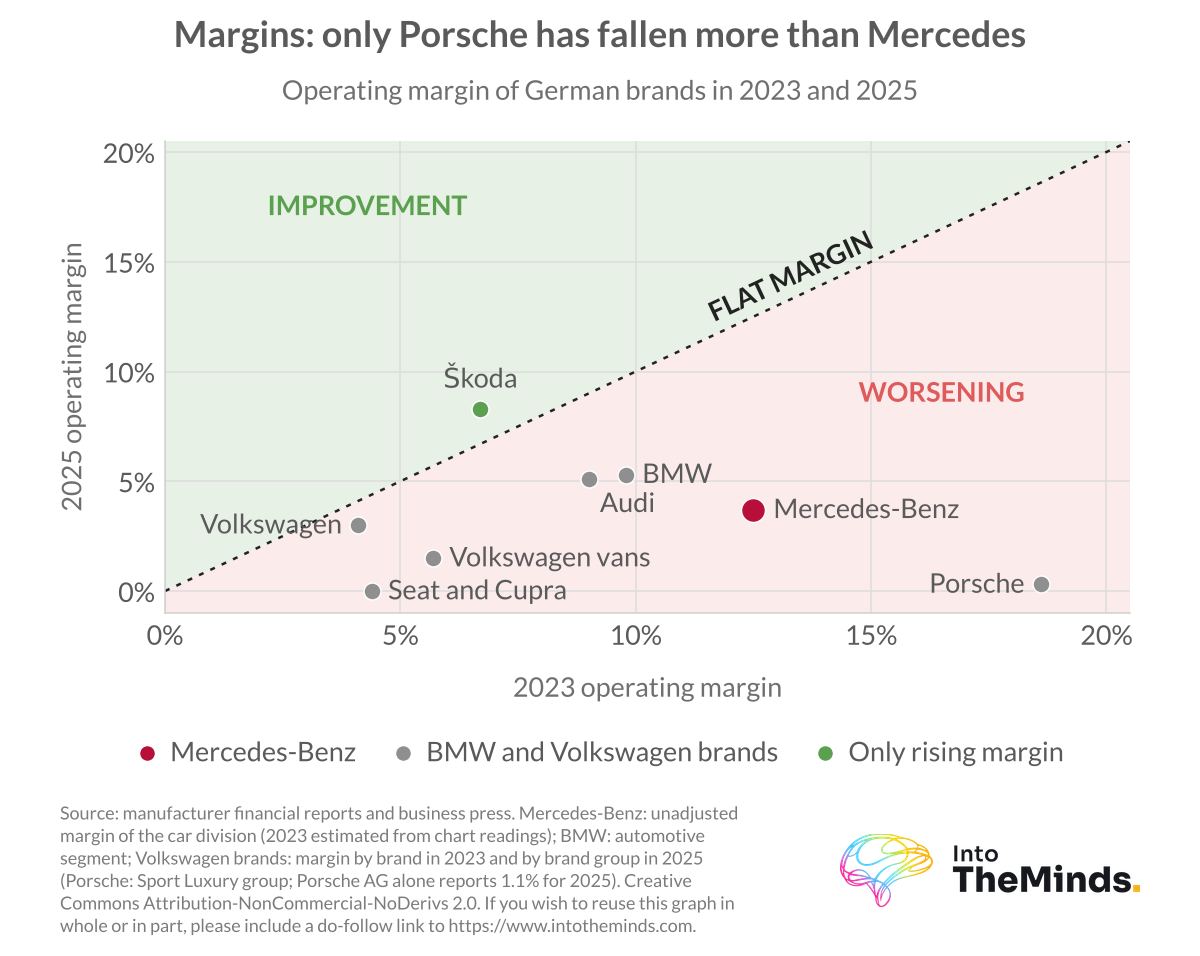
On a car sold for €100,000, Mercedes earns only €1,900!
Europe, once again Mercedes’ primary stronghold
Since the first 9 months of 2025, Europe has once again overtaken China as Mercedes-Benz’s main sales region. In 2025, electric and plug-in hybrid vehicles accounted for 40% of the brand’s sales there, double the global average. Mercedes is indeed the European number one in hybrids, with 23% of the plug-in hybrid market.
However, there is a worrying paradox. Diesel accounted for more than 29% of Mercedes’ European sales in the 9 months of 2025, in a market where it has fallen below 10%. This mix finances the transition, but exposes the company to CO2 standards and soaring diesel prices. Furthermore, we don’t see how diesel engines could still have a future in passenger cars. They are condemned to disappear.
On the electric side, the picture is more encouraging. European electric sales had grown by only 8% in 2025. But public subsidies and, starting in March 2026, the closure of the Strait of Hormuz and rising gas and diesel prices reinvigorated the EV market. Mercedes’ electric sales in Europe jumped 34% in Q1 2026 and 78% in Q3 2026. Order books for electric versions of the GLA, GLB, GLC, and CLA are full in Europe through the end of the year and extend into 2027.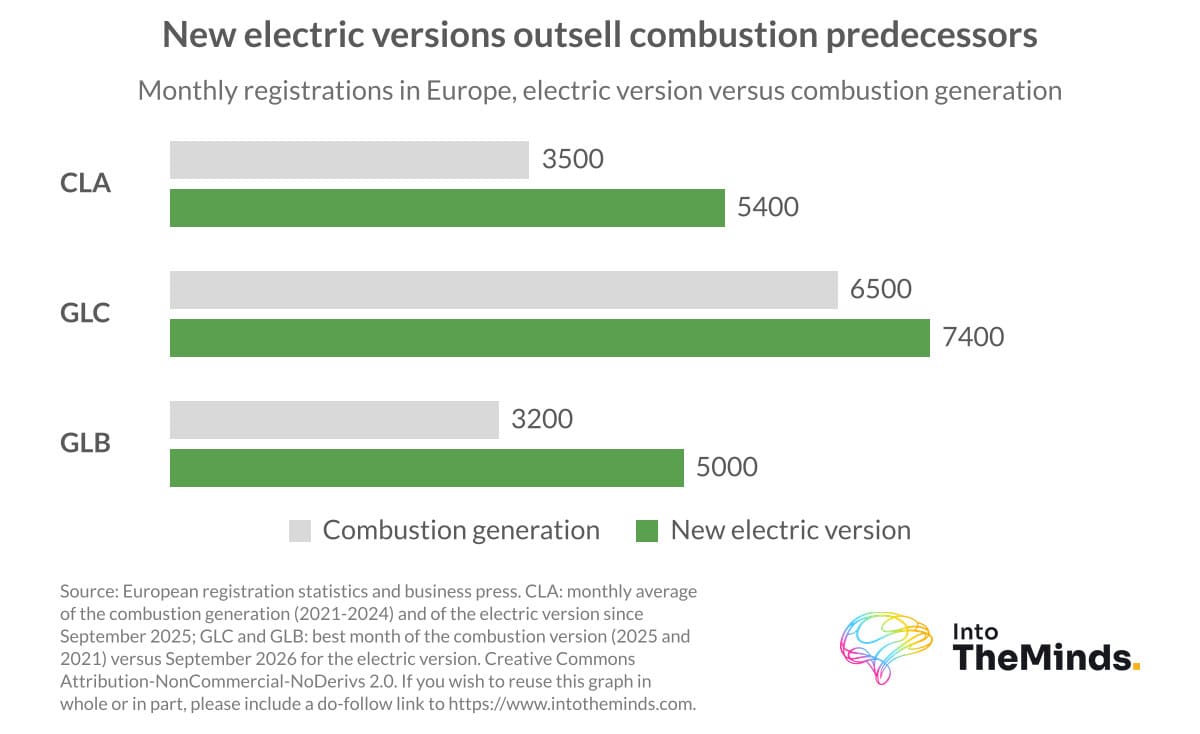
However, competitive pressure is increasing: Chinese brands captured 9% of European registrations in H1 2026, nearly triple their 2024 share.
In China, 94% of Mercedes cars sold in April 2026 were still petrol-powered.
Country by country: 3 markets, 3 dynamics
Below is the analysis of the markets dictating Mercedes-Benz’s strategy. The table below ranks the brand’s top 6 countries in 2025:
| Rank | Country | Vehicles sold in 2025 |
|---|---|---|
| 1 | China | 472,800 |
| 2 | United States | 337,200 |
| 3 | Germany | 260,280 |
| 4 | Great Britain | 108,270 |
| 5 | South Korea | 68,470 |
| 6 | France | 64,850 |
China: a drastic shift
All Mercedes indicators there are in the red:
- Deliveries dropped from 753,850 units in 2022 to 551,932 in 2025 (-27%). In the first half of 2026, the drop is 28%.
- Revenue generated in China from imported vehicles and parts shrank by 40%, from 27.3 billion euros in 2022 to 16.5 billion in 2025.
- Mercedes’ share of profits from the BBAC joint venture with BAIC dropped from 1,711 million euros in 2022 to 761 million in 2025, and then swung to a loss of 445 million in H1 2026, compared to a profit of 645 million a year earlier.
- The Chinese margin fell from 15% in 2024 to approximately 10%.
Luxury, which generated profitability in the country, is the most affected segment. S-Class registrations fell by 66% between 2022 and 2025.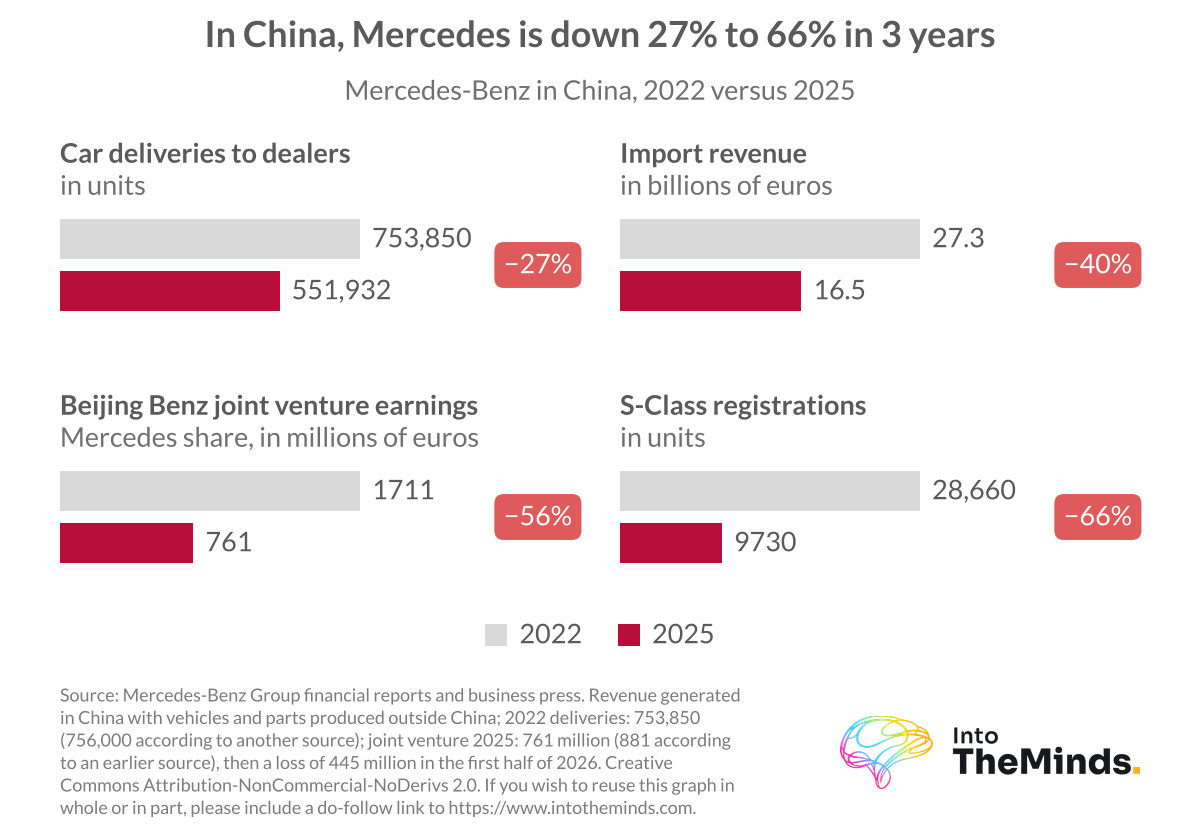
In the electric space, the finding is the same as for other European carmakers. Chinese consumers buy Chinese EVs: they are cheaper, and consumers now prefer local brands. Result: in April 2026, 94% of Mercedes cars sold in the country were petrol-powered, and electric cars contribute almost nothing according to internal sources. As an example, the electric CLA sold fewer than 2,800 units between October 2025 and end-August 2026, and the electric GLC fewer than 2,500 since May, while its combustion version exceeded 36,300 units in the same period.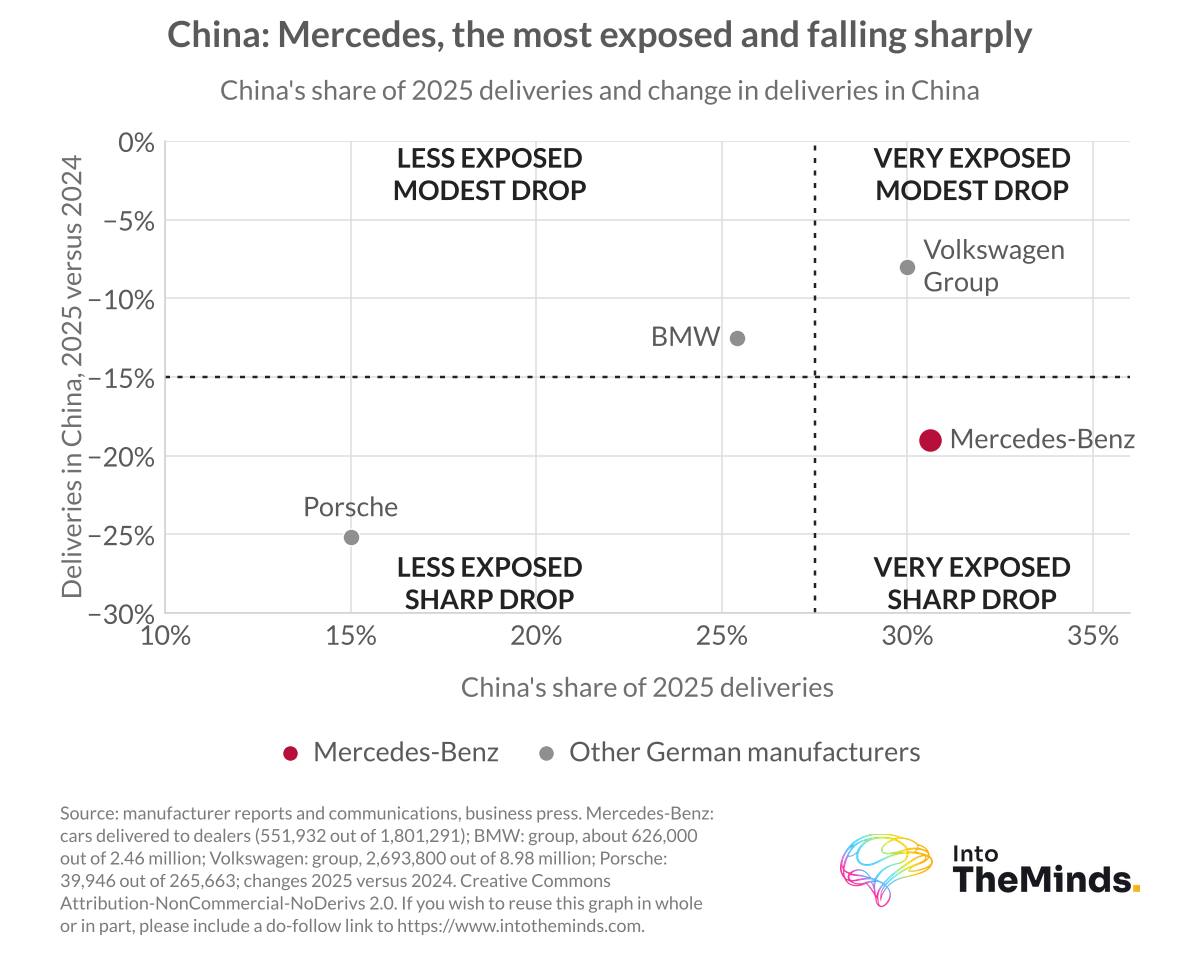
What strategy to adopt in China?
- First, a rationalization of product ranges. The new GLA is no longer offered in China because the entry-level segment is too fierce. Mercedes has reduced its targets to 500,000 to 600,000 sales per year.
- Second, relocation and adaptation to local tastes. Mercedes plans to produce 20 models in Beijing by 2027, 7 of which will feature specific software and a cockpit tailored to local expectations. The local production rate, currently 80%, is planned to reach 100% in the long term.
United States: growth engine and prohibition risk
Mercedes-Benz aims for 400,000 cars and 80,000 vans in the United States by 2030. At the end of July 2026, Ola Källenius stated that the group would remain present in this market, even if adjustments were necessary. But the reality is tough.
- US tariffs on European cars, which rose from 2.5% to 25% in April 2025 and were reduced to 15% since August 2025, cost about 1 billion euros in 2025, with 1.5 billion expected in 2026.
- In 2025, between 70 and 71% of Mercedes cars sold in the United States were imported.
- BMW registered 422,961 cars in 2025, compared to 301,438 for Mercedes.
- The Connected Vehicle Security Act bill, passed in Senate committee in July 2026, would ban starting in 2030 manufacturers whose Chinese shareholding exceeds 15%. However, BAIC and Li Shufu hold nearly 20% of Mercedes-Benz, which advocates for a 25% threshold.
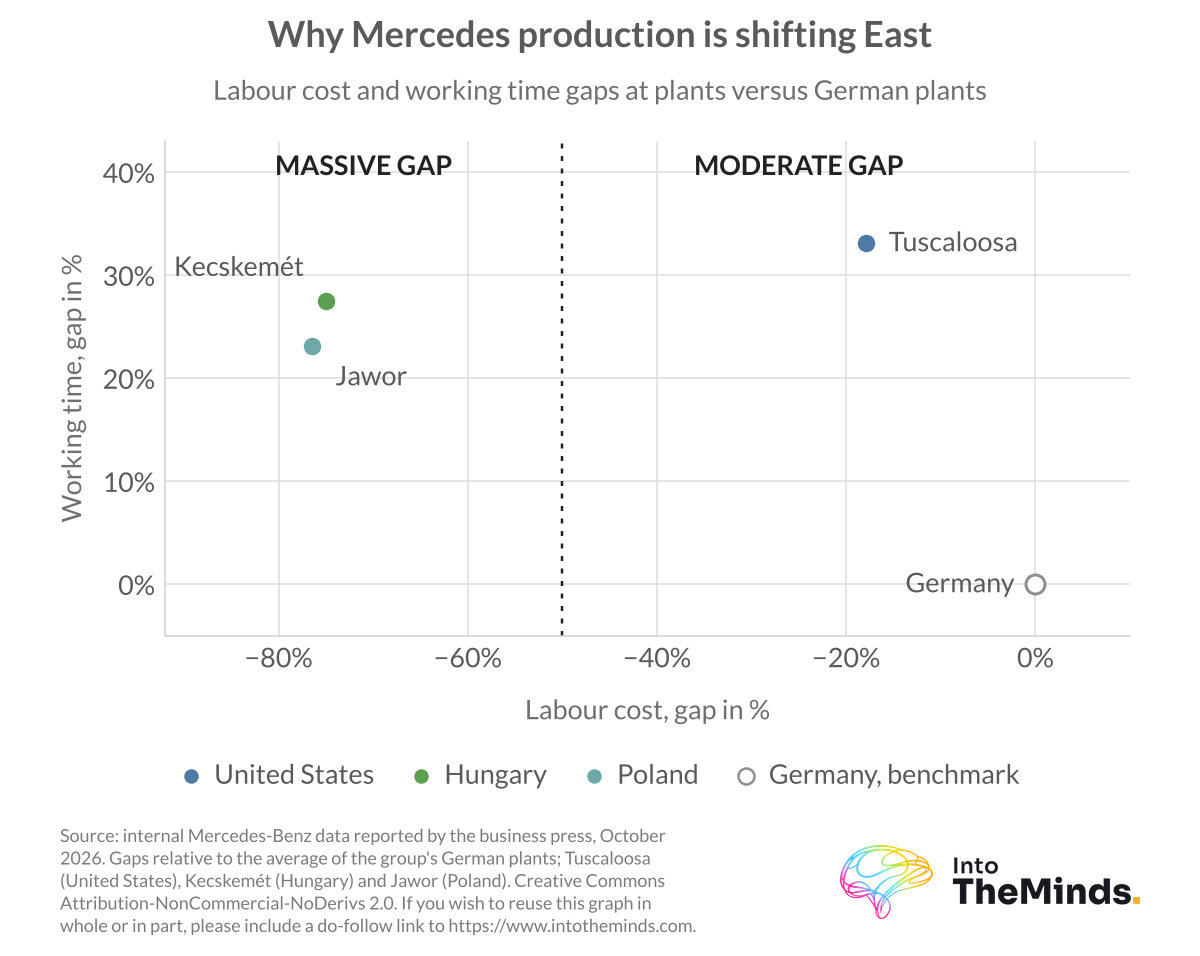
The response involves $7 billion in US investments by 2030, including $4 billion in Tuscaloosa, Alabama. The US plant has also become an internal benchmark: its labor costs are 17.9% lower than those in German plants, for a 33.1% higher working time. It’s no wonder Audi announced a massive investment there last week. The problems are the same, and the solutions are similar.
Germany: cost and capacity reduction
It is in Germany that the adjustment is deepest. Two-thirds of the group’s 164,000 employees work there, while only 15% of vehicles are sold there. In 2023, the Sindelfingen plant produced only 222,000 vehicles out of a potential 500,000, representing a capacity utilization of 44%. Today, this plant of 31,500 employees (including 19,000 in production) operates only one shift out of three, while the Bremen plant runs at full capacity and Rastatt produces between 225,000 and 250,000 vehicles per year. German capacity is dropping from 1.0 to 0.9 million units.
There is a sense of an ending. “Made in Germany” is being scaled back at a forced march.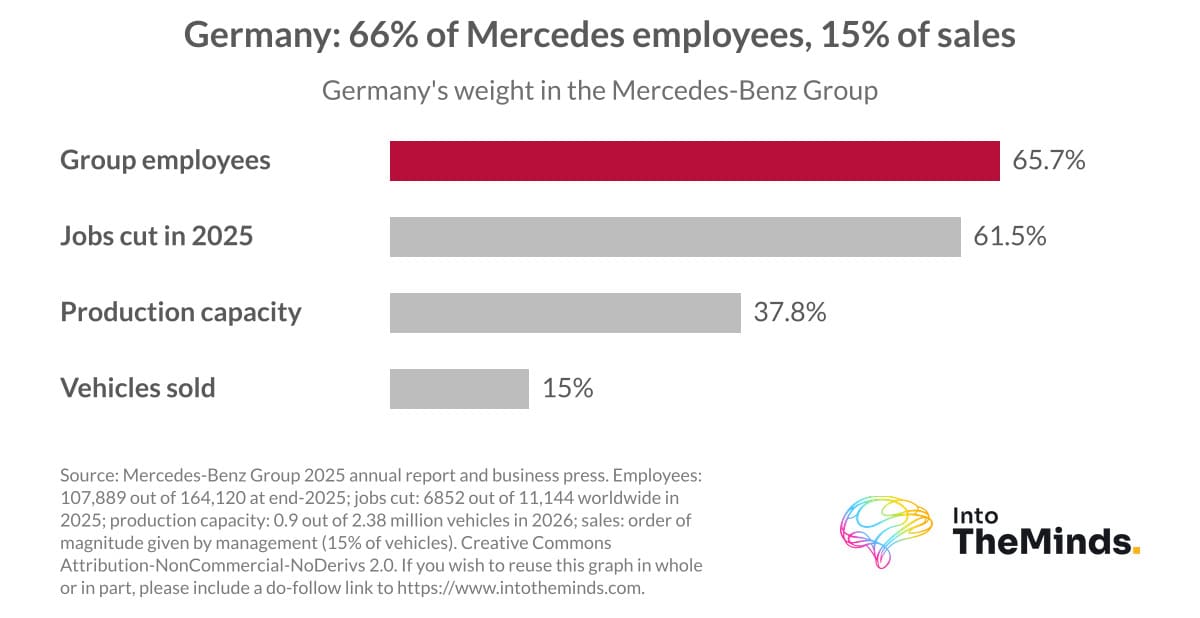
Ola Källenius’ short-term plan calls for €800 million in annual savings in Germany, representing nearly one margin point, through a reduction in hourly labor costs.
- Management is demanding a 38-hour workweek, up from 35 hours in place since 1995, and the supervisory board chairman mentioned a return to 40 hours. The July bonus, worth 18.4% of monthly salary, has been abolished. German employees enjoy 30 days of vacation plus 6 extra days off, and take an average of 25 sick days per year. If no agreement is reached with worker representatives and the IG Metall union, a production facility and a component plant could close in Germany, despite a job guarantee running through late 2034. Such a closure would take 7 to 8 years.
- Relocating production to Eastern Europe due to hourly costs: €62 in Germany versus €16 in Hungary. With capacity doubled to 400,000 units, Kecskemét is Mercedes’ largest plant in Europe and the group’s second-largest after Beijing. By 2027, 30% of Mercedes vehicles must be produced in low-cost countries, double the 2024 share.
- Sale of German dealerships.
| Mercedes-Benz plant | Labor costs relative to Germany | Working time relative to Germany |
|---|---|---|
| Tuscaloosa (United States) | -17.9% | +33.1% |
| Kecskemét (Hungary) | -75.0% | +27.5% |
| Jawor (Poland) | -76.5% | +23.1% |
Product offensive: the electric pivot
In this section, you will see how Mercedes-Benz replaced the 100% electric dogma with “strategic flexibility.” The product offensive, the largest in the group’s history, includes more than 40 new or refreshed models between 2025 and 2027.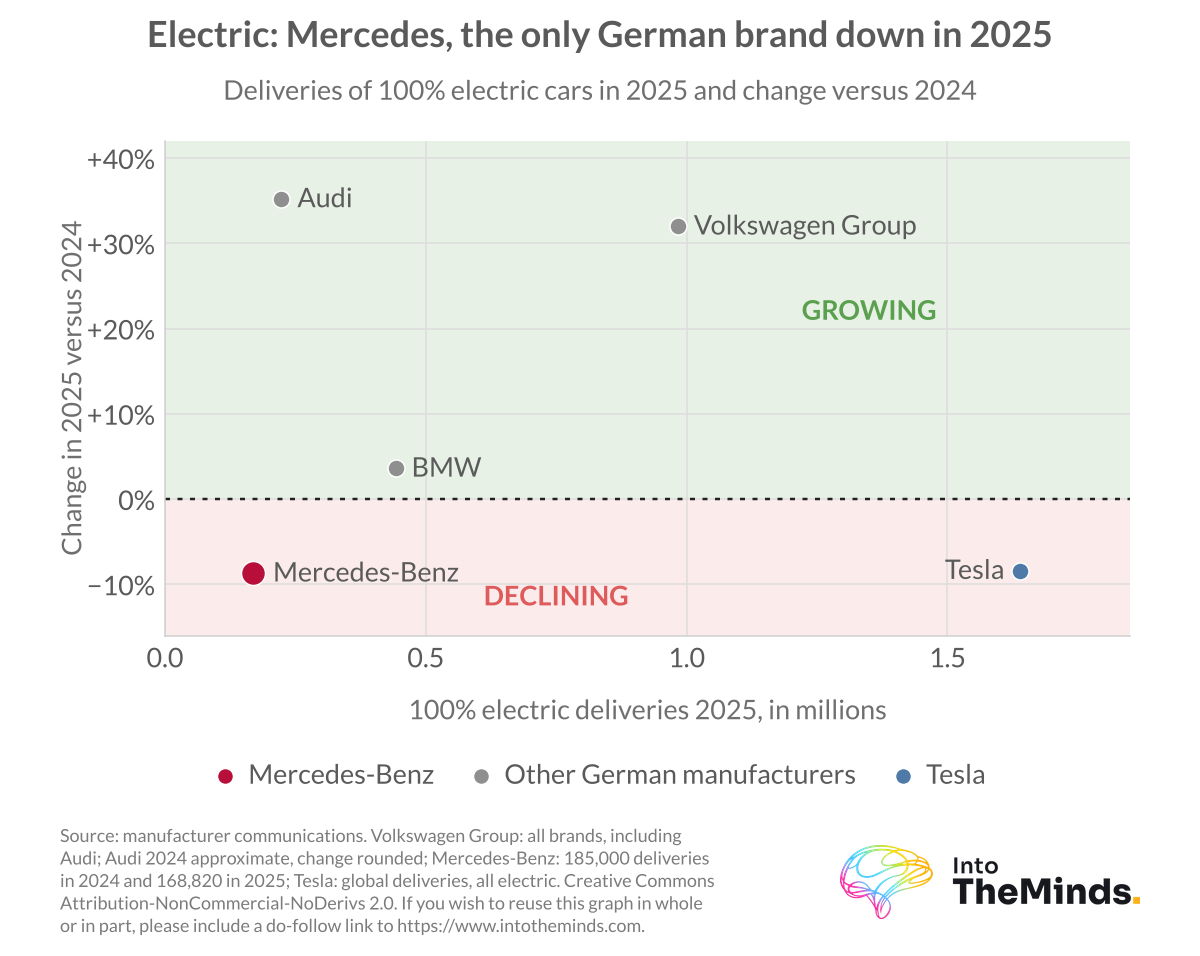
Here are the key electric models of the new product lineup:
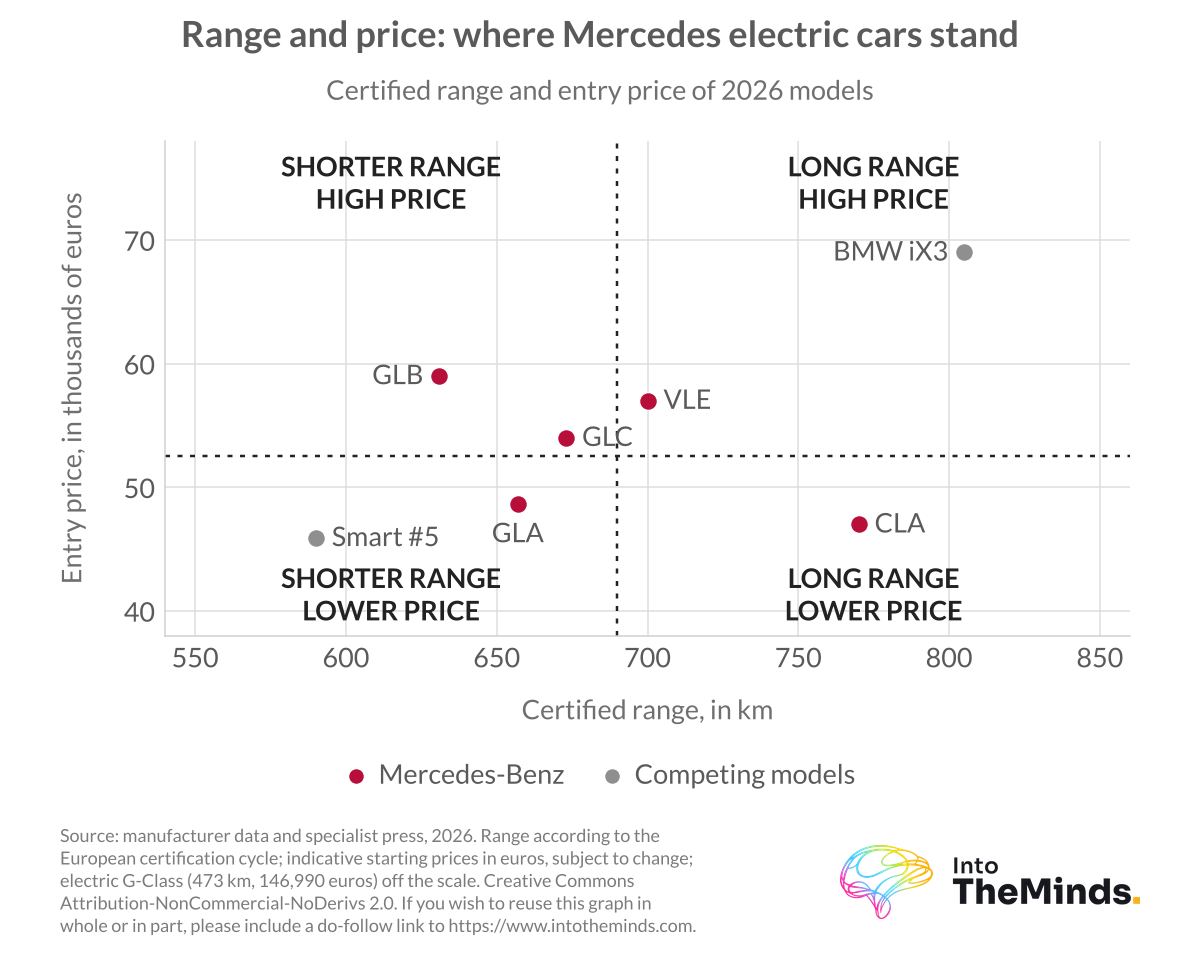
- Electric CLA: 770 km WLTP range. Over 71,000 units sold in Europe since September 2025.
- Electric GLC: electric version of the bestseller, 673 km WLTP. Nearly 7,400 registrations in Europe in September 2026.
- Electric GLB: around 5,000 registrations in September 2026, a monthly level never reached by its electric predecessor EQB.
- VLE: this 100% electric “van-limousine”, unveiled globally on March 10, 2026 in Stuttgart, announces a 700 km range.
- Electric “Baby G-Class”: smaller sibling of the G-Class, rounder and roughly half as expensive, planned for 2028.
Next will come the electric E-Class, presented at the IAA mobility show in Munich in autumn 2027, and a new A-Class in 2028, even though the discontinuation of this entry-level model was initially planned. In the third quarter of 2026, Mercedes-Benz sold 68,400 electric cars, a quarterly record (+61% year-on-year), and 25% of its sales were electrified (17% pure electric and 8% hybrids). According to a dealer, 60 to 70% of pre-orders are for electric versions. But caution remains necessary:
- 70% of new Mercedes cars will still be combustion-powered in 2027;
- future EVs will share design with their ICE counterparts;
- the V8 returns to AMG.
On the technological front, catching up is real. Next-generation batteries cost 30% less and rely on an 800-volt architecture. MB.OS will equip all new vehicles at the end of the product offensive in late 2027. For the following generation, Mercedes-Benz is preparing modular production replacing its current 5 platforms and has invested 500 million euros in an AI system, PLM.AI, aimed at reducing the time from concept to production vehicle by up to 30%. In autonomous driving, Mercedes-Benz withdrew Level 3 (hands-off driving up to 95 km/h) from the refreshed S-Class due to lack of demand, in favor of a Level 2++ urban assistant sold for $3,950 for 3 years in the US and set for approval in Germany starting in 2027. A highway assistant allowing hands-free driving up to 130 km/h will also arrive in Germany.
In the first half of 2026, Mercedes-Benz Financial Services EBIT rose by 64%.
A new stage: defense, services, and recurring revenues
To conclude, here are the avenues Mercedes-Benz is exploring beyond passenger cars. They all share the same goal: supporting profitability.
Diversification into defense is taking shape. In May 2026, Ola Källenius expressed readiness to invest in this sector, which he considers a growth niche. The Ludwigsfelde van plant (1,800 employees) is in divestment talks with the KNDS group to produce the Boxer armored vehicle, but the transaction was stalled in late September 2026 awaiting a Bundeswehr order. The brand already supplies the G-Class “Wolf” to the German military, whose Wolf 2 successor is subject to a framework contract for up to 5,800 vehicles, as well as military versions of the Sprinter.
Services are taking over from passenger cars. Vans and financial services drove the 2026 rebound. The group is selling its Athlon leasing subsidiary to BNP Paribas for an expected amount of up to 1 billion euros. The “Next Level Performance” savings program, valued at around 5 billion euros, has already delivered nearly 3.6 billion in 2025.
Mercedes-Benz is also returning to the taxi and rental car market. The effects of the product offensive are not expected until 2027: that is the horizon to watch.

FAQ: questions you may ask
What are the 6 pillars of Mercedes-Benz’s strategy?
They are luxury, profitable growth, customer base expansion via AMG, Maybach, G, and EQ, recurring revenues, electric and software leadership, and cost reduction. They were presented on October 6, 2020. Only the fixed cost reduction of about 20% between 2019 and 2024 achieved its target.
Why did Mercedes-Benz make its electric strategy more flexible?
Because demand did not keep pace. The electrified share reached only 21% in the first 9 months of 2025 compared to the planned 50%, and 25% in Q3 2026. The group is now betting on powertrain flexibility while launching the electric CLA, GLC, and VLE.
How does Mercedes-Benz plan to improve profitability?
Through a savings program of about 5 billion euros, capacity reductions, and a lowering of labor costs in Germany expected to deliver 800 million euros annually. German production is capped at 0.9 million units, Hungary doubles to 400,000, and 11,144 jobs were eliminated globally in 2025, including 6,852 in Germany. The target is an 8 to 10% margin in 2028/29.
What geopolitical risks threaten Mercedes-Benz?
US tariffs and a potential US ban. A bill would exclude starting in 2030 manufacturers with over 15% Chinese shareholding, while BAIC and Li Shufu hold nearly 20% of the capital. In China, local competition is causing sales and margins to collapse.
How to measure the impact of this strategy on customers?
By directly surveying buyers and prospects. A B2C market research or a customer satisfaction survey reveals whether the brand’s repositioning convinces its customer base.