In this report, we present the latest trends in the data centre market. We offer an overview of how this market is evolving, as well as a focus on three specific markets: the United States, France and Germany.
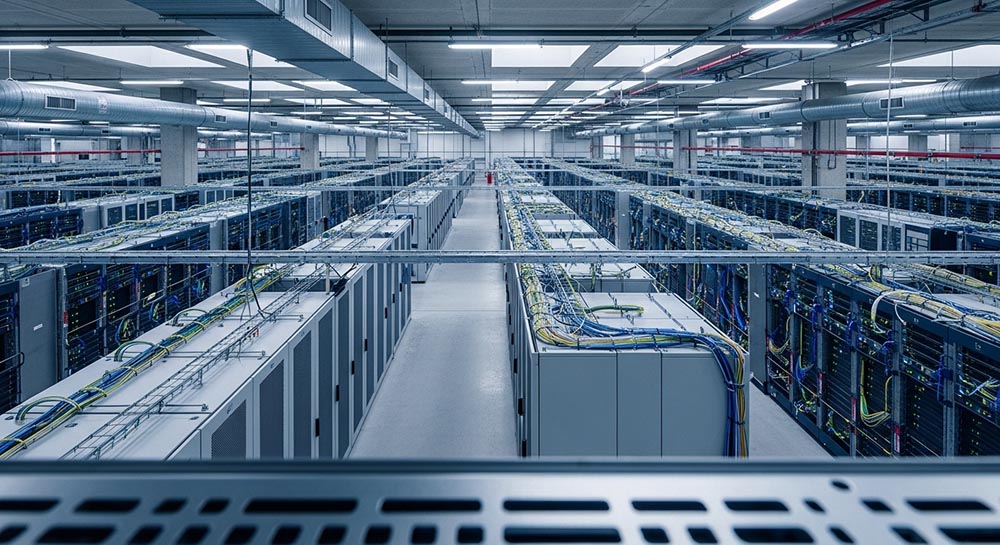
The data center market is experiencing a period of rapid expansion. Every newspaper is talking about it. It is impossible to ignore. There are now approximately 12,000 data centers worldwide, with the largest share located in the United States (4,000 operational and 900 under construction as of June 2026). France counted 352 facilities in 2026—twice as many as in 2017. Behind these figures lie technological breakthroughs, energy constraints, and sovereignty challenges that are reshaping the global geography of digital infrastructure. In this article, our market research company has compiled the latest available data to provide a comprehensive overview of this market. As you will see, we offer a global perspective while also developing a detailed analysis of three specific markets: the United States, France, and Germany.
Key takeaways
- As of June 2026, there are approximately 12,000 data centers worldwide. Around 4,000 are operational in the United States, while another 900 are under construction.
- Global electricity consumption by these facilities reached 415 TWh in 2024. It is expected to rise to 945 TWh by 2030, representing an increase of 165% between 2023 and 2030.
- France had 352 data center facilities in 2026. Investments announced during recent AI and industrial strategy summits amount to nearly €100 billion.
- American operators controlled 80% of the European market as of June 2026.
- Average power density per server rack increased from less than 1 kW before 2010 to 50–100 kW in 2026. Some experts estimate it could eventually reach 1 MW per rack.
- Germany, Europe’s largest market, reached a total installed capacity of 3.06 GW in the first half of 2025, with 72% concentrated in Frankfurt.
The data center market: key figures
The scale of the transformation becomes apparent when the figures are viewed over time. In 2010, Facebook’s facility in Prineville (Oregon) represented a $200 million investment, covering 14,000 m² with a capacity of 30 MW and creating 35 jobs. By July 2026, a single Meta site in Alberta represented a $9 billion investment and covered 270,000 m². Between these two dates, two technological breakthroughs dramatically accelerated growth:
- Cloud computing increased average rack power density from less than 1 kW to around 15 kW.
- Generative AI pushed it further to between 50 and 100 kW in 2026, with some estimates reaching 1 MW per rack.
Growing electricity demand
Global electricity consumption by data centers reached 415 TWh in 2024, representing 1.5% of global electricity use. It is expected to increase to approximately 945 TWh by 2030, equivalent to nearly 3% of global electricity consumption. Demand is projected to grow by 165% between 2023 and 2030. The United States, Europe, and China account for approximately 85% of this consumption.
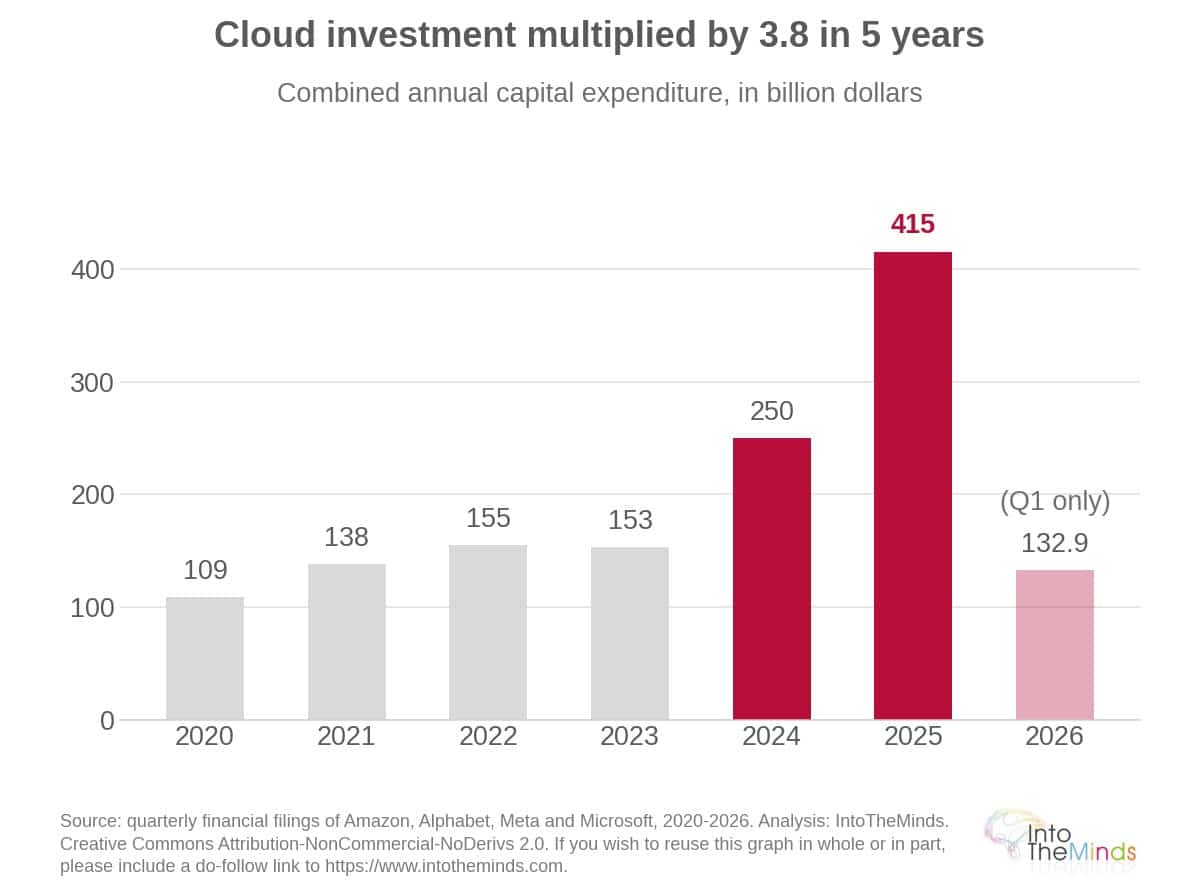
The global AI infrastructure market is expected to reach $422.55 billion by 2029, corresponding to an annual growth rate of 44% between 2023 and 2029. The cumulative capital expenditure of the world’s four largest buyers illustrates this trend (see table below).
| Year | Cumulative quarterly spending (US$ bn) | Estimated annual total (US$ bn) |
|---|---|---|
| 2020 | 22.1 to 32.9 | ~109 |
| 2021 | 30.4 to 39.0 | ~138 |
| 2022 | 36.5 to 40.4 | ~155 |
| 2023 | 34.9 to 44.9 | ~153 |
| 2024 | 47.3 to 79.7 | ~250 |
| 2025 | 76.9 to 127.6 | ~415 |
| Q1 2026 | 132.9 | 650 (annual forecast) |
The first quarter of 2026 alone exceeded the total investment recorded during the whole of 2020.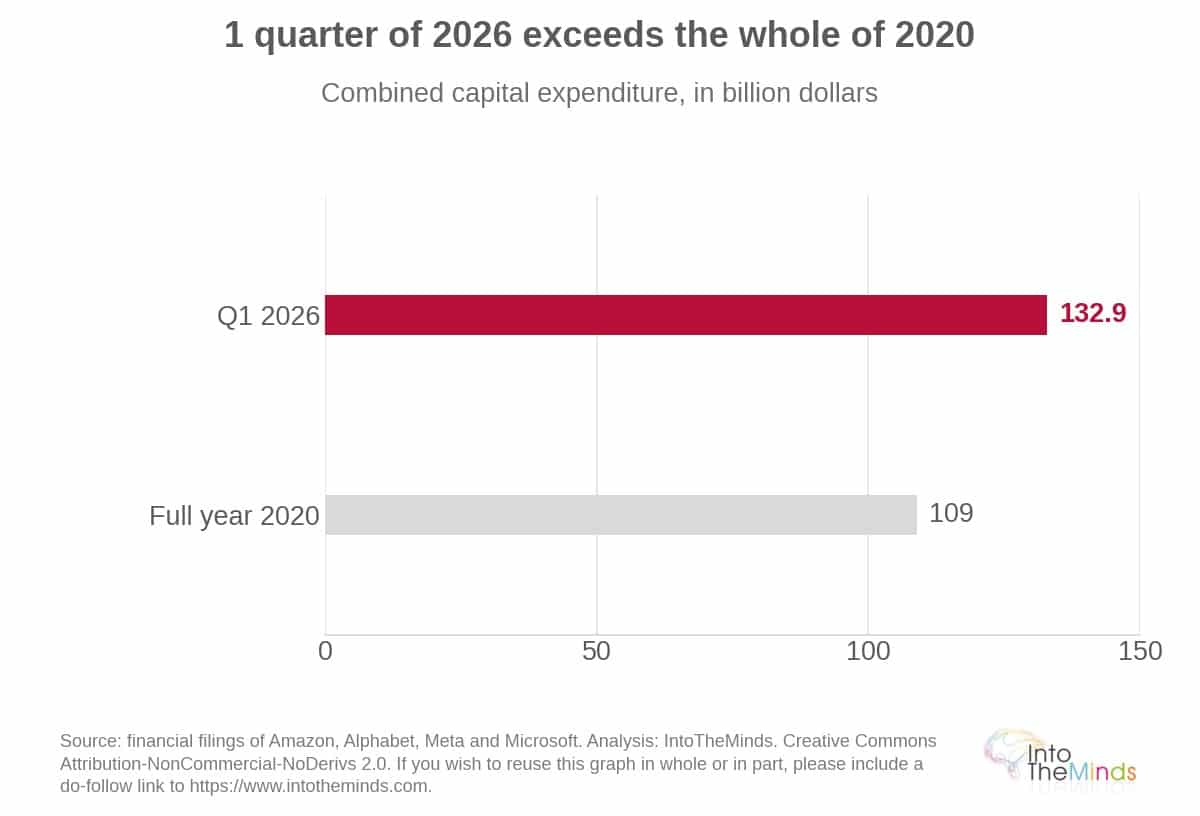
Major investments in France and Europe
France ranks sixth worldwide, with 352 data centers recorded in 2026. The February 2025 AI Summit concluded with investment announcements totaling €109 billion. In June 2026, SoftBank announced an additional €45 billion in investments, including three new facilities in the Hauts-de-France region. Some giant AI campus projects in the Paris region are expected to exceed one gigawatt of capacity, representing record-breaking investment levels.
Across Europe, the market’s strength is also reflected in mergers and acquisitions. M&A transactions reached approximately $50 billion in 2025, more than double the 2024 figure. Consolidation is accelerating, with acquisition deals now regularly reaching several tens of billions of dollars.
A data center dedicated to AI consumes as much electricity as 100,000 households.
Energy impact and sustainability challenges
A data center dedicated to AI consumes approximately as much electricity as 100,000 households. An AI-assisted query is estimated to require around ten times more energy than a traditional web search. This makes the energy mix a critical issue. While electricity production in France is largely decarbonized thanks to its nuclear power plants, coal still supplied 30% of the electricity consumed by the global data center industry in 2025. The rapid expansion of AI therefore has a significant impact on CO₂ emissions. Below are some key figures for the countries covered by this study:
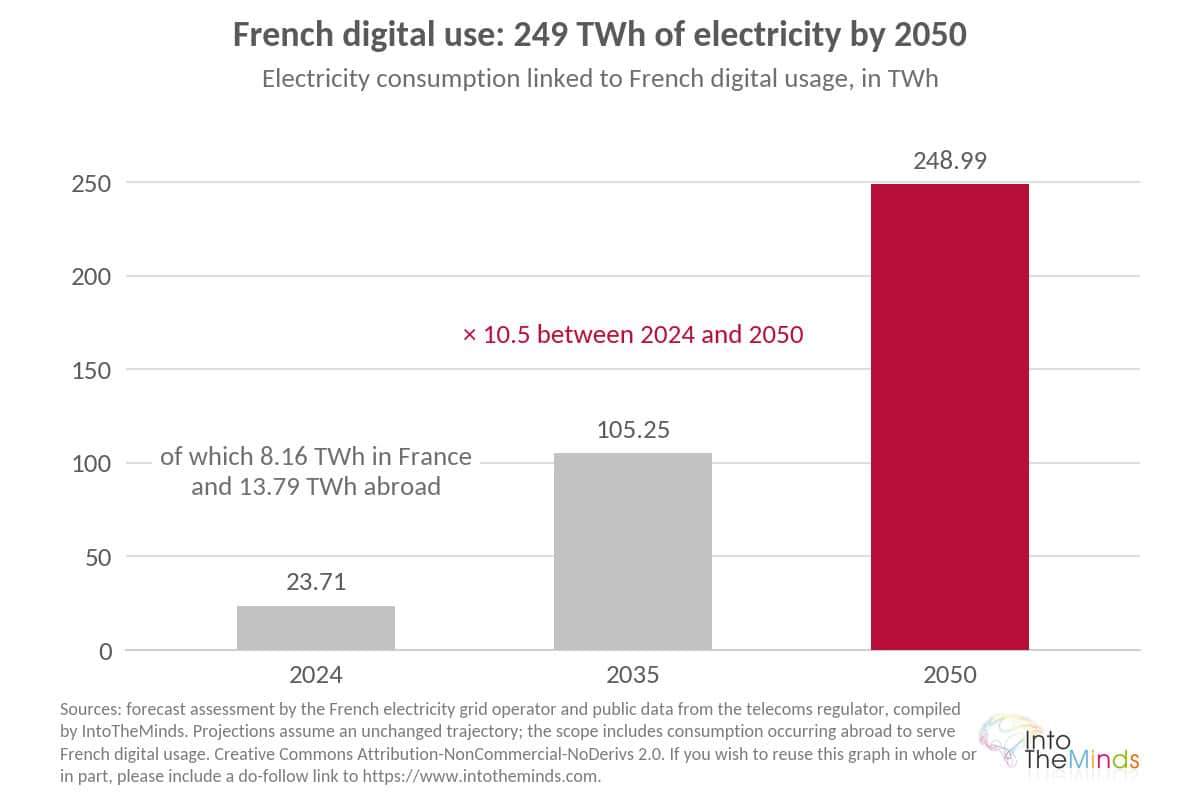
- France (2024): 8.16 TWh consumed by data centers located in France, plus an additional 13.79 TWh imported to support French digital usage, for a total of 23.71 TWh.
- France forecast for 2035: 105.25 TWh under a business-as-usual scenario. This projection includes all digital consumption by French users, including services hosted abroad, and is based on a straight-line extrapolation. Forecasts from the French electricity transmission system operator (RTE), based solely on the connection pipeline of French facilities, estimate demand at between 21 and 32 TWh by 2035.
- Germany (2024): 20 billion kWh consumed by 529 data centers, equivalent to the annual electricity consumption of 5.7 million two-person households.
- United States: Data centers accounted for less than 2% of national electricity consumption before 2020 and could absorb as much as 12% by 2028.
Water cooling reduces power consumption by 10% to 30% compared with conventional cooling systems.
Water consumption: the other resource under scrutiny
Cooling systems place water consumption at the center of many local debates. Yet, at the national level, the volumes involved remain relatively modest. In France, major data center operators withdrew 681,000 m³ of water in 2024, representing just 0.002% of the country’s annual withdrawals of 30 billion m³. According to June 2026 estimates, new projects would account for approximately 0.023% of national water withdrawals. A 250 MW AI campus planned in the Essonne department estimates its water consumption to be equivalent to that of just 236 residents.
Technical solutions are evolving rapidly. Water cooling systems reduce power consumption by 10% to 30% compared with conventional cooling technologies. A recently commissioned U.S. facility operates with a closed-loop cooling system for more than 90% of the time, with annual water consumption equivalent to that of an 18-hole golf course during a single summer week. In Marseille, 45% of cooling requirements are met using water from former mining galleries, where temperatures remain between 14°C and 15°C. In Germany, a facility in Aachen operates for 7,000 hours per year using free cooling, compared with only 1,760 hours requiring active mechanical cooling.
The debate therefore focuses less on total water consumption than on local concentration effects and the reuse of waste heat, an increasingly important issue in negotiations between data center developers and local authorities.
In Germany, around 66% of data center projects are located outside major cities: this is known as geographical dispersion.
Data Center Market Dynamics and Outlook Through 2027
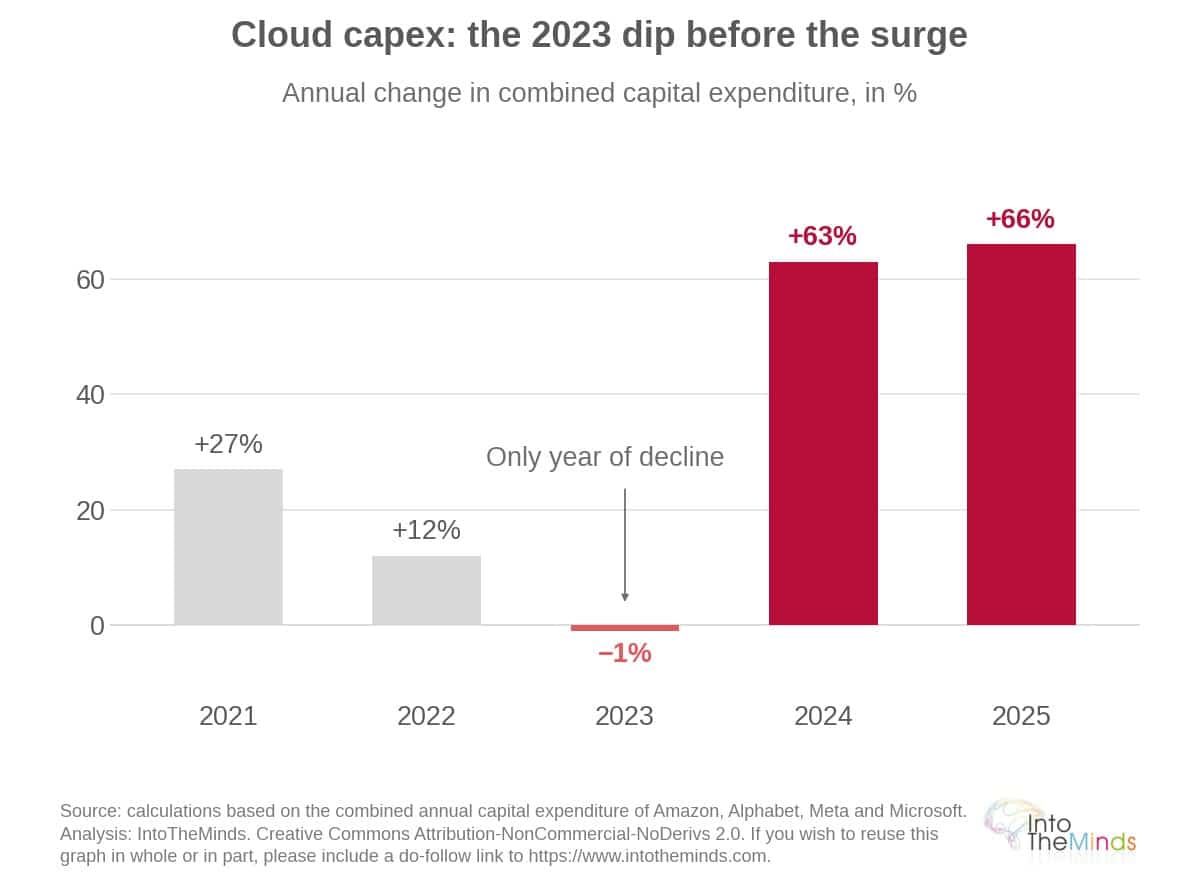
The industry is no longer following a linear growth curve. After plateauing between 2021 and 2023 at around $150 billion in annual spending by the world’s four largest buyers, investment has increased by a factor of 2.7 in just two years. This sharp acceleration is driven by the combined impact of generative AI, cloud expansion, and the rapid digitalization of economies.
Three Trends Shaping the Industry
Three major trends are defining the market in 2026:
- First, the main bottleneck has shifted from capital to electricity, and then to execution capacity and public acceptance. Funding is no longer the primary constraint. Instead, grid connections, gas turbines, and permitting have become the limiting factors. Around one-fifth of the U.S. facilities scheduled for 2026 were experiencing delays ranging from six months to more than one year, based on a panel of nearly 400 sites analyzed in June 2026. These delays have roughly doubled compared with 2020.
- Second, geographical dispersion is becoming evident across all markets. In Germany, approximately 66% of identified projects are located outside major cities, compared with only 10% of the existing installed capacity. Across Europe, the five historical hubs (Frankfurt, London, Amsterdam, Paris, and Dublin) accounted for 62% of European capacity in the first quarter of 2026, a share expected to decline to 51% by 2035. In France, the national transmission system operator had identified by mid-2025 four priority grid connection sites, each offering capacities ranging from 700 MW to 1,000 MW, all located outside major metropolitan areas: Parc des Soufflantes in Escaudain (Nord), ZAC des Bordes in Fouju and the former Vernou-la-Celle thermal power plant site (Seine-et-Marne), and ZAC du Bosquel in the Somme department.
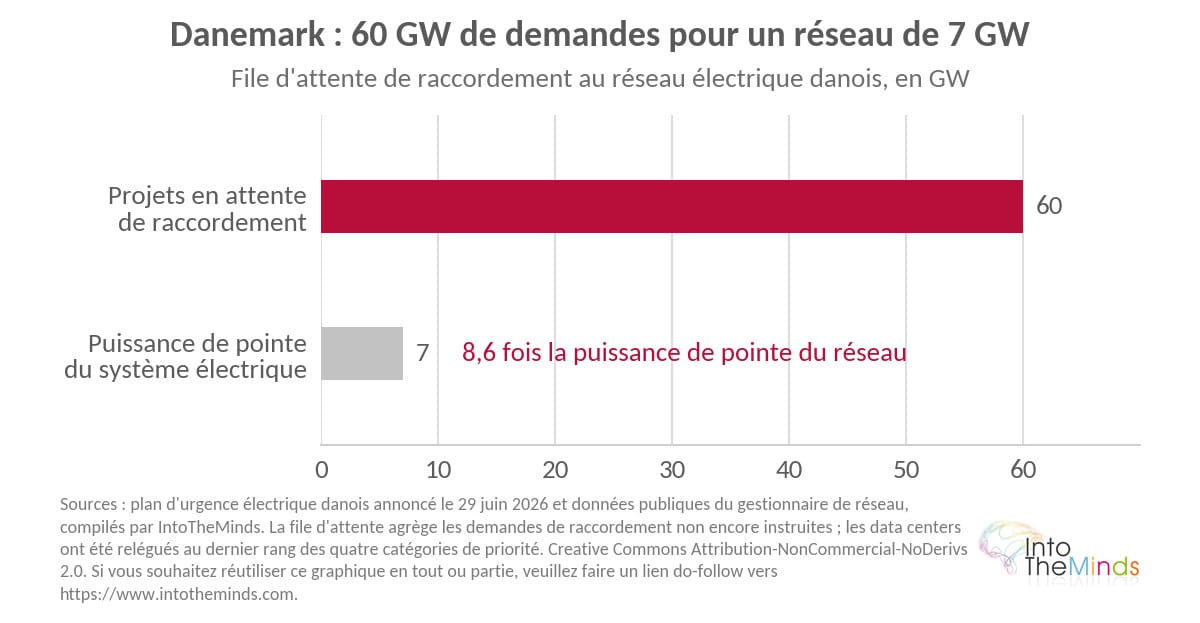
- Finally, the political tension between reindustrialization ambitions and the industry’s extremely high capital intensity per job created continues to increase, with electricity prices acting as the main catalyst. An academic study estimates that these facilities could increase U.S. electricity bills by 8% by 2030, and by as much as 25% in Northern Virginia—approximately $1,000 per household annually. On April 14, 2026, the State of Maine approved the first U.S. moratorium on facilities larger than 20 MW, effective until autumn 2027. Eleven other states were considering similar legislation, while New York State introduced a one-year moratorium on new permits in early June 2026. In Denmark, on June 29, 2026, the government placed data centers at the lowest priority for grid connection, with 60 GW of pending connection requests for a system designed to deliver only 7 GW at peak demand, following a three-month suspension introduced in March 2026.
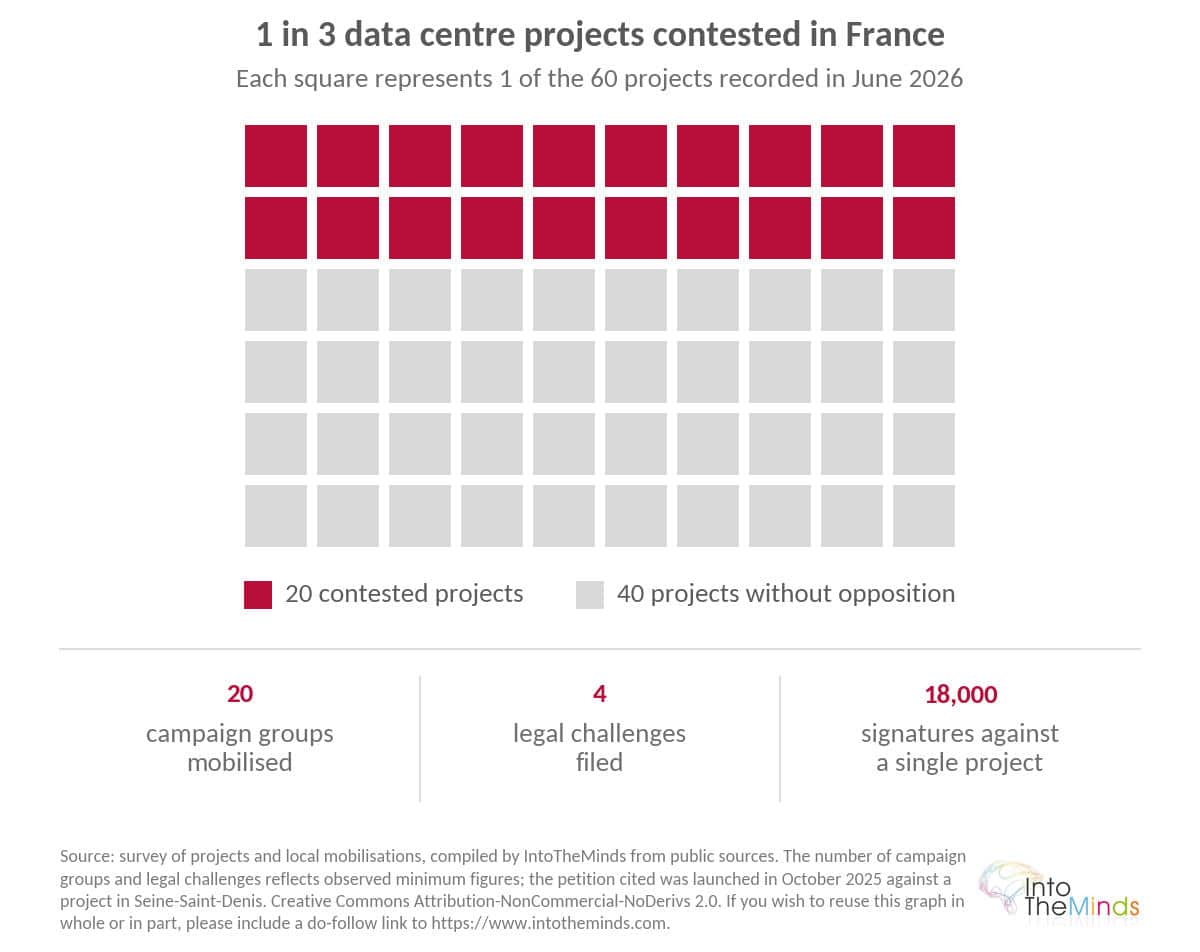
In France, approximately one-third of the country’s 60 announced projects were facing local opposition as of June 2026. While the reasons vary, two types of impacts deserve particular attention:
- additional heat emissions: one study measured air temperatures between 0.7°C and 0.9°C higher in residential neighborhoods located downwind from data centers in the Phoenix metropolitan area.
- noise pollution: another study found that sound levels near data centers in Northern Virginia ranged from 40 to 59 decibels, compared with the 55-decibel guideline recommended by the World Health Organization.
The €45 billion pledged by SoftBank in June 2026 would generate only around 900 direct jobs.
Employment: The Weak Point of the Reindustrialization Narrative
The political argument supporting these projects is based on reindustrialization. However, a closer examination of the data weakens that narrative. Between 2015 and 2020, even before the AI boom, investment per job created averaged €1.7 million for data centers, compared with €500,000 in the battery manufacturing sector. This represents the highest capital intensity among the major documented industrial sectors.
Recent announcements reinforce this finding. The €45 billion investment announced by SoftBank in June 2026 is expected to create only around 900 direct jobs, while the €67 billion invested in 2025 would generate approximately 2,800 jobs. Overall, France’s data center industry accounted for 48,374 jobs in 2024, including 30,000 direct positions, with 91% of employees on permanent contracts. Employment quality is therefore high, but the number of jobs created remains relatively limited.
Readers may forgive the somewhat bold comparison, but France’s 30,000 direct data center jobs can be compared with the 33,800 people employed in French public libraries—another way of storing knowledge.
The contrast is even more striking at the local level. The former Aulnay-sous-Bois automotive plant employed approximately 8,000 workers across 168 hectares during the 1970s. The future data center on part of the site will occupy just 12 hectares and employ roughly 100 people. France’s largest operational data center, located in La Courneuve, employs only around one hundred staff on a four-hectare site.
Training initiatives do exist and have delivered positive results, with around 650 young people trained as technicians and nearly 85% securing employment afterward. However, these programs do not fundamentally change the scale of employment. More than electricity consumption itself, this imbalance explains why local public opinion is shifting so rapidly.
Data Centers: Regional and Segment Growth Forecasts
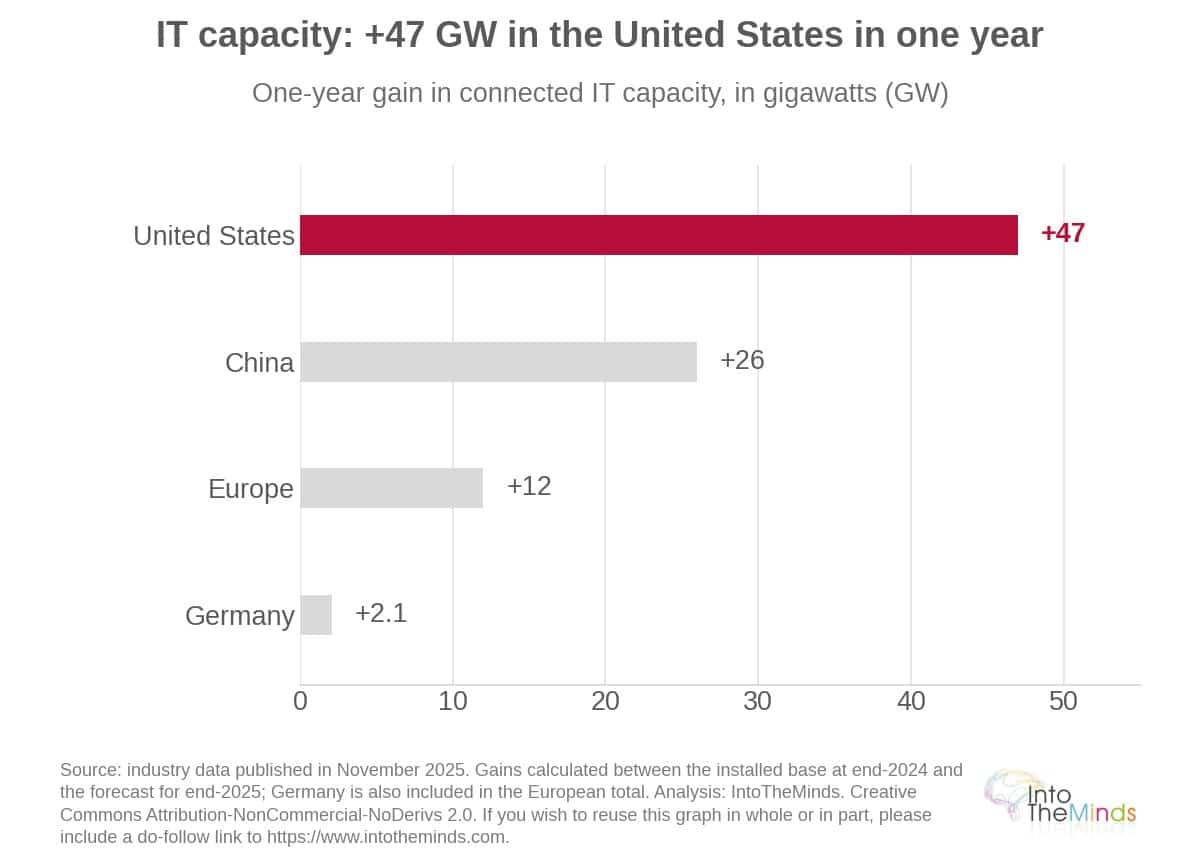
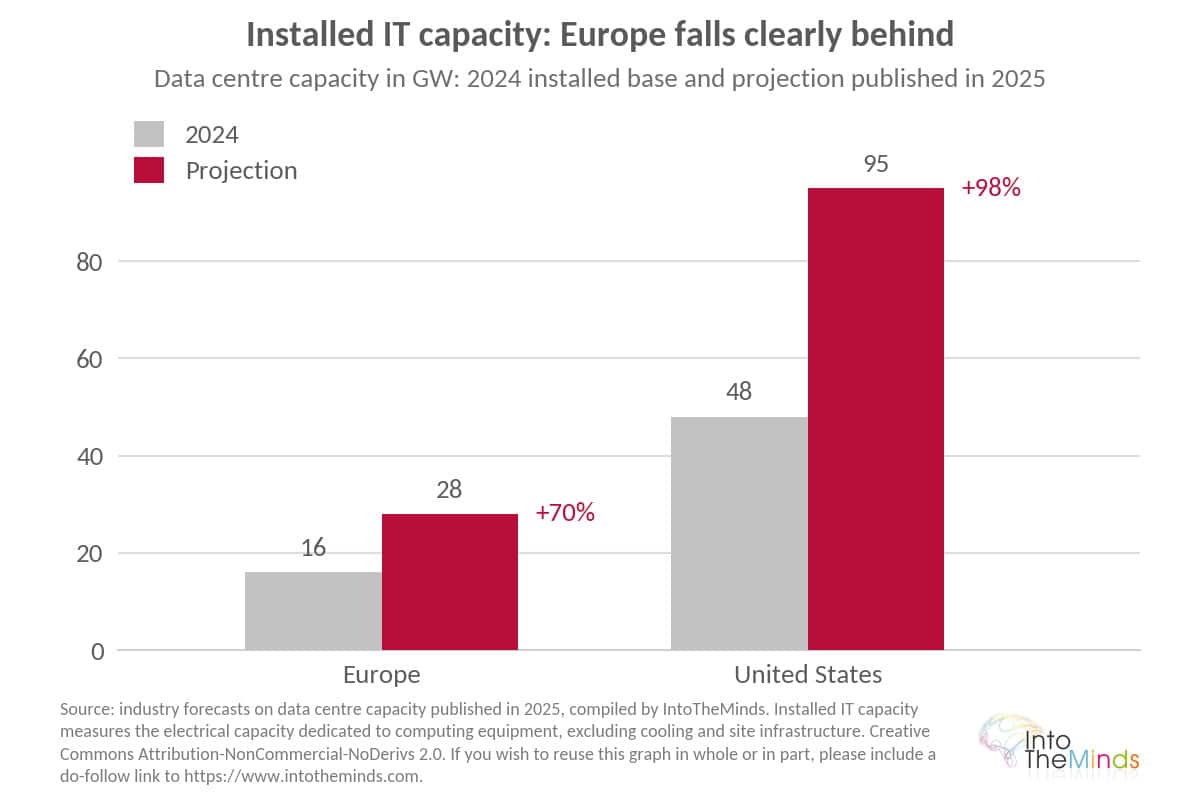
| Geographic region | Connected IT capacity (2024) | Forecast (2025) | Change |
|---|---|---|---|
| United States | 48 GW | 95 GW | +100% |
| China | 38 GW | 64 GW | +70% |
| Europe | 16 GW | 28 GW | +70% |
| Germany | 2.7 GW | 4.8 GW | +78% |
With growth rates remaining broadly similar across regions, the absolute gap widens mechanically: Europe would gain 12 GW of additional IT capacity, while the United States would add 47 GW. The hyperscale data center segment comprised 522 facilities at the end of the first quarter of 2025, accounting for 55% of global IT capacity, with an additional 280 sites expected by 2028. These capacity levels illustrate why operators are seeking to diversify their geographic footprint.
United States: the world’s leading market
The United States accounts for the largest share of global data center capacity, with 4,000 operational facilities and 900 under construction as of June 2026. Among them, 522 are hyperscale data centers, representing 55% of global IT capacity, with another 280 sites expected to come online by 2028. Construction spending surged from $7 billion in 2023 to more than $60 billion in 2025.
Electricity has become the industry’s most critical constraint. Data centers accounted for less than 2% of U.S. electricity consumption before 2020 but could absorb as much as 12% by 2028. Their geographic concentration is particularly pronounced: in 2023, data centers consumed 25.6% of Virginia’s electricity, while only eleven U.S. states exceeded the 5% threshold.
National peak electricity demand, which remained relatively stable between 750 and 800 GW from 2010 to 2025, is expected to reach approximately 905 GW by 2030. Electricity generation is projected to increase from around 4,230 TWh in 2025 to approximately 5,060 TWh by 2030. The gap between demand and actual capacity expansion is significant: the country would need to add roughly 80 GW of new generating capacity every year, whereas less than 60 GW had actually been built as of October 2025. In Texas, the grid operator expects electricity demand to increase by 65% by the end of the decade—equivalent to adding the entire electricity consumption of California.
Faced with grid connection delays of five to ten years, two workaround strategies are emerging:
- The first is on-site power generation: by October 2025, nearly one-third of new facilities planned to produce their own electricity using natural gas, fuel cells, or by restarting nuclear reactors.
- The second, more recent strategy is vertical integration. In 2026, Alphabet (Google) became the only major technology company to own an electricity producer (Intersect) through a $4.75 billion acquisition of a wind and solar energy developer. Alphabet also signed a demand response agreement capable of freeing up to 100 MW on the country’s largest electricity market.
Execution has nevertheless become the new limiting factor. More than 60% of the capacity planned for 2027 was still not under construction as of June 2026, while an additional 7% was already behind schedule. Overall, around 15% of the capacity expected between 2026 and 2028 will be delayed or cancelled due to shortages of skilled labor, gas turbines, and transformers.
The influence of AI and cloud computing on demand
AI already accounted for 20% of global computing capacity in 2023. This share is expected to reach 40% in Germany by 2030. Global AI spending is forecast to reach $301 billion in 2026, with a compound annual growth rate (CAGR) of 26.5%. OpenAI has secured 3.2 GW from a Georgia-based utility for the 2028–2032 period, as well as an additional 6 GW from Oracle. These figures illustrate the enormous infrastructure demand generated by AI.
Market structure and competitive landscape
The operator landscape has been profoundly reshaped since 2020 through a combination of mergers and acquisitions, the entry of investment funds, and the growing influence of major technology companies.
Leading data center operators and colocation providers
Among colocation providers, Equinix operated 245 facilities in 2023, compared with 110 in 2012. Digital Realty manages 300 data centers worldwide as of 2025, while Data4 operates 40 facilities across 10 campuses in 6 countries in 2026, with an occupancy rate of 98% and revenue of €500 million in 2025. OVHcloud, France’s historic cloud provider, has expanded into cloud computing after initially focusing on server hosting.
In France, operator concentration across identified projects is significant:
- Data4 and Colt: 5 projects each
- Digital Realty, Equinix, OVHCloud, NTT, Goodman, Eclairion, H&DC and Opcore: 3 projects each
- DataOne, Segro and NDC: 2 projects each
Infrastructure capacity and geographic distribution
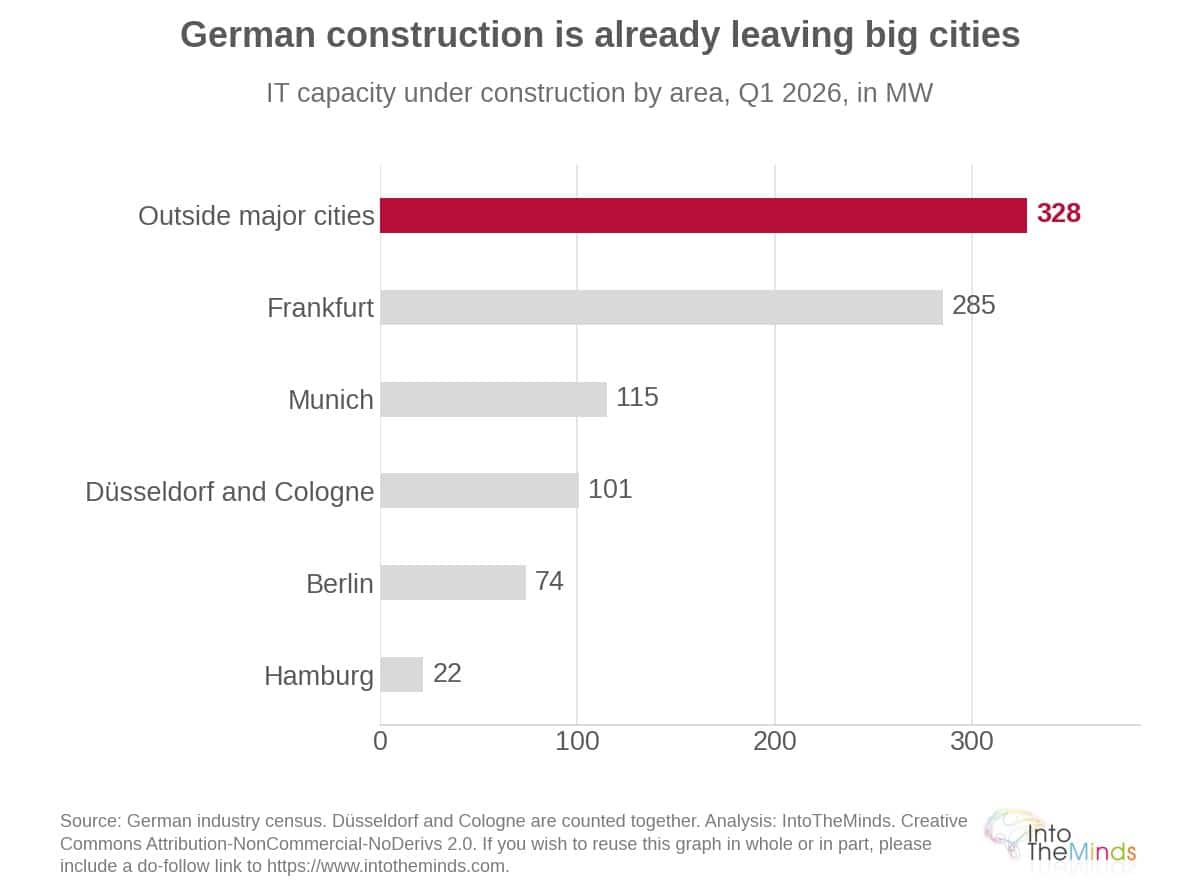
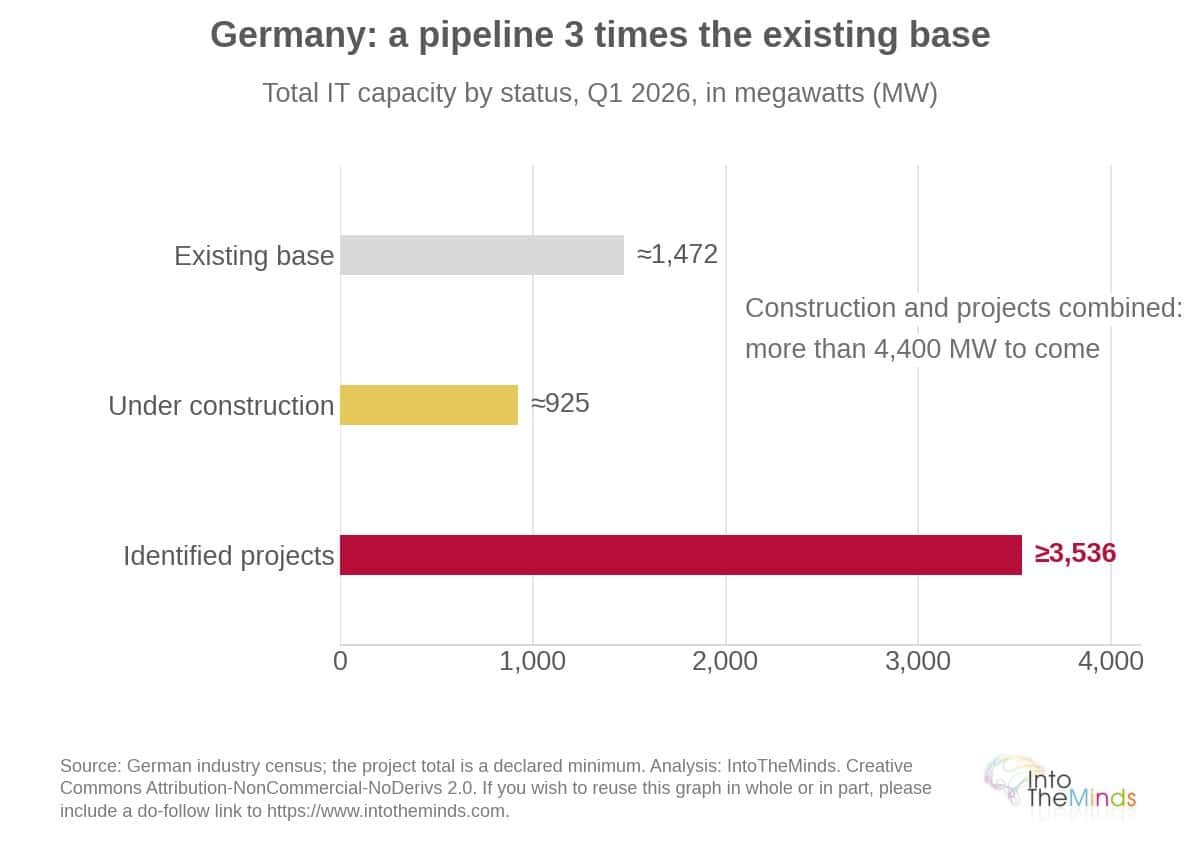
In Germany, the distribution of IT capacity in the first quarter of 2026 illustrates the ongoing geographic diversification across the European data center industry. Each operator is seeking alternative locations beyond the traditional hubs, which are now reaching saturation.
| City | Existing capacity (MW) | Under construction (MW) | Planned projects (MW) |
|---|---|---|---|
| Frankfurt | 997 | 285 | 550 |
| Berlin | 136 | 74 | 643 |
| Munich | 102 | 115 | n/a |
| Düsseldorf/Cologne | 55 | 101 | n/a |
| Hamburg | 35 | 22 | n/a |
| Other locations | 147 | 328 | 2,343 |
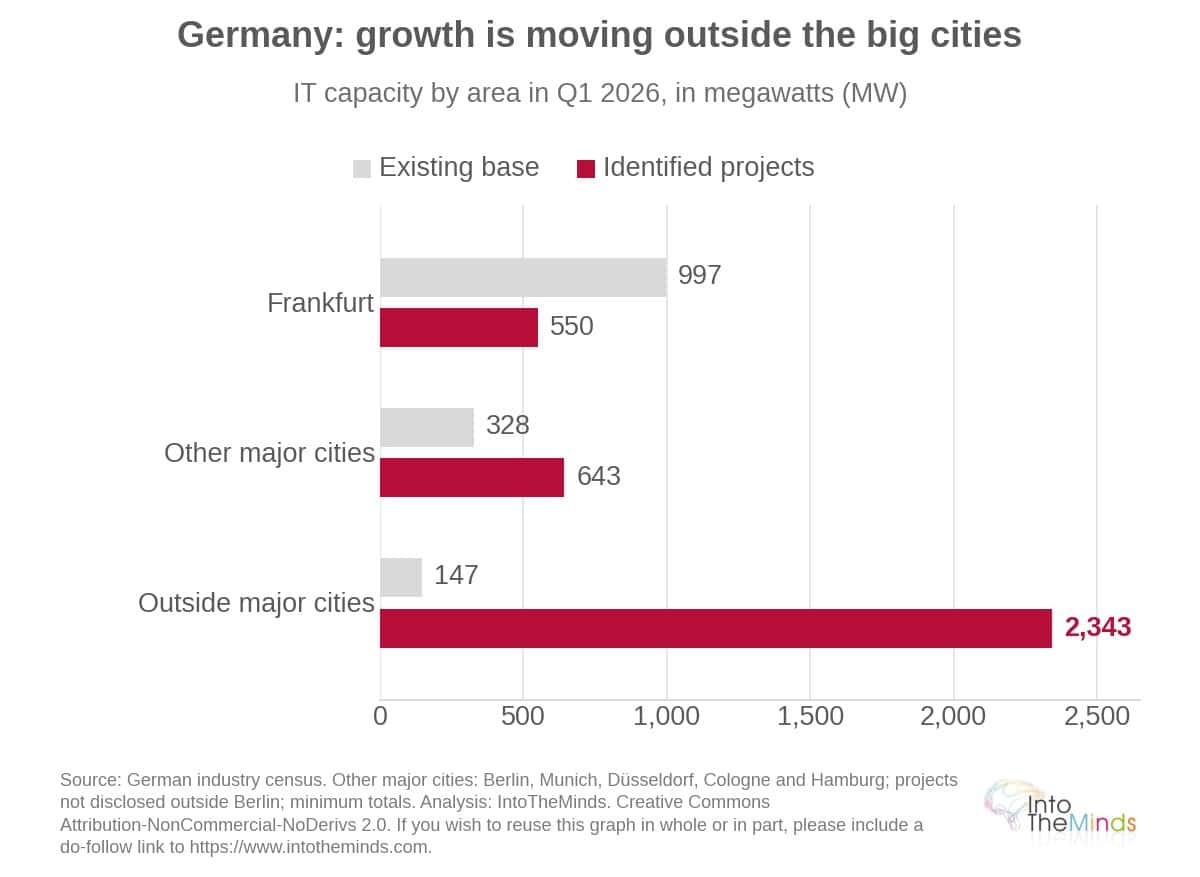
Frankfurt accounts for 68% of existing capacity but only 16% of identified projects, reflecting an almost complete shortage of available land and a vacancy rate that has fallen to just 4%.
The French Grid Connection Pipeline: 30 GW Reserved
At the end of 2025, the French electricity transmission system operator published the first quantitative assessment of this pipeline in its 2025–2035 Forecast Report. As of November 1, 2025, projects with reserved grid access represented approximately 30 GW, spread across data centers, industrial facilities, and hydrogen production projects. Around 15 GW of this capacity is expected to come online before 2030. At full utilization, this capacity would theoretically correspond to 240 TWh of annual electricity consumption, or around 180 TWh under realistic load-factor assumptions, compared with France’s total electricity consumption of 447 TWh in 2024.
Not all of these projects will ultimately be built. In its high-growth scenario, the transmission system operator assumes that approximately 60% of the planned data center projects scheduled before 2030 will be completed, representing around 4.3 GW of connected capacity. The low-growth scenario assumes around 30% completion. More importantly, one gigawatt connected to the grid does not immediately translate into one gigawatt of actual consumption. Data centers typically ramp up operations over nearly a decade, and their final electricity demand often remains significantly below their reserved capacity. Consequently, the average utilization rate assumed for 2030 is only 20%. Under the high-growth scenario, electricity consumption by dedicated data centers would therefore reach 15 TWh in 2030 and 32 TWh in 2035, compared with 10 TWh and 21 TWh respectively under the low-growth scenario, starting from an estimated 4–5 TWh in 2024.
The reservation mechanism itself is currently being reformed. The traditional first-come, first-served approach has led to administrative congestion: projects reserve a place in the connection queue without necessarily being completed, preventing more mature projects from moving forward, while some developers reserve multiple sites for the same project. Since June 2026, the transmission system operator has been allowed to prioritize projects according to a first-ready, first-served principle. Its stagnation scenario also identifies three potential causes of a market slowdown: a shift of investments toward other European countries offering more attractive conditions, the adoption of local moratorium policies, or the bursting of a financial bubble.
A Broader Ecosystem: Suppliers, Service Providers and Partners
The industry extends well beyond data center operators themselves. A broad ecosystem supports the sector:
- Design: engineering firms, architects, and specialist consulting companies
- Equipment: manufacturers of HVAC and cooling systems, cabling suppliers, server manufacturers, and transformer producers
- Operations and maintenance: facility management providers and preventive and corrective maintenance specialists
- Energy: renewable electricity suppliers and on-site power generation developers
Strategic Challenges and Four Development Priorities
The strategies pursued by data center operators increasingly converge around four major priorities, each addressing a specific industry constraint.
1. Expanding Hosting Capacity to Meet Demand
Demand exceeds available capacity across almost every mature market. Data4 reported 98% occupancy in 2026, with no immediate availability, and aims to double its business by 2030. The company plans to invest between €20 billion and €30 billion over the next five years.
2. Service Expansion and Differentiation
As colocation services become increasingly commoditized, operators are expanding their value-added offerings. Key differentiation strategies include:
- AI-specific infrastructure and services
- Edge computing
- Enhanced interconnection services
- Integrated software platforms
Equinix and OVHcloud are developing AI-focused solutions, while Scaleway emphasizes cybersecurity and sovereign cloud services.
3. The Energy Transition and the Goal of 100% Renewable Electricity
Germany currently leads Europe in terms of energy-efficiency requirements. Since July 1, 2026, every new facility must achieve a maximum Power Usage Effectiveness (PUE) of 1.2, compared with a national average of 1.46 in 2025. A legal requirement to operate on 100% renewable electricity will take effect in 2027.
Some regional operators already achieve a PUE of 1.08, combined with 85% energy self-sufficiency through direct connections to local wind farms and solar installations. Waste heat recovery for district heating networks is also becoming an increasingly important sustainability criterion for local authorities.
In France, electricity prices remain roughly half those of Germany, providing a significant competitive advantage that the French government actively promotes to attract investment. France generated a substantial electricity surplus in 2024, exporting 90 TWh, equivalent to nine times the total electricity consumption of all French data centers combined. The French transmission system operator describes the current situation as one of abundant low-carbon electricity, highly favorable for accommodating new industrial demand, and expects this period of surplus capacity to continue for at least another two to three years.
4. Security and Regulatory Compliance
The French administrative simplification law enacted on May 26, 2026 extended the status of Major National Interest Project to data centers, with the objective of cutting permitting procedures by half. Current approval processes typically take five to seven years, compared with three to four years in neighboring European countries. Under the new legislation, legal appeals must now be resolved within ten months.
Grid connection follows a separate accelerated framework. Approved by the French energy regulator in May 2025 for projects requiring 400 MW to 1 GW, it enables eligible facilities located on pre-identified sites to obtain grid connections within three to four years.
Digital sovereignty also remains a key European strategic priority. The European Union plans to support the construction of four to five AI gigafactories, each equipped with at least 100,000 GPUs, with public funding covering up to 35% of project costs and a total investment envelope reaching €20 billion.

FAQ: Frequently Asked Questions
What is the growth rate of the data center market?
Global electricity demand from data centers is expected to increase by 165% between 2023 and 2030, rising from 415 TWh in 2024 to approximately 945 TWh. Capital expenditure by the world’s four largest buyers increased 2.7-fold between 2023 and 2025, following three years of relatively stable investment. The global AI infrastructure market is forecast to grow at a 44% compound annual growth rate (CAGR) between 2023 and 2029. To better understand these market dynamics, IntoTheMinds conducts B2B market research tailored to industrial clients.
Where are the main data centers located in France and Europe?
France counted 352 data centers in 2026, with approximately three-quarters located in the Paris region (Île-de-France). Around 17 facilities are currently under construction across 13 municipalities in the region, while only four projects are under development elsewhere in France. Across Europe, the five traditional hubs—Frankfurt, London, Amsterdam, Paris, and Dublin—accounted for 62% of installed capacity in the first quarter of 2026. Frankfurt remains Europe’s leading hub with 997 MW of installed IT capacity, but Berlin already has 643 MW of planned projects despite having only 136 MW currently in operation, highlighting the ongoing geographical redistribution of the industry.
What are the energy challenges facing data centers?
Electricity consumption is the industry’s primary challenge. In the United States, the sector could account for up to 12% of national electricity consumption by 2028, compared with less than 2% before 2020. Grid connection times range from five to ten years for large-scale facilities. In response, nearly one-third of new U.S. data centers were already planning, as of October 2025, to rely on on-site power generation. In France, more than 70% of the increase in electricity demand comes from the Île-de-France region. As of November 1, 2025, industrial and digital projects that had secured access to the transmission grid represented approximately 30 GW of capacity, including around 15 GW scheduled to come online before 2030.
What investments are planned in the data center sector by 2027?
Planned capital expenditures for 2026 amount to $650 billion for the world’s four largest buyers (Amazon, Alphabet, Meta, and Microsoft), compared with approximately $400 billion in 2025. In France, a Japanese investor announced €45 billion in investments in June 2026, while the Campus IA project in Fouju (Seine-et-Marne) alone represents €50 billion. The bond issue backed by Meta’s El Paso facility was placed at the end of July 2026 for $12.55 billion at an interest rate of 7.5%. To assess investment opportunities in this sector, IntoTheMinds offers B2B market research covering competitive and financial dynamics.
How can customer satisfaction be measured for data center operators?
In such a competitive environment, retaining business customers is a strategic priority for operators. Customer satisfaction surveys conducted by IntoTheMinds help identify retention drivers, pain points in customer relationships, and unmet expectations, whether related to service quality, responsiveness, or regulatory compliance.
Who are the leading players in the French data center market?
The French data center industry brings together international operators and domestic providers. Among the leading colocation companies operating in France are Equinix (245 sites in 2023, up from 110 in 2012), Digital Realty (300 facilities worldwide), Data4 (40 sites across 10 campuses in 6 countries, with a 98% occupancy rate in 2026), and OVHcloud, France’s historic cloud provider. Investment funds are playing an increasingly important role: since 2023, 60% of Data4’s capital has been owned by a Canadian investment fund, valuing the company at €3.5 billion when it was acquired in April 2023.


![Illustration of our post "Turnover: what strategies are companies implementing? [Study]"](/blog/app/uploads/banner-millenial-employee-120x90.jpg)

![Illustration of our post "LinkedIn remains under-used by marketing managers [Research]"](/blog/app/uploads/linkedin-logo-120x90.jpg)