Luxury brands are seeking growth opportunities in other product and service categories. In this article, we analyze the brand extension strategy based on recent statistics and concrete examples.
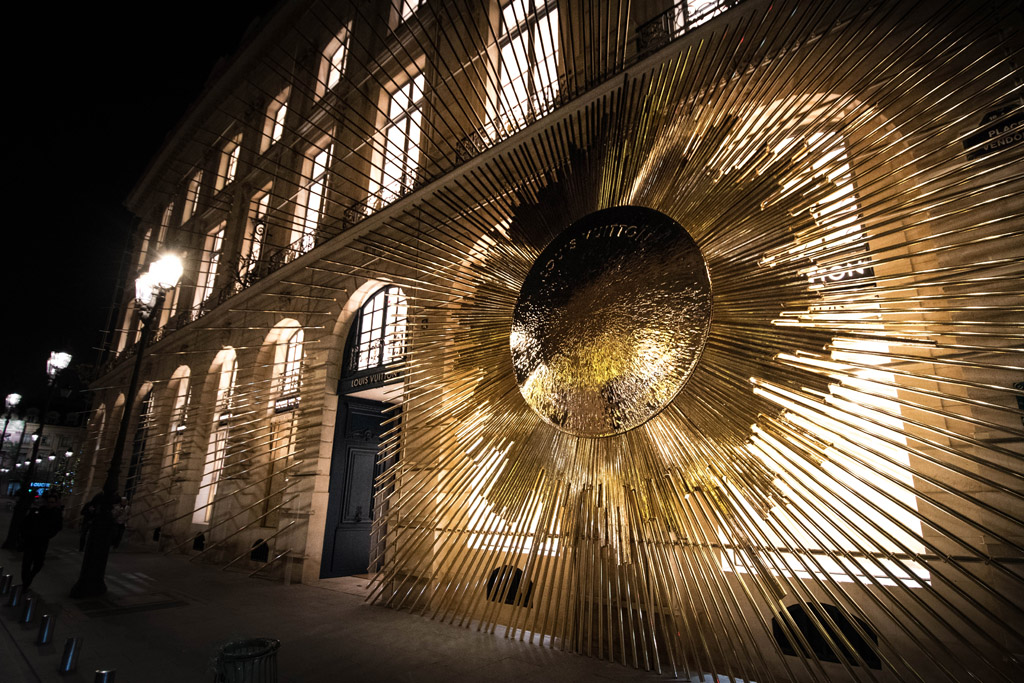
The luxury sector is going through a rather challenging period after the boom years of Covid. The customer base is evolving, generational expectations are diversifying, and major maisons must adapt. Brand extension is a strategy that many of them have chosen to pursue. This strategy consists of leveraging the reputation of an established brand to conquer new commercial territories (also referred to as “brand territories“), well beyond its original area of expertise. As a close observer of these strategies within my marketing consulting firm, I wanted to analyze the latest initiatives and provide you with a comprehensive overview of this strategy.
Contact the IntoTheMinds market research agency
Key takeaways
- The global luxury market represents €1.5 trillion in 2023, but has lost 50 million customers
- Luxury brands are diversifying into gastronomy, hospitality and real estate: this is known as a “brand extension.”
- Expansion into gastronomy is particularly popular: it is relatively inexpensive to implement and allows customers to access a luxury brand at a more “affordable” price point
- This strategy helps offset the decline in traditional clientele
- Customer experience is becoming more important than the mere sale of products
- Flagships are turning into genuine cultural destinations. The “ocean liner” of Louis Vuitton in Shanghai attracted between 20,000 and 25,000 visitors each week in 2025.
The luxury market in 2025: between growth and challenges
The global luxury sector is posting impressive figures. In 2023, the market reached a valuation of €1.5 trillion worldwide. “Personal luxury goods” – including fashion, accessories, watches, jewelry, perfumes and cosmetics – alone account for $362 billion. However, this apparent prosperity conceals a more nuanced reality. The sector faces a major challenge: a shrinking customer base.
Between 2022 and 2024, the luxury industry lost 50 million customers, declining from 400 million to 350 million active consumers. This 12.5% erosion of the customer base is forcing major houses to fundamentally rethink their business model.
This contraction can be explained by several factors. On the one hand, global inflation has reduced the purchasing power of certain customer segments. On the other hand, new generations of consumers favor experience over ownership, thereby reshaping traditional luxury codes. Finally, conspicuous consumption is now frowned upon in China and, in some cases, even repressed. Yet China was one of the driving forces of the global luxury market.
Brand extensions create new bridges between universes. A certain permeability emerges, particularly with regard to brand attributes.
Why are luxury brands extending their territories?
In response to these market developments, brand extension strategies are becoming a strategic necessity rather than a simple commercial choice. Several reasons explain this trend.
- Diversification makes it possible to offset the decline in traditional sales. By entering new sectors, brands create additional revenue streams that reduce their dependence on their historical products.
- Extension responds to a growing demand for immersive experiences. Today’s consumers seek more authentic relationships with brands. They want to experience the brand universe rather than simply purchase its products. This behavioral shift is pushing luxury houses to build complete ecosystems around their identity.
- The extension strategy makes it possible to reach new customer segments. By offering services in hospitality or gastronomy, for example, a fashion brand can attract consumers who would never have purchased its clothing but appreciate its aesthetic universe.
- This approach strengthens brand desirability. By creating exclusive and memorable experiences, brands enhance their emotional capital with consumers.
Ultimately, brand extensions create new bridges between sectors. A certain permeability takes hold, benefiting both sectors that are now connected.
Flagships: new cultural destinations
The evolution of flagship stores perfectly illustrates this transformation. These spaces no longer merely sell products; they are becoming true cultural and commercial destinations.
Louis Vuitton exemplifies this approach through large-scale projects. In Seoul, South Korea, the French maison inaugurated in December 2025 “The Place,” a revolutionary 4,000m² flagship spread over 6 floors. The originality of this project lies in the allocation of 1,200m² exclusively dedicated to an immersive exhibition, transforming the venue into a genuine brand museum. However, the flagship that impressed me most is undoubtedly the one built in Shanghai (see video above). It welcomed between 20,000 and 25,000 visitors per week in 2025. It is a spectacular success and the economic impact exceeded expectations: this project tripled the revenue of the shopping mall hosting it, demonstrating the spillover effect of these brand destinations on their commercial environment.
This success is inspiring other similar projects. Louis Vuitton plans openings in Hong Kong in 2026, Paris in 2027, and Beverly Hills probably in 2029. This geographical expansion confirms the ambition to transform retail outlets into global destinations.
In Paris, LV Dream has embodied this philosophy since December 2022. This 2,000m² space showcases more than 200 historical pieces from the brand, covering a period from 1892 to the present day. The innovation lies in the pricing strategy: chocolate bars starting at €12, pastries priced between €16 and €18, and even 1.6kg chocolate creations for €200. This approach makes the Louis Vuitton universe accessible to a broader audience while preserving the brand’s exclusivity.
Gastronomy: a preferred sector for brand extension
The gastronomic industry is emerging as a prime field for luxury brand extension. This trend is not new: the Emporio Armani Caffè opened its doors in Paris as early as 1998. It is the oldest example I found and, in my view, it marks the beginning of a new era in which fashion and gastronomy converge.
Ralph Lauren followed this path in 2010 with the opening of Ralph’s, strategically located just 500 meters from the Emporio Armani Caffè in the French capital. This geographical proximity reflects the emergence of a new district dedicated to brand experiences. I found an interesting video (below) that clearly illustrates the concept. The only minor drawback of this video is that it does not fully convey how deeply the brand codes permeate the gastronomic universe. Often, in this type of brand extension, semiological and semantic codes, as well as color codes, are incorporated into the venue so that you are truly “immersed in the brand universe.” I find this expression particularly interesting because it is usually taken figuratively, whereas here it can almost be understood literally.
Culinary collaborations have accelerated in recent years (see also the table at the end of this article). In 2022, Louis Vuitton partnered with chef Jean Imbert for its Saint-Tropez restaurant, offering creations such as the “New Look” truffle croque-monsieur priced at €31. Still in Saint-Tropez, Dior also opened its café (see video below). In Paris, the restaurant Monsieur Dior offers the Christian Dior soft-boiled egg, illustrating this fusion between haute couture and haute gastronomy.
Other prestigious houses are investing heavily in this sector. Prada inaugurated Torre in Milan in 2020, a restaurant led by chef Lorenzo Lunghi. Gucci opened Osteria Gucci in Florence in 2018, entrusting the kitchens to three-Michelin-starred chef Massimo Bottura. These establishments go beyond simple dining to become cultural meeting places where brand identity is expressed through culinary art. In the video below, the concept of “permeability” of brand attributes mentioned earlier becomes clear. Gucci’s signature colors are green and red, and these two colors serve as the leitmotif of the restaurant’s interior design.
Luxury hospitality: extending the brand experience
The hotel sector represents a natural extension for luxury brands, enabling them to offer complete immersion over several days. This strategy transforms a one-off purchase into an extended experience.
Fauchon illustrates this approach with its 5-star Parisian hotel, inaugurated in May 2018. The establishment includes 54 rooms and 22 suites, complemented by a 100-seat restaurant and a café. This configuration allows guests to experience the Fauchon universe continuously, from morning to night.
Italian brands excel in this field. Bulgari has been developing a global hotel network since 2004, starting with its first establishment in Milan. The brand has gradually expanded to Bali, London, Dubai, Shanghai, Beijing, Tokyo, Paris and Rome. This geographical expansion enables Bulgari to offer a consistent experience to its international clientele. There are numerous videos about Bulgari hotels online. I selected one that, in my view, best highlights the essence of this brand extension (see below).
Armani has adopted a similar strategy with hotels in Dubai in 2010 and Milan in 2011, developed in partnership with Emaar Properties, a major real estate player. These collaborations allow fashion brands to benefit from hospitality expertise while retaining control over their identity. I find that the work on brand identity is particularly successful. The presentation video of the Milan hotel (see below) shows a result that appears highly faithful to Giorgio Armani’s aesthetic heritage.
Real estate and cinema: new territories of expression
Luxury real estate is also attracting major houses. In 2023, Dolce & Gabbana announced ambitious projects in Miami, Marbella and the Maldives. This expansion follows the launch of the Martini Bar in Milan in 2003 and the Dolce & Gabbana Casa home décor line in 2021.
Cinema offers a new field for creative expression. In April 2023, Saint Laurent launched Saint Laurent Productions, a film production company. Pedro Almodóvar directed the short film “Strange Way of Life” for the brand, demonstrating how luxury brands can reach new audiences through cinematic art. While I understand that a sophisticated brand such as Saint Laurent may naturally extend into the seventh art, the result (see below) leaves me somewhat unconvinced. Nevertheless, it remains an expression of brand extension into other sectors.
Art and culture: a strengthened historical commitment
The cultural engagement of luxury brands is not new, but it is intensifying and becoming more structured. Louis Vuitton launched its City Guides as early as 1998 and supports numerous exhibitions worldwide. In 2018, Dior contributed to the restoration of the Queen’s Hamlet at Versailles, while Chanel supported the Biarritz Film Festival in 2023.
These initiatives position brands as contemporary patrons, reinforcing their cultural legitimacy and desirability among an educated and demanding clientele.
Summary table of brand extensions in luxury
| Brand | Extension sector | Year | Location | Specific features |
|---|---|---|---|---|
| Armani | Gastronomy | 1998 | Paris, France | Emporio Armani Caffè |
| Ralph Lauren | Gastronomy | 2010 | Paris, France | Ralph’s Restaurant |
| Bulgari | Hospitality | 2004 | Milan, Italy | First hotel in the network |
| Armani | Hospitality | 2010 | Dubai, UAE | Partnership with Emaar Properties |
| Fauchon | Hospitality | 2018 | Paris, France | 54 rooms, 22 suites |
| Gucci | Gastronomy | 2018 | Florence, Italy | Chef Massimo Bottura |
| Prada | Gastronomy | 2020 | Milan, Italy | Torre, Chef Lorenzo Lunghi |
| Louis Vuitton | Culture/Gastronomy | 2022 | Paris, France | LV Dream, 2,000m² |
| Saint Laurent | Cinema | 2023 | International | Saint Laurent Productions |
| Dolce & Gabbana | Real estate | 2023 | Miami, Marbella, Maldives | Residential projects |
Challenges and future prospects
This extension strategy is not without risks. Brands must maintain the coherence of their identity while exploring new territories. The challenge lies in preserving the exclusivity that constitutes their value while broadening their audience.
Recent economic data show mixed signals. In the United States, price increases of 4% in April 2025 and 2% in August 2025 reflect inflationary pressure. At the same time, raw materials have risen by 25% to 30% since the Covid-19 pandemic, impacting corporate margins.
Some divisions are showing signs of slowdown. The fashion and leather goods division of a major group recorded a 2% decline in the third quarter of 2025, and a 6% decrease over the first nine months of the year, following a 1% contraction in 2024.

Frequently asked questions about brand extension in luxury
Why are luxury brands diversifying their activities?
Luxury brands are diversifying their activities to offset the decline in their traditional customer base (50 million customers lost between 2022 and 2024) and to respond to new consumer expectations that prioritize experience over ownership. This strategy also enables them to create new revenue streams and reach previously untapped customer segments.
Which sectors are preferred for brand extension?
The most sought-after sectors are gastronomy, hospitality, luxury real estate, art and culture. These fields allow brands to create immersive experiences consistent with their identity while offering services complementary to their traditional offering.
How are flagships evolving within this strategy?
Flagships are transforming into genuine cultural and commercial destinations. The example of Louis Vuitton in Shanghai, which welcomes 20,000 to 25,000 visitors per week, illustrates this evolution. These spaces combine retail, exhibition and experience, becoming pilgrimage sites for brand enthusiasts.
What are the risks of this extension strategy?
The main risk lies in the dilution of brand identity. Companies must maintain the coherence of their universe while exploring new territories. Poorly managed expansion can damage the perception of exclusivity that constitutes the fundamental value of luxury.
Is this trend sustainable?
This evolution appears structural rather than cyclical. Behavioral changes among consumers, particularly younger generations, and the need to compensate for the decline in traditional clientele make this strategy essential for the survival and growth of luxury brands.


![Illustration of our post "Pricing: strategies, techniques, examples [Guide 2025]"](/blog/app/uploads/pricing-120x90.jpg)